Artwork
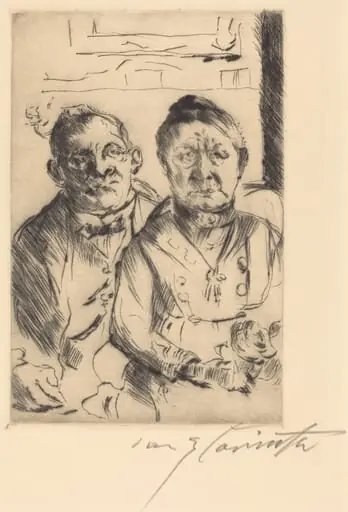
Des Künstlers Schwiegermutter (The Artist's Mother-in-Law)
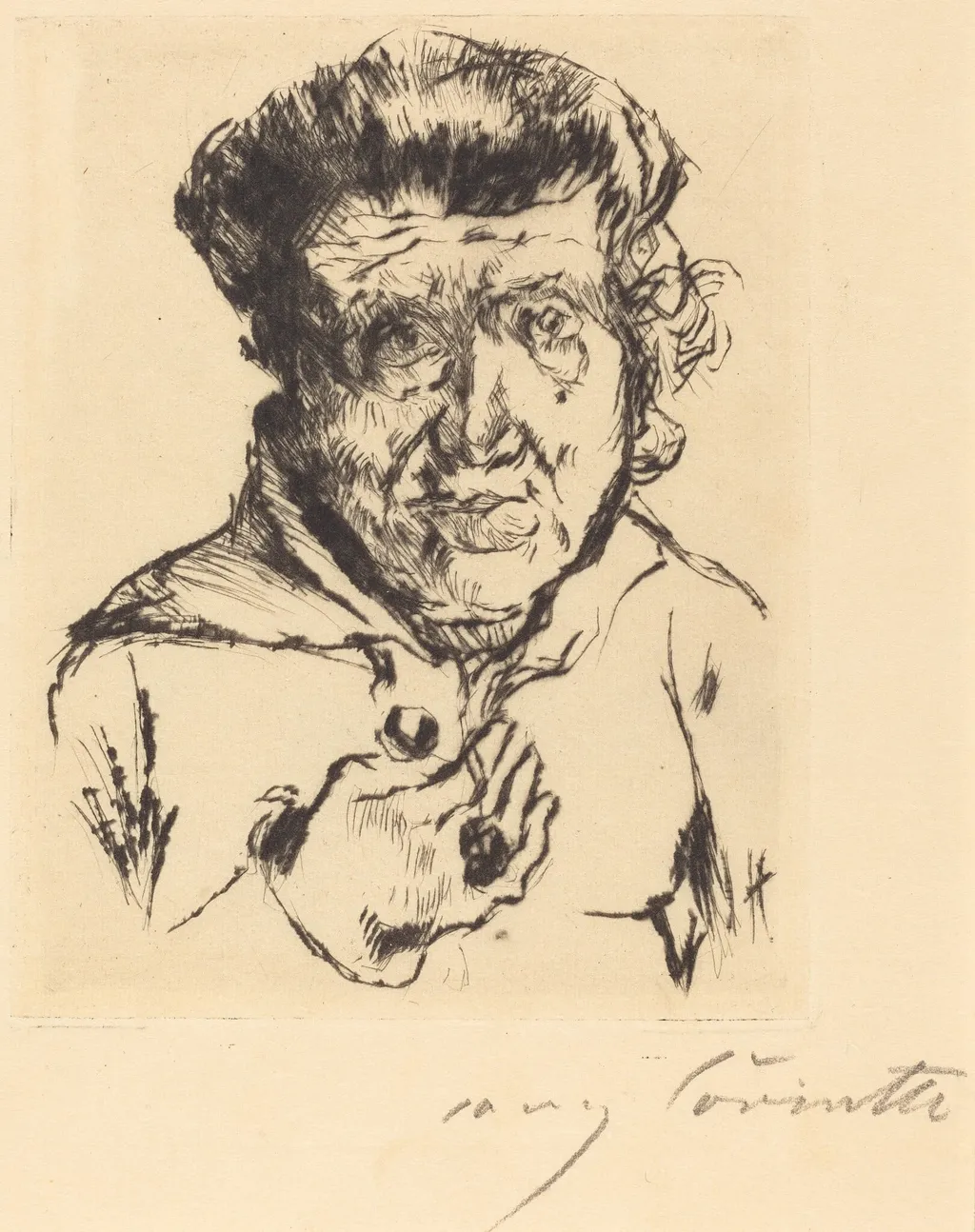
Des Künstlers Schwiegermutter (The Artist's Mother-in-Law) is an ink print by Lovis Corinth. It dates from 1920 and is held in the collection of the National Gallery of Art.
About this work
Overview
Created in 1920, *Des Künstlers Schwiegermutter* is a drypoint print by Lovis Corinth, executed in black ink on laid paper.
Created in 1920, *Des Künstlers Schwiegermutter* is a drypoint print by Lovis Corinth, executed in black ink on laid paper. The work belongs to a phase of his career marked by intense psychological depth and a shift away from earlier naturalism. Corinth, who had been active in Berlin’s avant-garde circles and later led the Berlin Secession, turned increasingly inward after a stroke in 1911, producing portraits that convey emotional gravity over idealized form.
Subject & Meaning
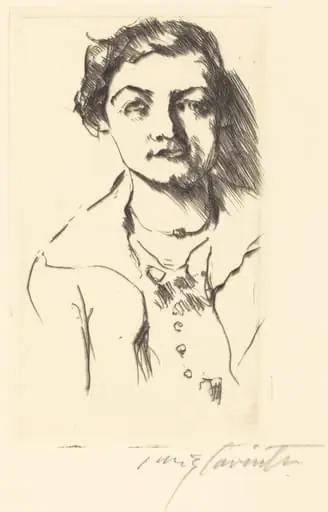
The subject is Corinth’s mother-in-law, portrayed without embellishment. Her aged face, etched with deep lines and a furrowed brow, suggests a lifetime of quiet endurance. A faint, ambiguous smile lingers, neither joyful nor sorrowful, inviting contemplation rather than narrative. The stillness of her gaze and the restrained posture convey dignity rooted in lived experience, not social status or theatrical expression.
Technique & Style
Corinth employed drypoint to generate dense, tactile lines that catch the light unevenly, enhancing the texture of skin and fabric. The heavy, irregular strokes around her face and collar create a sense of weight and volume, while the sparse background isolates the figure. The medium’s inherent roughness aligns with the unvarnished realism of the portrait, rejecting smoothness in favor of emotional authenticity and physical presence.
History & Provenance
The print emerged during Corinth’s later years, when he focused on intimate family subjects following his health decline. It was likely made in his Berlin studio, where he produced numerous prints and paintings of close relatives. Though specific early ownership records are sparse, the work entered public collections in the mid-20th century, valued for its psychological insight and technical mastery within German printmaking of the era.
Context
In post-war Germany, artists like Corinth grappled with the collapse of pre-war cultural norms. His portraits from this period reflect a broader turn toward introspection and human vulnerability. Unlike the expressive distortions of some Expressionists, Corinth’s approach remained grounded in observation, blending the immediacy of Impressionism with the emotional weight of personal experience, making his work a quiet counterpoint to the era’s louder movements.
Legacy
The print stands as a testament to Corinth’s ability to transform personal subjects into universal studies of aging and resilience. It influenced later generations of German realist printmakers who sought emotional truth over stylistic novelty. Though not widely exhibited in his lifetime, its restrained power has secured its place in discussions of early 20th-century portraiture as an example of quiet, unflinching humanity.
Artist & collection

Artist
Lovis Corinth was a German artist and writer whose mature work as a painter and printmaker realized a synthesis of impressionism and expressionism.

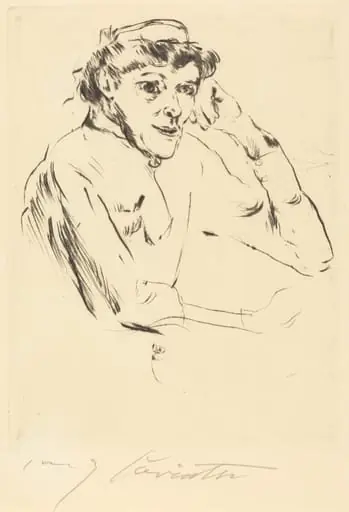 Pflegerin (Nurse)
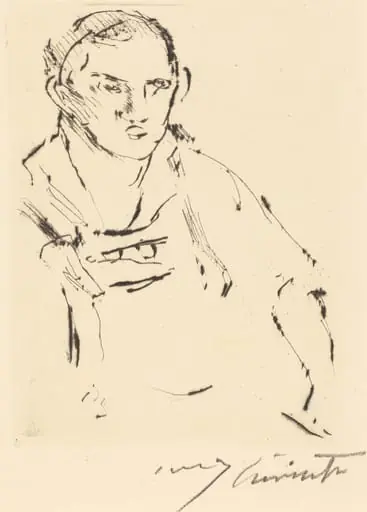 Thomas Corinth
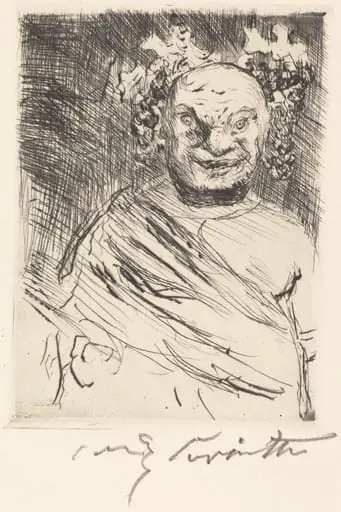 Das Gastmahl des Trimalchio: pl. I (The Banquet of Trimalchio: pl. I)
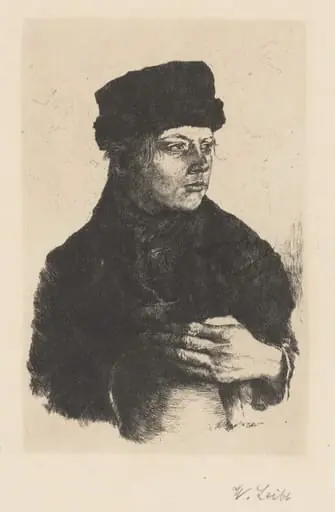 Peasant Boy with a Jug
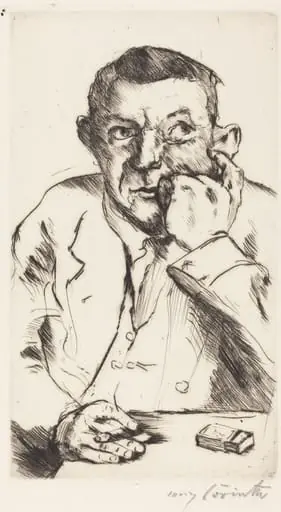 Männliches Bildnis mit Aufgestütztem Arm (Portrait of a Man Smoking)
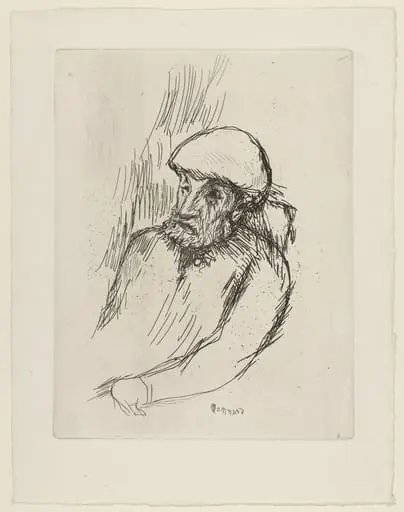 Untitled
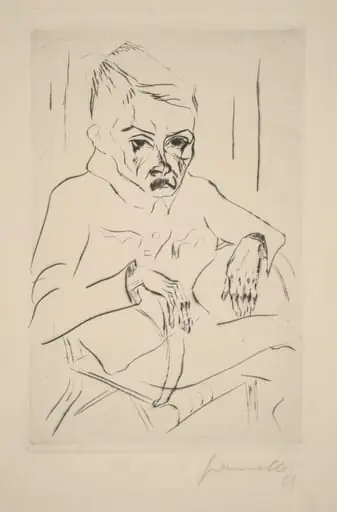 Tired Soldier I
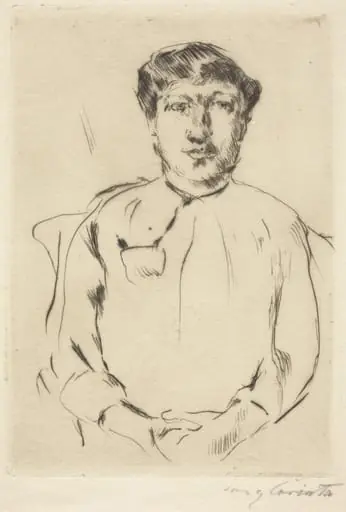 Frauenbildnis (Portrait of a Woman)
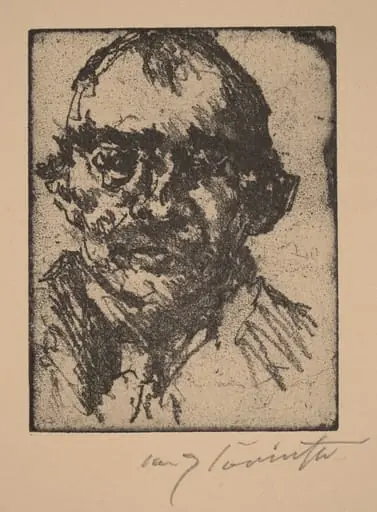 Selbstbildnis (Self-Portrait)
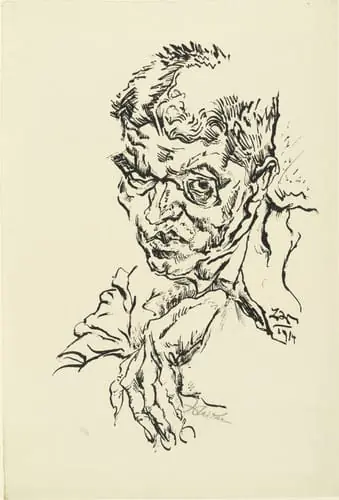 Untitled
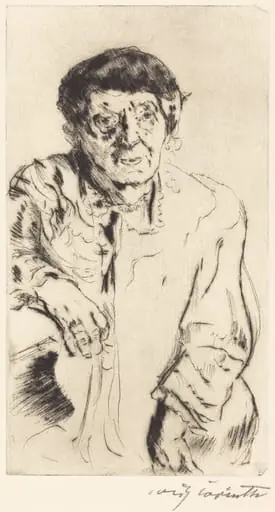 Schwiegermutter (Mother-in-Law)
 Ostpreussisches Ehepaar (Couple from East Prussia)