Artwork
Selbstbildnis (Self-Portrait)
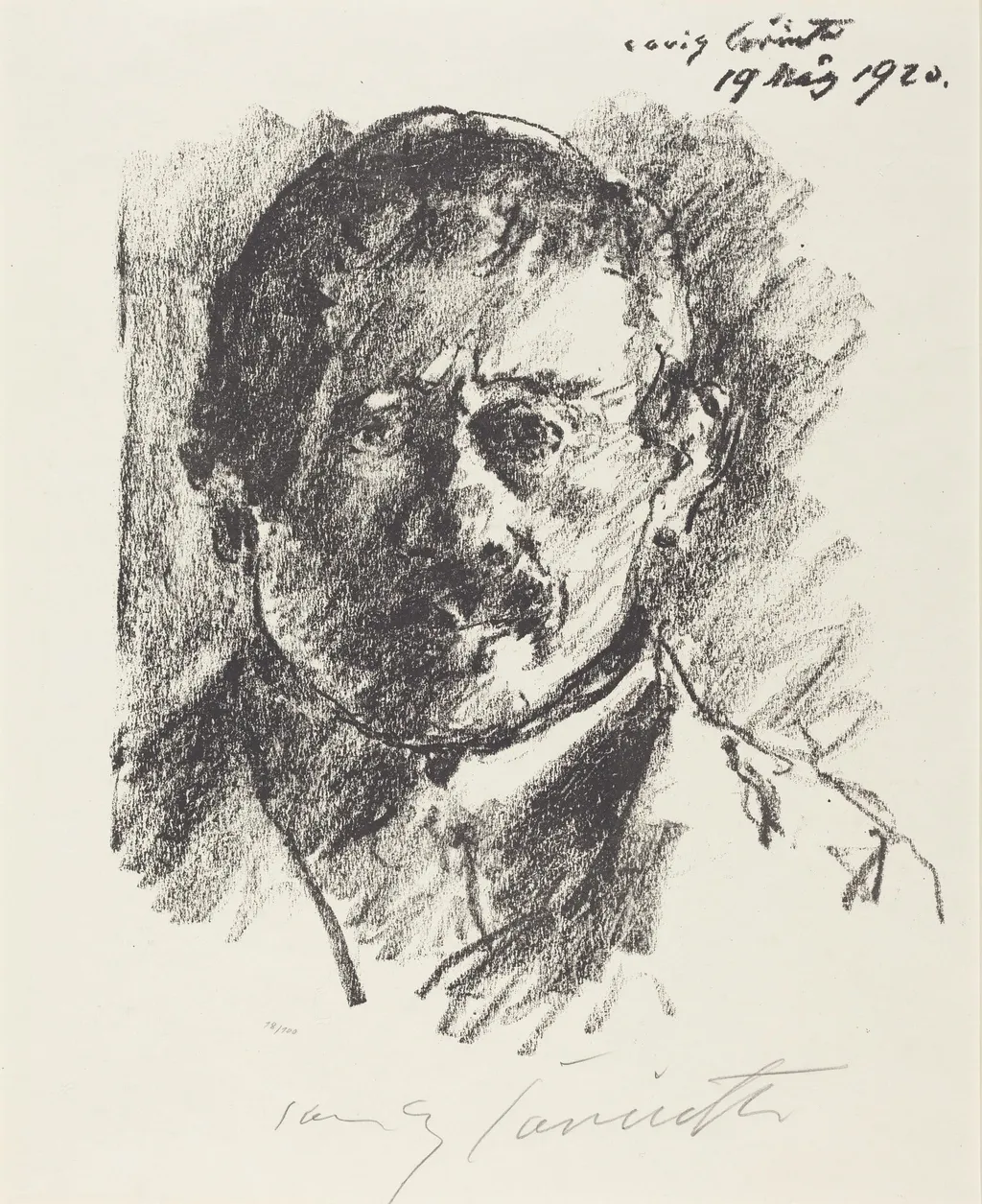
Selbstbildnis (Self-Portrait) is an ink print by Lovis Corinth. It dates from 1920 and is held in the collection of the National Gallery of Art.
About this work
The artist used only black marks on a light background, leaving some areas blank to show shadows.
This sketch shows a close-up face with a sharp hat and a high collar. The lines are loose and rough, almost like scribbles. The artist used only black marks on a light background, leaving some areas blank to show shadows.
The drawing is a self-portrait, but the artist’s name isn’t visible in the image. The top-right corner has a handwritten date: *1920*. It looks like it was made quickly, with quick strokes instead of careful details.
If you’re curious about how this was made, look up lithography.
Overview
Lovis Corinth’s 1920 lithograph titled *Selbstbildnis* is a black‑ink print that captures the artist’s own face in a brisk, gestural manner. The composition focuses closely on the head, framed by a sharply rendered hat and high collar, while the surrounding space remains largely blank, allowing the ink lines to suggest shadow and form.
Subject & Meaning
The work functions as a self‑portrait, presenting Corinth’s visage with an immediacy that reflects his personal artistic evolution after the stroke he suffered in 1911. The loose, almost scribbled lines convey a sense of introspection and resilience, emphasizing the artist’s continued engagement with his own image despite physical challenges.
Technique & Style
Executed as a lithograph, the piece relies solely on black ink applied to a light ground, with areas left untouched to create contrast. The handling of line is free and expressive, abandoning precise detailing in favor of rapid strokes that suggest volume and texture, characteristic of Corinth’s later graphic practice.
History & Provenance
Created in 1920, the lithograph bears a handwritten date in the upper right corner. At this time Corinth held the presidency of the Berlin Secession, a position he assumed after Max Liebermann. The work exemplifies his leadership within the Berlin avant‑garde and his shift toward more liberated graphic expression.
Context
Corinth’s career began in the naturalist tradition, later absorbing Impressionist and Expressionist tendencies during his studies in Munich and Paris. The *Selbstbildnis* reflects the stylistic transition that followed his 1911 stroke, when his art moved toward looser forms and heightened emotional content, aligning with broader trends in early‑20th‑century German art.
Artist & collection

Artist
Lovis Corinth was a German artist and writer whose mature work as a painter and printmaker realized a synthesis of impressionism and expressionism.

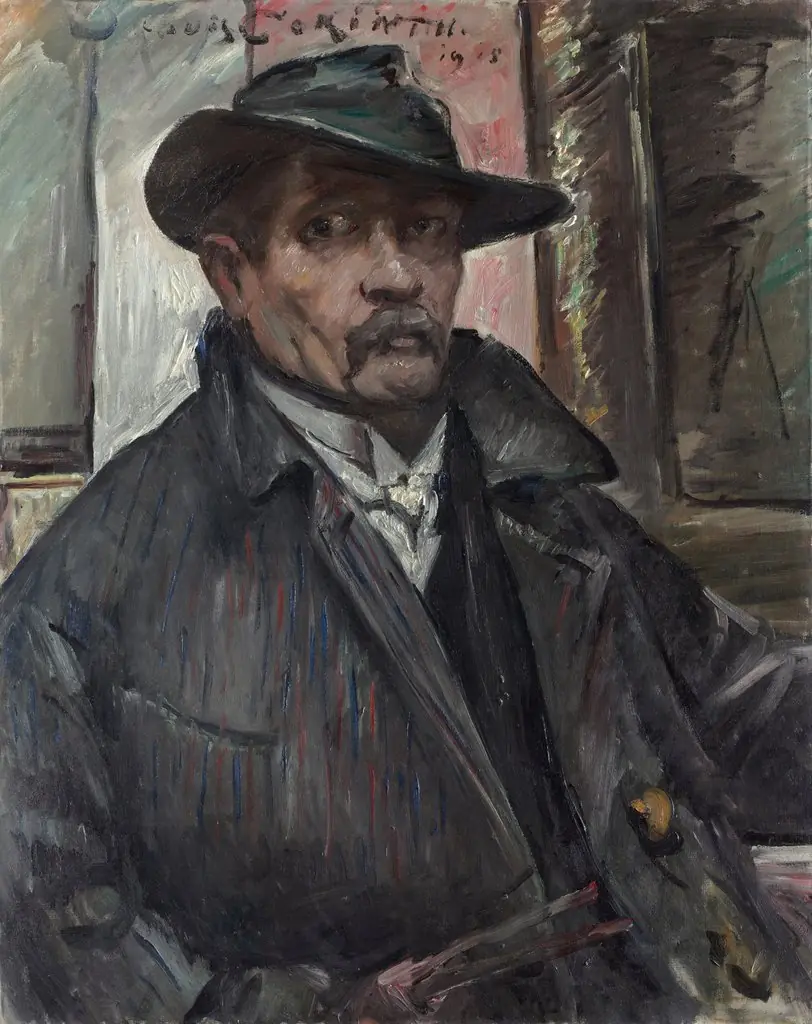
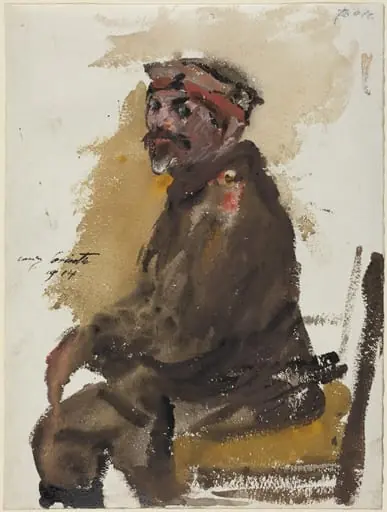
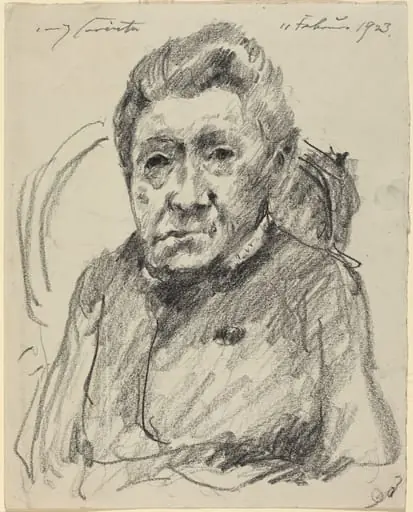
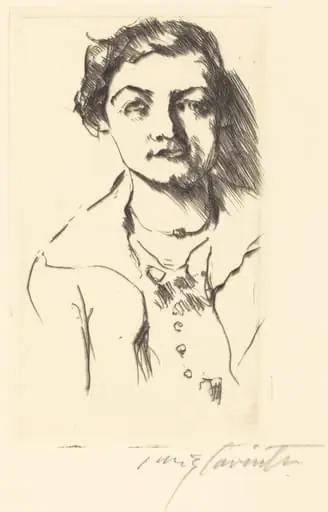
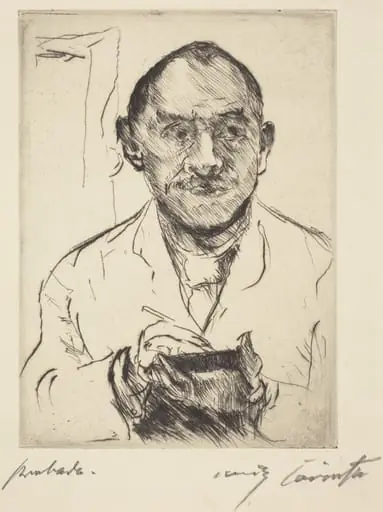 Selbstbildnis (Self-Portrait)
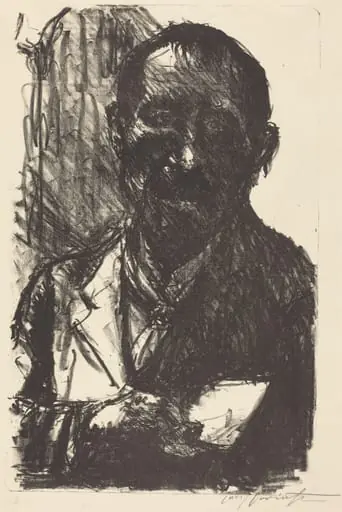 Selbstbildnis 1919 (Self-Portrait 1919)
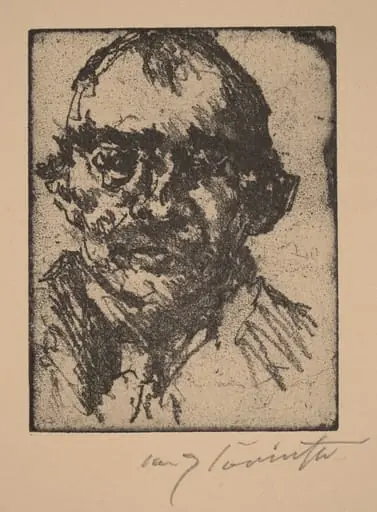 Selbstbildnis (Self-Portrait)
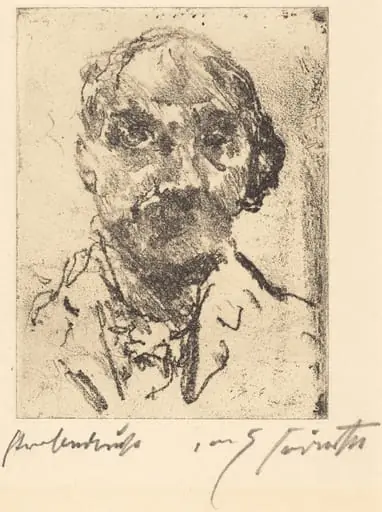 Selbstbildnis (Self-Portrait)
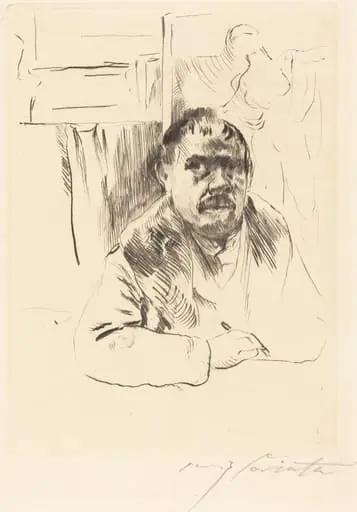 Selbstbildnis im Pelz (Self-Portrait in a Fur Coat)
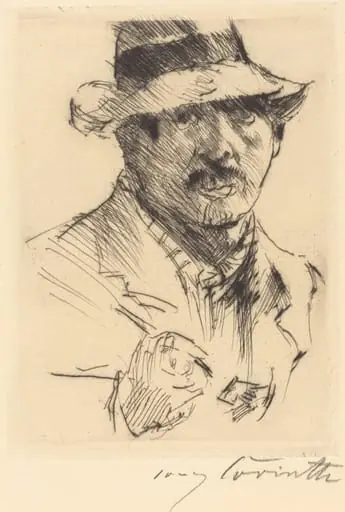 Selbstbildnis (Self-Portrait)
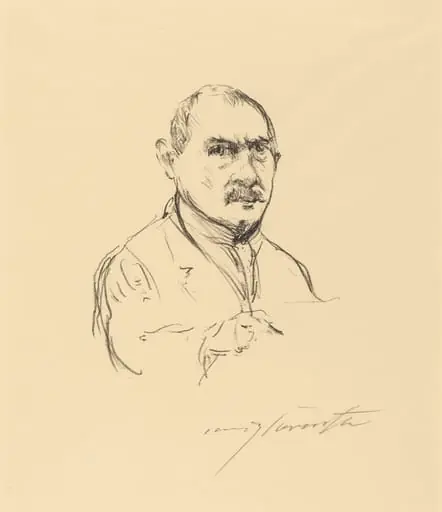 Selbstbildnis (Self-Portrait)
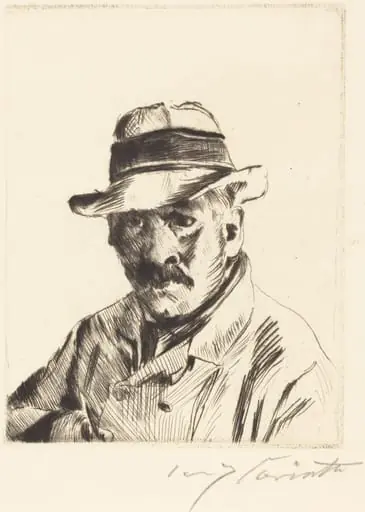 Selbstbildnis im Strohhut (Self-Portrait in a Straw Hat)
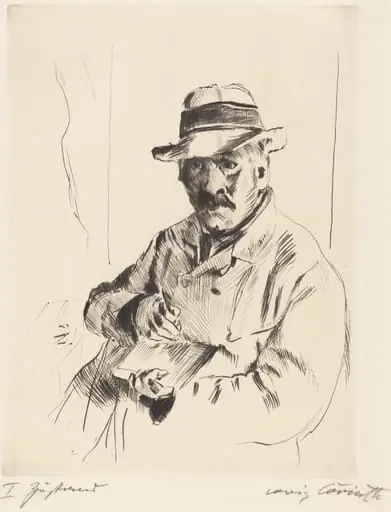 Selbstbildnis im Strohhut (Self-Portrait in a Straw Hat)
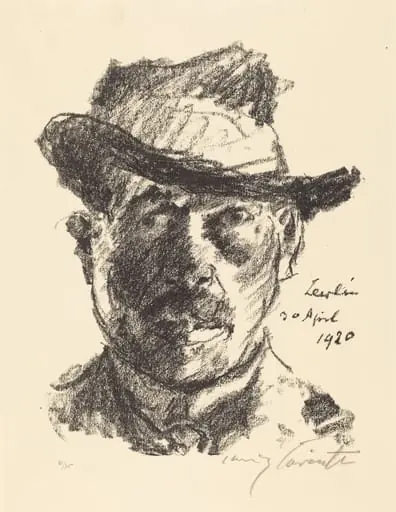 Selbstbildnis (Self-Portrait)