Artwork
Beatrix Pacheco d'Ascalona
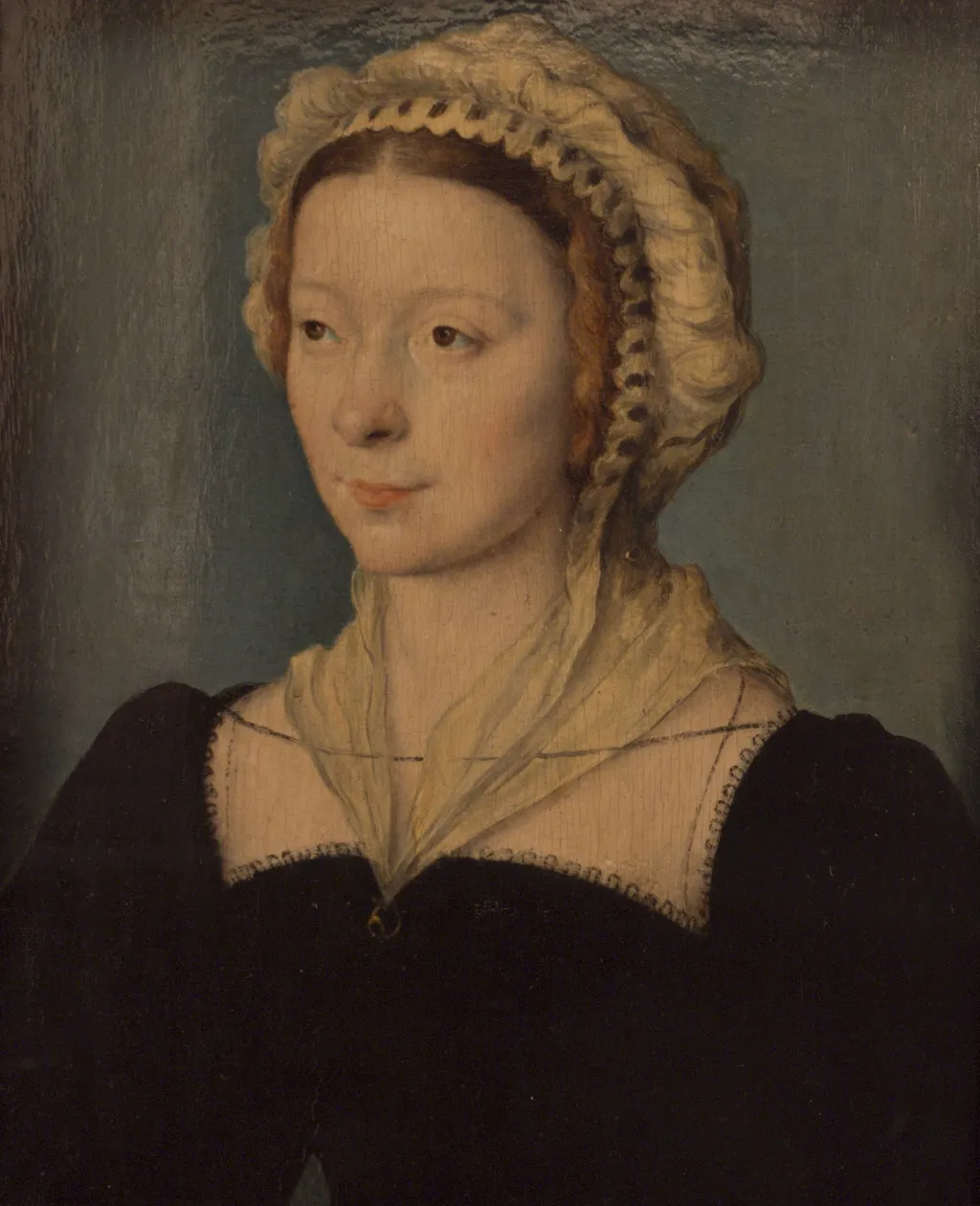
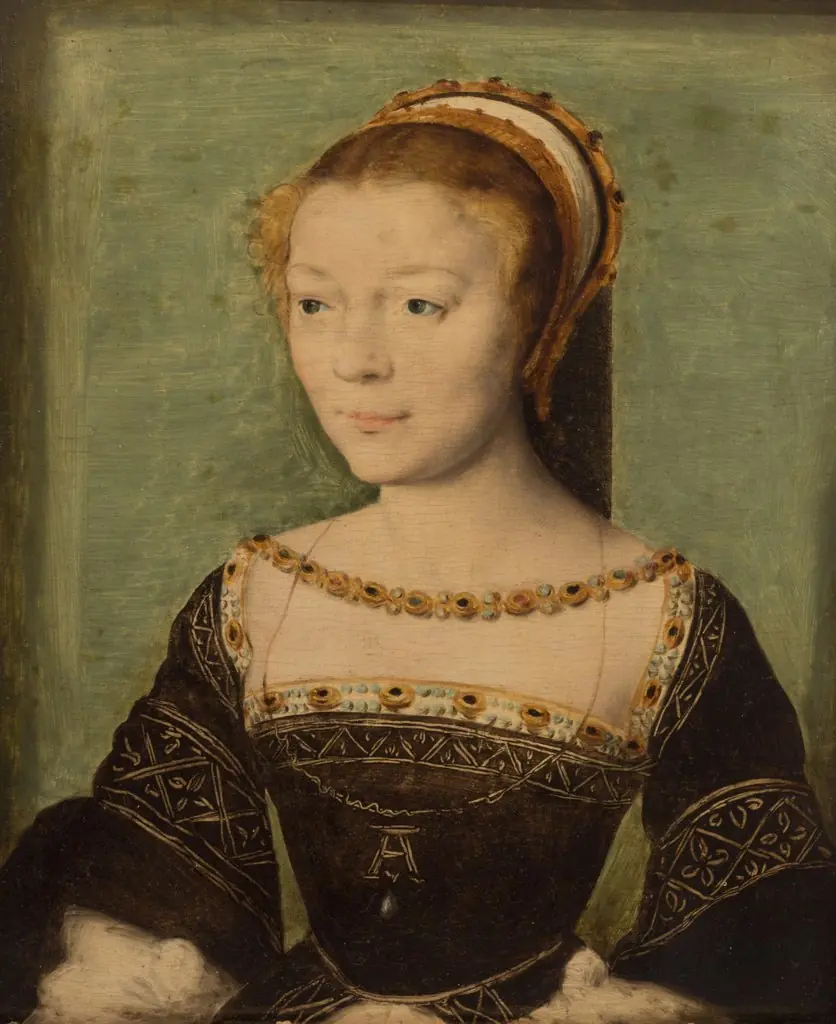
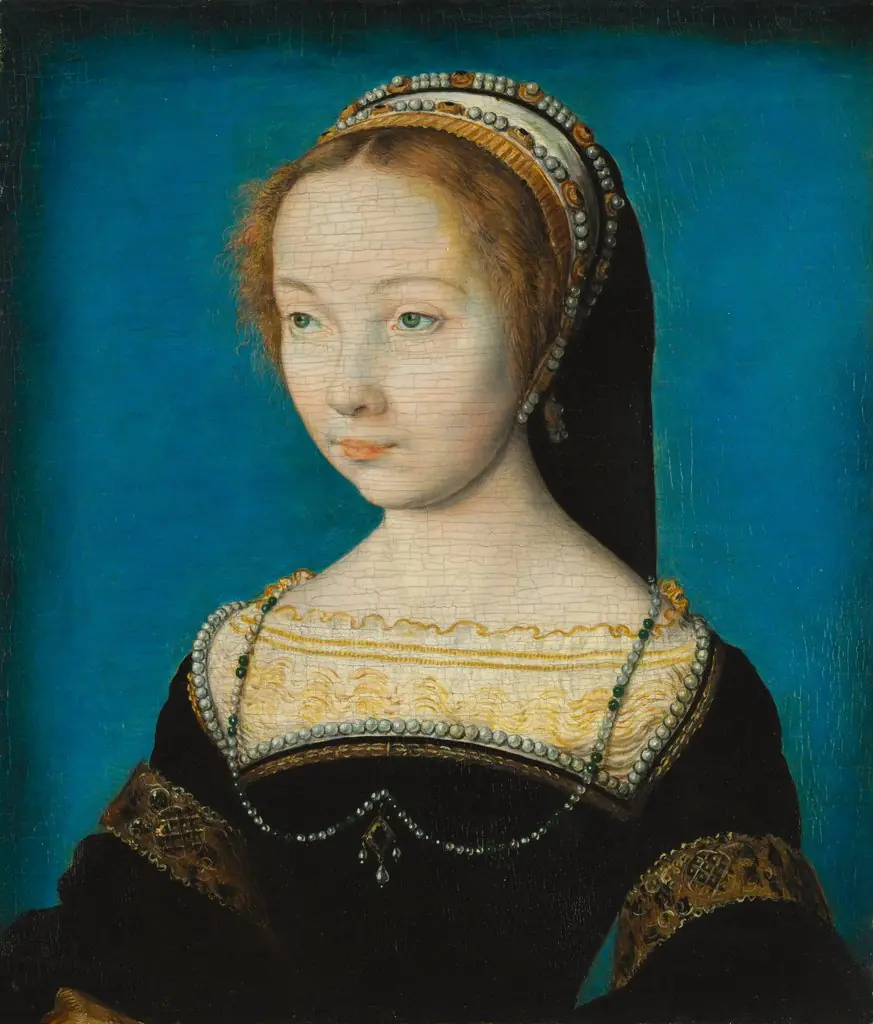
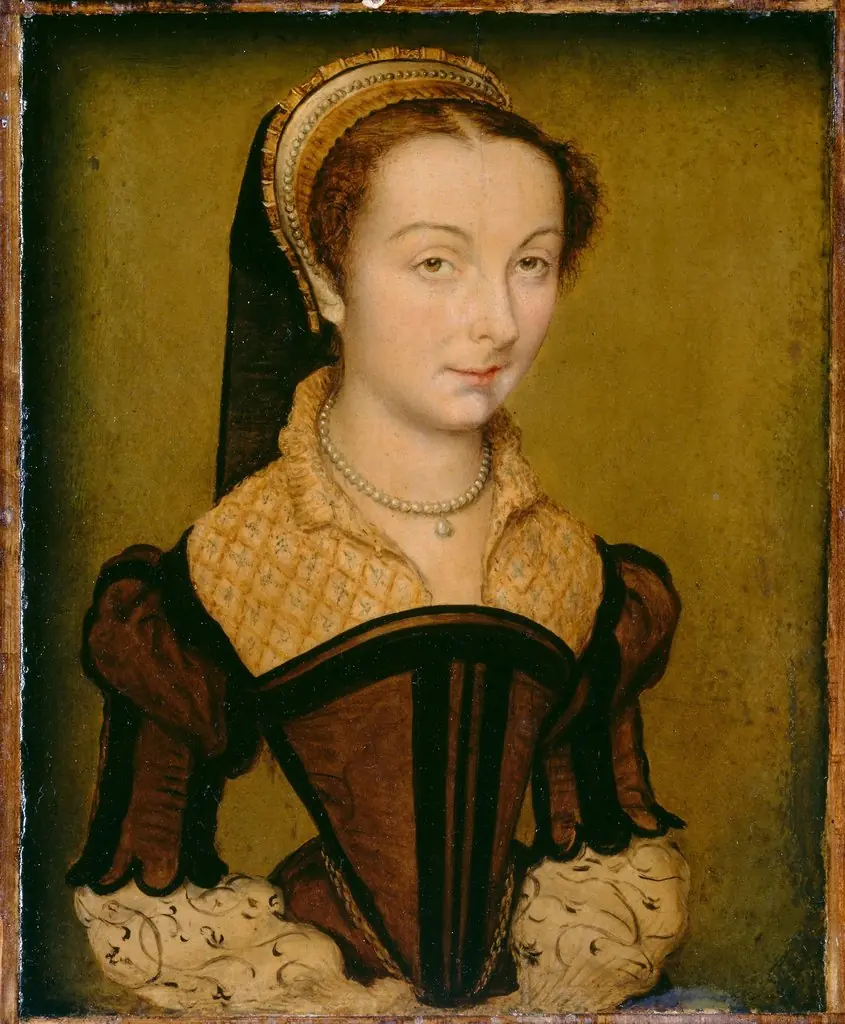
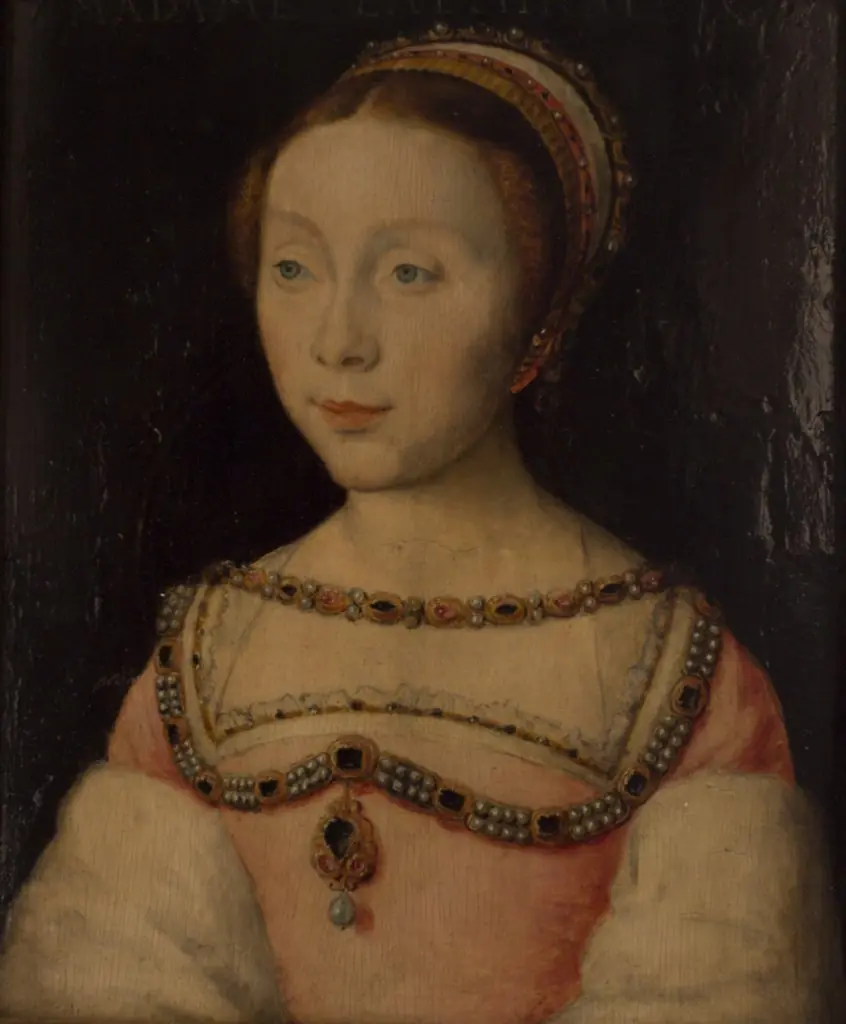
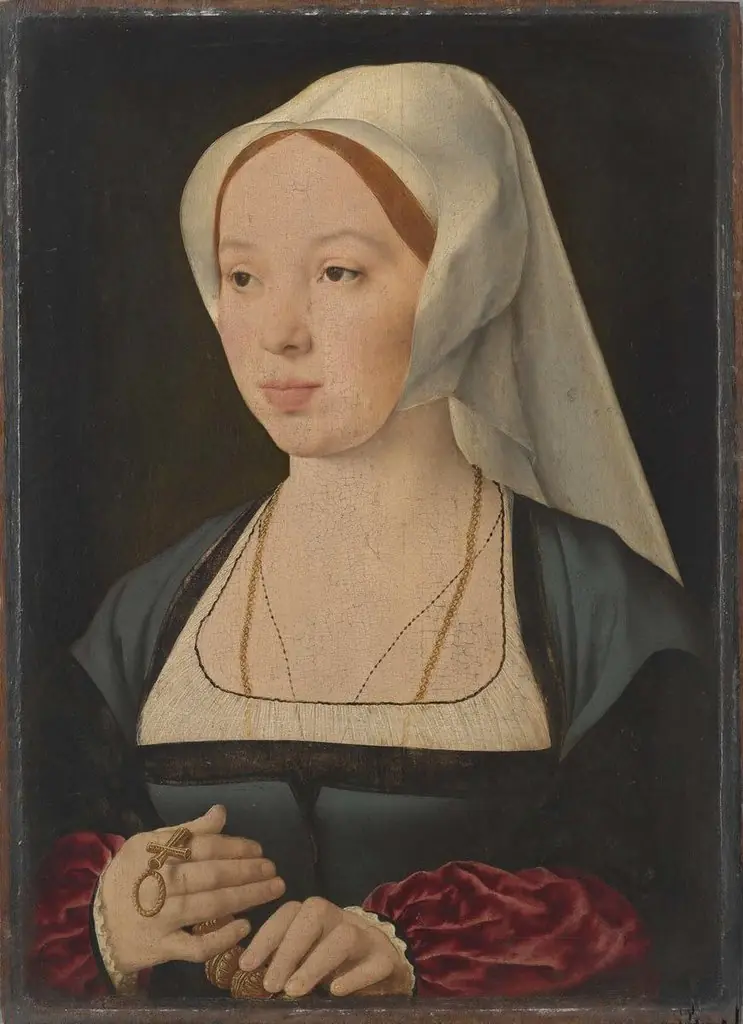
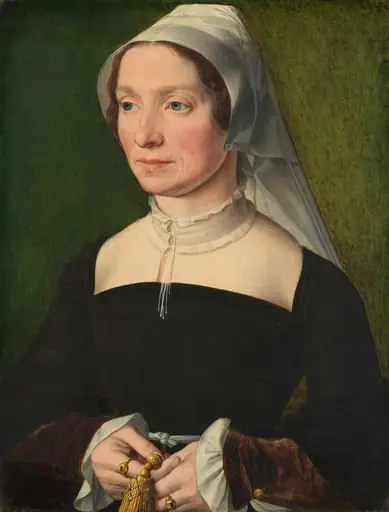
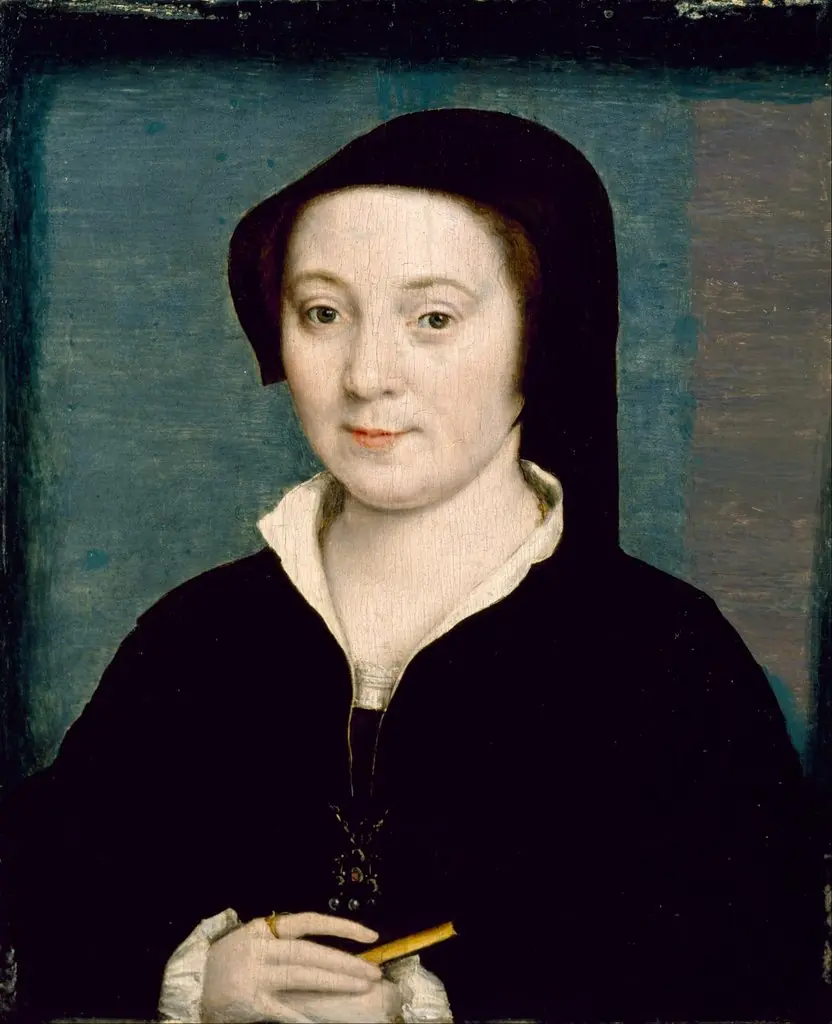
Beatrix Pacheco d'Ascalona is an oil painting by the Dutch Golden Age artist Corneille de Lyon. It dates from 1533 and is held in the collection of the Museum of the History of France.
About this work
If you're interested in learning more about this style of painting, you might want to look up the artist Corneille de Lyon.
The painting shows a woman with a black dress and a white head covering. The background is a blue wall.
The woman's face is painted with fine details, and her eyes are looking straight ahead. The painting is done in oil paint, and the style is characteristic of the 16th century.
If you're interested in learning more about this style of painting, you might want to look up the artist Corneille de Lyon.
Overview
This oil painting, dated 1533, is attributed to Corneille de Lyon and portrays a woman identified as Beatrix Pacheco d'Ascalona. Executed with precision typical of mid-16th-century French portraiture, it is part of the collection at the Palace of Versailles. The work reflects the quiet dignity and restrained elegance favored in elite portraiture of the period, emphasizing the sitter’s presence over elaborate ornamentation.
Subject & Meaning
The subject, Beatrix Pacheco d'Ascalona, is depicted in formal attire, suggesting her noble status. Her direct gaze and composed posture convey quiet authority, while the modest black dress and white head covering reflect both contemporary fashion and religious propriety. The absence of symbolic objects or background narrative focuses attention on her individuality, aligning with the era’s growing interest in personal identity within aristocratic circles.
Technique & Style
Corneille de Lyon employed fine brushwork to render the texture of fabric and the subtleties of facial features, particularly around the eyes and lips. The blue background, flat and unadorned, isolates the figure and enhances the focus on her expression. The oil medium allows for smooth transitions in tone, characteristic of the Lyon school’s emphasis on lifelike realism over theatricality, distinguishing it from Italian Renaissance conventions.
History & Provenance
The painting entered the French royal collection during the 16th century and has remained in state custody since, eventually finding its place in the Palace of Versailles. Its continuous presence in royal holdings suggests it was valued as a portrait of noble lineage. Documentation from the period confirms its attribution to Corneille de Lyon, whose workshop produced numerous portraits for the French court during the 1530s and 1540s.
Context
In early 16th-century France, portraiture became a tool for asserting social standing among the nobility. Corneille de Lyon emerged as a leading portraitist, favored by courtiers for his ability to capture likeness with restrained elegance. This work reflects a shift from medieval iconography toward individualized representation, influenced by Netherlandish realism and the humanist ideals gaining traction in French intellectual circles.
Legacy
The painting contributes to the understanding of French portraiture’s evolution before the full influence of the Italian Renaissance. Corneille de Lyon’s approach—focused on psychological presence and meticulous detail—helped define a distinctly French style. Beatrix Pacheco d'Ascalona’s portrait remains a key example of how elite women were visually framed as dignified, composed figures within the courtly culture of the Valois era.
Own this work as a print
Artist & collection
Artist
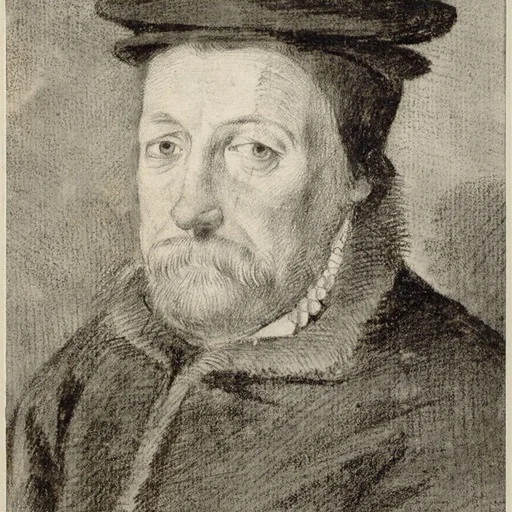
Corneille de Lyon was a Dutch painter of portraits who was active in Lyon, France, from 1533 until his death. In France and the Netherlands he is also still known as Corneille de La Haye after his birthplace, The Hague.