Artwork
Früchtestück
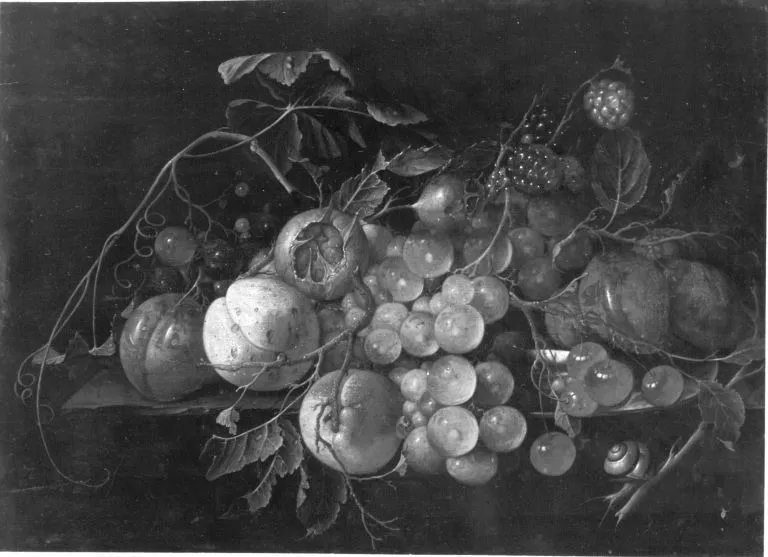
Früchtestück is an unspecified painting by the Dutch Golden Age artist Cornelis de Heem. It dates from 1663 and is held in the collection of the Bavarian State Painting Collections.
About this work
Overview
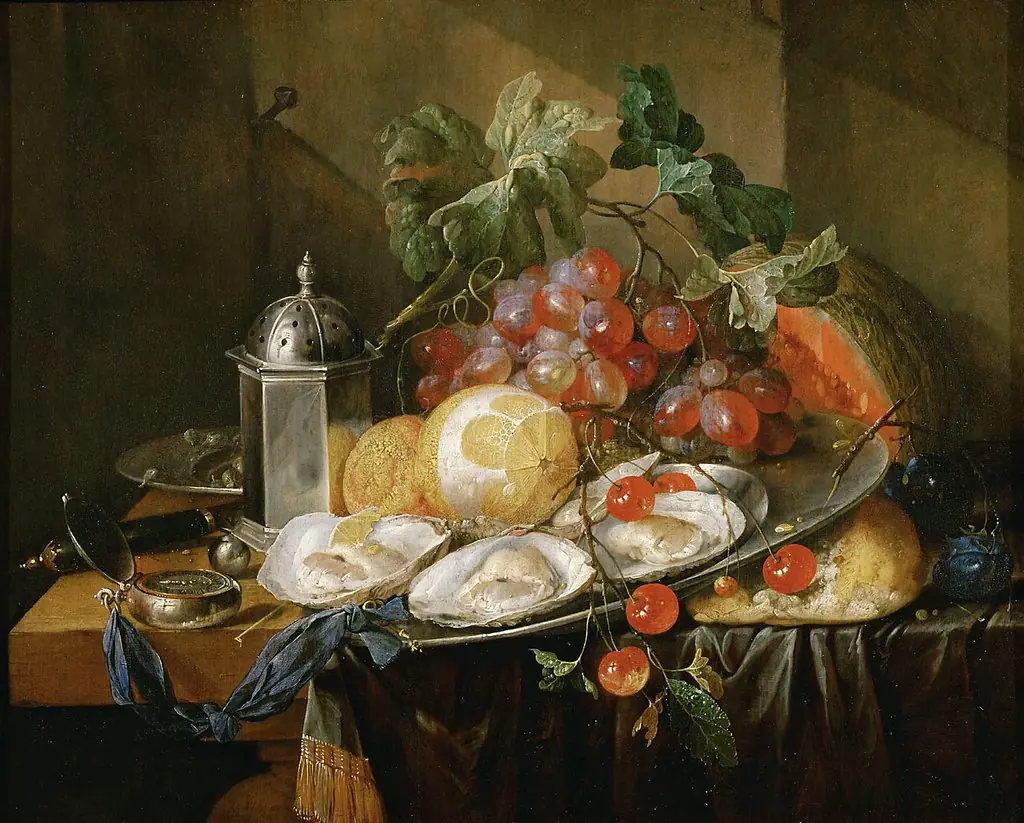
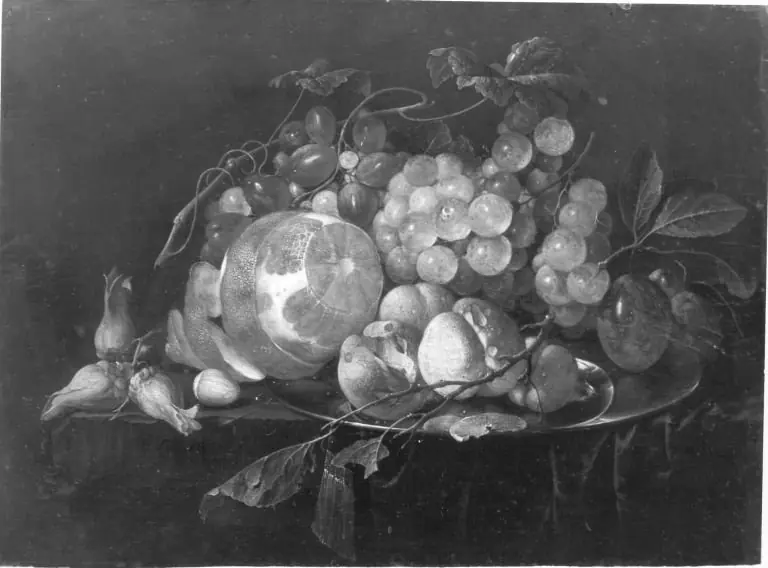
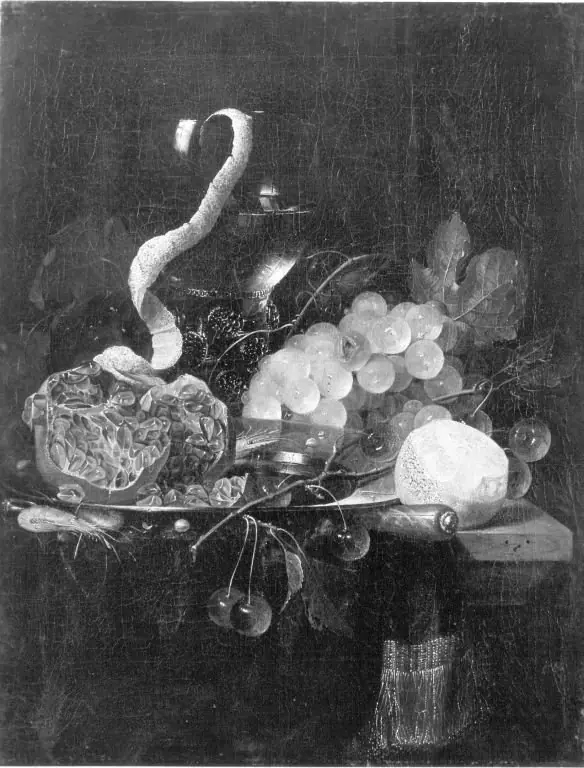
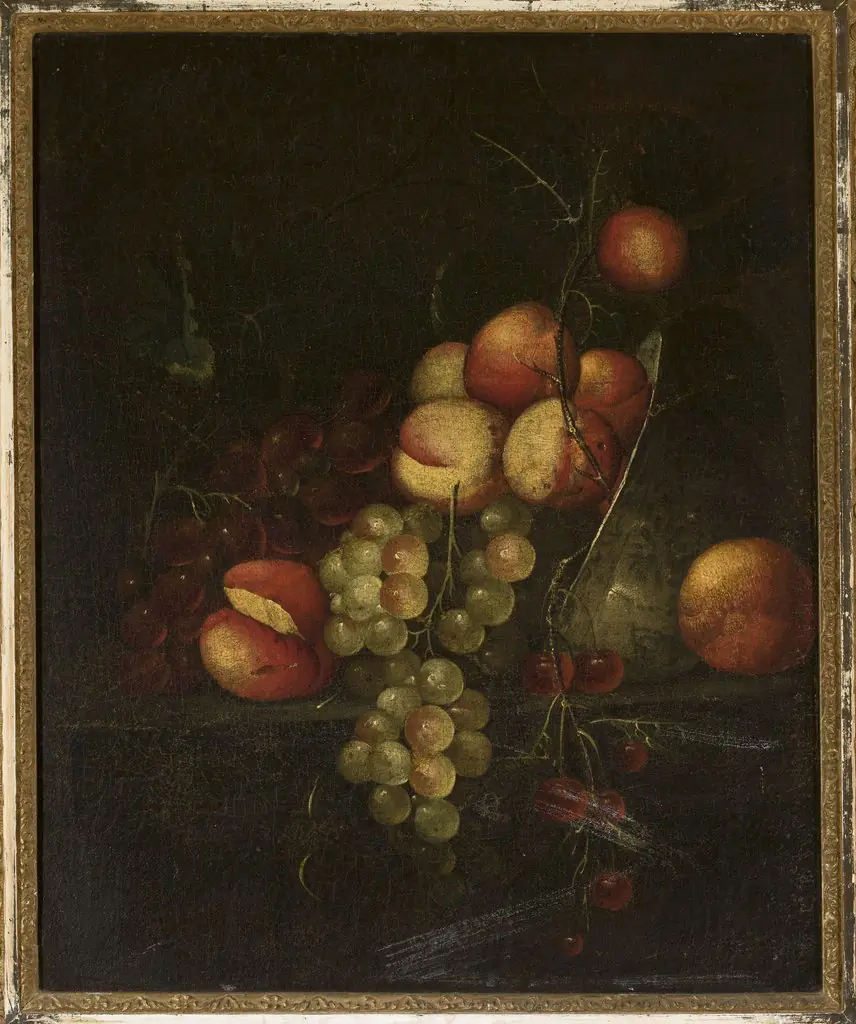
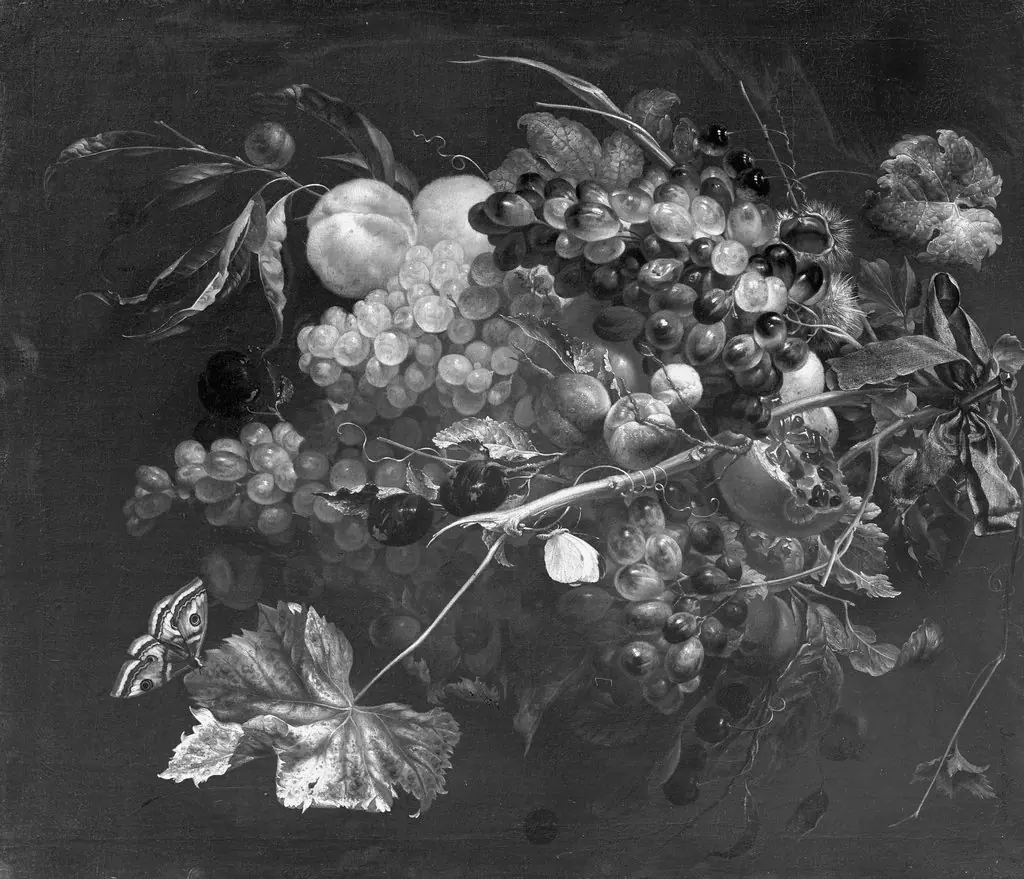
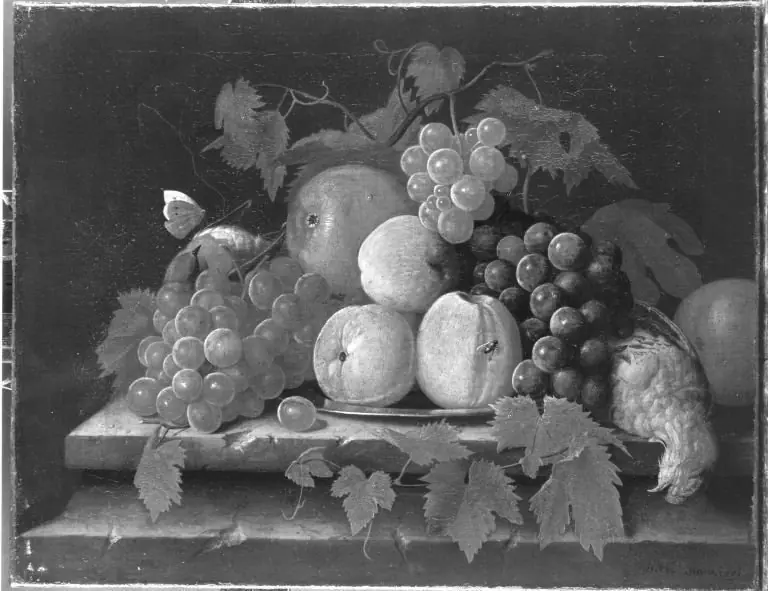
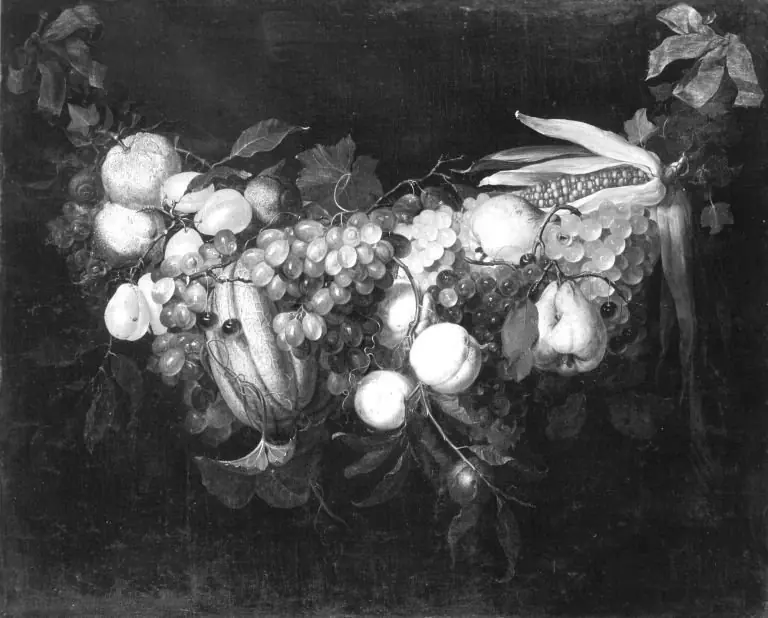
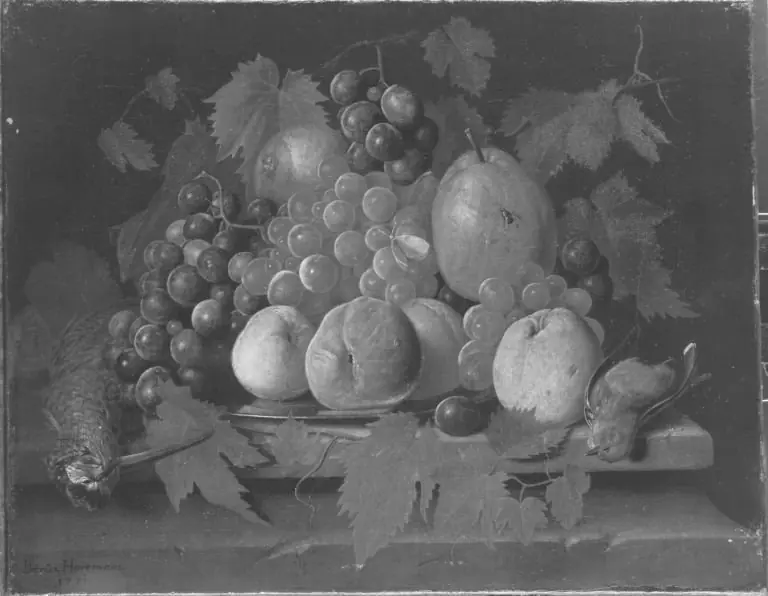
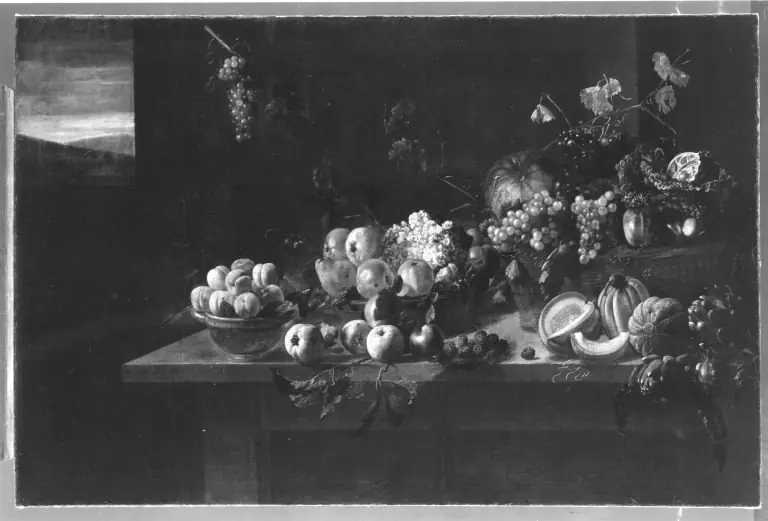
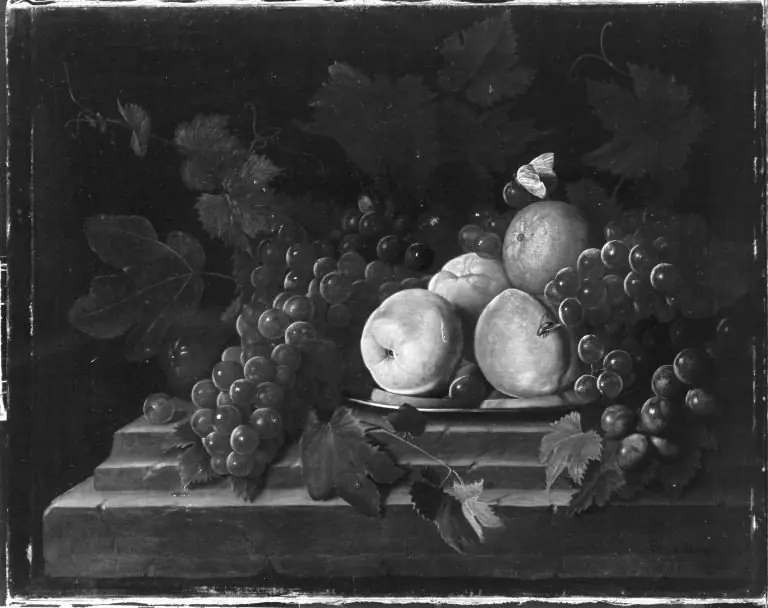
The composition features a dynamic arrangement of fruit cascading over a dark, shadowed ledge, creating a sense of abundance and immediacy.
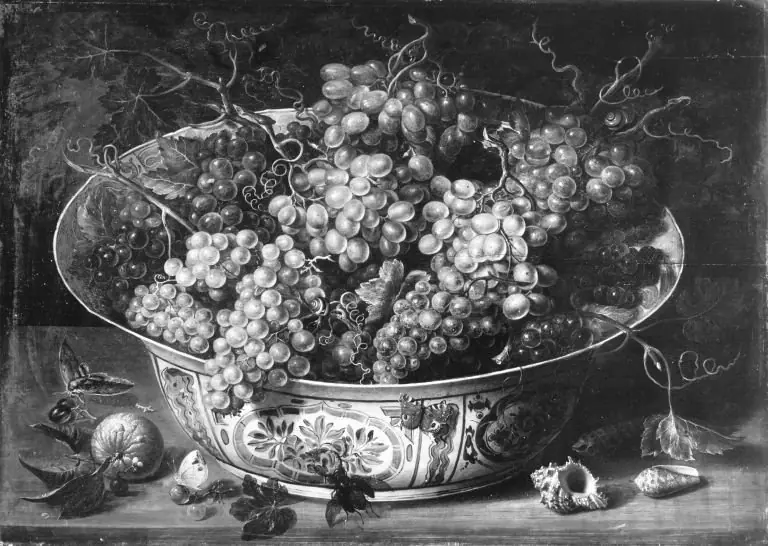
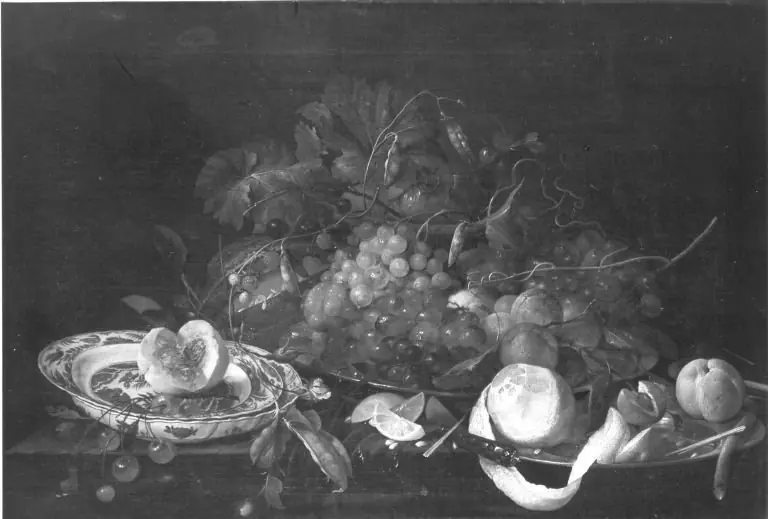
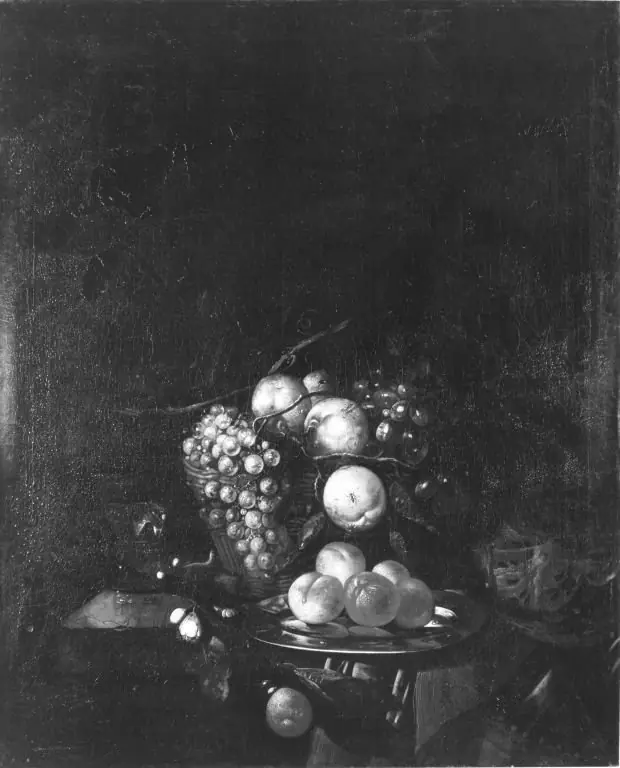
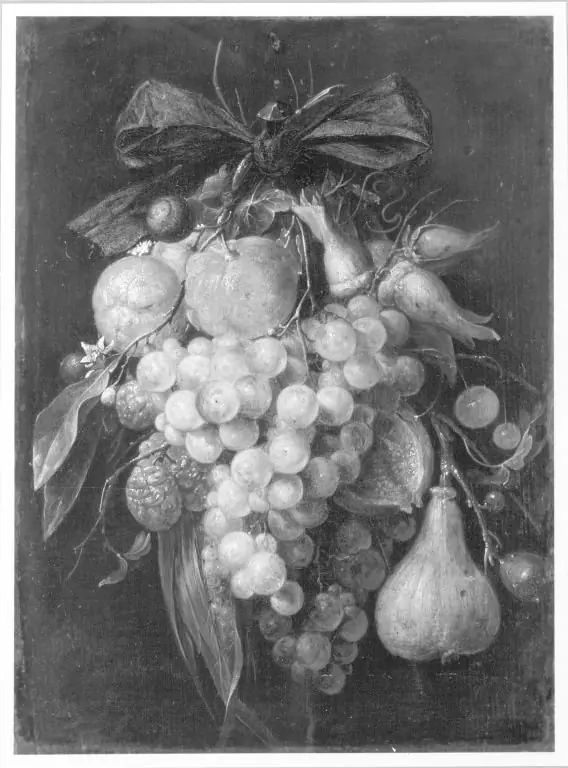
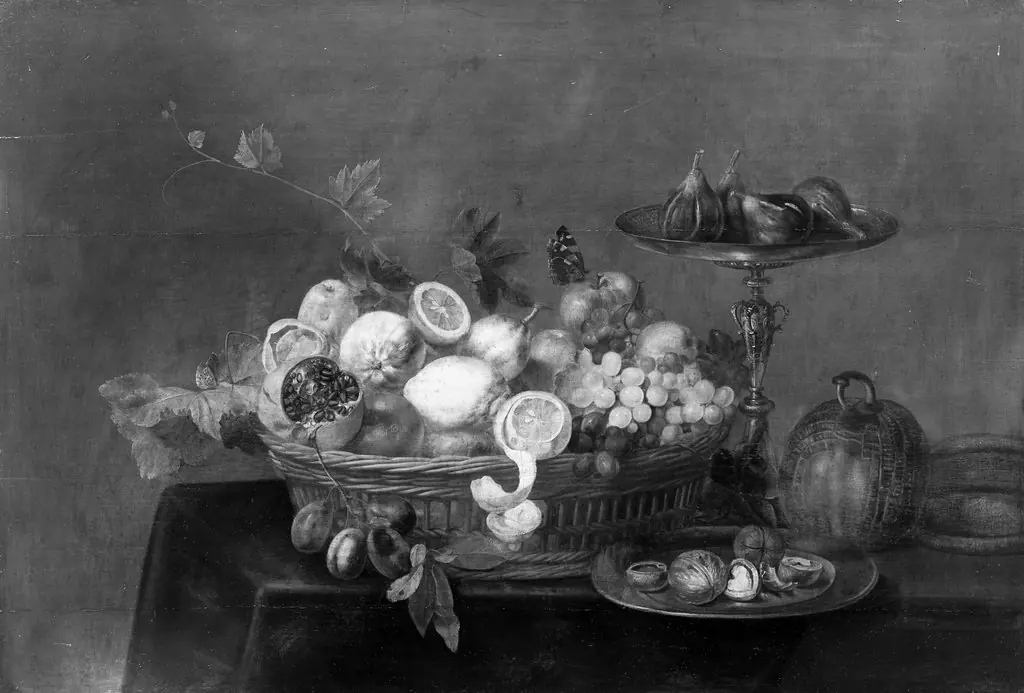
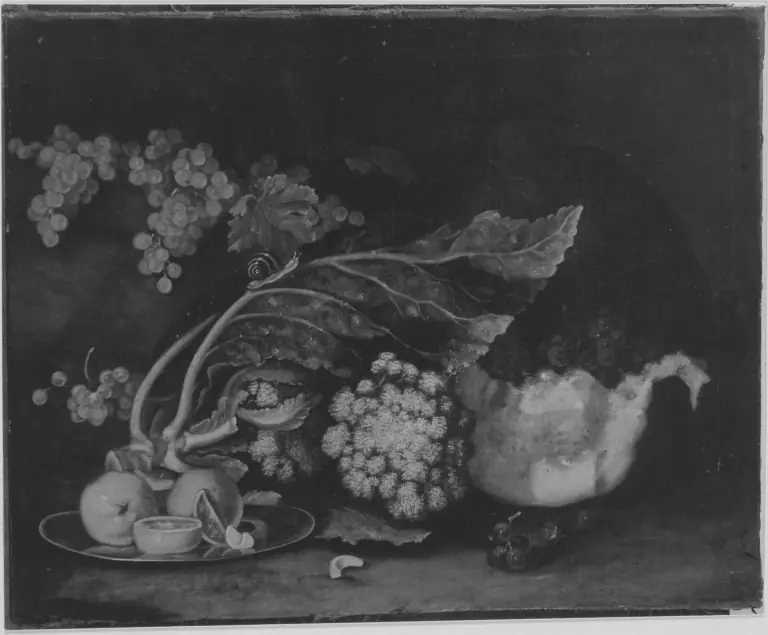
Cornelis de Heem's 'Früchtestück' (1663) is a quintessential example of Dutch Golden Age still life, showcasing the artist's mastery in rendering naturalistic textures and light. The composition features a dynamic arrangement of fruit cascading over a dark, shadowed ledge, creating a sense of abundance and immediacy. Prominent elements include large clusters of grapes, a substantial squash, a melon, and scattered plums, all interwoven with leaves that exhibit meticulous attention to detail, including curled edges and varied surface textures. De Heem employs a dramatic chiaroscuro technique, directing a focused light source to illuminate the glossy skins of the fruit, enhancing their three-dimensionality and tactile appeal against the deep background. Executed in 1663, this work reflects the height of the artist's career, bridging the Flemish Baroque tradition of opulent display with the precise observational style characteristic of Dutch painting. The painting demonstrates de Heem's ability to transform ordinary produce into a study of form, color, and light, solidifying his reputation within the 17th-century still life genre.
Subject & Meaning
The canvas depicts a generous spill of assorted fruit: clustered grapes, a bulbous squash, a ripe melon, and several plums, interspersed with lifelike foliage whose edges curl subtly. While the painting does not convey a narrative, the abundance of produce reflects the 17th‑century fascination with natural bounty and the symbolic associations of fruit with prosperity and the fleeting nature of earthly pleasures.
Technique & Style
De Heem employs a pronounced chiaroscuro, allowing light to strike the fruit’s surfaces and create a glossy, three‑dimensional effect. The contrast between the illuminated produce and the dark background intensifies the colors, while the fine rendering of leaf veins and texture demonstrates the artist’s skill in naturalistic detail characteristic of the Dutch Golden Age still‑life tradition.
History & Provenance
Created in 1663, the painting entered the Alte Pinakothek’s holdings at an unspecified later date, becoming part of the museum’s extensive Baroque collection. Its attribution to Cornelis de Heem aligns with the artist’s known oeuvre of richly composed fruit still‑lifes, confirming its place within the broader trajectory of 17th‑century Northern European art.
Artist & collection

Artist
Cornelis de Heem was a still-life painter associated with both Flemish Baroque and Dutch Golden Age painting.