Artwork
Madame Van Donick
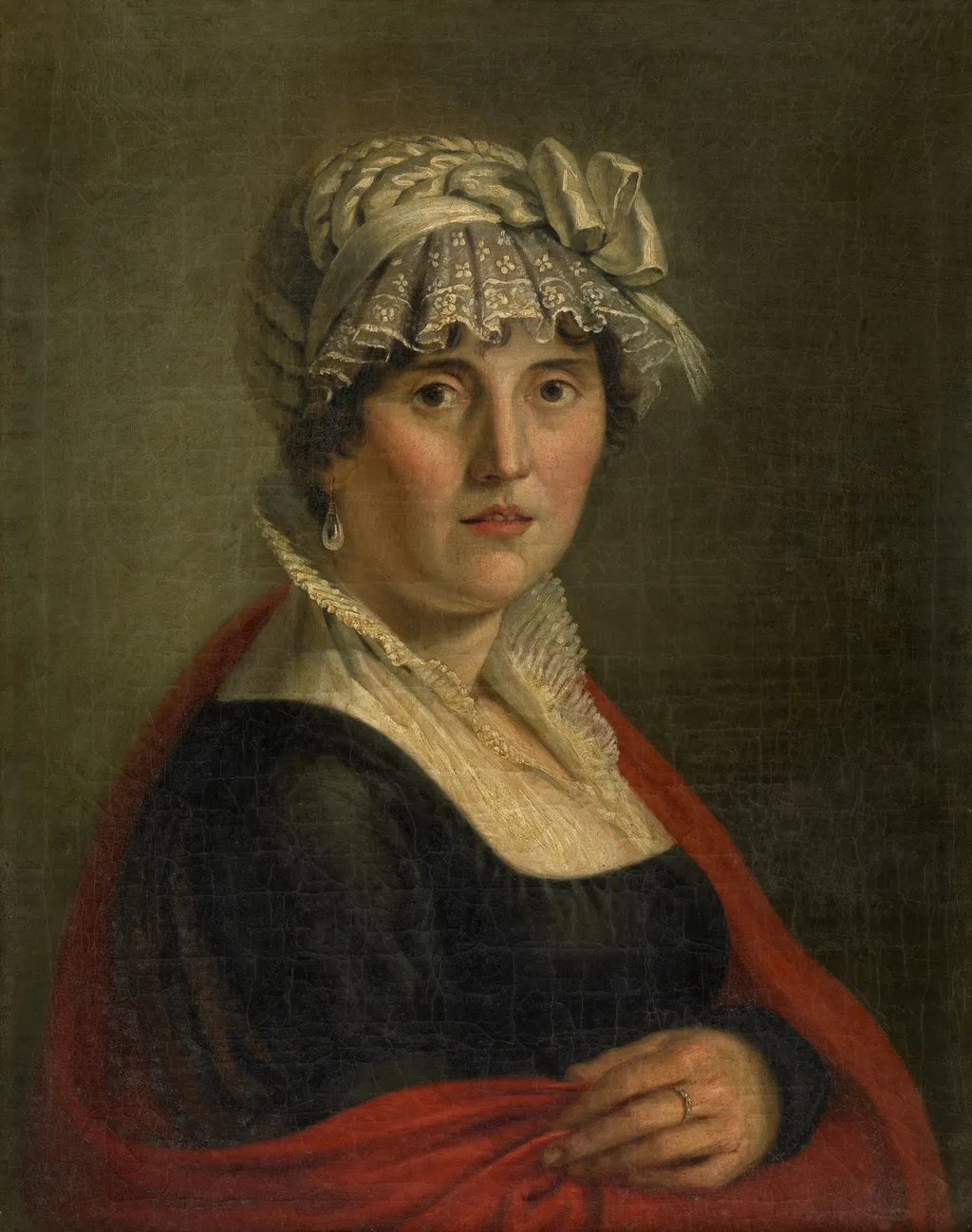
Madame Van Donick is an oil painting by the Biedermeier artist Cornelis Groenendael. It dates from 1810 and is held in the collection of the Royal Museum of Fine Arts Antwerp.
About this work
To learn more about the artist's use of chiaroscuro, impasto, and glazing techniques, explore the works of Cornelis Groenendael.
This portrait painting shows a woman wearing a black dress with a white lace collar and a red shawl. She has a ring on her left hand and is adorned with a white lace bonnet and dangling earrings. The background is a muted brown color.
The woman's attire and the style of the painting suggest that it was created in the early 19th century. The artist has used oil paint to create a realistic and detailed depiction of the subject.
The painting is held at the Royal Museum of Fine Arts Antwerp. To learn more about the artist's use of chiaroscuro, impasto, and glazing techniques, explore the works of Cornelis Groenendael.
Overview
Cornelis Groenendael’s oil portrait, titled Madame Van Donick, dates from 1810 and is part of the collection of the Royal Museum of Fine Arts in Antwerp. The work presents a single female sitter rendered in a realistic manner typical of early‑nineteenth‑century portraiture.
Subject & Meaning
The figure is dressed in a black gown trimmed with a white lace collar, complemented by a red shawl and a white lace bonnet. A ring on her left hand and dangling earrings accentuate her status, while the muted brown backdrop focuses attention on her attire and facial expression.
Technique & Style
Groenendael employed oil paint to achieve fine detail and subtle modeling, using layered glazing to render the textures of lace and fabric. The handling of light and shadow suggests a restrained use of chiaroscuro, enhancing the three‑dimensionality of the sitter.
History & Provenance
Since its creation in 1810, the portrait has remained in the public domain, eventually entering the holdings of the Royal Museum of Fine Arts Antwerp, where it is displayed as part of the museum’s early‑19th‑century Dutch‑Flemish collection.
Own this work as a print
Artist & collection

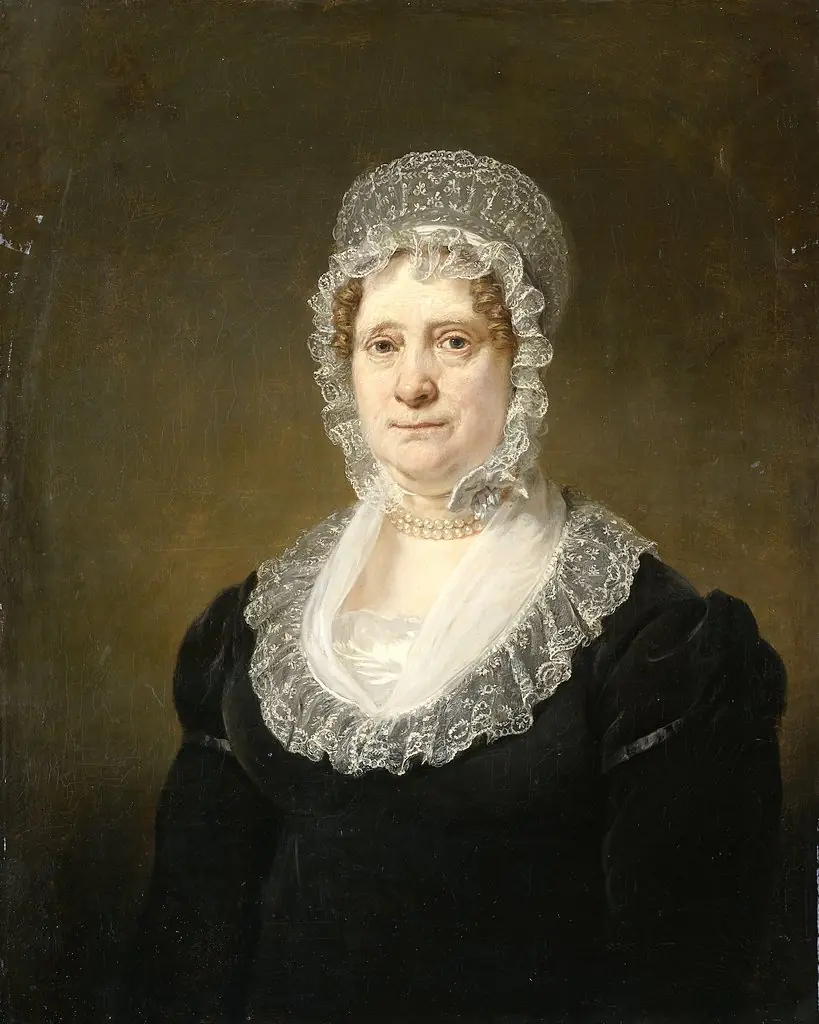 Portrait of Sara de Haan, Widow of the Amsterdam Underwriter Cornelis Hartsen
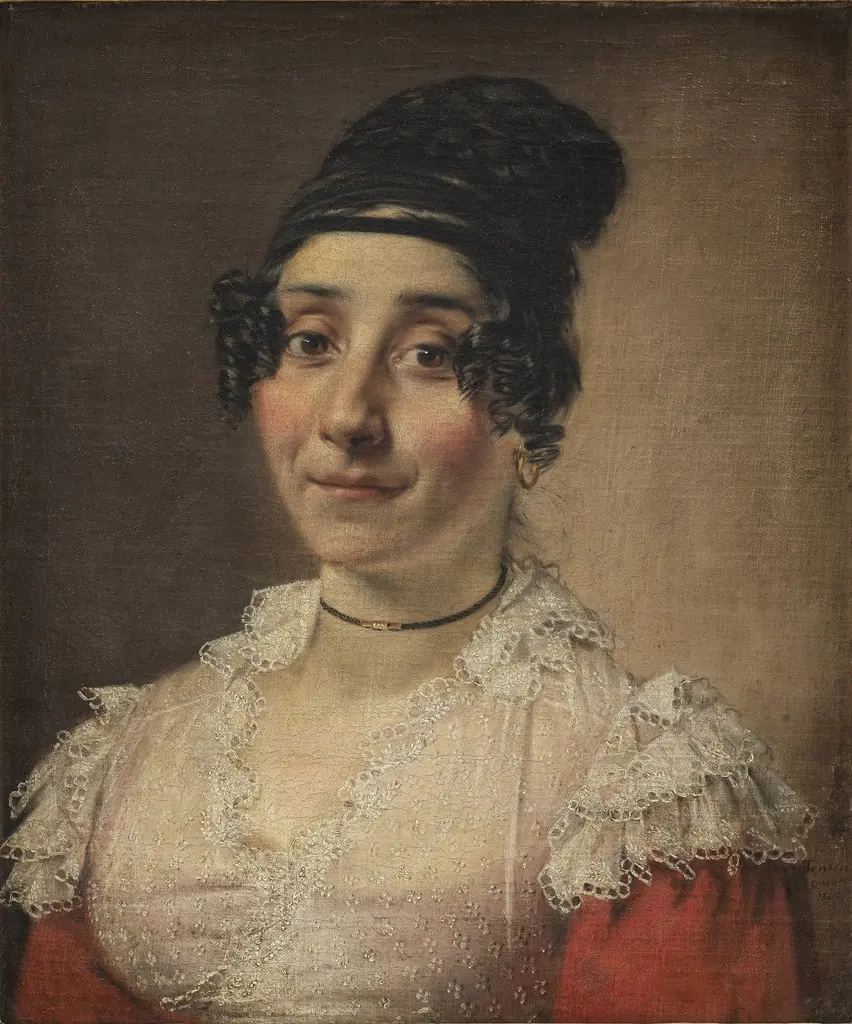 Portræt af fru Gumperd
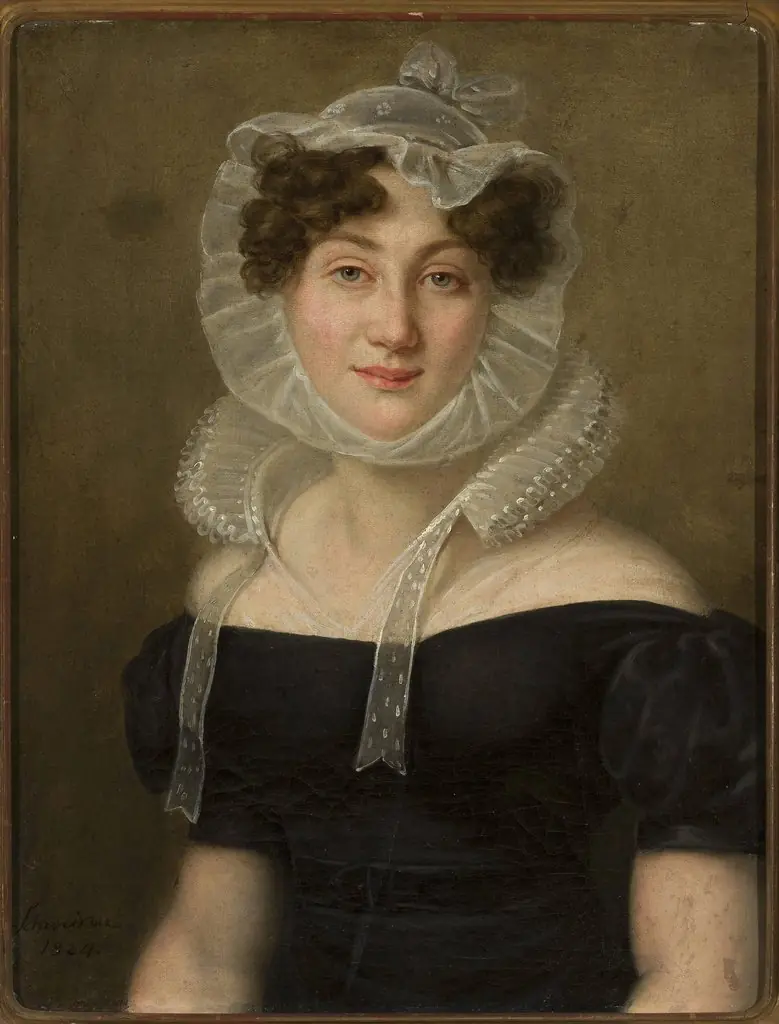 Portrait of a lady in a cap
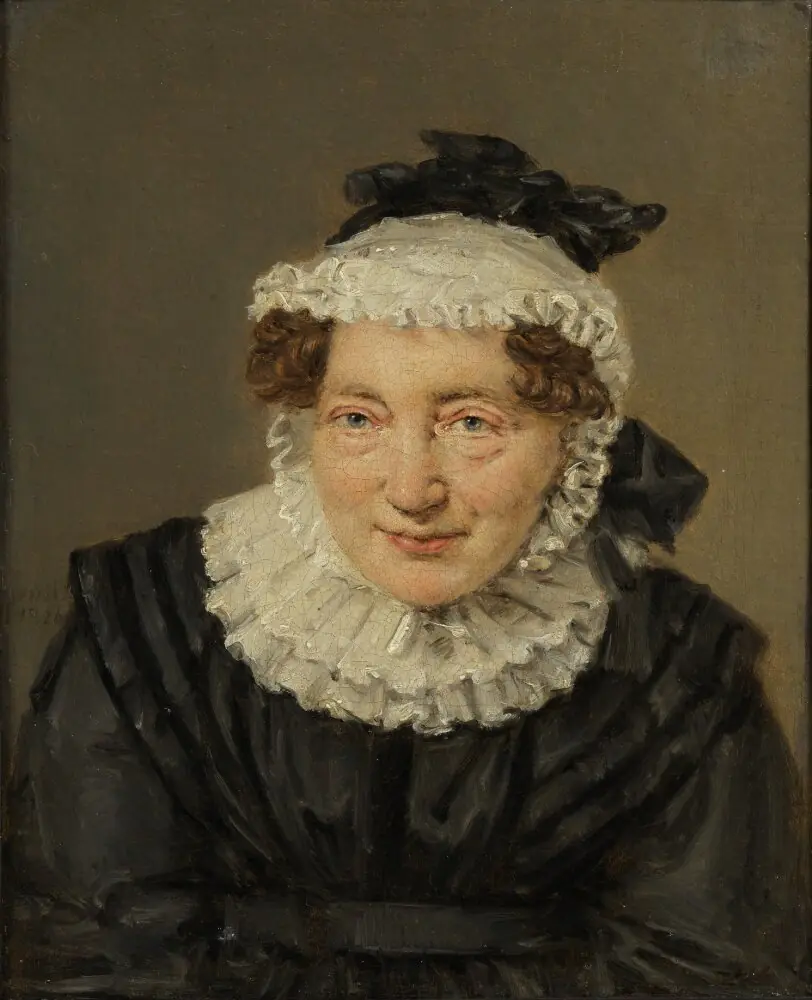 The Professor’s Wife Elisabeth Christine Sophie Horrebow, née Manthey
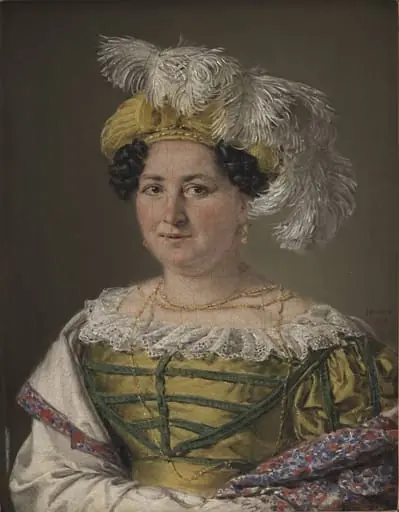 Portrait of Mrs. Pauline Hagen
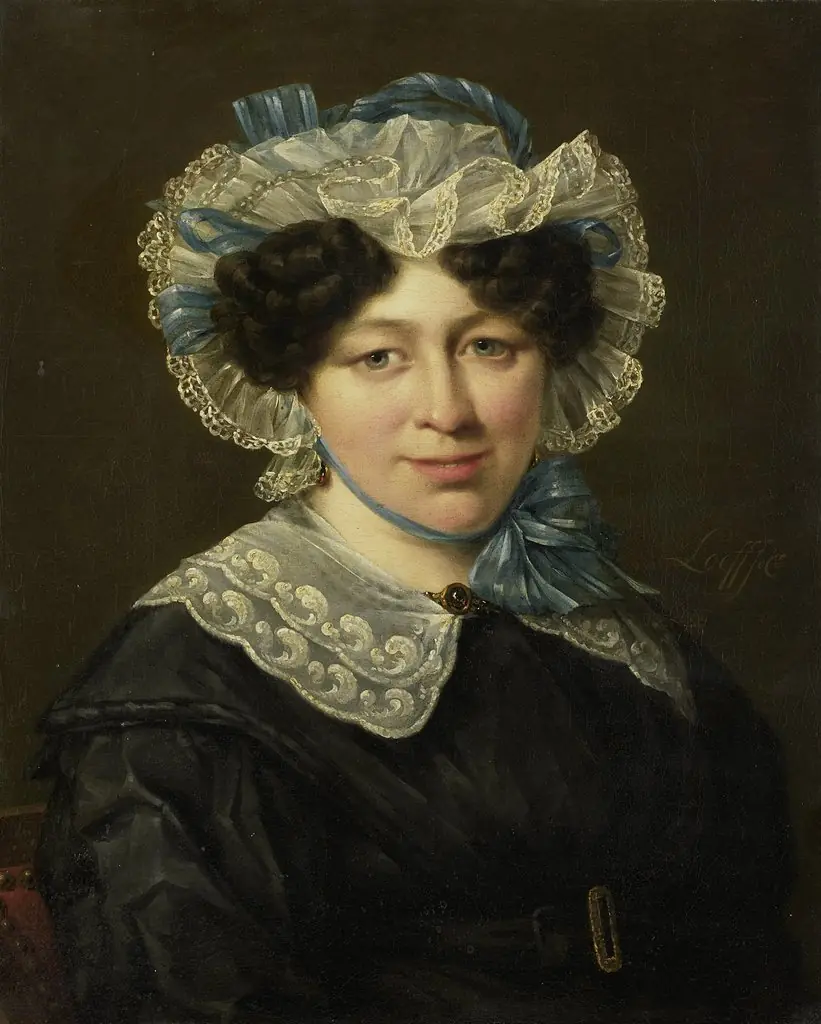 Portrait of Maria Adriana van der Sluys, Wife of Hermanus Martinus Eekhout
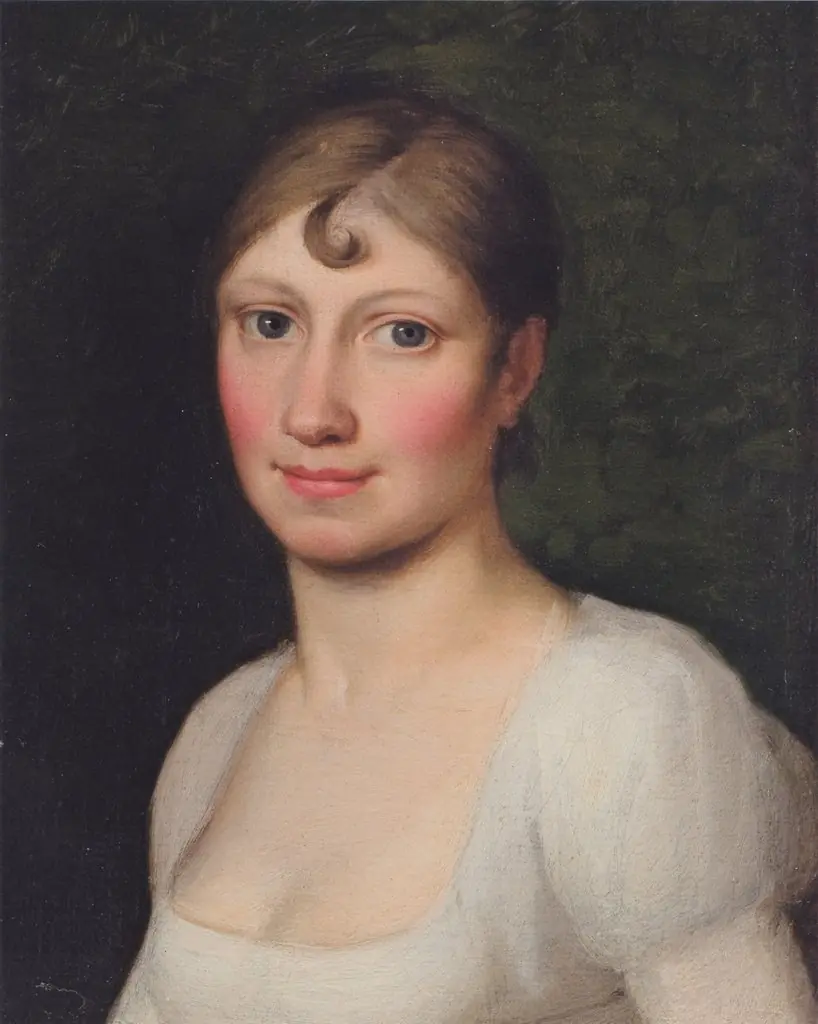 Christine Rebekka Eckersberg, f. Hyssing, kunstnerens første hustru
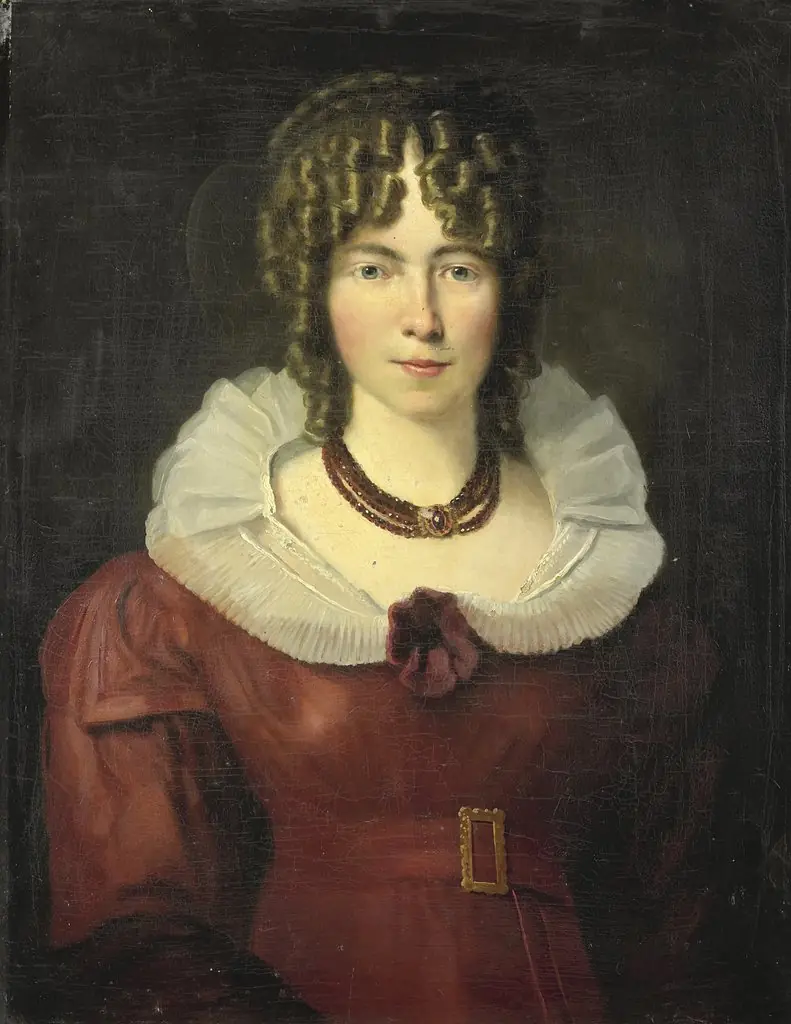 Portrait of a young Woman
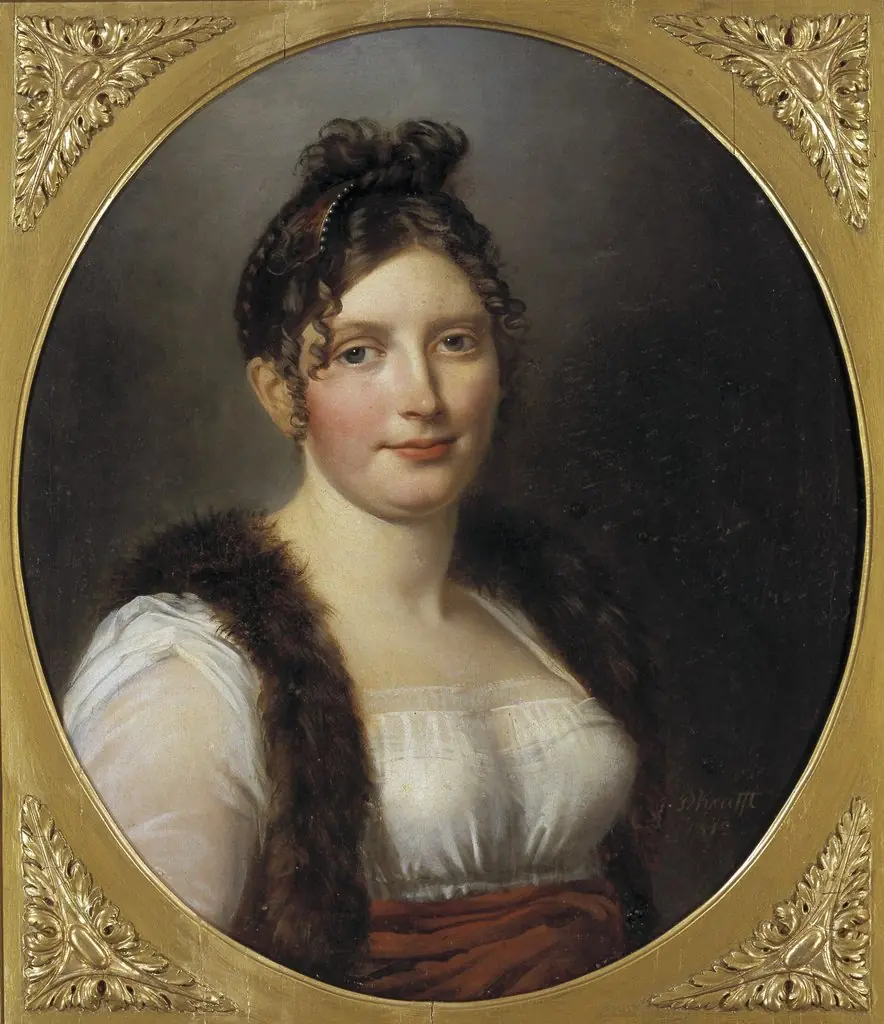 Catharina Charlotta Bågh (1777-1816), gift med friherre Pehr Erik Skjöldebrand
 Portrait of a lady
 Portrait of a Woman
 Portrait of a woman