Artwork
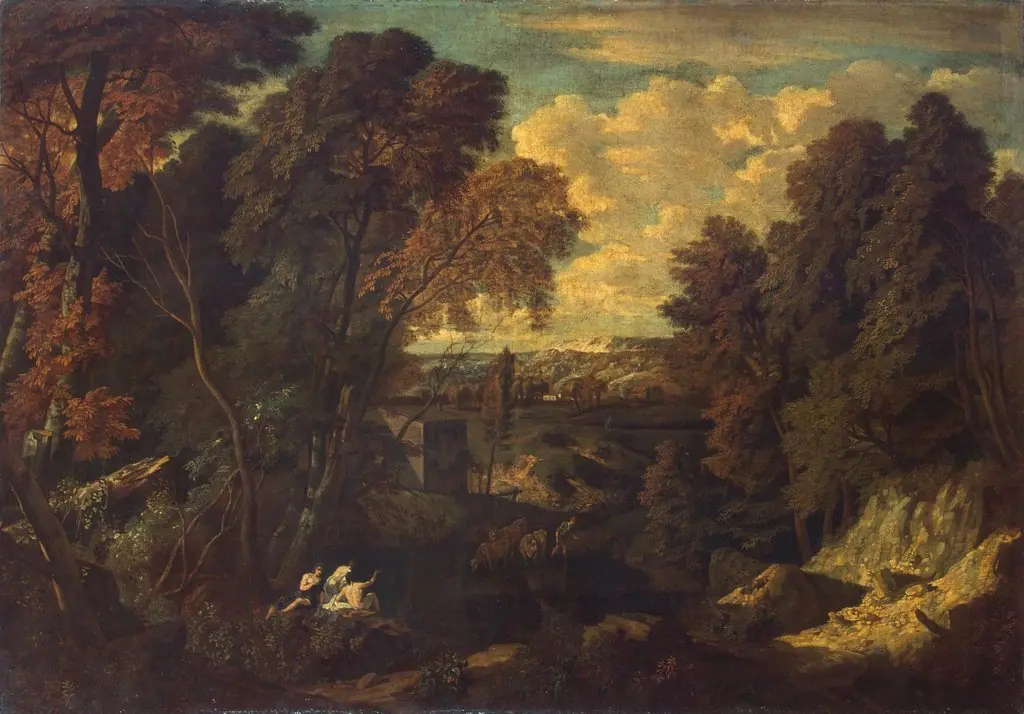
Forest Landscape with a River
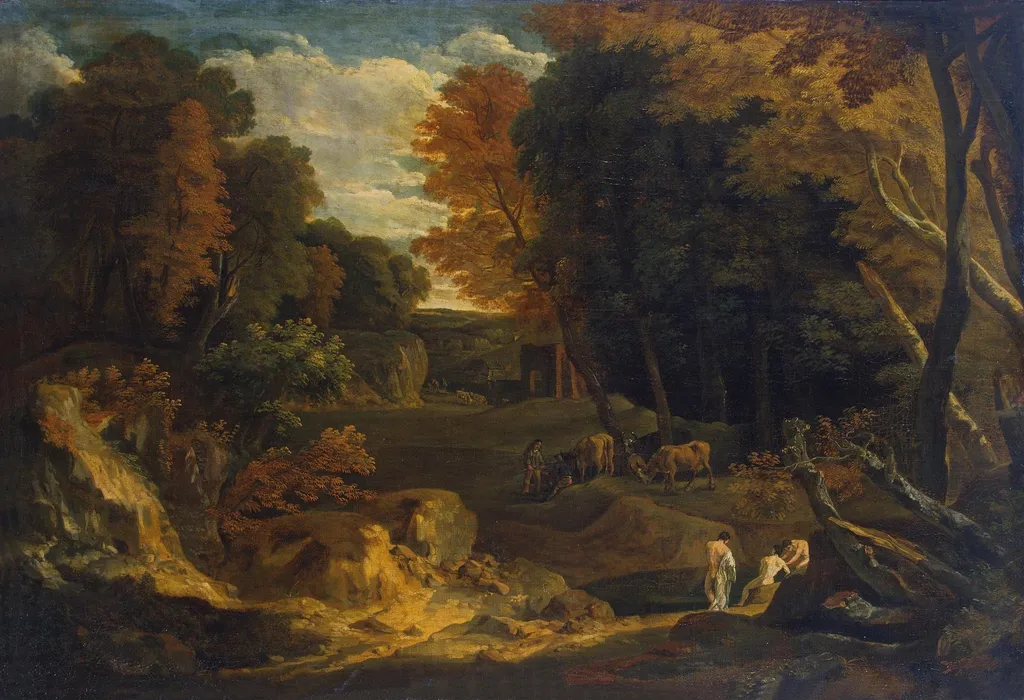
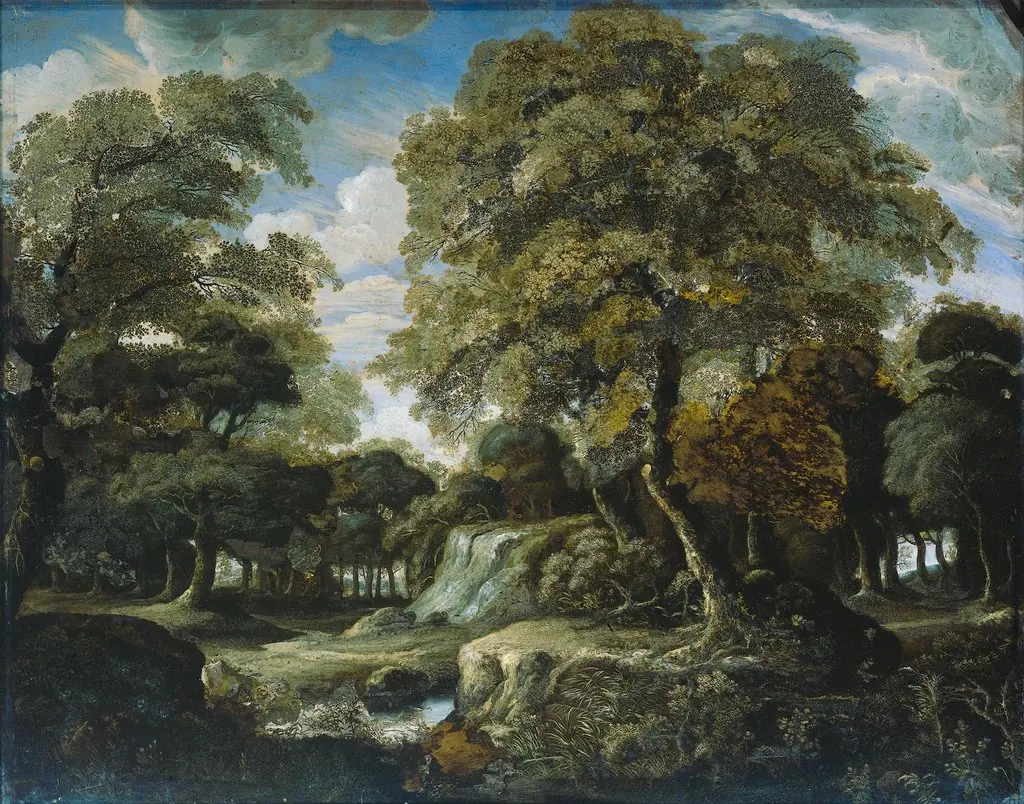
Forest Landscape with a River is an oil painting by the Dutch Golden Age artist Cornelis Huysmans. It dates from 1696 and is held in the collection of the Hermitage Museum.
About this work
Overview
The painting is held in the State Hermitage Museum’s collection and exemplifies late 17th-century landscape traditions in the Southern Netherlands.
Painted in 1696 by the Flemish artist Cornelis Huysmans, this oil-on-canvas work presents a tranquil riverside forest scene. Active across Antwerp, Brussels, and Mechelen, Huysmans specialized in idealized natural settings that blended Northern European detail with Italianate compositional sensibilities. The painting is held in the State Hermitage Museum’s collection and exemplifies late 17th-century landscape traditions in the Southern Netherlands.
Subject & Meaning
The scene portrays a quiet moment along a winding river, where figures—some clothed, others nude—rest among trees and rocks. Their presence suggests a pastoral idyll, neither mythological nor narrative, but quietly human. Distant horses near a humble hut reinforce a sense of rural stillness. The absence of dramatic action invites contemplation, emphasizing harmony between people and the natural world rather than storytelling or allegory.
Technique & Style
Huysmans employed soft, diffused lighting to model the forest canopy and illuminate figures near the water, creating a gentle luminosity. Brushwork is refined but unobtrusive, with warm browns and muted greens dominating the palette. The composition guides the eye along the river’s curve into a hazy, elevated background, echoing the structured landscapes of Poussin while retaining Northern attention to botanical and topographical detail.
History & Provenance
Created during Huysmans’s mature period, the painting reflects his established style developed through decades of work in Flemish cities. It entered the State Hermitage Museum’s collection in the 18th or 19th century, likely through imperial acquisitions of European art. No earlier ownership records are widely documented, but its presence in the Hermitage underscores its recognition within broader European artistic circles of the time.
Context
In the late 1600s, Flemish landscape painting evolved beyond topographical accuracy toward idealized, atmospheric scenes. Huysmans contributed to this trend by synthesizing Italianate mountainous backdrops with Northern European forest motifs. His work responded to tastes for serene, contemplative nature, distinct from Dutch genre scenes but aligned with broader European trends in landscape as a vehicle for quiet reflection.
Legacy
Huysmans’s approach influenced later Flemish and Dutch landscapists who favored poetic atmosphere over narrative. While not widely celebrated in his lifetime, his integration of light, structure, and naturalism helped bridge the gap between Italianate ideals and Northern realism. Today, his works, including this one, are studied for their subtle balance of observation and composition within the broader landscape tradition of the period.
Own this work as a print
Artist & collection
Artist
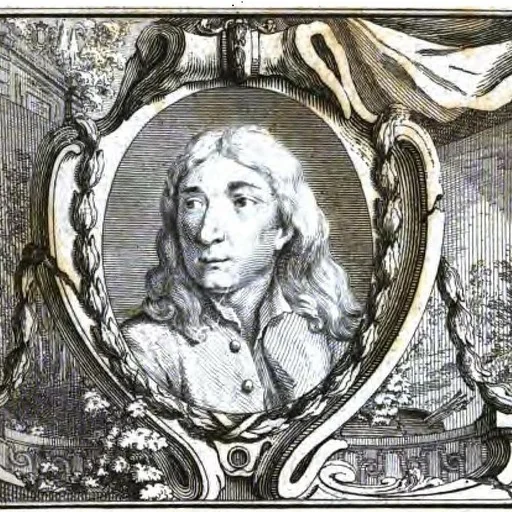
Cornelis Huysmans (baptized 2 April 1648 in Antwerp; died 1 June 1727 in Mechelen) was a Flemish landscape painter who was active in Antwerp, Brussels and Mechelen.

 Landscape with a Ruined Tower
 Forest landscape
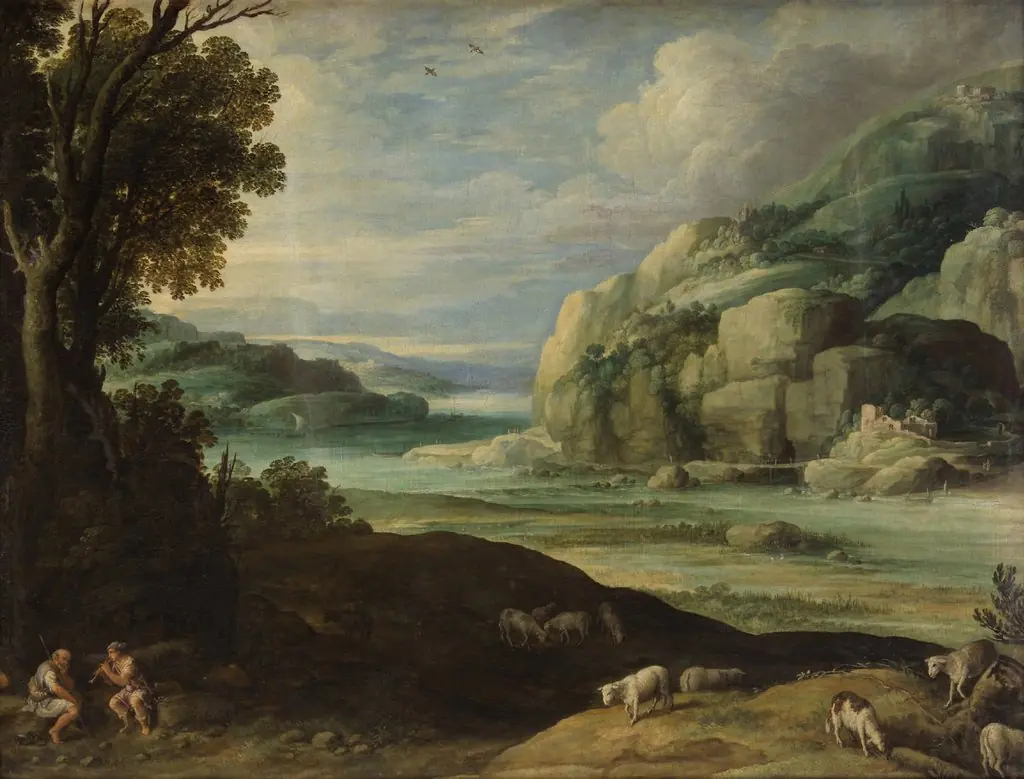 Landschaft mit Merkur und Argus
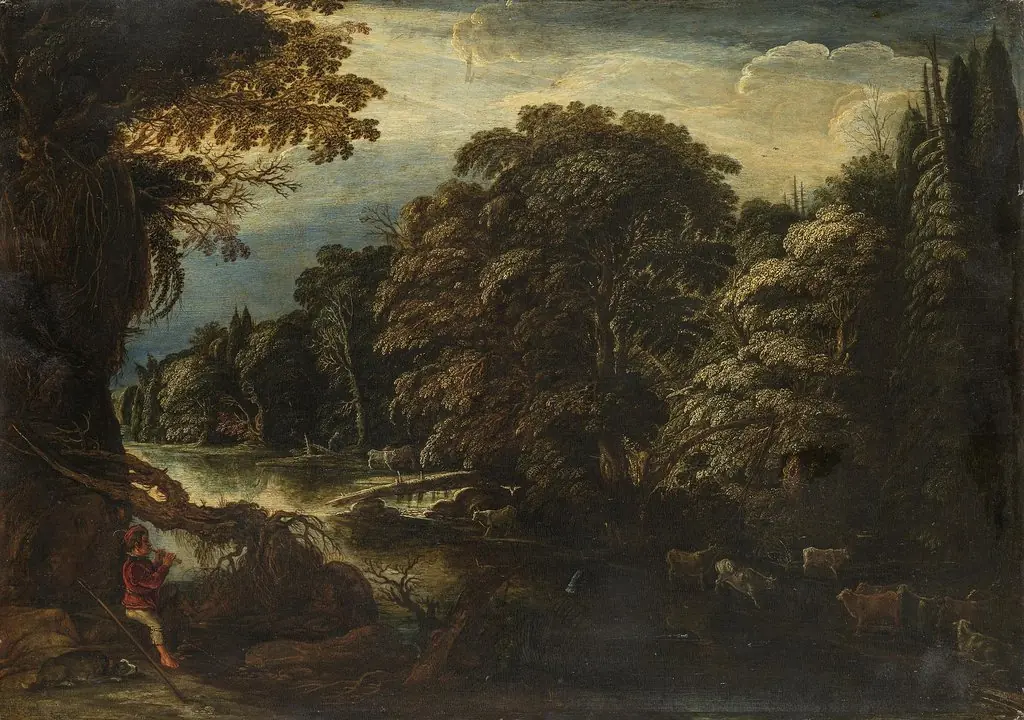 Forest
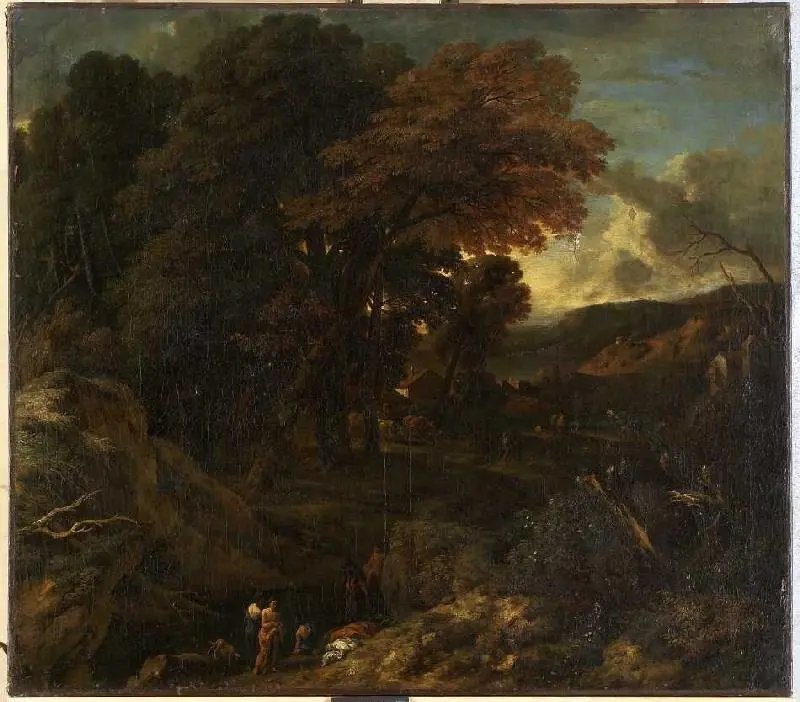 Italian forest landscape with bathers
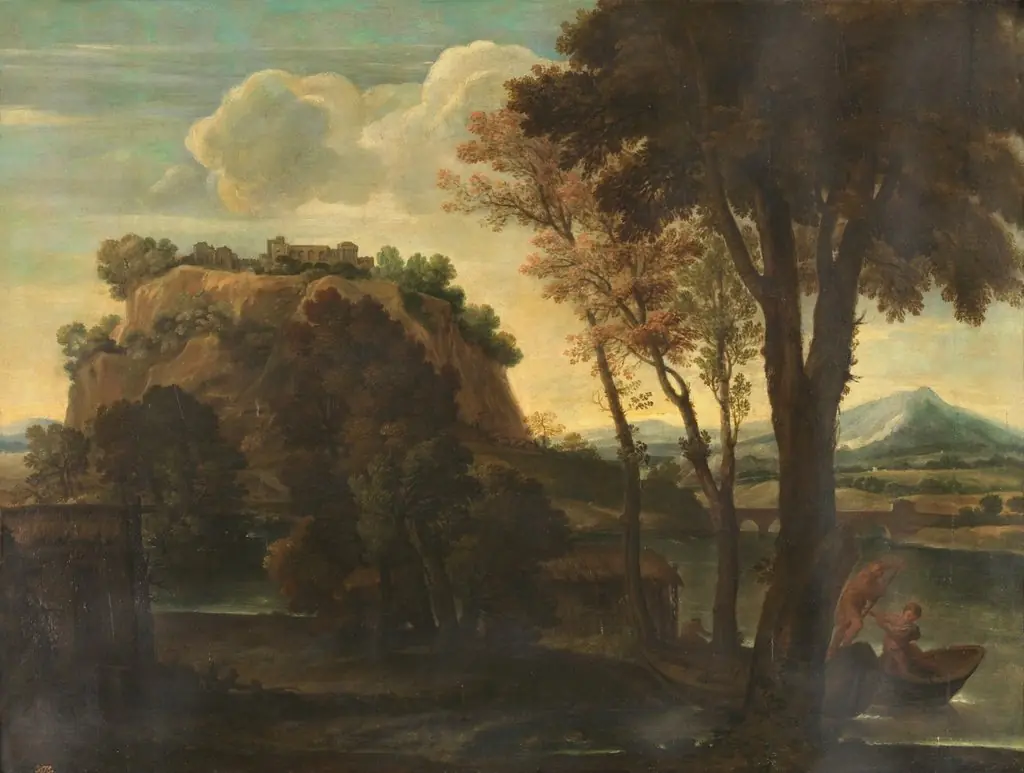 Landscape with River and Boats
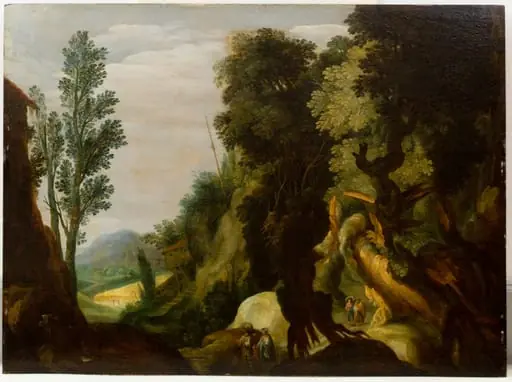 Felslandschaft
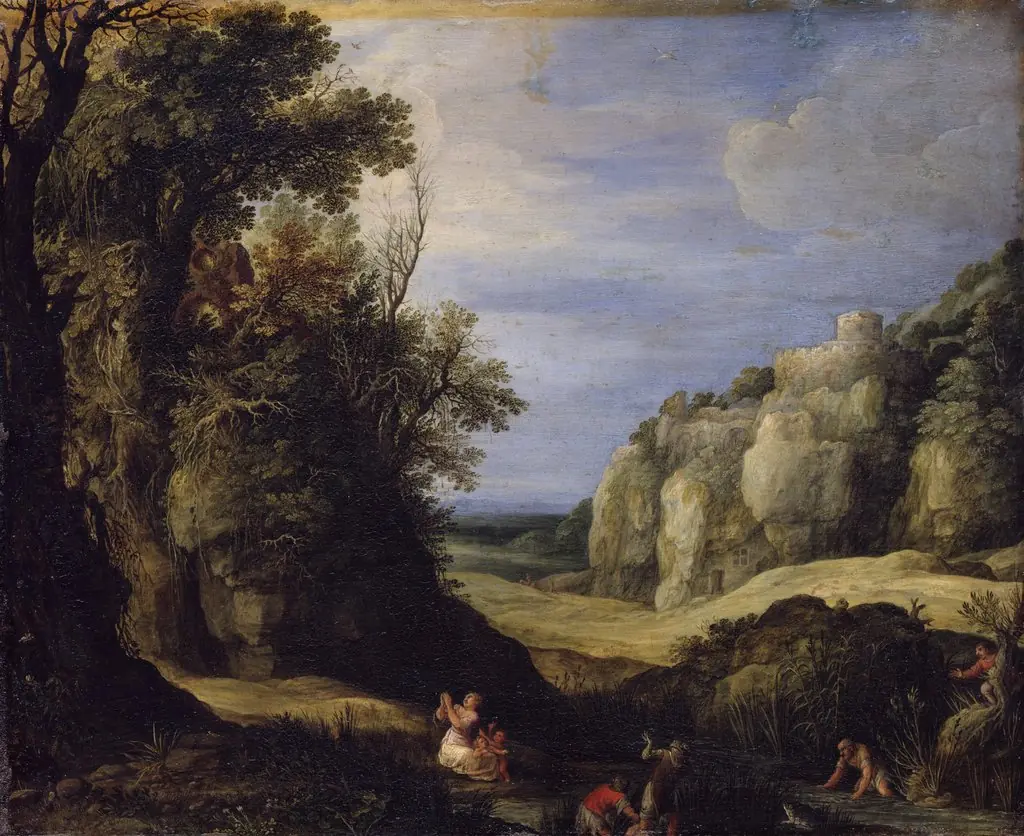 Landscape with Latona and the Lycian Peasants
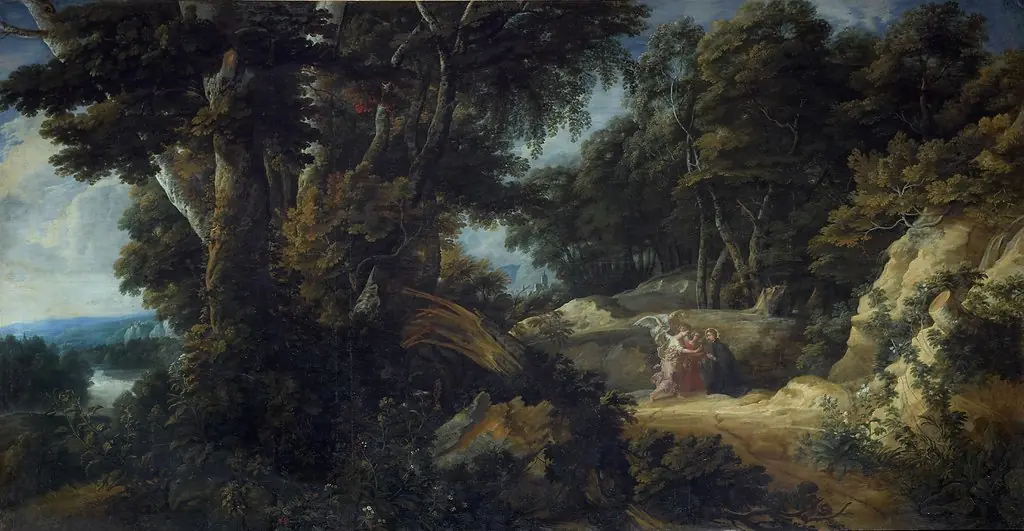 Extensive forest landscape with St. Stanisław Kostka
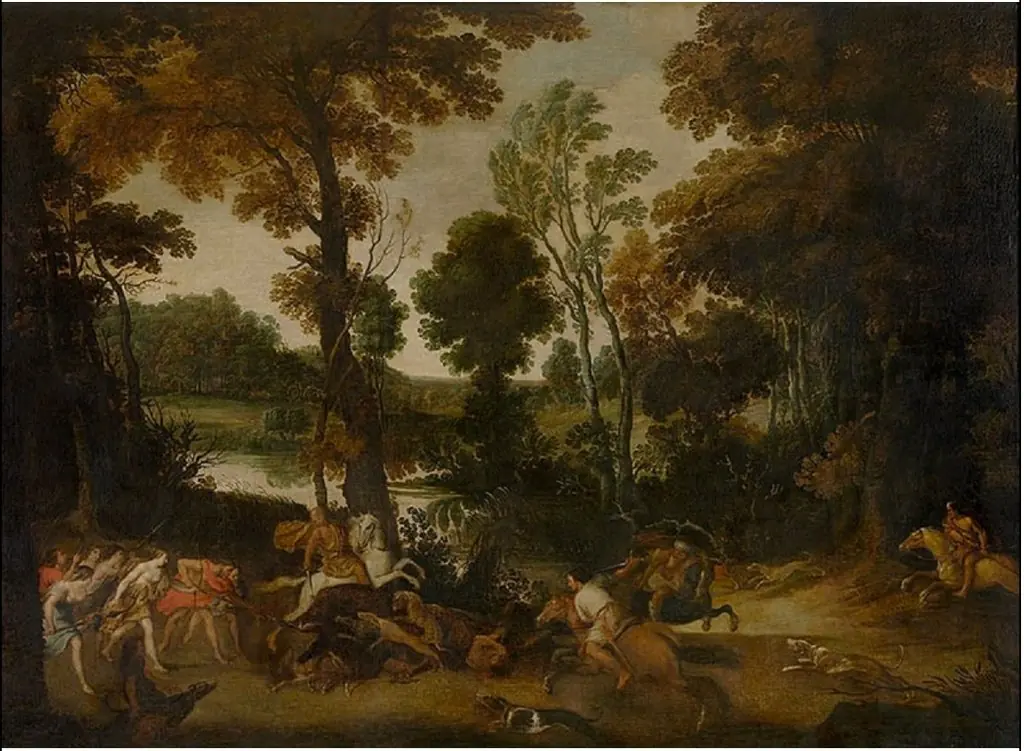 Landscape with Hunt of Meleager and Atalanta
 View in the woods
 A Hilly Landscape with Tall Oaks