Artwork
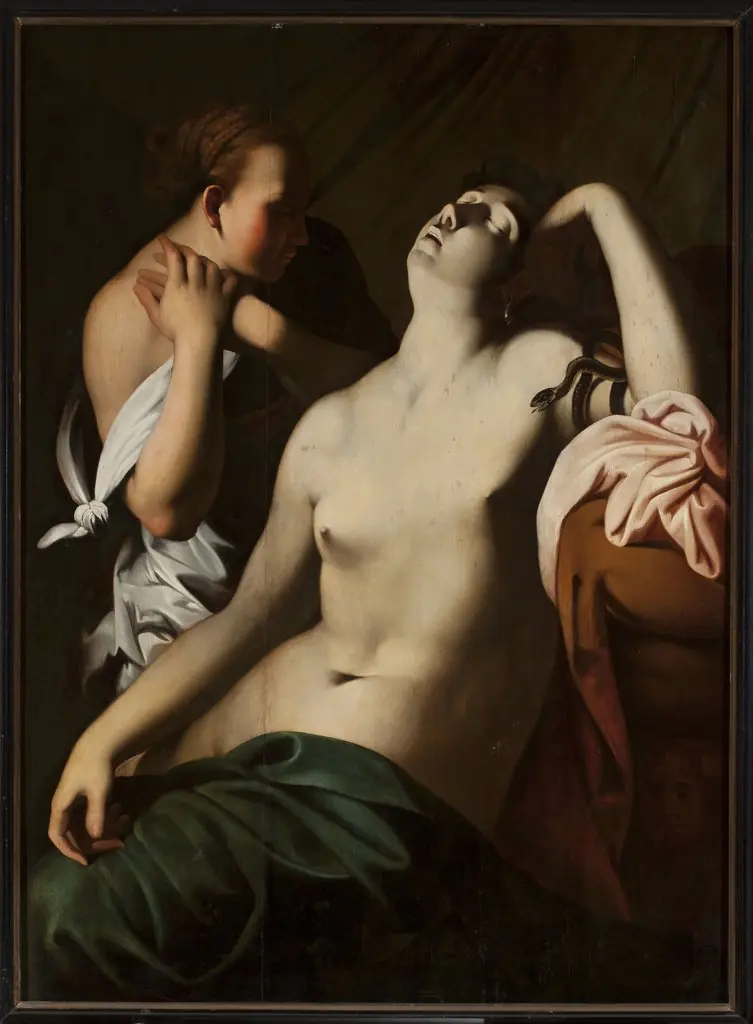
Ceres and Bacchus
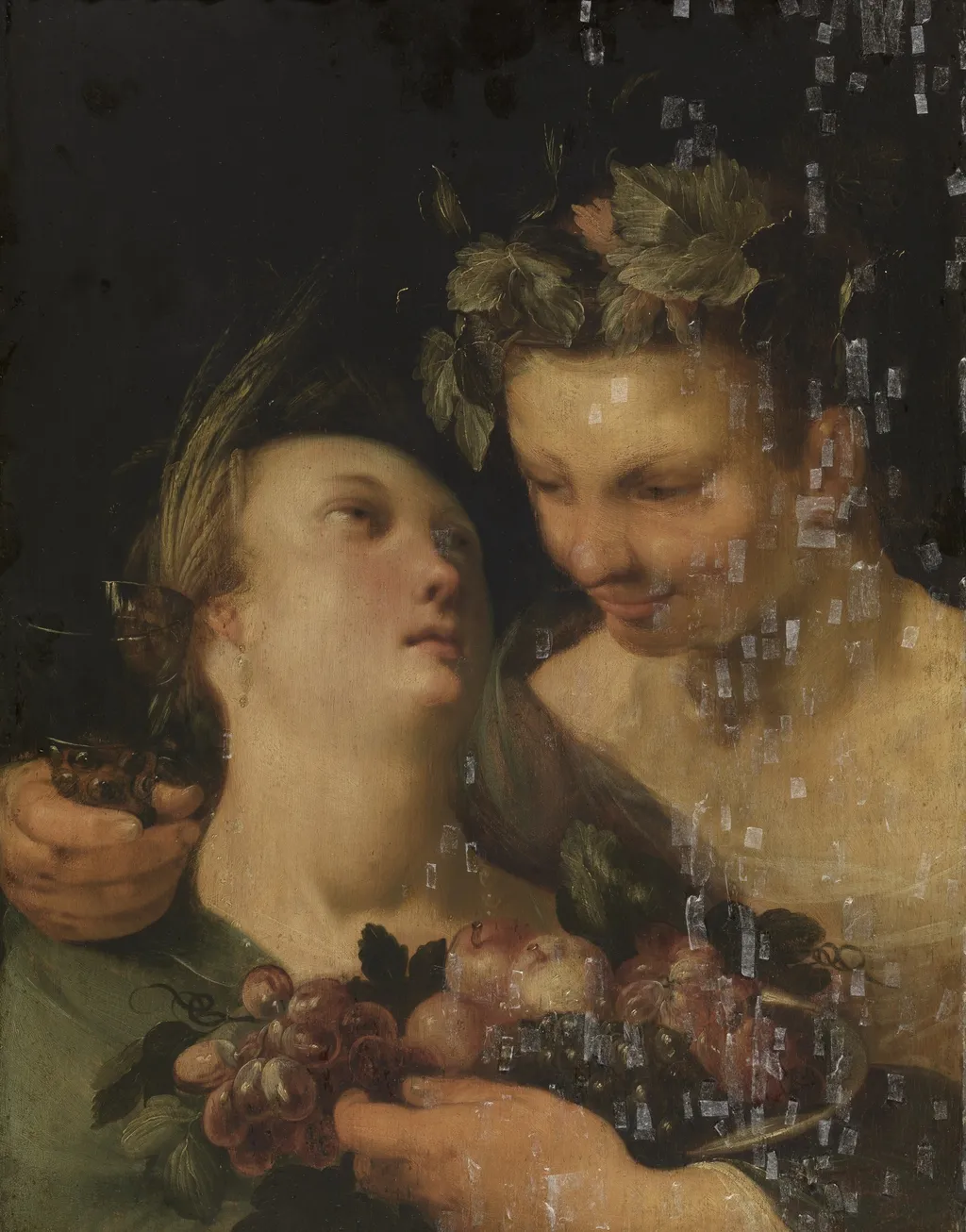
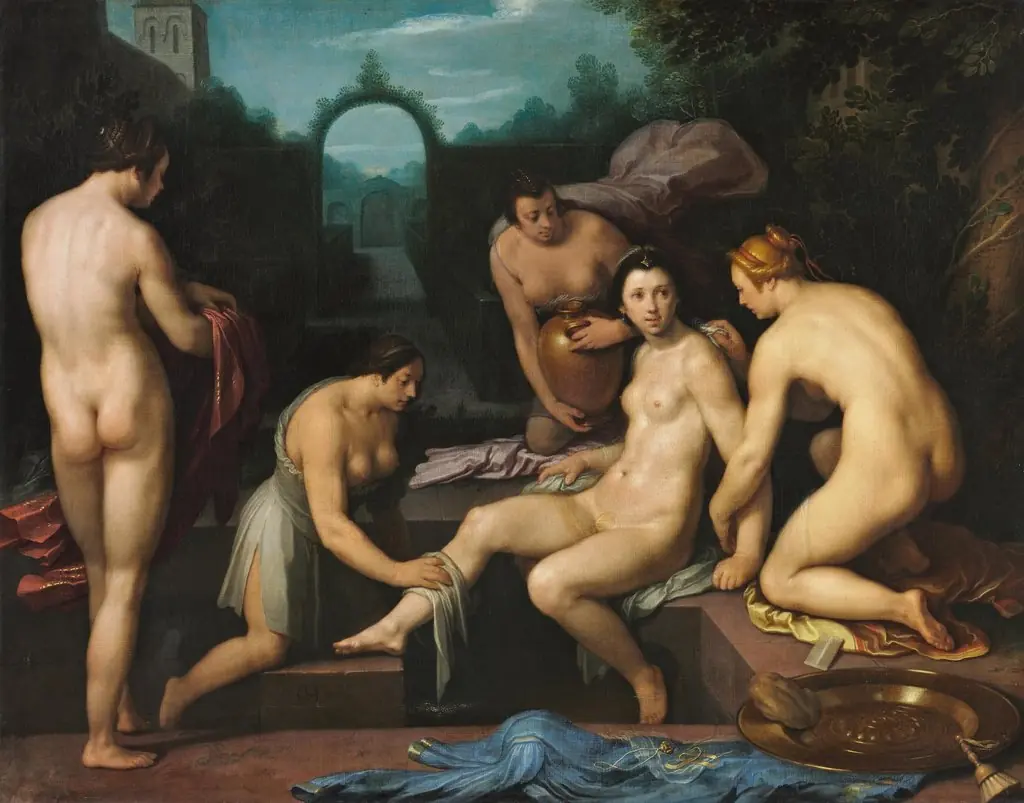
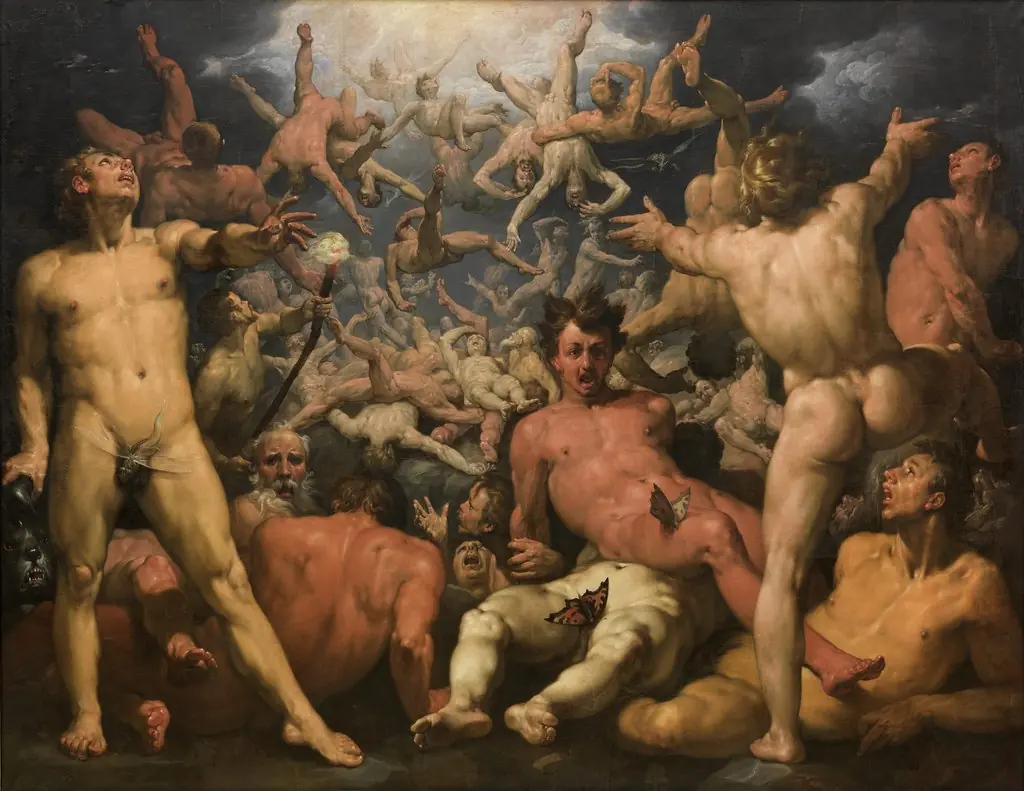
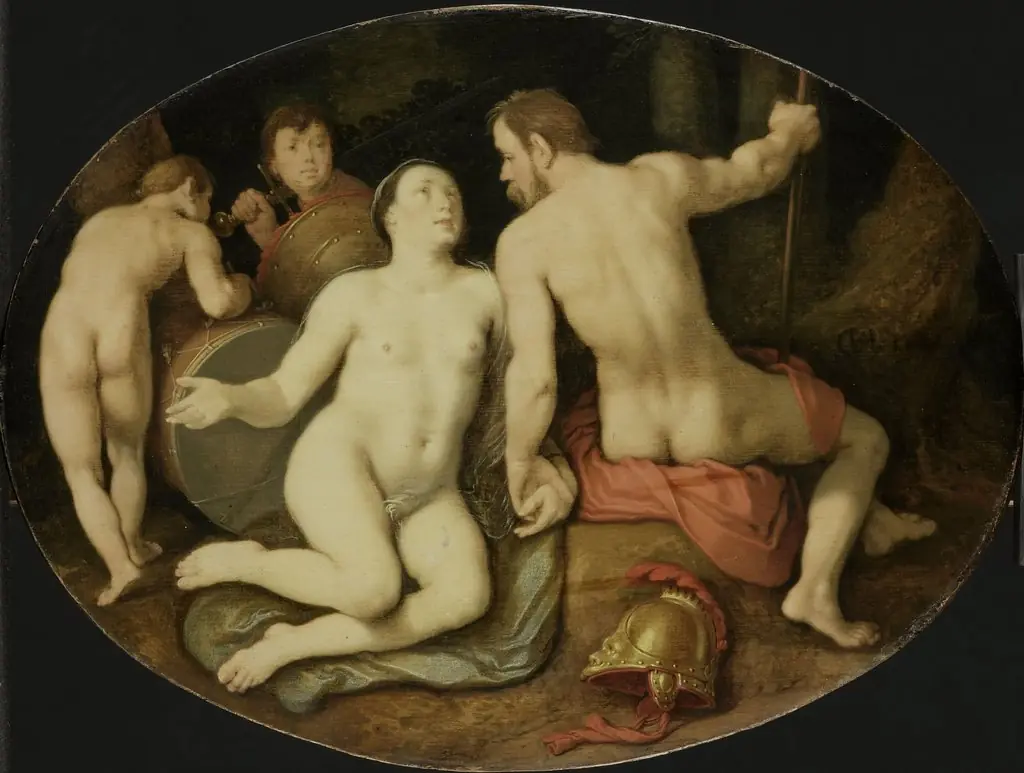
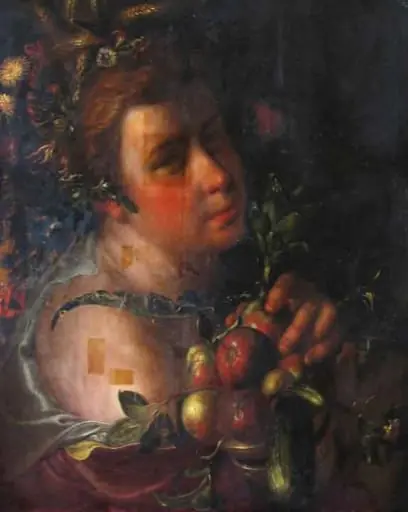
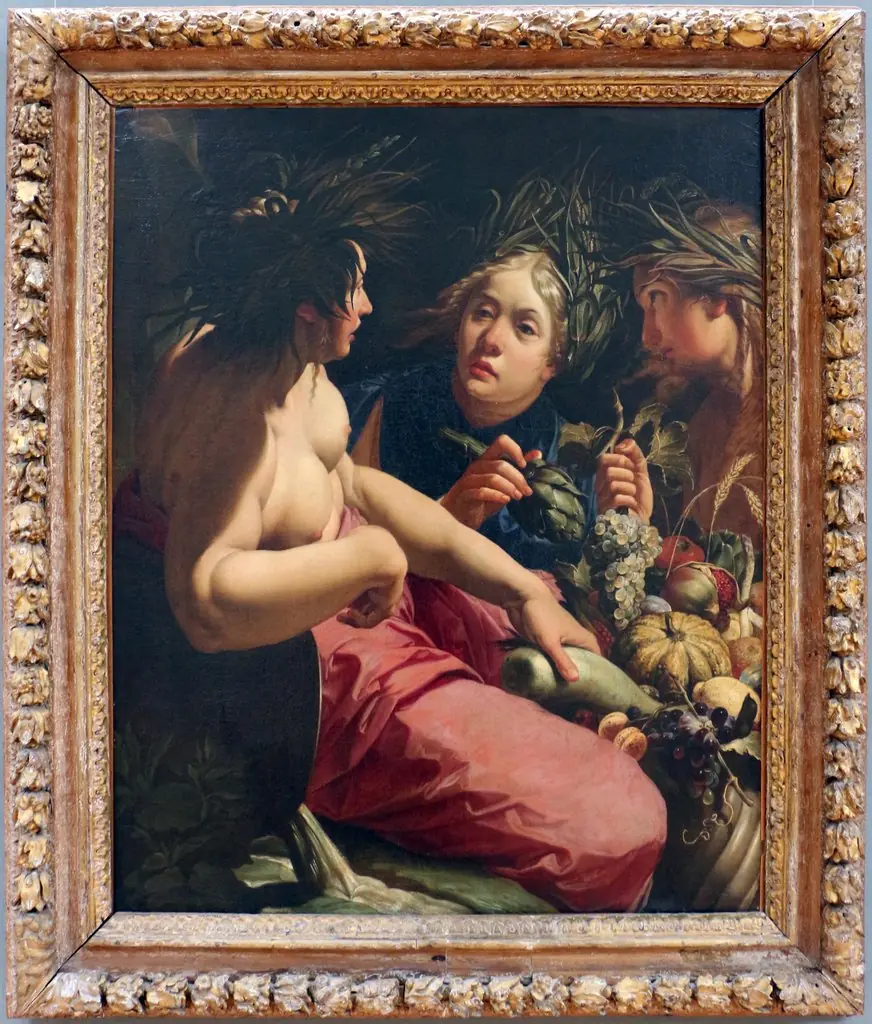
Ceres and Bacchus is an oil painting by the Mannerist artist Cornelis van Haarlem. It dates from 1610 and is held in the collection of the Royal Museum of Fine Arts Antwerp.
About this work
Overview
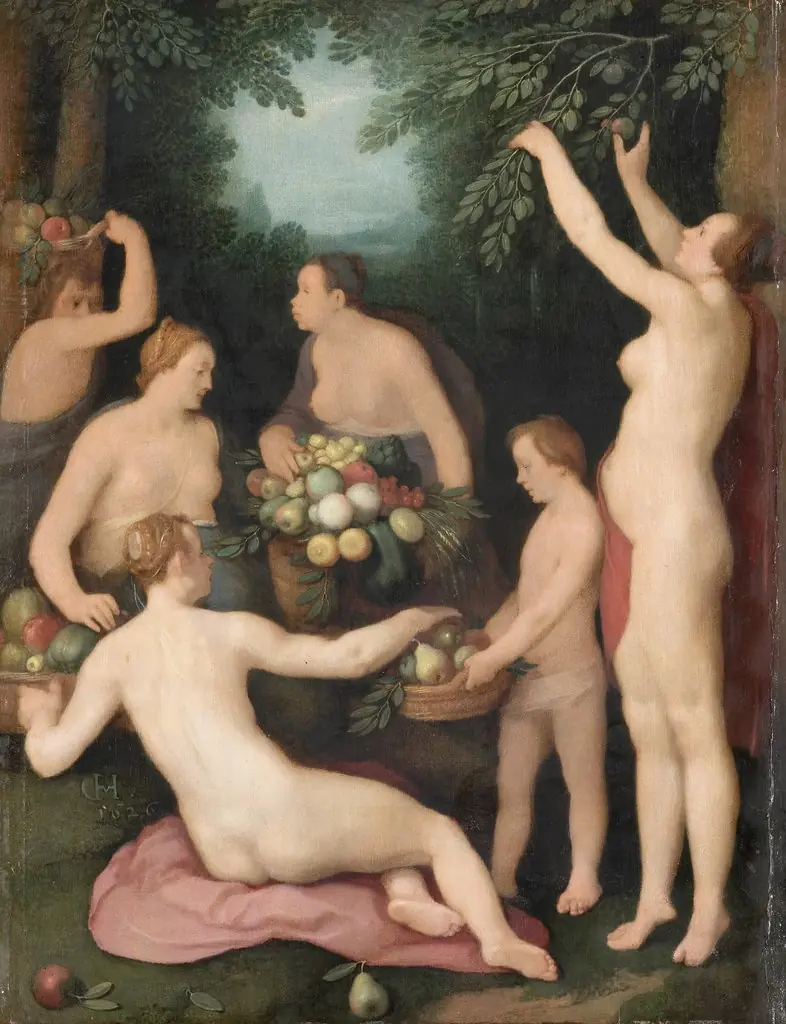
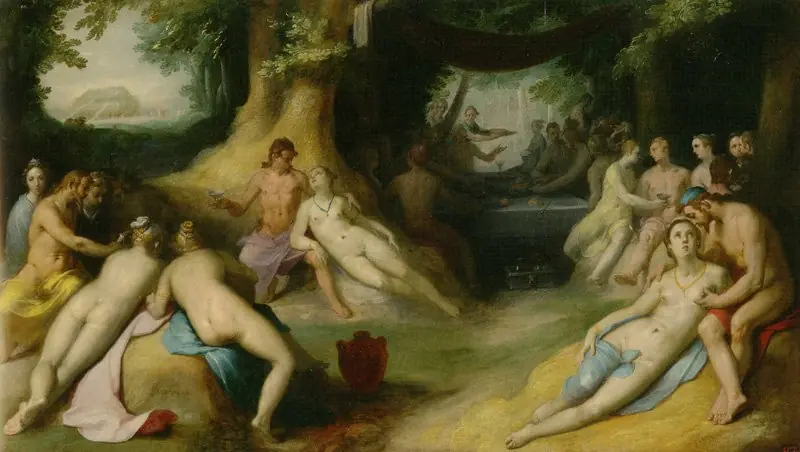
Cornelis van Haarlem’s oil painting *Ceres and Bacchus*, executed in 1610, presents a quiet encounter between two mythological figures. The work is part of the Royal Museum of Fine Arts Antwerp’s collection and exemplifies the Northern Mannerist aesthetic that dominated Dutch art at the start of the seventeenth century.
Subject & Meaning
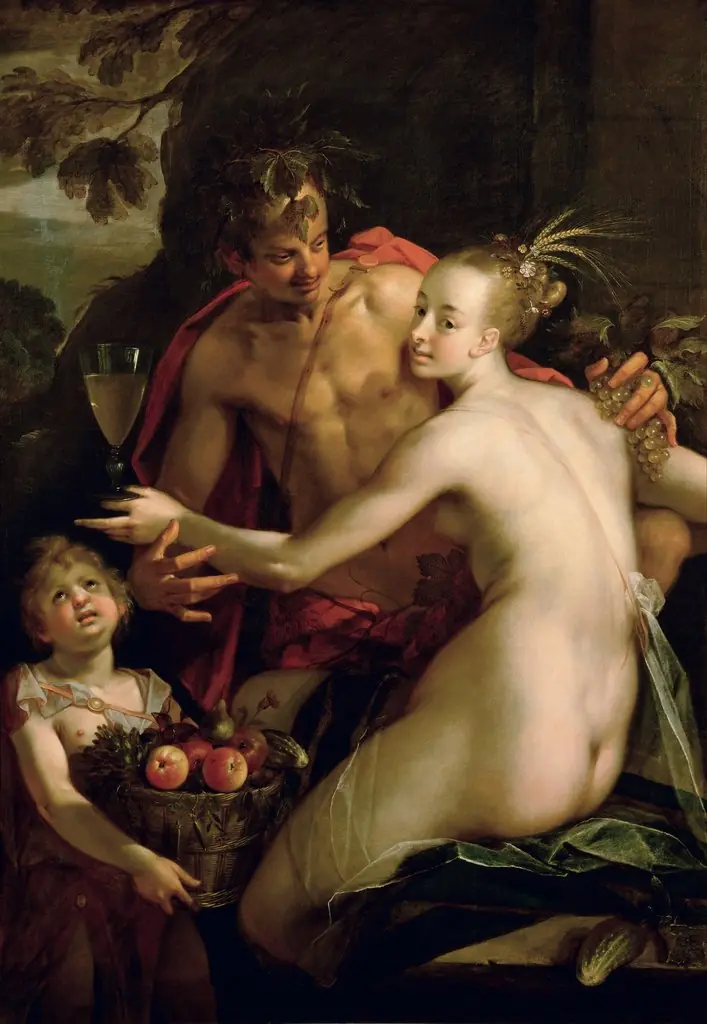
The composition features the Roman goddess Ceres, identified by a wreath of foliage, alongside a male figure bearing a cluster of grapes, a conventional attribute of Bacchus. Their relaxed posture and subtle smiles suggest an intimate, perhaps celebratory, exchange between the deity of agriculture and the god of wine.
Technique & Style
Rendered in oil on canvas, the painting employs a pronounced chiaroscuro that models the figures’ flesh with soft transitions of light and shadow. The dark background recedes, allowing the illuminated faces and hands to emerge with a three‑dimensional presence, while the muted green leaves add a hint of natural context.
History & Provenance
Created during van Haarlem’s mature period, the canvas reflects his engagement with the Mannerist tradition prevalent in the Netherlands. It entered the Royal Museum of Fine Arts Antwerp’s holdings in the twentieth century, where it remains on display as a representative example of the artist’s mythological oeuvre.
Own this work as a print
Artist & collection
Artist
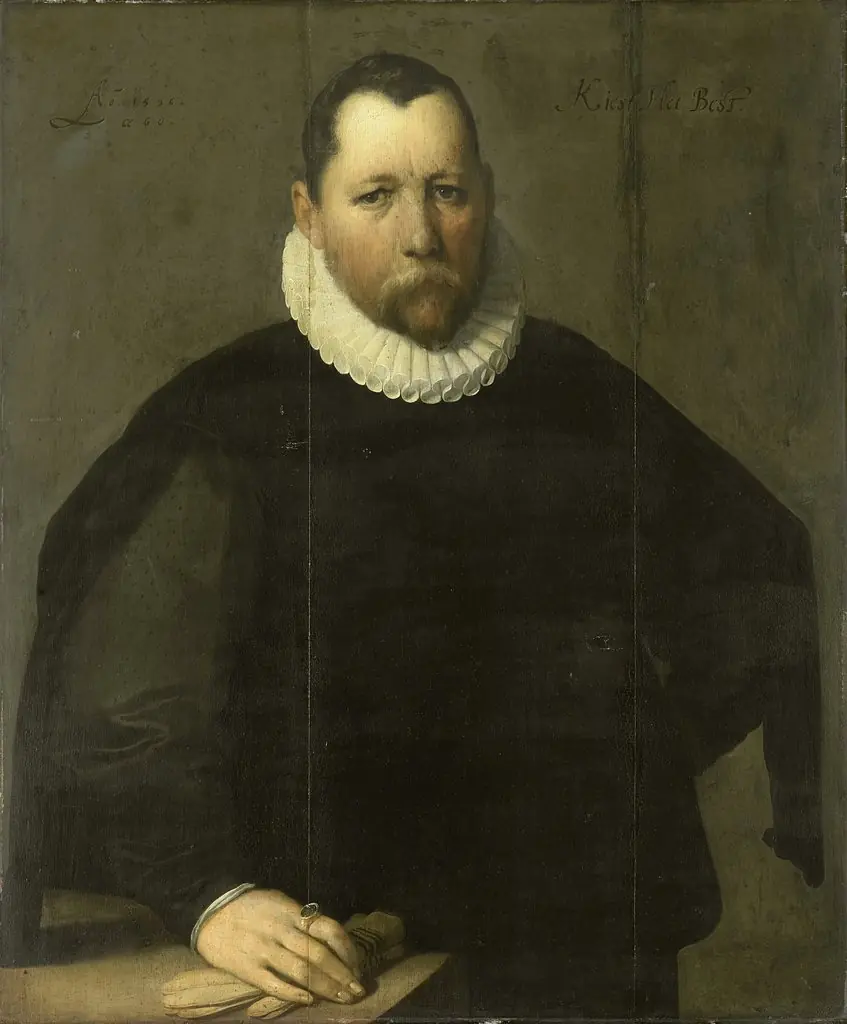
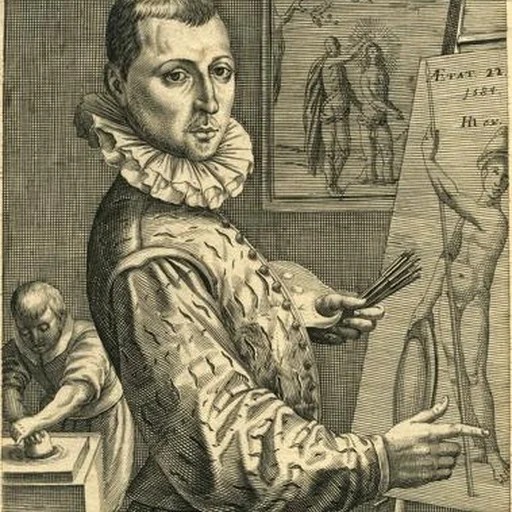
Cornelis Corneliszoon van Haarlem (Dutch: ; 1562 – 11 November 1638) was a Dutch Golden Age painter and draughtsman, one of the leading Northern Mannerist artists in the Netherlands, and an important forerunner of Frans Hals as a…