Artwork
Hermit's Woods (Le Bois de l'ermite)
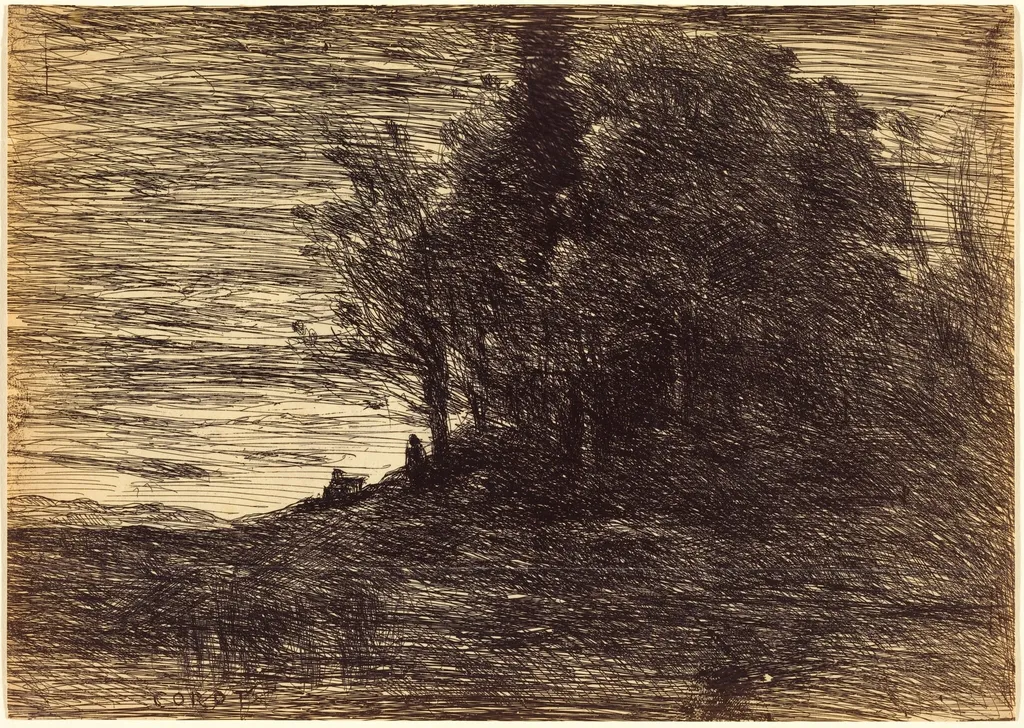
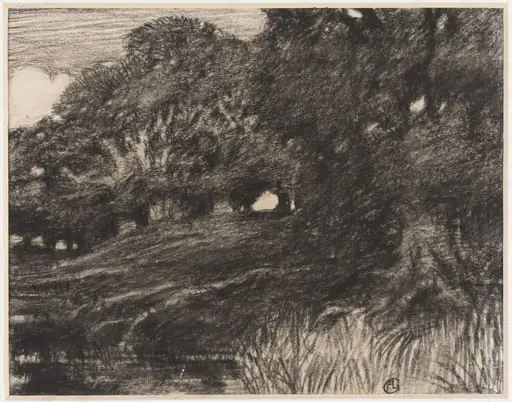
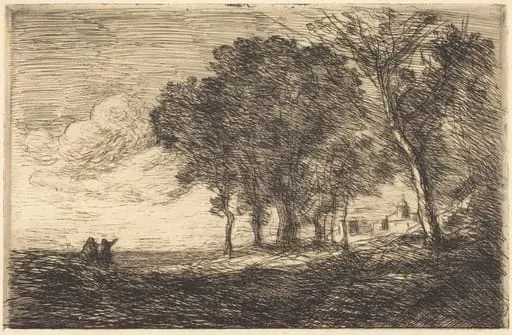
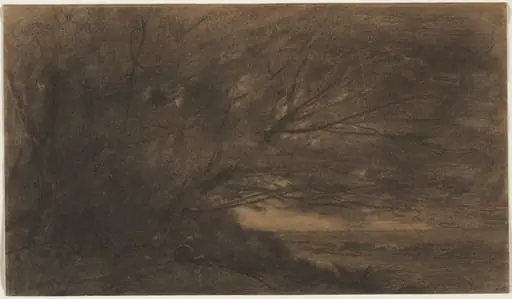
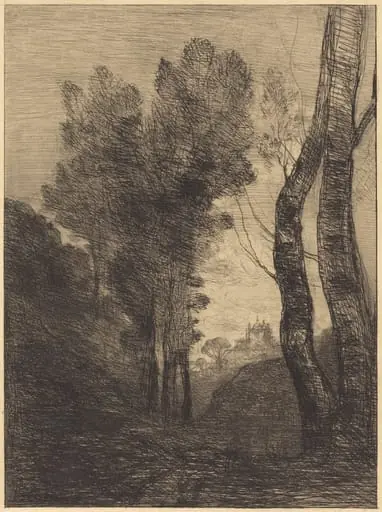
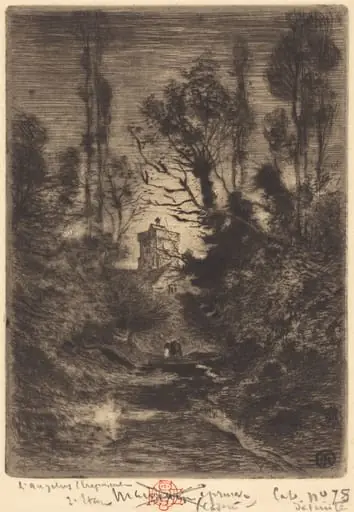
Hermit's Woods (Le Bois de l'ermite) is a print by the Impressionist artist Jean Baptiste Camille Corot. It dates from 1858 and is held in the collection of the National Gallery of Art.
About this work
Overview
Jean-Baptiste-Camille Corot produced *Hermit's Woods* in 1858 using the cliché-verre process, a hybrid technique combining drawing and photographic printing.
Jean-Baptiste-Camille Corot produced *Hermit's Woods* in 1858 using the cliché-verre process, a hybrid technique combining drawing and photographic printing. This method involved coating glass with opaque material, scratching away areas to allow light exposure on photosensitive paper. Corot employed it to explore tonal gradations and atmospheric effects, aligning with his broader interest in capturing the quiet essence of nature beyond formal composition.
Subject & Meaning
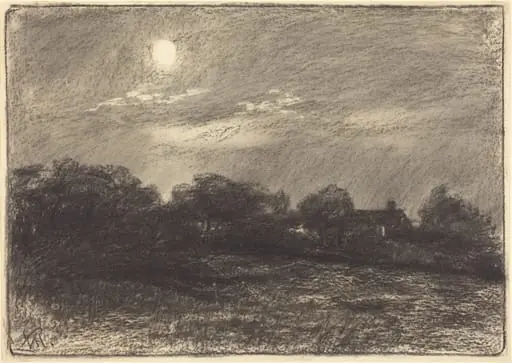
The scene depicts a secluded woodland, dense with gnarled trees and tangled undergrowth, evoking solitude and introspection. No human figures appear, yet the composition suggests the presence of a hermit—implied by the title and the secluded, almost sacred atmosphere. The subdued light and heavy shadows convey a meditative stillness, consistent with Corot’s poetic interpretation of nature rather than its literal representation.
Technique & Style
Corot used cliché-verre to achieve a range of grayscale tones, manipulating the glass plate’s scratched lines to control light and shadow. The resulting print emphasizes contrast between dark, impenetrable foliage and faint, filtered light, creating depth without sharp outlines. This approach echoes the tonal experiments of early photography and reflects Corot’s preference for atmospheric suggestion over detailed realism, bridging traditional landscape conventions with emerging photographic aesthetics.
History & Provenance
Created during a period when Corot was deeply engaged with printmaking, *Hermit's Woods* belongs to a series of cliché-verre works he produced in the late 1850s. These prints were often made in small editions and circulated among artists and collectors. The work remained within French artistic circles, later entering public collections as interest grew in Corot’s experimental graphic output alongside his more famous oil paintings.
Context
In the mid-19th century, artists across Europe explored new ways to capture light and nature beyond academic norms. Corot’s use of cliché-verre responded to the rise of photography and the desire for direct, spontaneous recording of landscape. While contemporaries like the Barbizon painters worked outdoors, Corot often translated sketches into prints, blending observation with poetic reinterpretation, positioning him between tradition and modernity.
Legacy
Corot’s cliché-verre prints, including *Hermit's Woods*, influenced later generations interested in the intersection of drawing and photographic processes. Though less widely known than his oils, these works demonstrated how traditional techniques could be adapted to new visual languages. Their emphasis on mood and tone prefigured concerns later central to Symbolist and modernist printmaking, securing their place in the evolution of landscape representation.
Own this work as a print
Artist & collection
Artist
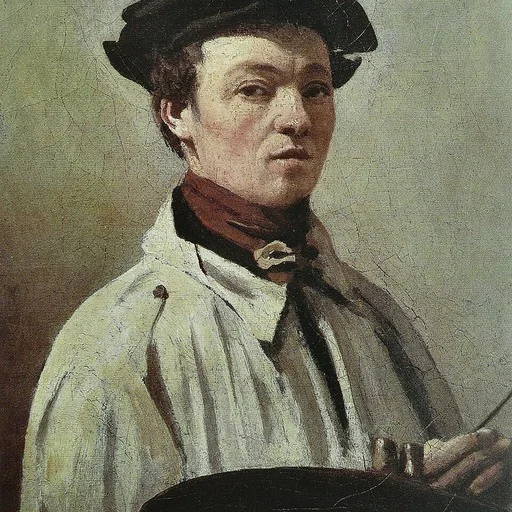
Jean-Baptiste-Camille Corot (UK: KORR-oh, US: kə-ROH, kor-OH; French: ; 16 July 1796 – 22 February 1875), or simply Camille Corot, was a French landscape and portrait painter as well as a printmaker in etching.