Artwork
Landscape (Paysage)
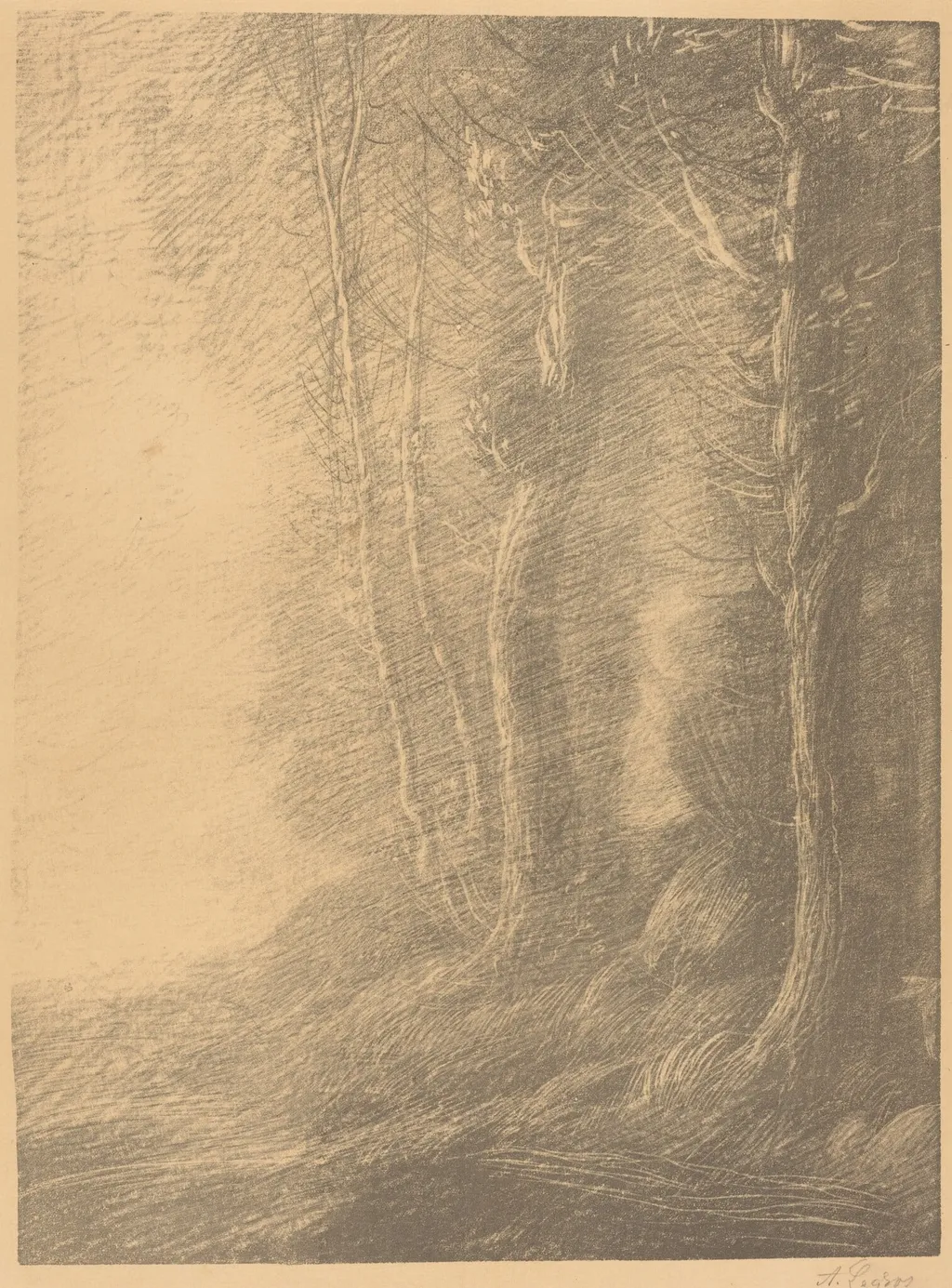
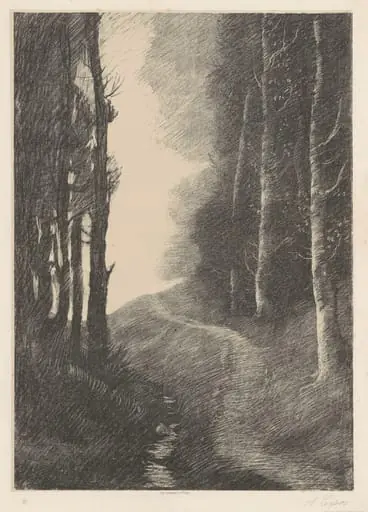
Landscape (Paysage) is an ink print by the Romanticist artist Alphonse Legros. It dates from 1874 and is held in the collection of the National Gallery of Art.
About this work
Overview
The work belongs to a body of prints that reflect his engagement with landscape and his interest in reviving traditional printmaking techniques in England.
Created in 1874, *Landscape (Paysage)* is a lithograph by Alphonse Legros, a French artist who moved to London in 1863 and later became a British citizen. The work belongs to a body of prints that reflect his engagement with landscape and his interest in reviving traditional printmaking techniques in England. Lithography allowed Legros to capture subtle tonal variations, aligning with his broader artistic focus on direct, observational representation.
Subject & Meaning
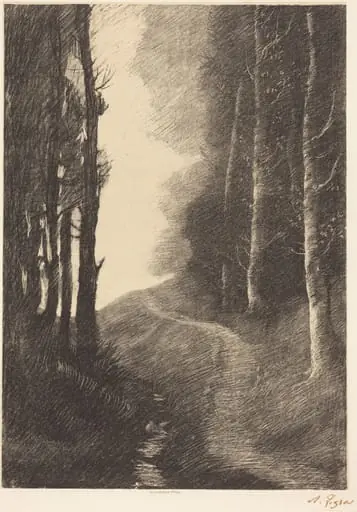
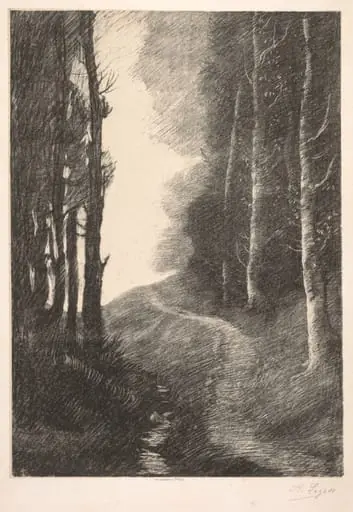
The image portrays a quiet rural scene: a winding path threads through a grove of trees, suggesting a solitary walk or a moment of pause in nature. There is no human figure, yet the path implies human presence and movement. The composition evokes stillness and introspection, emphasizing the quiet rhythm of the countryside rather than dramatic or symbolic content. The title, in French, hints at Legros’s cultural roots and his continued connection to continental traditions.
Technique & Style
Legros employed lithography to achieve a range of gray tones, using varied line weight and hatching to model form and suggest depth. The trees are rendered with bold, confident strokes, while the path is drawn with finer, more fluid lines, creating a visual contrast that guides the viewer’s eye. The medium’s capacity for immediacy lends the scene a spontaneous quality, as if the landscape was captured in a single, attentive observation rather than a polished studio composition.
History & Provenance
The print was made during Legros’s early years in England, a period when he was gaining recognition for his technical skill and teaching at the Slade School of Art. While specific ownership records for this particular impression are not widely documented, it aligns with the broader circulation of his prints among collectors and students interested in the revival of etching and lithography in late 19th-century Britain.
Context
In the 1870s, British printmaking was undergoing a renewal, with artists and educators seeking to elevate printmaking beyond reproductive functions. Legros, trained in France and influenced by the Barbizon school, brought continental approaches to British art education. His landscapes, like this one, reflect a quiet realism that contrasted with the more theatrical styles then popular, offering instead a contemplative engagement with nature.
Legacy
Legros’s lithographs, including *Landscape (Paysage)*, contributed to the reestablishment of printmaking as a legitimate medium for original artistic expression in Britain. His emphasis on direct observation and technical precision influenced a generation of students and printmakers. Though less widely known today than his contemporaries, his work remains a quiet but significant part of the 19th-century British print revival.
Artist & collection

Artist
Alphonse Legros (French pronunciation: ; 8 May 1837 – 8 December 1911) was a French, later British, painter, etcher, sculptor, and medallist.

 Landscape with Birch Trees (Le Paysage aux Bouleaux)
 Landscape with Birch Trees (Le paysage aux bouleaux)
 Landscape at Bouleaux
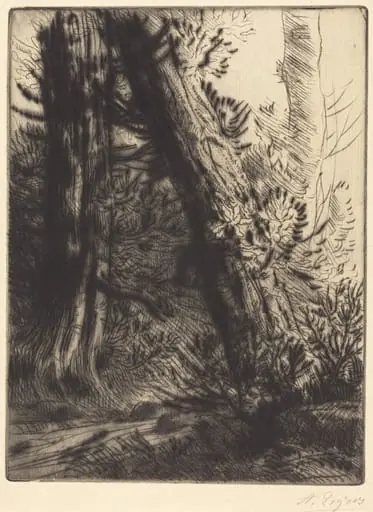 Edge of a Brook (Bord de ruisseau)
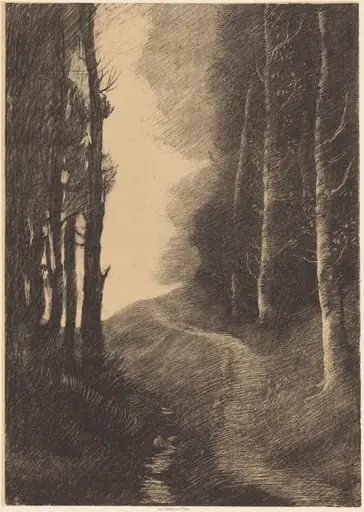 Landscape with Birch Trees (Le paysage aux bouleaux)
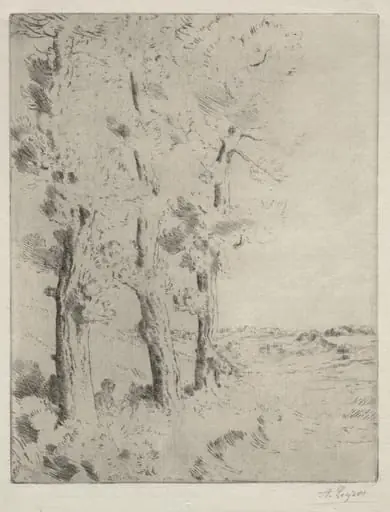 The Reader: The Lecture under the Trees
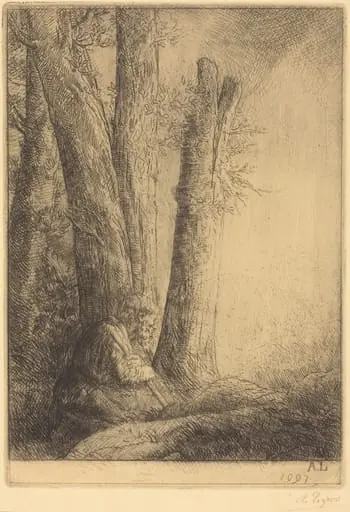 Study for the Prodigal Son (Etude pour L'enfant prodigue)
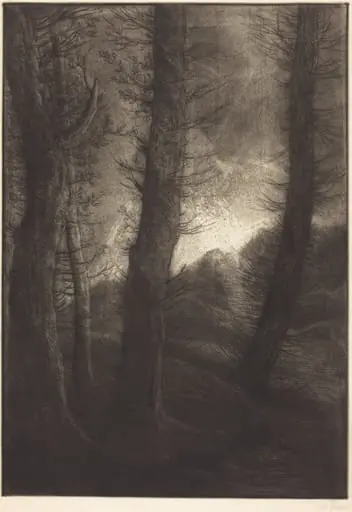 Large Trees Seen against the Sun (Les grandes arbres: Effet du soir)
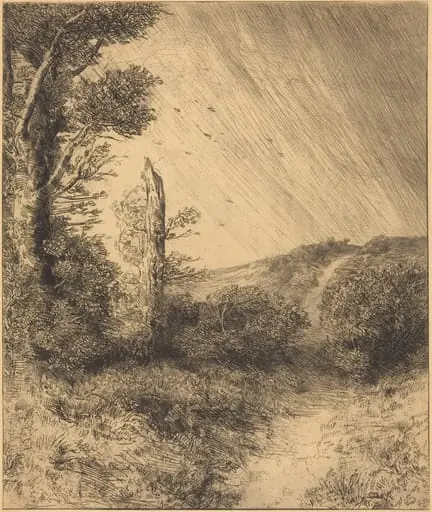 Gust of Wind (Le coup de vent)
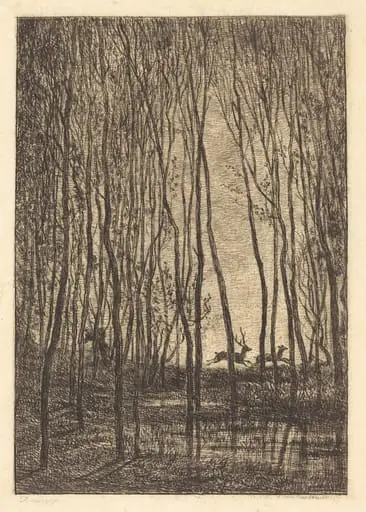 Deer in the Woods (Les Cerfs sous bois)