Artwork
The Gardens of Horace (Les Jardins d'Horace)
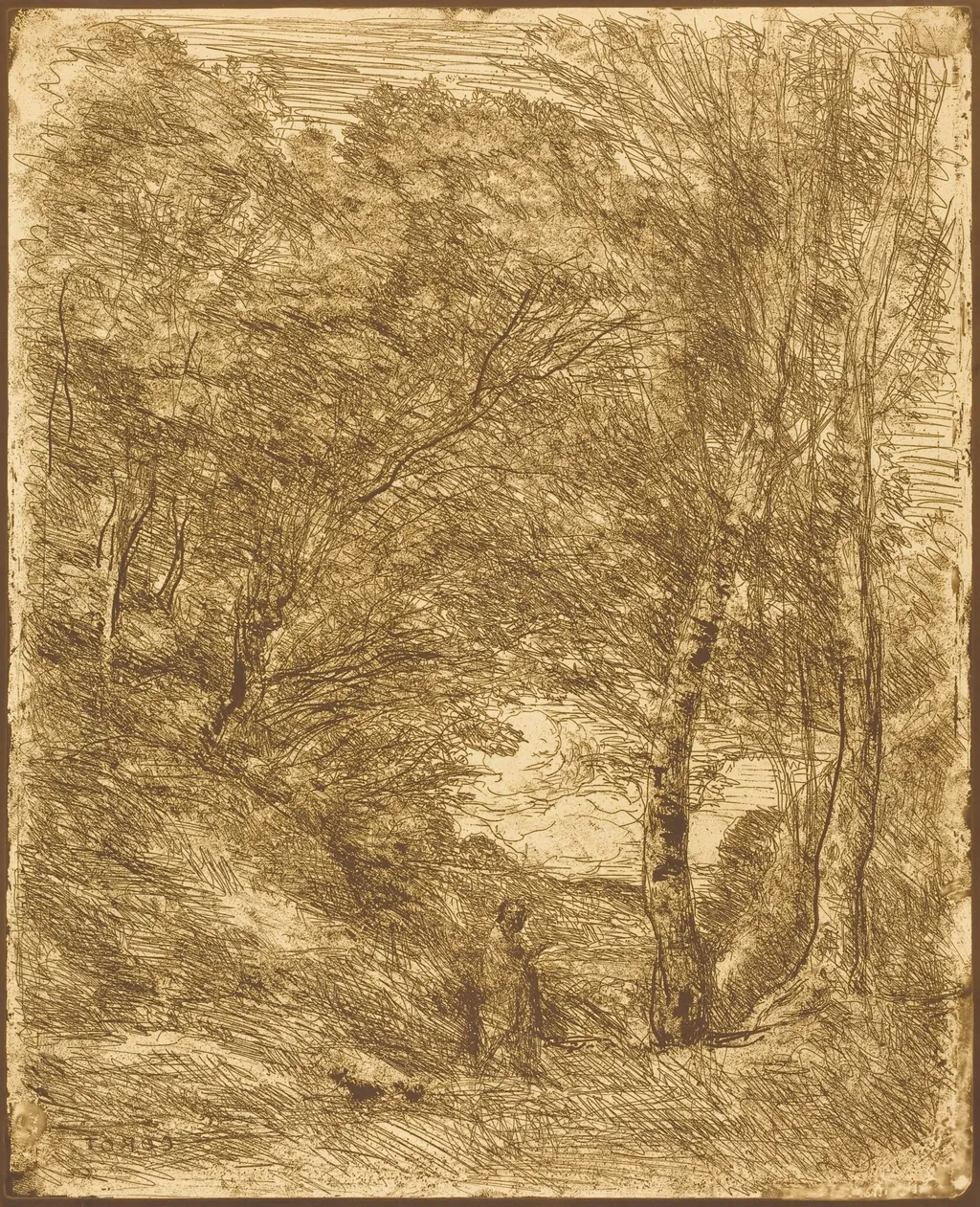
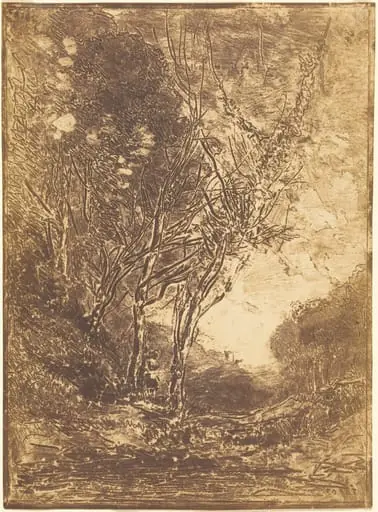
The Gardens of Horace (Les Jardins d'Horace) is a print by the Impressionist artist Jean Baptiste Camille Corot. It dates from 1855 and is held in the collection of the National Gallery of Art. Created in 1855, *The Gardens of Horace* is a cliché-verre print by Jean-Baptiste-Camille Corot, an artist known for his nuanced landscapes.
About this work
Overview
The work belongs to a small body of experimental prints Corot produced during the mid-19th century, blending photographic processes with hand-drawn elements.
Created in 1855, *The Gardens of Horace* is a cliché-verre print by Jean-Baptiste-Camille Corot, an artist known for his nuanced landscapes. The work belongs to a small body of experimental prints Corot produced during the mid-19th century, blending photographic processes with hand-drawn elements. Unlike his oil paintings, this piece emphasizes atmospheric ambiguity over detail, revealing his interest in alternative methods of capturing light and mood.
Subject & Meaning
The scene depicts a secluded garden path winding through dense, overgrown vegetation, evoking a sense of quiet solitude. While not a literal representation of Horace’s estate, the title alludes to classical ideals of retreat and contemplation. The blurred forms and muted tones suggest a memory or dream rather than a specific place, reinforcing themes of transience and introspection common in Corot’s later work.
Technique & Style
Corot employed the cliché-verre technique, drawing on a glass plate coated with opaque material, then exposing it to light through the incised lines. This process allowed him to control tonal gradations with precision, resulting in soft, hazy effects. The image’s ghostly quality arises from the interplay of light and hand-drawn marks, producing a texture that lies between drawing and photography, distinct from his painterly style.
History & Provenance
The print was made in 1855 during a period when Corot was exploring printmaking alongside his painting practice. Few cliché-verre works by him survive, and this one was likely produced in small editions, possibly for private circulation. Its early ownership remains undocumented, but it entered public collections in the 20th century as interest grew in 19th-century photographic experiments.
Context
In the 1850s, artists across Europe experimented with new imaging technologies as photography emerged. Corot’s use of cliché-verre placed him among those seeking to merge artistic intention with mechanical processes. Unlike commercial photographers, he prioritized mood over documentation, aligning his prints with Romantic and poetic traditions rather than scientific recording.
Legacy
Corot’s cliché-verre prints, including *The Gardens of Horace*, influenced later artists interested in the expressive potential of non-traditional print media. Though not widely known during his lifetime, these works gained recognition in the 20th century as early examples of artist-driven photographic experimentation, bridging painting and photography in ways that prefigured modernist approaches.
Own this work as a print
Artist & collection
Artist
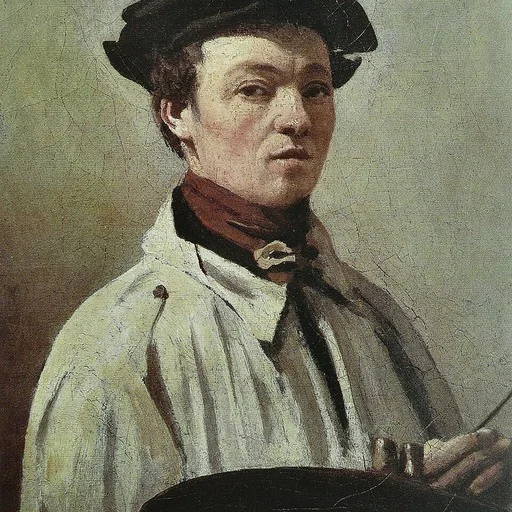
Jean-Baptiste-Camille Corot (UK: KORR-oh, US: kə-ROH, kor-OH; French: ; 16 July 1796 – 22 February 1875), or simply Camille Corot, was a French landscape and portrait painter as well as a printmaker in etching.

 Ambush (L'Embuscade)
 The Philosophers' Retreat (Le Repos des Philosophes)
 A Young Mother at the Entrance of a Wood
 Souvenir of the Sole Valley (Souvenir de la Vallee de la Sole)
 Little Shepherd, 1st Plate (Le Petit Berger)
 A Souvenir of the Bas-Bréau
 The Gallic Round
 Souvenir of Lake Maggiore (Souvenir du Lac Majeur)
 The House of the Well (La maison du puits)
 Early Morning - Richmond