Artwork
The House of the Well (La maison du puits)
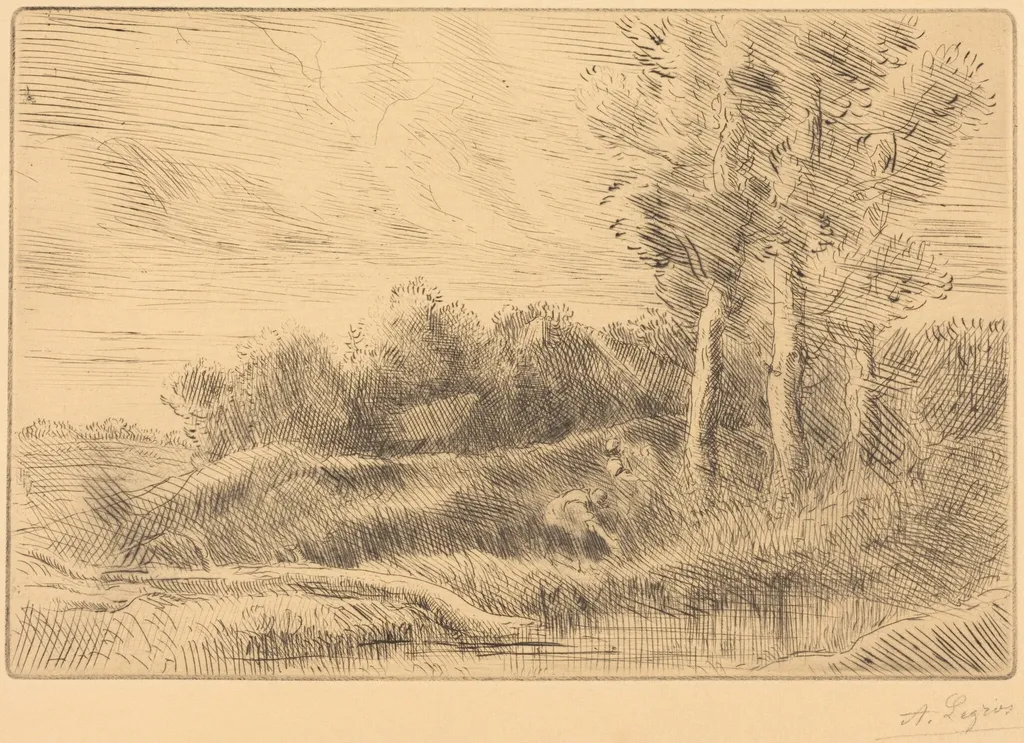
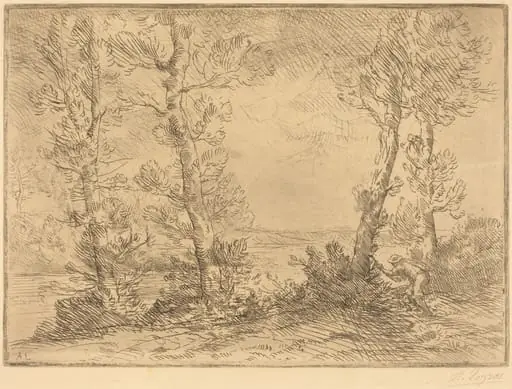
The House of the Well (La maison du puits) is an ink print by the Romanticist artist Alphonse Legros. It dates from 1874 and is held in the collection of the National Gallery of Art.
About this work
Overview
The work belongs to a body of graphic pieces that helped reinvigorate printmaking in Victorian Britain.
Created in 1874, *The House of the Well* is an etching and drypoint by Alphonse Legros, a French artist who moved to London in 1863 and later became a British citizen. The work belongs to a body of graphic pieces that helped reinvigorate printmaking in Victorian Britain. Legros, known for his precision and sensitivity to tone, used the intimate scale and tactile qualities of etching to capture quiet rural scenes, distinguishing his approach from the more dramatic styles of his contemporaries.
Subject & Meaning
The scene portrays a modest dwelling beside a well, nestled within a quiet, overgrown landscape. No figures are present, emphasizing solitude and the passage of time. The well, a symbol of sustenance and domestic life, anchors the composition, while the distant horizon suggests an expansive, unhurried countryside. The absence of human activity invites contemplation rather than narrative, reflecting Legros’s interest in the dignity of ordinary places.
Technique & Style
Legros combined etching with drypoint to achieve rich tonal variation and fine texture. The drypoint’s burr creates soft, velvety shadows, especially in the foliage and the earth around the well, while etched lines define architectural forms with clarity. His method avoids bold contrasts, favoring subtle gradations that mimic natural light. The result is a quiet realism, where texture and atmosphere take precedence over detail, enhancing the scene’s stillness.
History & Provenance
The print was made during Legros’s early years in England, when he was establishing himself as a teacher at the Slade School of Art. It reflects his commitment to reviving etching as a serious artistic medium, moving away from reproductive prints toward original, expressive work. Though specific early ownership records are sparse, the piece entered institutional collections in the 20th century, recognized for its role in the British etching revival.
Context
In the 1870s, British printmaking was undergoing a renaissance, with artists turning to etching as a personal, hands-on alternative to industrial reproduction. Legros, trained in France and influenced by Rembrandt and Daumier, brought continental sensibilities to London. His focus on rural simplicity aligned with broader Victorian interests in authenticity and the pastoral, yet his approach remained restrained, avoiding sentimentality in favor of quiet observation.
Legacy
Legros’s prints, including *The House of the Well*, influenced a generation of British etchers through his teaching and exhibitions. His emphasis on tonal nuance and direct engraving techniques helped shift printmaking from craft to fine art. Though less widely known today, his work remains a touchstone for those studying the revival of original printmaking in late 19th-century Britain, valued for its technical discipline and understated emotion.
Own this work as a print
Artist & collection

Artist
Alphonse Legros (French pronunciation: ; 8 May 1837 – 8 December 1911) was a French, later British, painter, etcher, sculptor, and medallist.

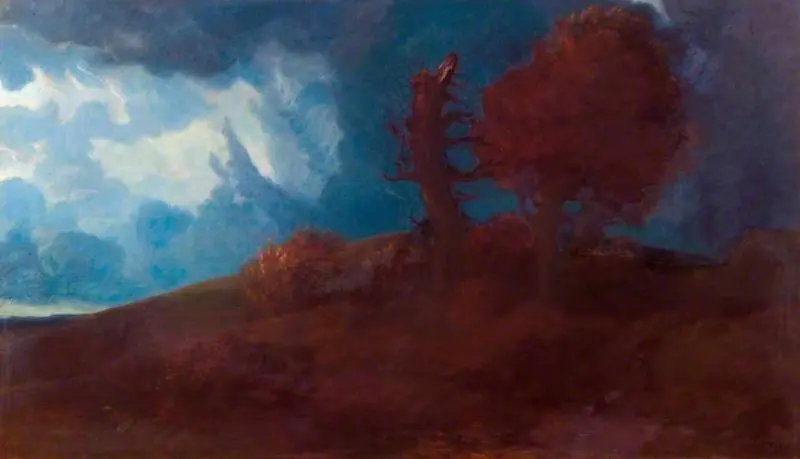
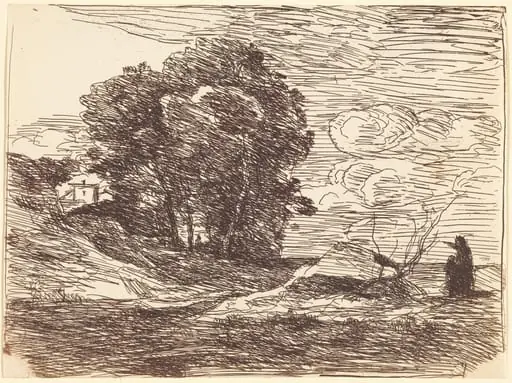 Poet's Dwelling (La Demeure du poete)
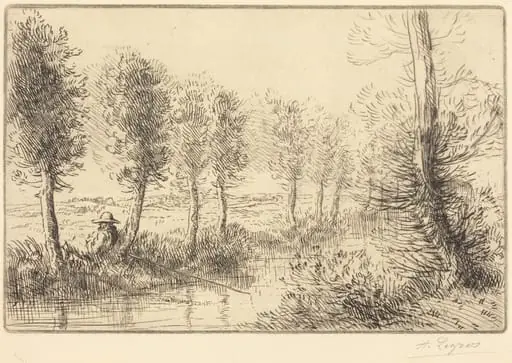 Near the Mill (Pres du moulin)
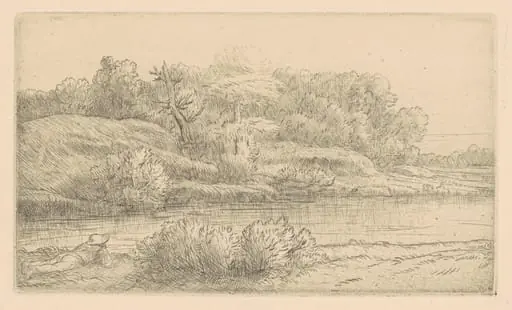 Banks of the Venelle (Bord de la Venelle)
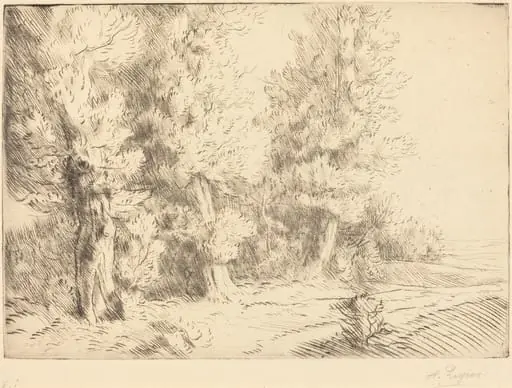 In the Forest of Fontainebleau (Dans la foret de Fontainebleau)
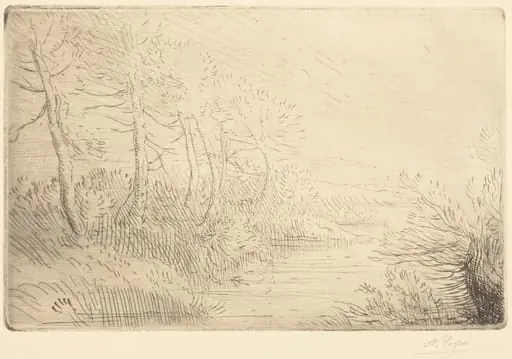 Riverbank (Bord de la riviere)
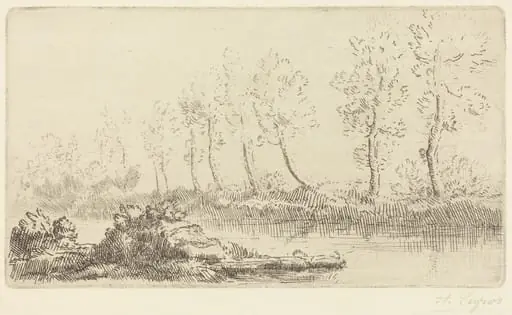 Banks of the Adour (Bord de l'Adour)
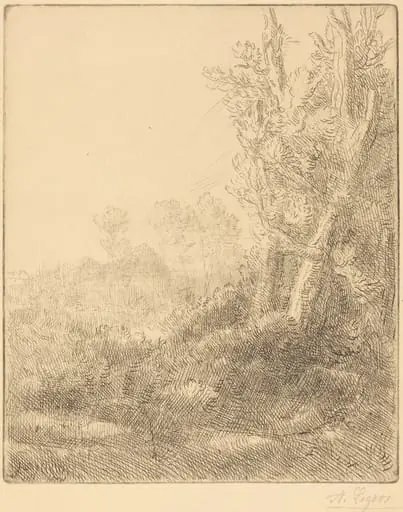 Old Village (Ville vieille)
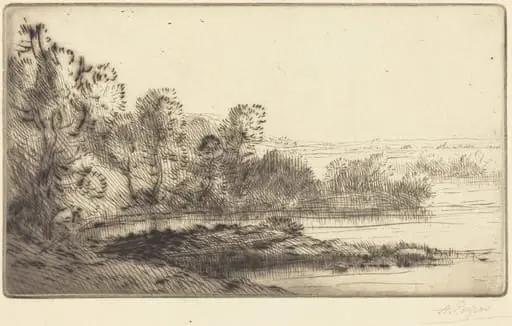 Along the Terne (Sur la terne)
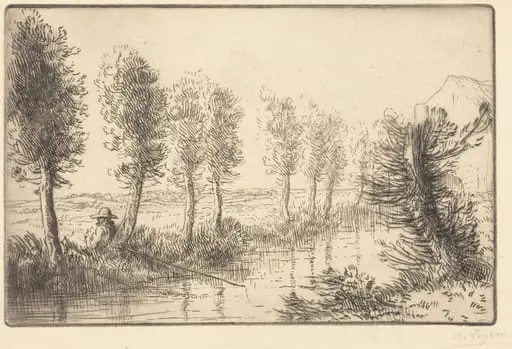 Near the Mill (Pres du moulin)
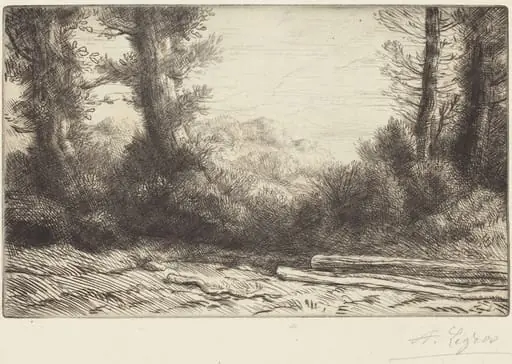 Edge of a Wood (Lisiere de bois)
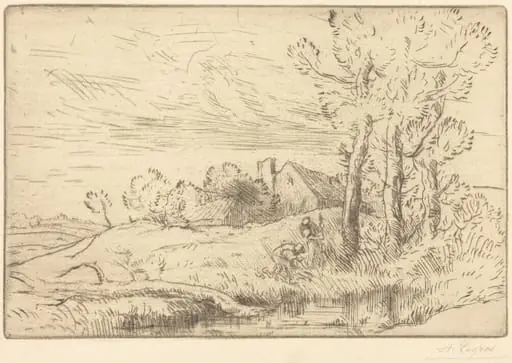 The House of the Well (La maison du puits)
 Salmon Fisher (Le pecheur du saumon)