Artwork
The Little Sister (La Petite Soeur)
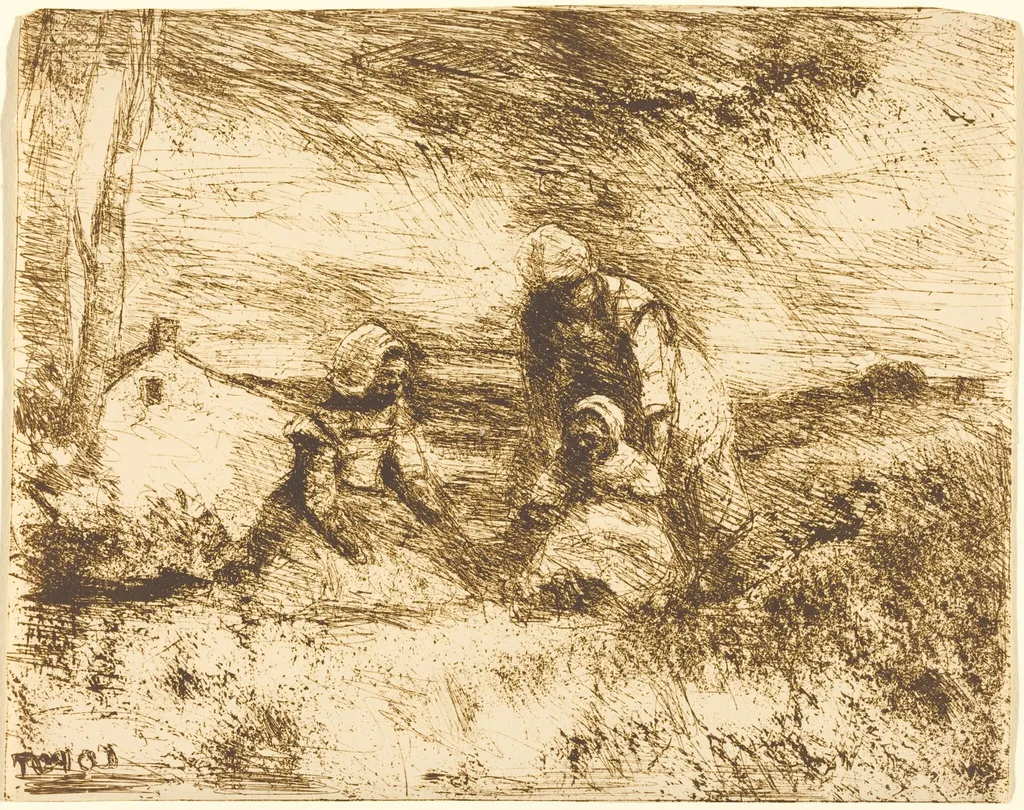
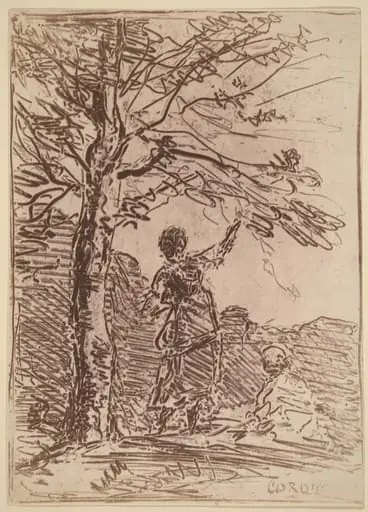
The Little Sister (La Petite Soeur) is a print by the Impressionist artist Jean Baptiste Camille Corot. It dates from 1854 and is held in the collection of the National Gallery of Art.
About this work
Overview
This work exemplifies Corot’s interest in experimental print techniques, blending drawing and photography-like processes to achieve subtle tonal gradations.
Created in 1854, *The Little Sister (La Petite Soeur)* is a cliché-verre print by Jean-Baptiste-Camille Corot, a French artist known for his atmospheric landscapes and quiet figural scenes. This work exemplifies Corot’s interest in experimental print techniques, blending drawing and photography-like processes to achieve subtle tonal gradations. Unlike traditional etchings, cliché-verre allowed for soft, painterly effects, aligning with Corot’s preference for mood over precision.
Subject & Meaning
The print depicts two indistinct figures in a dim, wooded setting—one smaller, suggesting a child, the other taller, possibly an adult. Their forms emerge faintly from the dark ground, emphasizing intimacy and quiet companionship rather than narrative detail. Corot avoids explicit storytelling, instead evoking a sense of tender stillness, characteristic of his poetic approach to domestic and rural life.
Technique & Style
Corot employed the cliché-verre method, drawing on a glass plate coated with opaque material, then exposing it to light through photographic paper. This technique produced soft, blurred edges and a range of grays, dissolving sharp contours. The result is a hazy, luminous atmosphere where light filters through foliage, creating a dreamlike depth. The absence of clear detail invites contemplation over observation.
History & Provenance
Made during a period when Corot was actively exploring printmaking alongside his painting, *The Little Sister* was likely produced in a small, private run. Few impressions survive, and its early ownership remains undocumented. It was not widely exhibited in Corot’s lifetime, reflecting its status as an intimate, experimental work rather than a public commission.
Context
In the mid-1850s, French artists were experimenting with new ways to capture light and atmosphere beyond academic conventions. Corot’s use of cliché-verre aligned with broader interests in photography and tonal harmony, while his subject matter—quiet rural figures—echoed Romantic and Barbizon School sensibilities. The work stands apart from his more famous oil landscapes, revealing his engagement with emerging visual technologies.
Legacy
Though not widely known during his lifetime, *The Little Sister* is now recognized as an early example of the artistic potential of photographic processes in printmaking. It influenced later generations interested in the intersection of drawing, light, and impermanence. Corot’s willingness to embrace ambiguity in form helped pave the way for more subjective, atmospheric approaches in modern printmaking.
Artist & collection
Artist
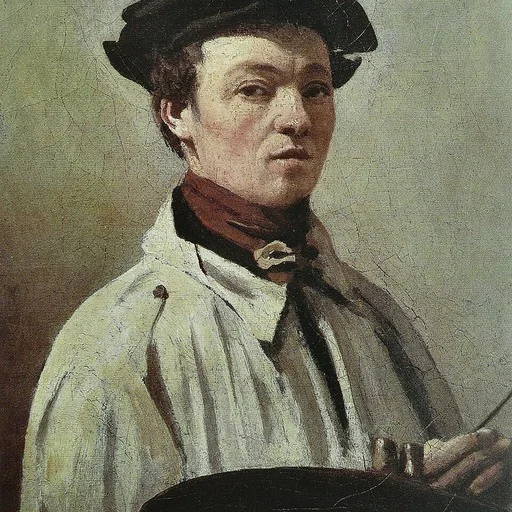
Jean-Baptiste-Camille Corot (UK: KORR-oh, US: kə-ROH, kor-OH; French: ; 16 July 1796 – 22 February 1875), or simply Camille Corot, was a French landscape and portrait painter as well as a printmaker in etching.

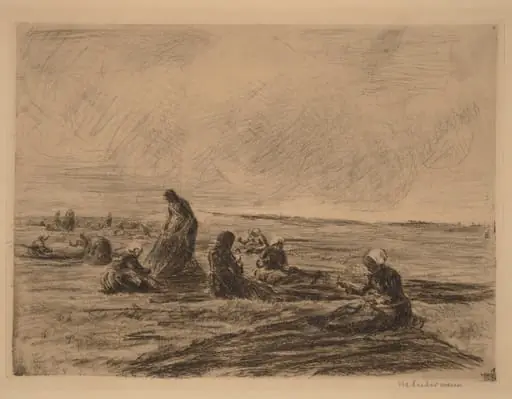 Mending the Nets
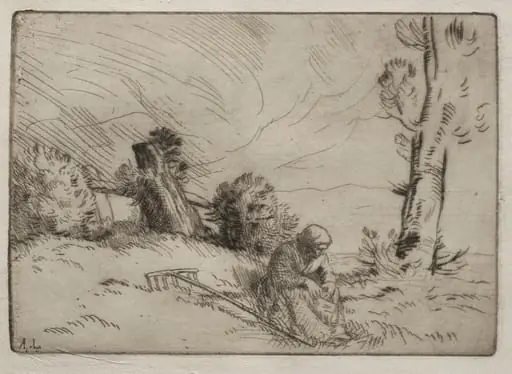 Peasant Woman Seated near a Hedge
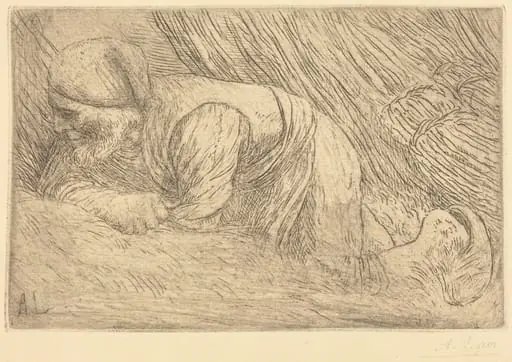 Fagot-gatherer (Le fagotier)
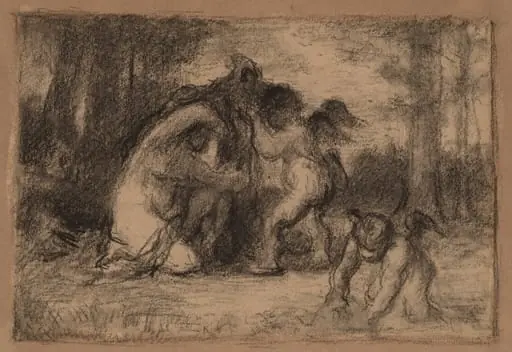 Wooded Landscape with Putti Helping a Woman Undress
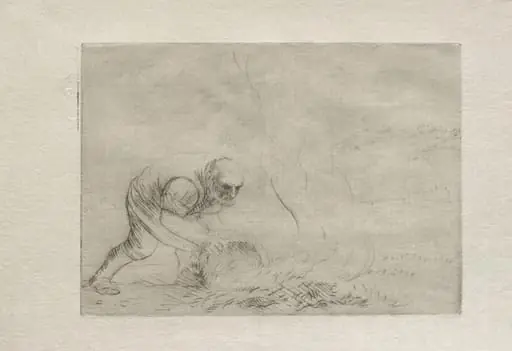 Burning the Grass
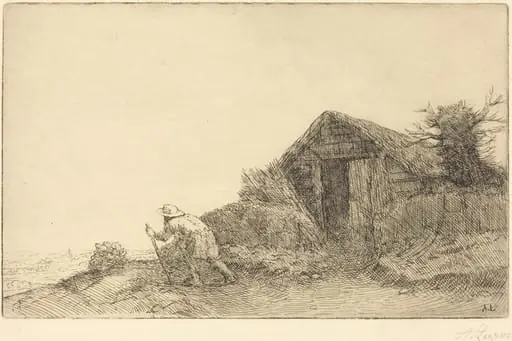 Along the Top of the Hill (Sur le haut de la colline)
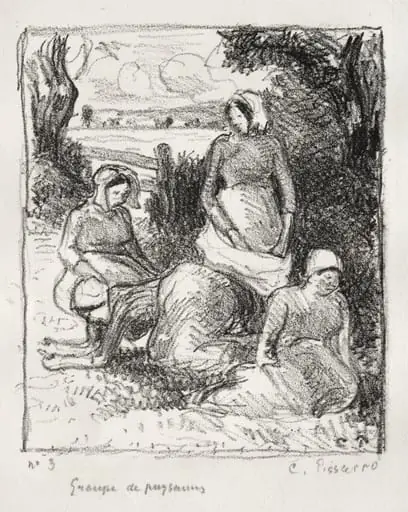 Group of Peasants
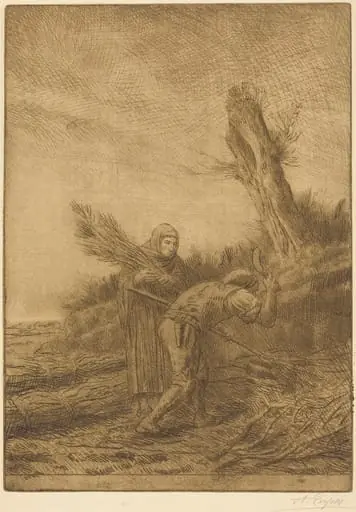 Fagot-makers (Les faiseurs de fagots)
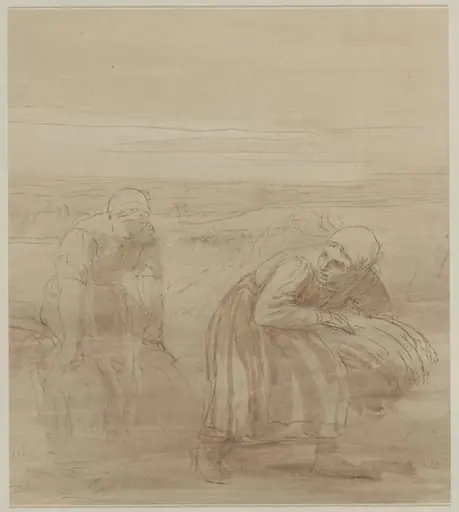 Les Glaneuses
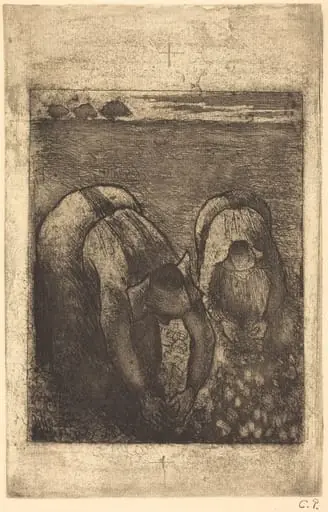 Peasants in a Field of Beans (Paysannes dans un champ de haricots)
 Young Woman and Death (La Jeune Fille et la Mort)
 Souvenir of Antibes (Souvenir d'Antibes)