Artwork
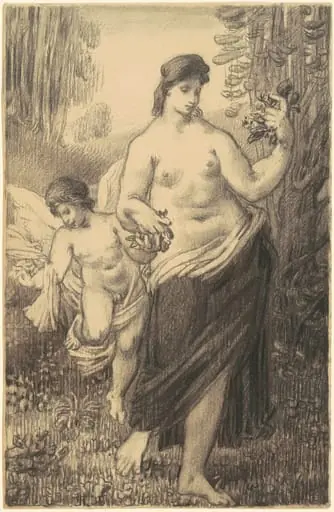
Wooded Landscape with Putti Helping a Woman Undress
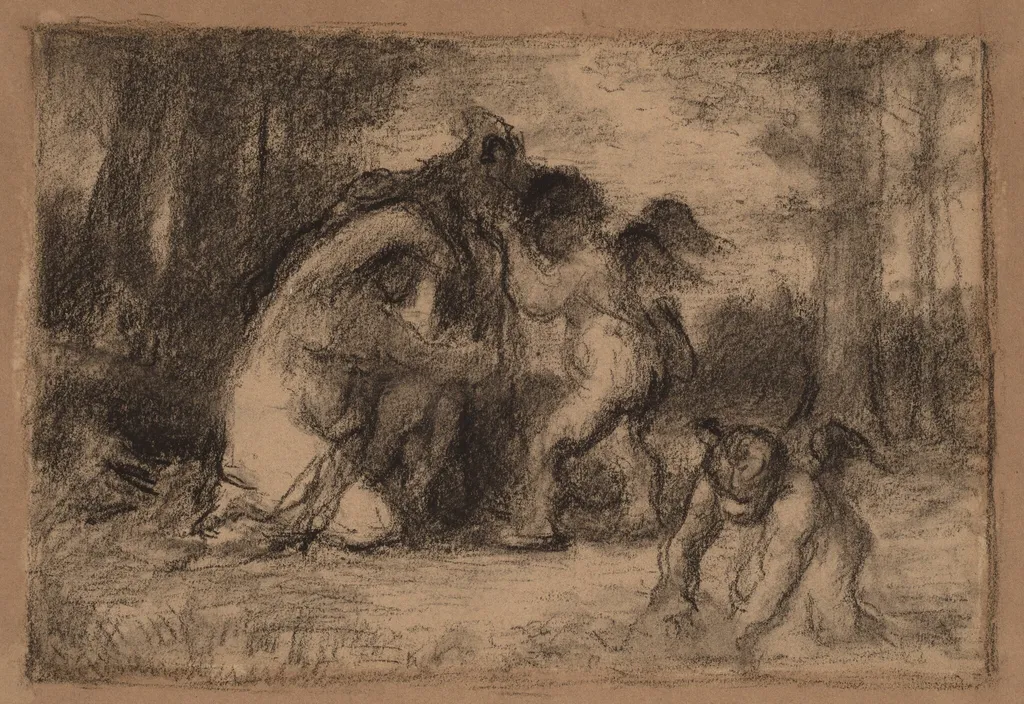
Wooded Landscape with Putti Helping a Woman Undress is a crayon drawing by the Romanticist artist William Perkins Babcock. It dates from 1862 and is held in the collection of the National Gallery of Art.
About this work
Overview
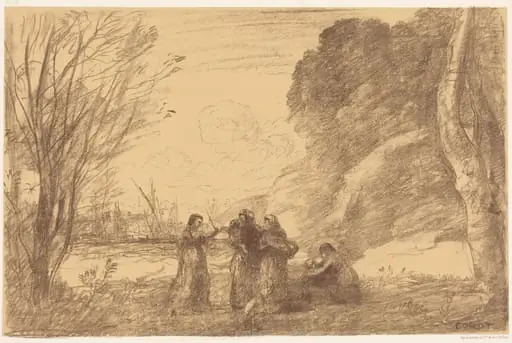
Wooded Landscape with Putti Helping a Woman Undress is a conté crayon drawing on laid paper, executed by William Perkins Babcock in 1862. The work depicts a scene where a woman is assisted by two putti in undressing, set amidst a dense, shadowy woodland environment.
Subject & Meaning
The drawing's subject revolves around a woman being hastily undressed by two winged putti in a foreboding, dark forest. The scene's intent is ambiguous, leaving interpretation open regarding the narrative or symbolic implications of the putti's actions and the woodland setting.
Technique & Style
Babcock utilized black and white conté crayon to achieve a pronounced chiaroscuro effect. Variations in crayon pressure created deep, dark shadows and softer, lighter areas, imbuing the scene with a sense of mystery and dynamism. The monochromatic palette heightens the dramatic and enigmatic qualities of the woodland setting.
History & Provenance
Created in 1862 by William Perkins Babcock, specific details regarding the drawing's provenance, exhibition history, or initial reception are not provided in the available information.
Context
The use of chiaroscuro in this drawing aligns with artistic techniques prevalent during the 19th century, where dramatic lighting was often employed to evoke emotion and depth. The inclusion of putti, mythical creatures commonly found in Renaissance and Baroque art, adds a layer of classical influence to the work.
Legacy
The lasting impact or influence of 'Wooded Landscape with Putti Helping a Woman Undress' on subsequent art or its recognition within Babcock's oeuvre is not detailed in the provided information.
Artist & collection


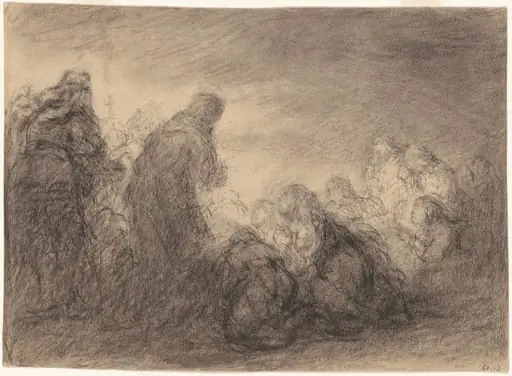 Group of Figures
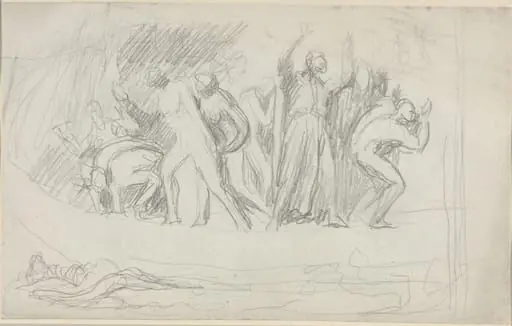 Study for "The Deluge"
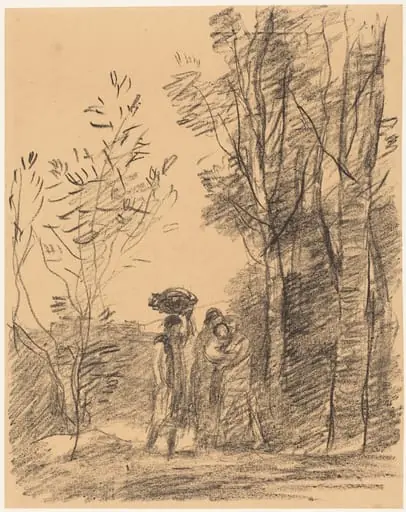 The Meeting in the Woods (La Rencontre du bosquet)
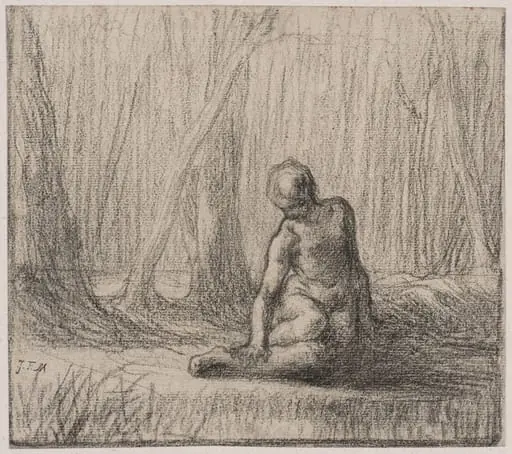 Female nude in a forest landscape
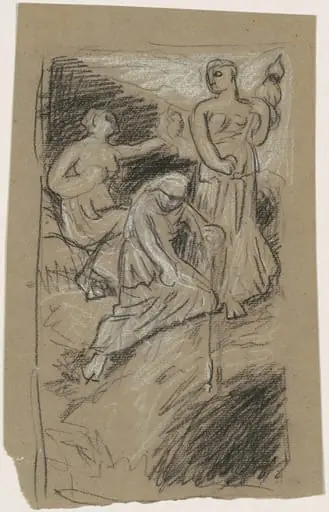 Study for "The Fates Gathering in the Stars"
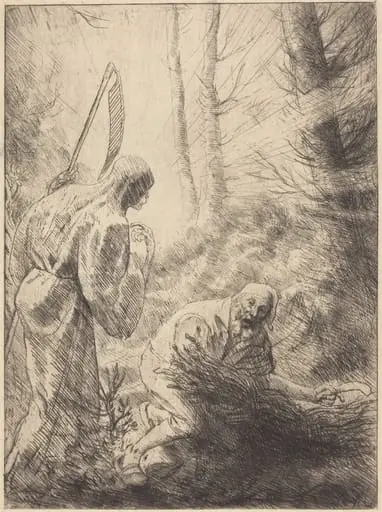 Death and the Woodcutter, 2nd plate (La Mort de le bucheron)
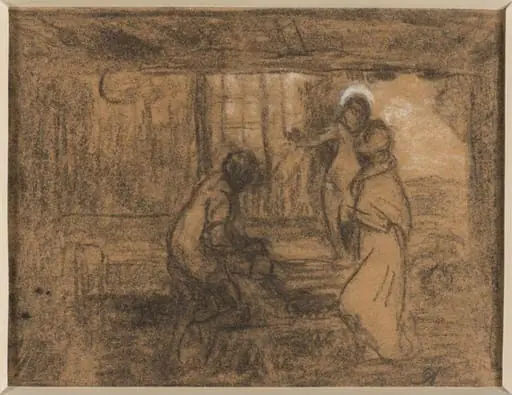 Study for the oil painting, "The Carpenter's Shop."
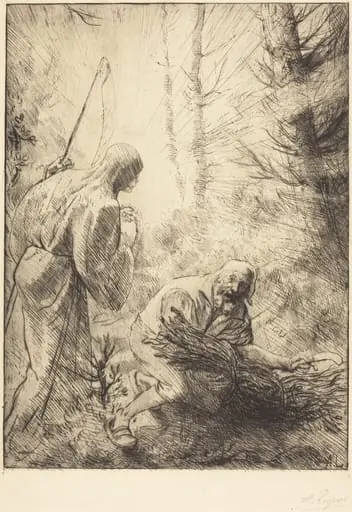 Death and the Woodcutter, 2nd plate (La mort et le bucheron)
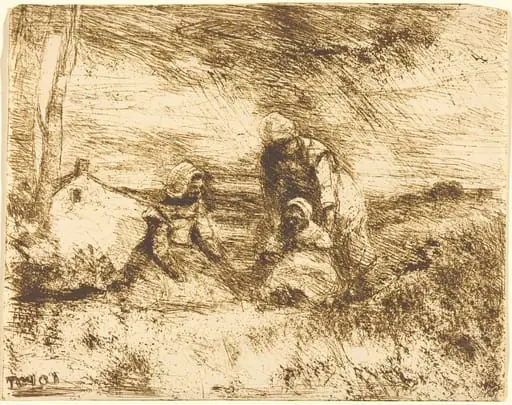 The Little Sister (La Petite Soeur)
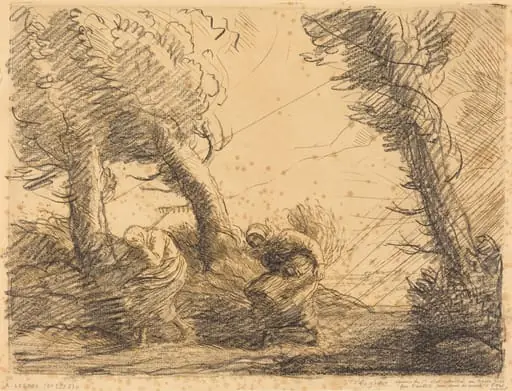 Harvesters Surprised by the Storm (Moissoneuses surprises par l'orage)
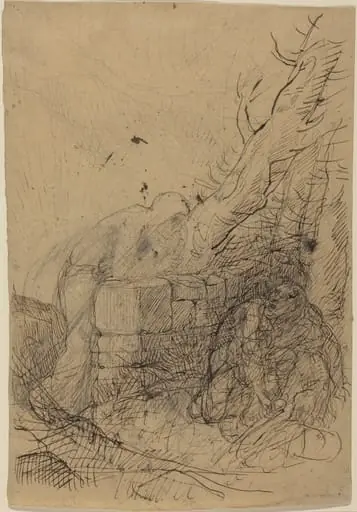 Death and the Woodcutter
 Family at Terracina (Une famille a terracine)