Artwork
The Bell Tower of St. Nicolas-Lez-Arras (Le Clocher de St. Nicolas-Lez-Arras)
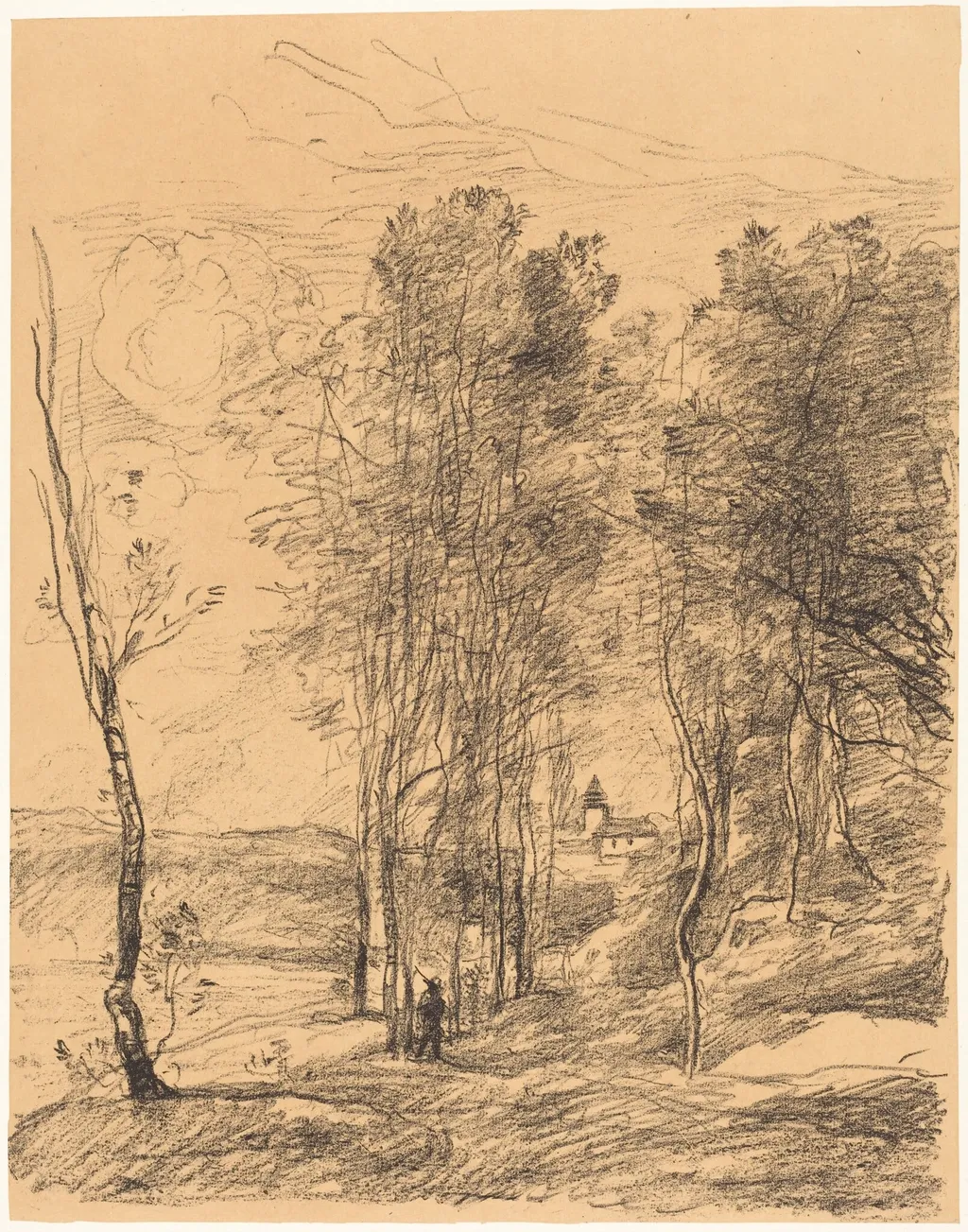
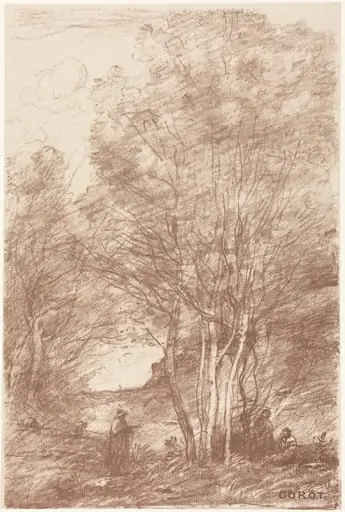
The Bell Tower of St. Nicolas-Lez-Arras (Le Clocher de St. Nicolas-Lez-Arras) is an ink print by the Impressionist artist Jean Baptiste Camille Corot. It dates from 1871 and is held in the collection of the National Gallery of Art. Created in 1871, *The Bell Tower of St.
About this work
Overview
Nicolas-Lez-Arras* is a lithograph by Jean-Baptiste-Camille Corot, reflecting his engagement with printmaking alongside his better-known paintings.
Created in 1871, *The Bell Tower of St. Nicolas-Lez-Arras* is a lithograph by Jean-Baptiste-Camille Corot, reflecting his engagement with printmaking alongside his better-known paintings. The work captures a modest ecclesiastical structure in northern France, rendered with subtle tonal gradations. Corot’s approach here merges careful observation with a quiet, meditative atmosphere, characteristic of his later graphic work.
Subject & Meaning
The composition centers on the bell tower of a local church, framed by surrounding trees and a solitary figure in the foreground. Rather than emphasizing grandeur, Corot presents the tower as an integrated element of the landscape, grounding it in everyday rural life. The figure, small and unobtrusive, suggests human presence without narrative, reinforcing the quiet dignity of the scene.
Technique & Style
Corot employed lithography to achieve soft, atmospheric effects, using a restrained palette of grays and browns to evoke depth and mood. His handling of tone—delicate hatching and layered washes—creates a sense of light filtering through foliage. The technique aligns with his broader interest in capturing transient natural conditions, bridging the precision of academic tradition with the immediacy of outdoor observation.
History & Provenance
The print was made during Corot’s later years, when he increasingly turned to lithography as a means of exploring landscape themes outside the constraints of oil painting. It likely originated from sketches made during his travels in northern France. While specific early ownership records are sparse, the work entered institutional collections in the 20th century as interest in his graphic oeuvre grew.
Context
In 1871, France was recovering from the Franco-Prussian War and the Paris Commune, yet Corot remained focused on serene, uneventful landscapes. His choice to depict a provincial church tower reflects a deliberate turn away from political or urban themes. This work belongs to a broader trend among French artists who sought solace in rural subjects during times of national upheaval.
Legacy
Corot’s lithographs, including this one, influenced later generations of printmakers who valued tonal subtlety over bold line work. Though less celebrated than his paintings, these prints demonstrate his consistent commitment to quiet observation and atmospheric harmony. They remain important for understanding the transition from 19th-century academic landscape to the more spontaneous approaches of Impressionism.
Own this work as a print
Artist & collection
Artist
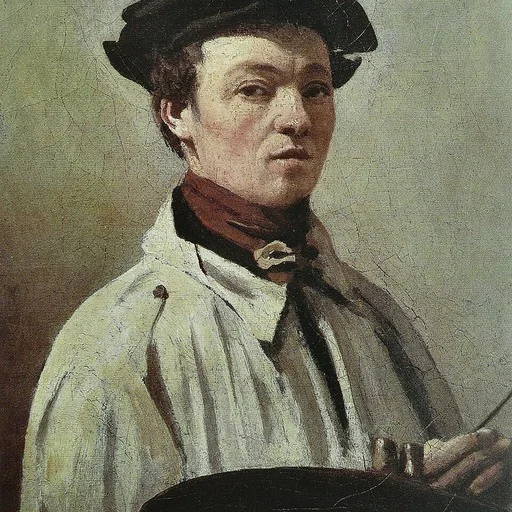
Jean-Baptiste-Camille Corot (UK: KORR-oh, US: kə-ROH, kor-OH; French: ; 16 July 1796 – 22 February 1875), or simply Camille Corot, was a French landscape and portrait painter as well as a printmaker in etching.

 The Philosophers' Retreat (Le Repos des Philosophes)
 Souvenir of Lake Maggiore (Souvenir du Lac Majeur)
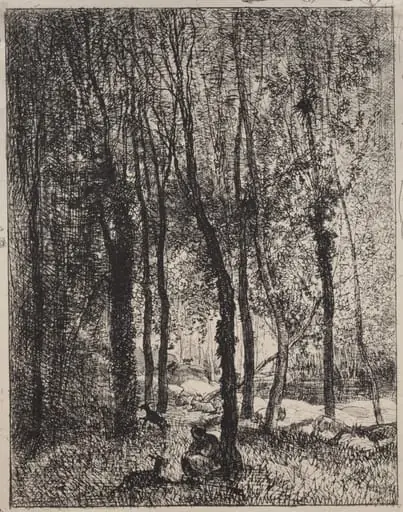 The Goatherd Girl
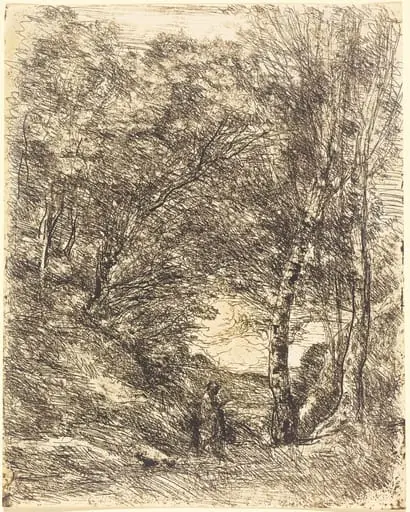 The Gardens of Horace (Les Jardins d'Horace)
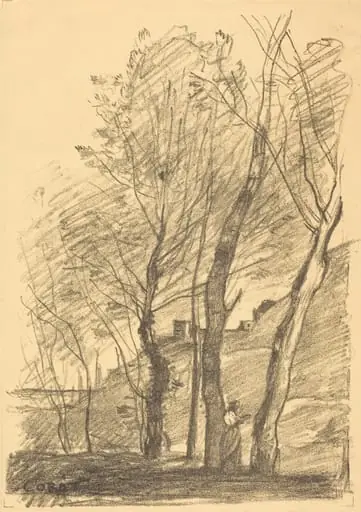 Reading Beneath the Trees (La Lecture sous les arbres)
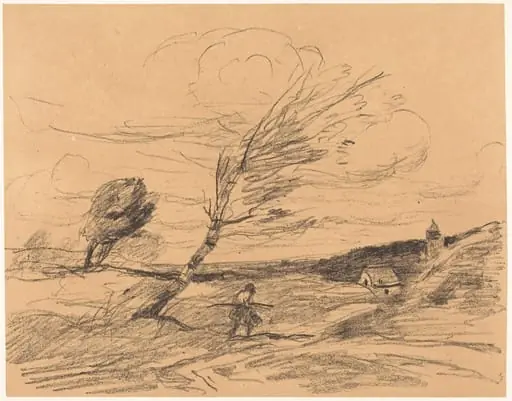 The Gust of Wind (Le Coup de vent)
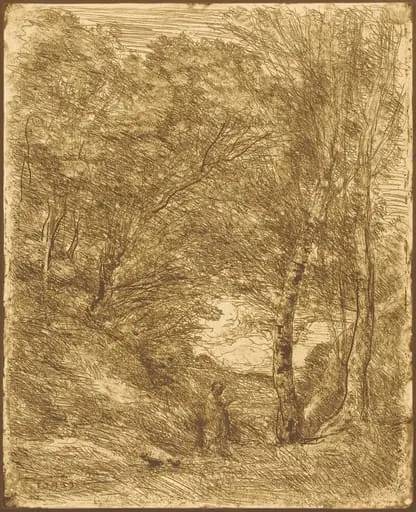 The Gardens of Horace (Les Jardins d'Horace)
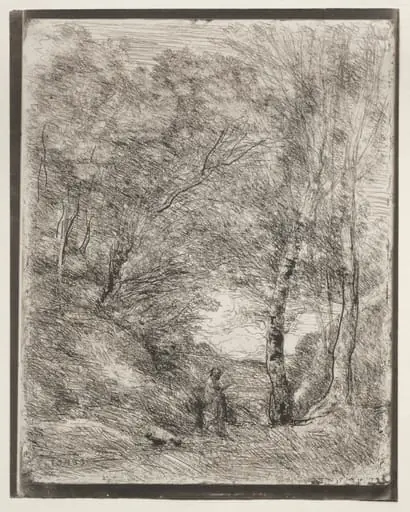 The Gardens of Horace
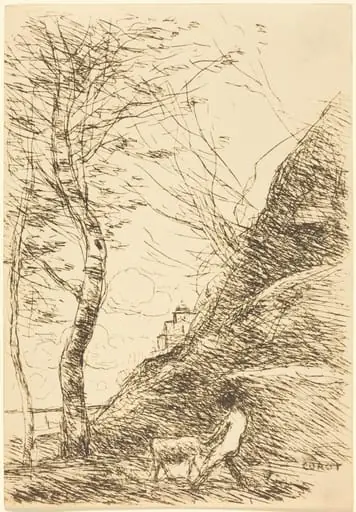 Shepherd Struggling with a Goat (Berger luttant avec sa chevre)
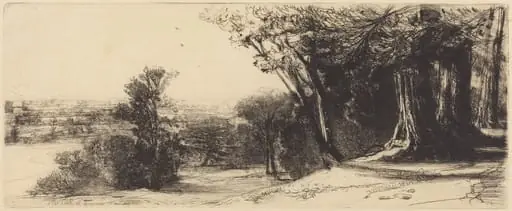 Early Morning - Richmond
 Banks of the Saint-Pre (Rive du Saint-Pre)
 La Petite Mare