Artwork
The Poet and His Muse (Le Poete et la muse)
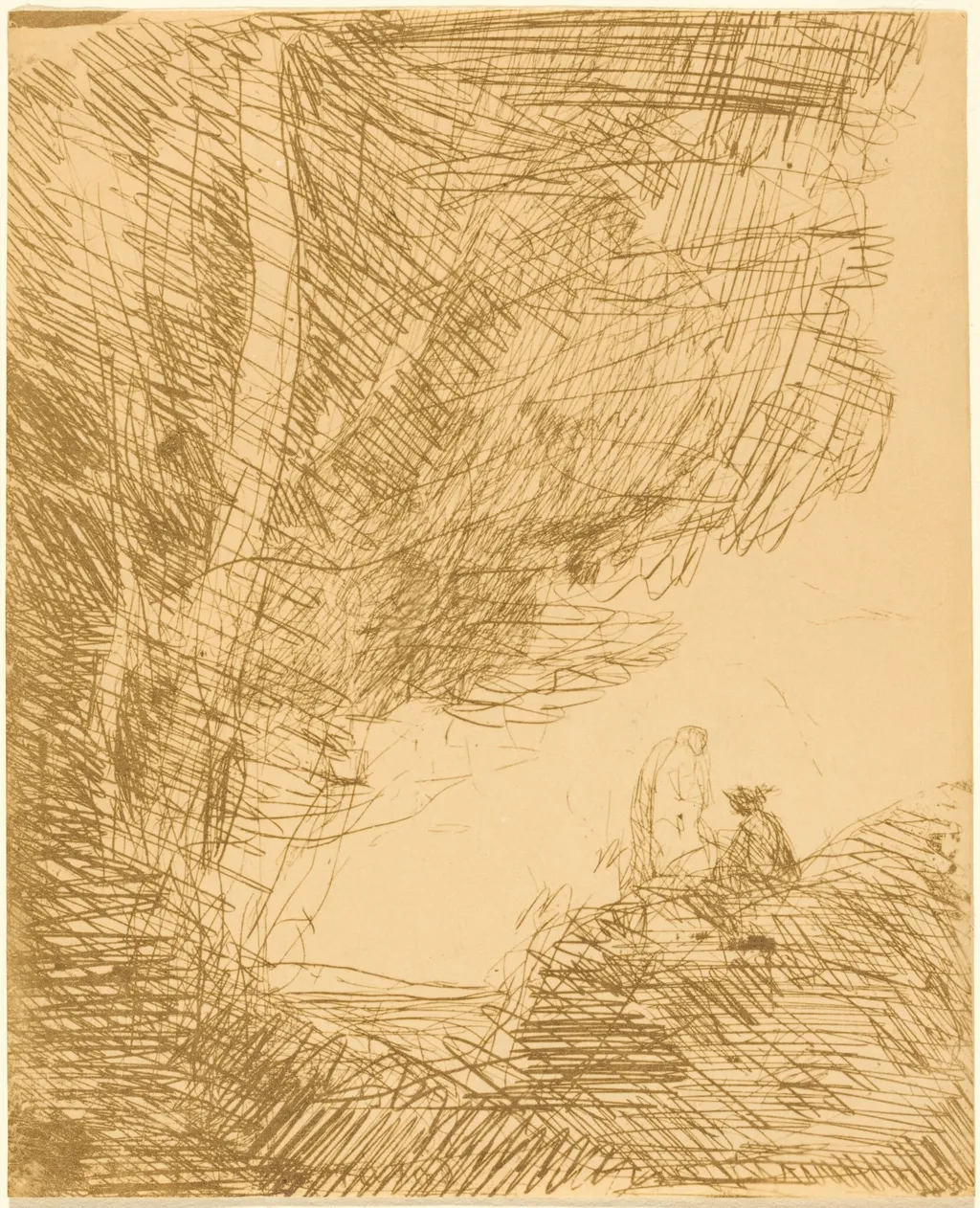
The Poet and His Muse (Le Poete et la muse) is a print by the Impressionist artist Jean Baptiste Camille Corot. It dates from 1871 and is held in the collection of the National Gallery of Art.
About this work
Overview
Created in 1871, *The Poet and His Muse* is a cliché-verre print by Jean-Baptiste-Camille Corot, blending drawing and photographic processes.
Created in 1871, *The Poet and His Muse* is a cliché-verre print by Jean-Baptiste-Camille Corot, blending drawing and photographic processes. The work emerges from Corot’s late experimentation with alternative printmaking methods, moving beyond his better-known oil landscapes. Its intimate scale and muted palette reflect a contemplative mood, characteristic of his later years, when he increasingly favored poetic suggestion over detailed representation.
Subject & Meaning
The image presents two indistinct figures in the lower right corner: one seated, the other nearby, possibly a companion or symbolic presence. Their small scale and ambiguity invite interpretation as poet and muse, though no narrative is fixed. The surrounding vegetation—dense, loosely rendered—dominates the composition, suggesting nature as the true subject, with human figures merely passing through it, evoking a quiet, lyrical solitude.
Technique & Style
Corot employed cliché-verre, a process involving drawing on glass with opaque material, then printing the image onto photosensitive paper. The result is a soft, tonal image with blurred edges and a warm, brownish hue. Lines are hesitant and sketchlike, resembling charcoal scribbles, emphasizing atmosphere over definition. This method allowed Corot to merge the spontaneity of drawing with the subtlety of light found in his paintings.
History & Provenance
Made during Corot’s final decade, the print belongs to a small group of experimental works he produced after 1860. Unlike his commercial oil paintings, these cliché-verres were often personal, not intended for public sale. Few were printed in large editions, and most remained in his studio or among close associates. This piece likely circulated among fellow artists and collectors familiar with his evolving practice.
Context
In the 1870s, Corot stood between traditional academic approaches and the radical innovations of the Impressionists. While he never fully embraced plein-air painting as they did, his late works, including this print, show a growing interest in transient effects and loose handling. The cliché-verre technique aligned with his preference for mood over detail, offering a middle ground between drawing and photography, both emerging as serious artistic tools.
Legacy
Corot’s cliché-verres, though obscure in his lifetime, influenced later printmakers drawn to tonal subtlety and experimental processes. His use of the medium demonstrated how traditional subjects could be reimagined through new technologies. Today, these works are valued for their quiet innovation, revealing an artist at ease with ambiguity and the poetic potential of imperfection.
Artist & collection
Artist
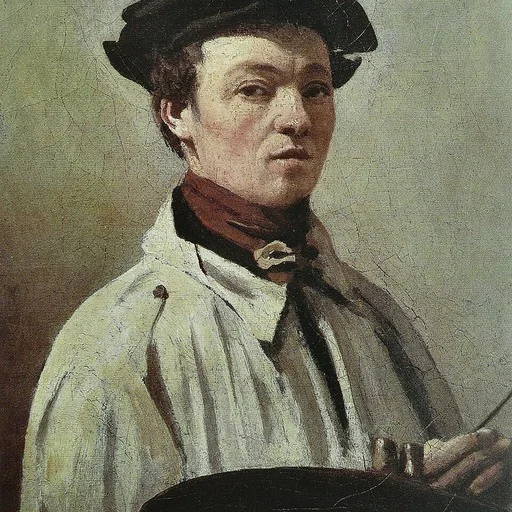
Jean-Baptiste-Camille Corot (UK: KORR-oh, US: kə-ROH, kor-OH; French: ; 16 July 1796 – 22 February 1875), or simply Camille Corot, was a French landscape and portrait painter as well as a printmaker in etching.

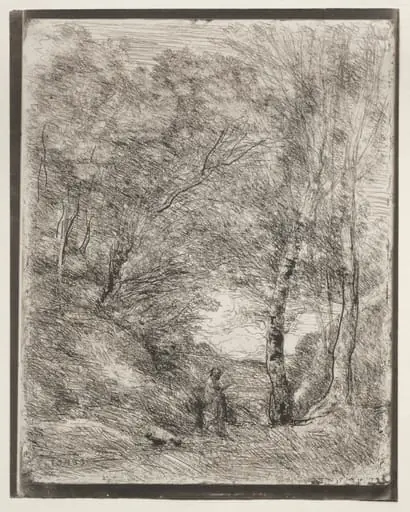 The Gardens of Horace
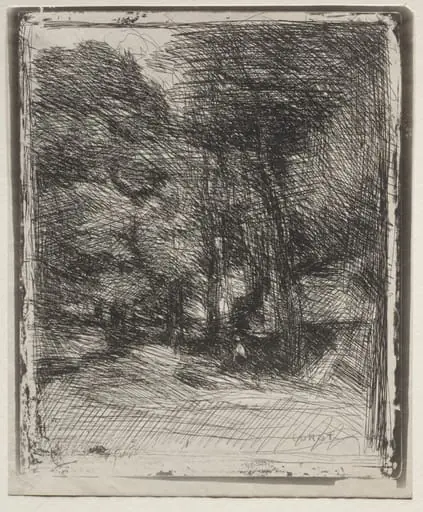 A Souvenir of the Bas-Bréau
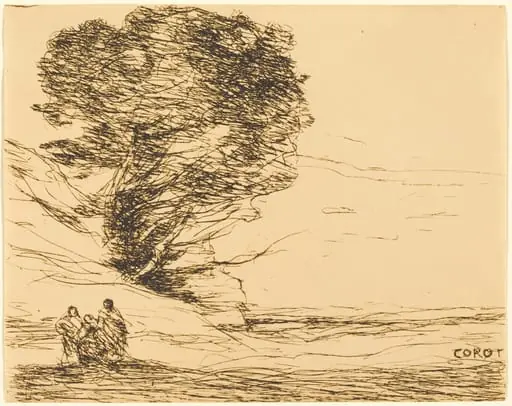 Souvenir of Antibes (Souvenir d'Antibes)
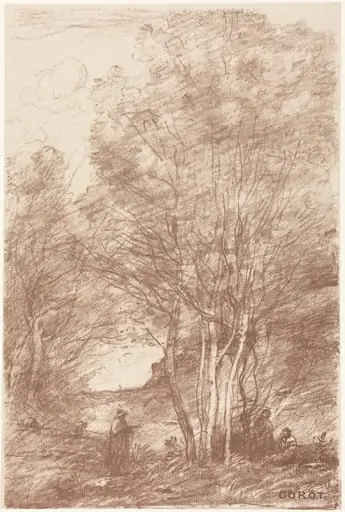 The Philosophers' Retreat (Le Repos des Philosophes)
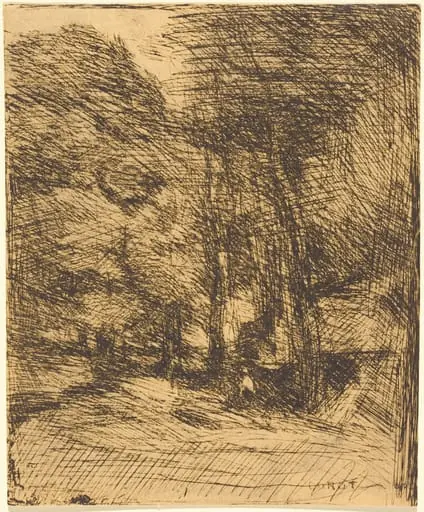 Souvenir of Bas-Breau (Souvenir du Bas-Breau)
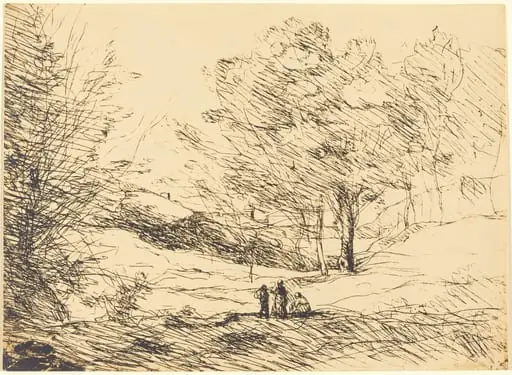 Souvenir of Lake Maggiore (Souvenir du Lac Majeur)
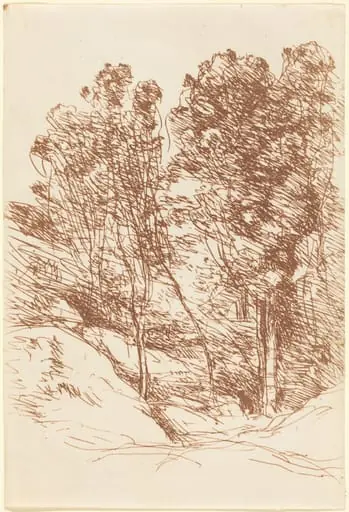 Souvenir of the Sole Valley (Souvenir de la Vallee de la Sole)
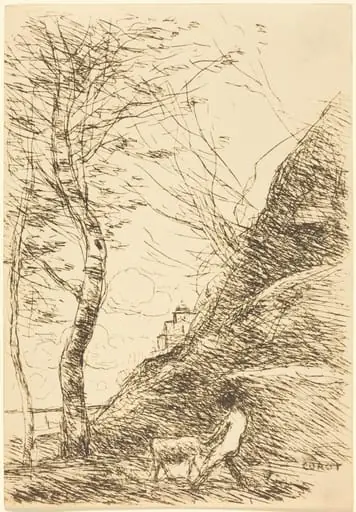 Shepherd Struggling with a Goat (Berger luttant avec sa chevre)
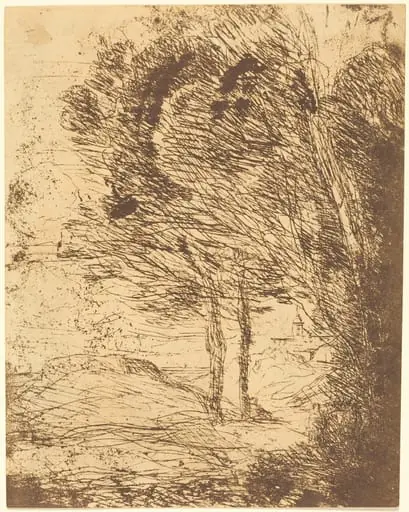 Environs of Genoa (Environs de Genes)
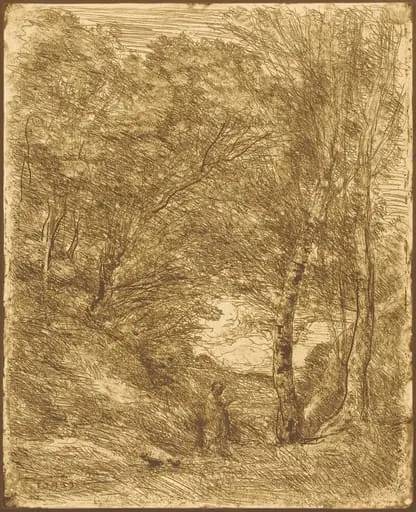 The Gardens of Horace (Les Jardins d'Horace)