Artwork
The Woodcutter of Rembrandt (Le Bucheron de Rembrandt)
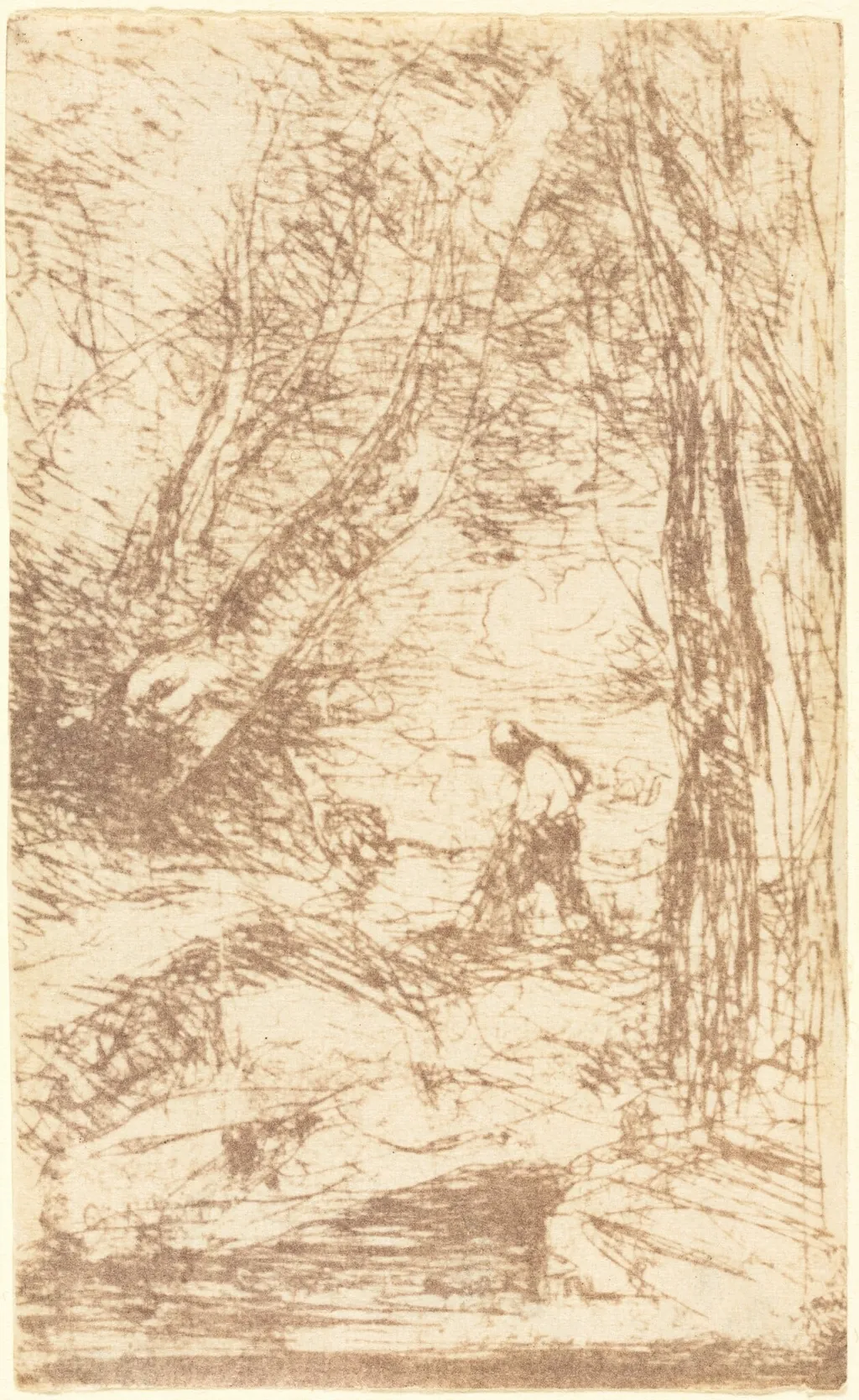
The Woodcutter of Rembrandt (Le Bucheron de Rembrandt) is a print by the Impressionist artist Jean Baptiste Camille Corot. It dates from 1853 and is held in the collection of the National Gallery of Art.
About this work
Overview
The Woodcutter of Rembrandt is a print created by Jean-Baptiste-Camille Corot in 1853 using the cliché-verre technique, a process that combines elements of drawing and photography.
Technique & Style
Corot employed hand-painted glass plates exposed to light-sensitive paper to achieve a blend of delicate lines and soft, diffused tones in the print, characteristic of the cliché-verre method.
Subject & Meaning
The print depicts a lone figure in a forest, a theme reminiscent of Corot's landscape paintings, which often explored rustic subjects and the effects of natural light.
Context
The work reflects Corot's experimentation with printmaking, a medium that allowed him to capture the subtleties of light and atmosphere in a unique and innovative way.
Artist & collection
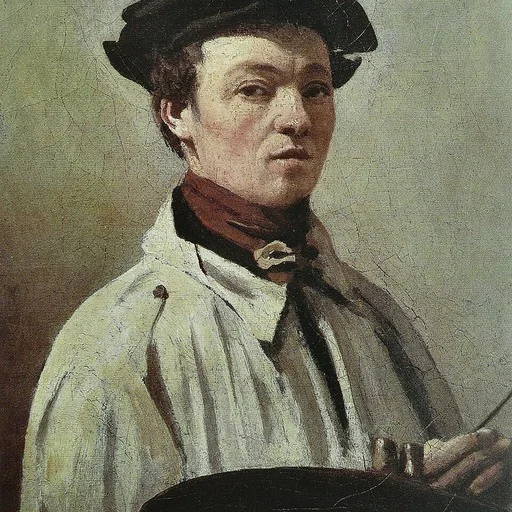
Artist
Jean-Baptiste-Camille Corot (UK: KORR-oh, US: kə-ROH, kor-OH; French: ; 16 July 1796 – 22 February 1875), or simply Camille Corot, was a French landscape and portrait painter as well as a printmaker in etching.

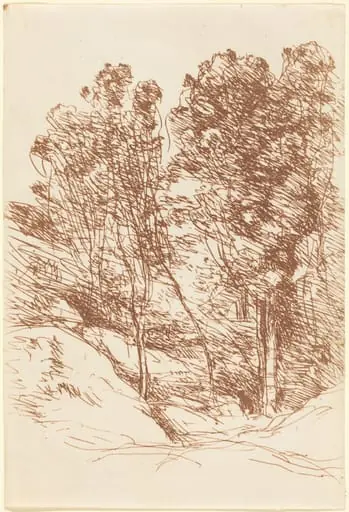 Souvenir of the Sole Valley (Souvenir de la Vallee de la Sole)
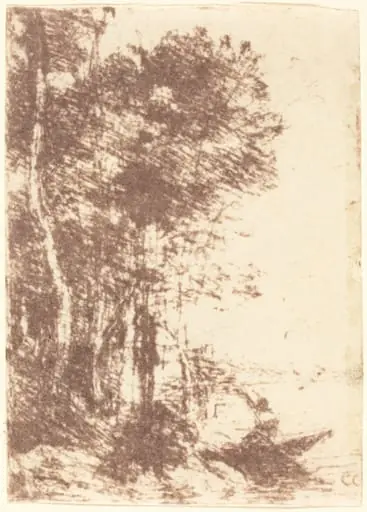 Souvenir of Fampoux (Souvenir de Fampoux)
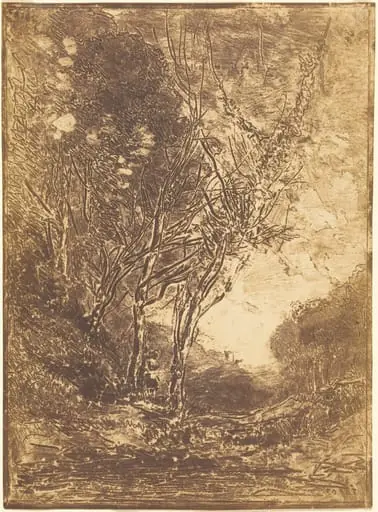 Ambush (L'Embuscade)
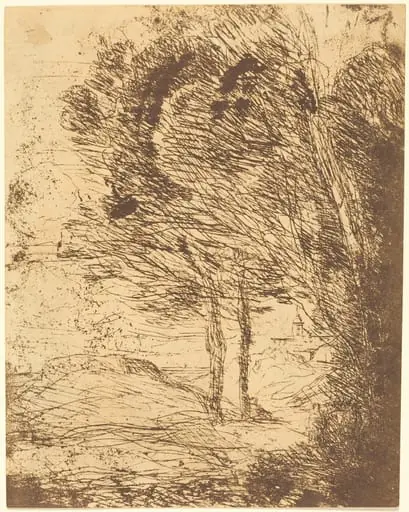 Environs of Genoa (Environs de Genes)
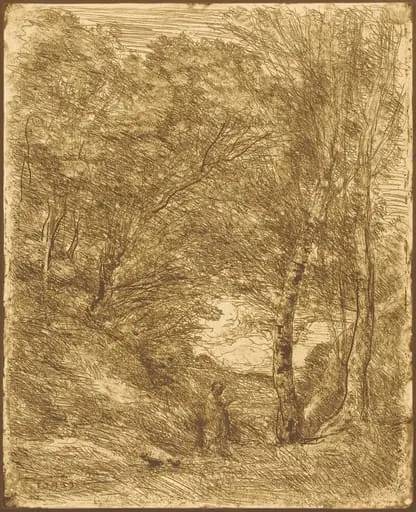 The Gardens of Horace (Les Jardins d'Horace)
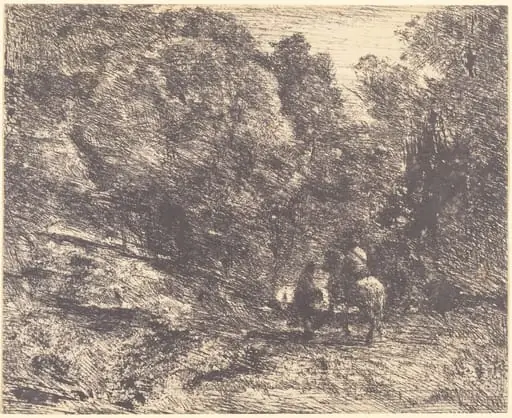 Horseman and Vagabond in the Forest (Le Cavalier en forêt et le piéton)
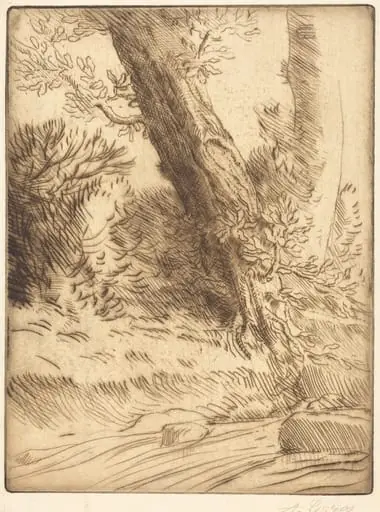 Edge of a Brook (Bord de ruisseau)
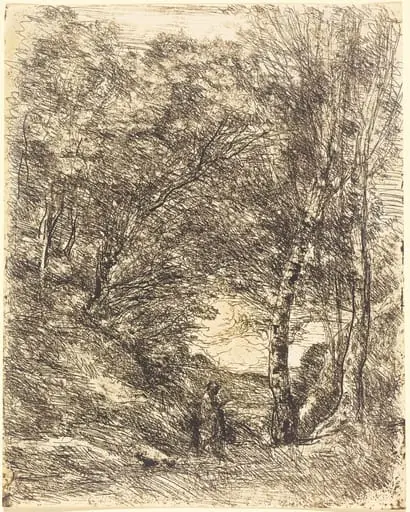 The Gardens of Horace (Les Jardins d'Horace)
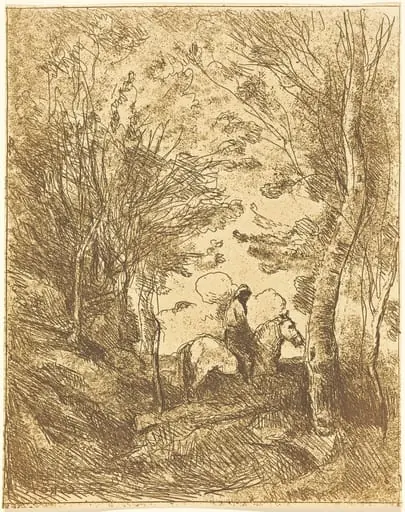 Horseman in the Woods, Large Plate (Le Grand Cavalier sous bois)
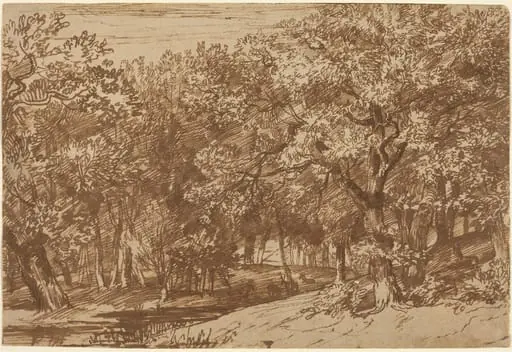 Deer Park
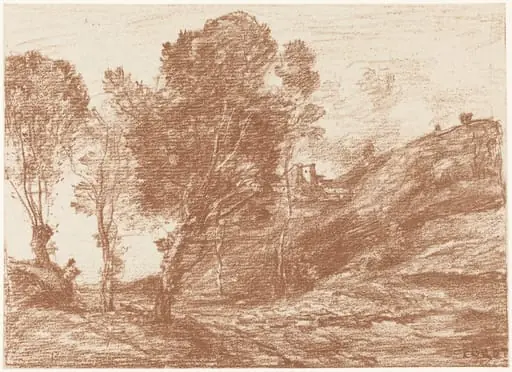 Souvenir of Italy (Souvenir d'Italie)
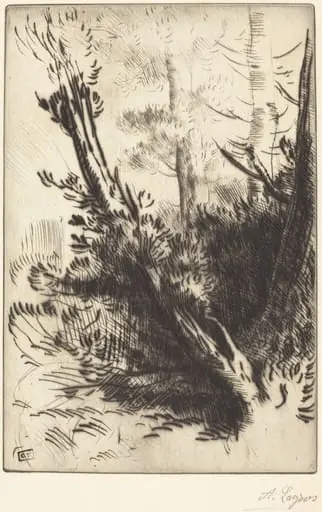 In the Woods (Dans les bois)