Artwork
Edge of a Brook (Bord de ruisseau)
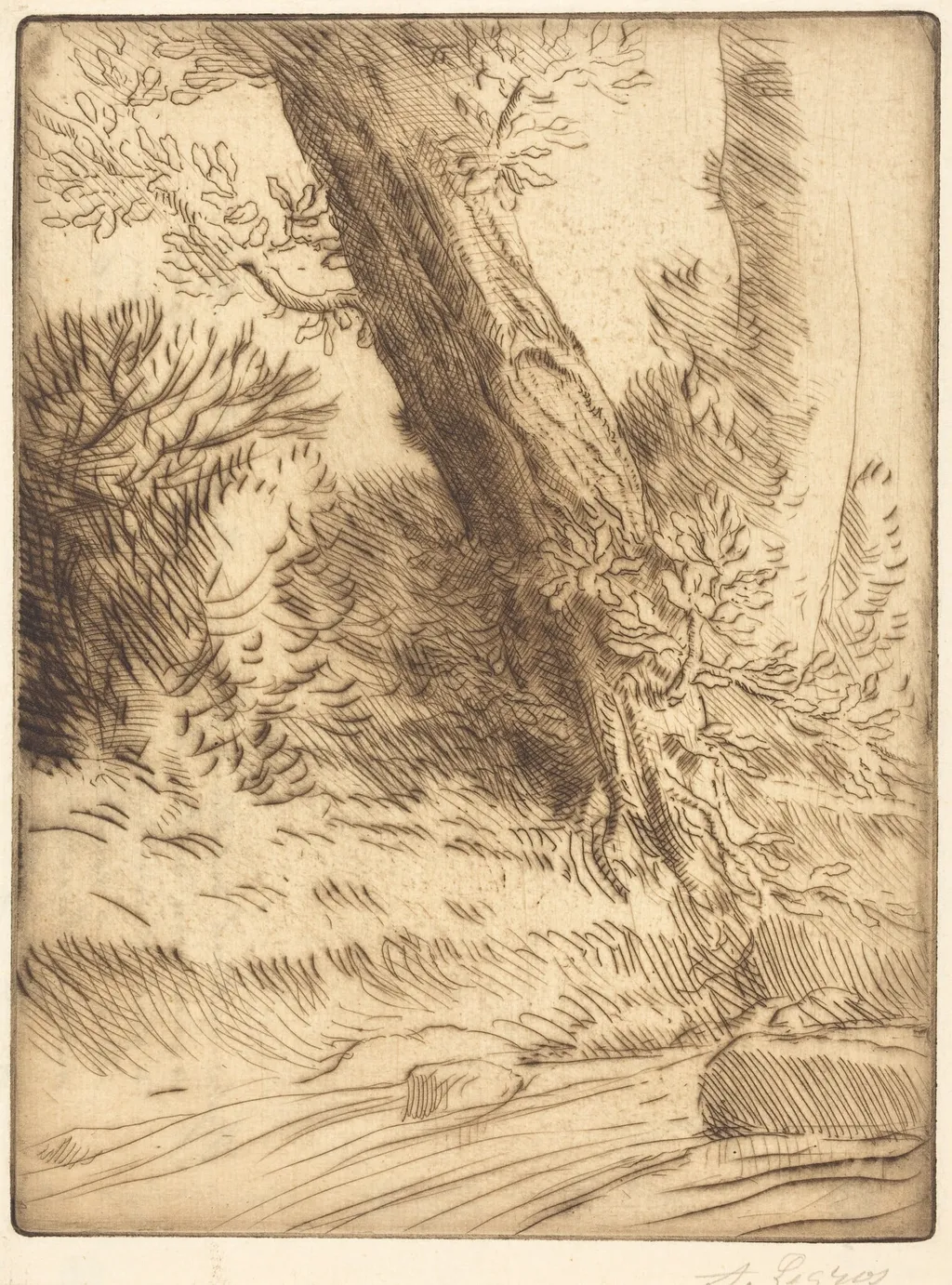
Edge of a Brook (Bord de ruisseau) is an ink print by the Romanticist artist Alphonse Legros. It dates from 1874 and is held in the collection of the National Gallery of Art.
About this work
Overview
Executed in brown ink, it captures a modest natural setting with quiet intensity, reflecting Legros’s broader engagement with printmaking as both art and craft.
Created in 1874, *Edge of a Brook (Bord de ruisseau)* is a drypoint print by Alphonse Legros, a French artist who settled in London in 1863 and later became a British citizen. The work belongs to a body of prints that helped reinvigorate interest in etching within 19th-century Britain. Executed in brown ink, it captures a modest natural setting with quiet intensity, reflecting Legros’s broader engagement with printmaking as both art and craft.
Subject & Meaning
The scene portrays a secluded stretch of brookside vegetation, where tangled branches, ferns, and grasses intertwine in a dense, unstructured composition. There is no human presence, and the focus lies in the organic chaos of undergrowth. The image conveys a sense of quiet observation rather than narrative, inviting contemplation of nature’s subtle rhythms and the quiet persistence of life in marginal spaces.
Technique & Style
Legros employed drypoint, a technique involving direct scratching of lines into a metal plate with a hardened needle. The resulting burr holds ink, producing rich, velvety lines with a tactile, uneven quality. In this print, the rough texture mimics the irregularity of natural forms—twigs, leaves, and blades of grass—enhancing the sense of immediacy and spontaneity, as if the scene were drawn on the spot.
History & Provenance
Made during Legros’s tenure at the Slade School of Fine Art in London, where he taught printmaking, the work emerged from a period of renewed interest in original etching among British artists. Though not widely exhibited at the time, it reflects his commitment to print as a serious medium. The print’s survival in institutional collections attests to its role in documenting the revival of intaglio techniques in late 19th-century Britain.
Context
In the 1870s, British art circles were reevaluating printmaking beyond reproductive engraving. Legros, influenced by French Realism and Japanese woodcuts, championed direct, expressive mark-making. *Edge of a Brook* aligns with this shift, favoring intimate, unidealized nature studies over grand historical themes. It stands as a quiet counterpoint to the prevailing academic styles of the era.
Legacy
The print exemplifies Legros’s influence on a generation of British printmakers who valued technical precision and emotional restraint. His emphasis on drypoint’s expressive potential helped legitimize the medium in academic settings. Though modest in scale, *Edge of a Brook* remains a touchstone for artists seeking to capture the complexity of natural forms through direct, unmediated drawing.
Own this work as a print
Artist & collection

Artist
Alphonse Legros (French pronunciation: ; 8 May 1837 – 8 December 1911) was a French, later British, painter, etcher, sculptor, and medallist.

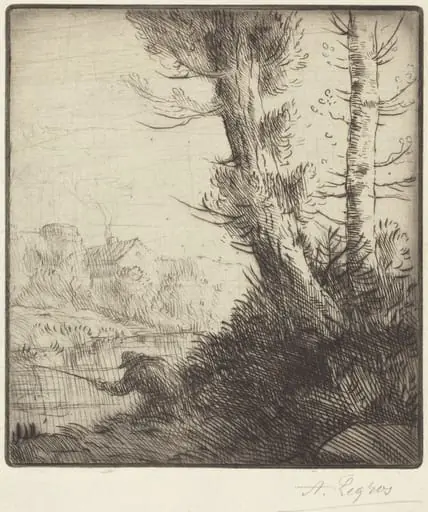 Banks of the Oise (Bord de l'Oise)
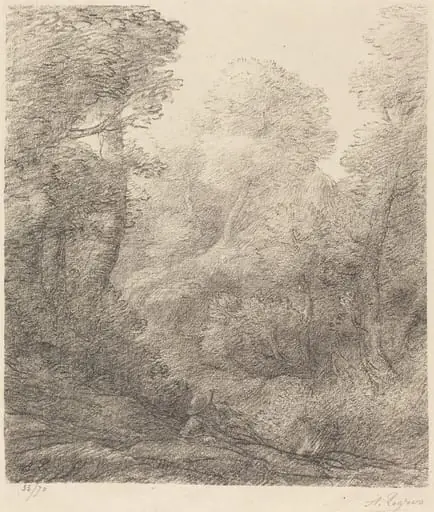 Landscape: Morning Mist (Paysage: Brumes du matin)
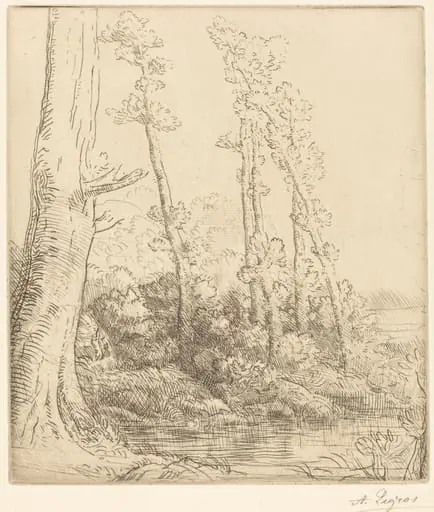 Little Pond (La petite mare)
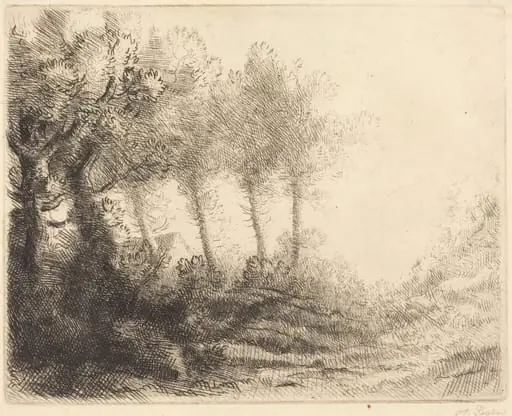 Landscape (Paysage)
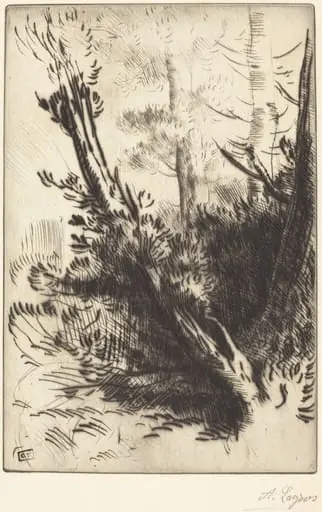 In the Woods (Dans les bois)
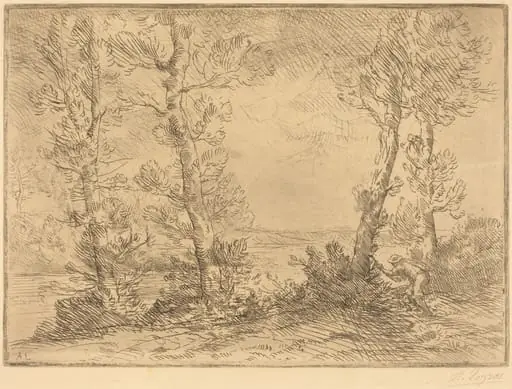 Salmon Fisher (Le pecheur du saumon)
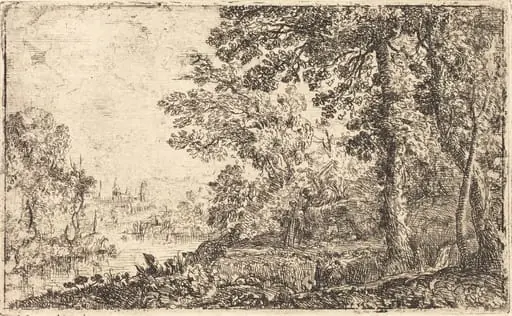 The Vision (L'apparition)
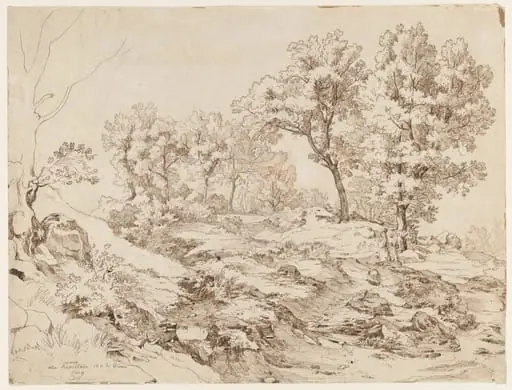 La Serpentara near Olevano
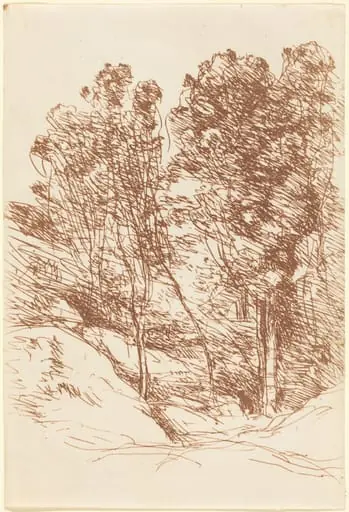 Souvenir of the Sole Valley (Souvenir de la Vallee de la Sole)
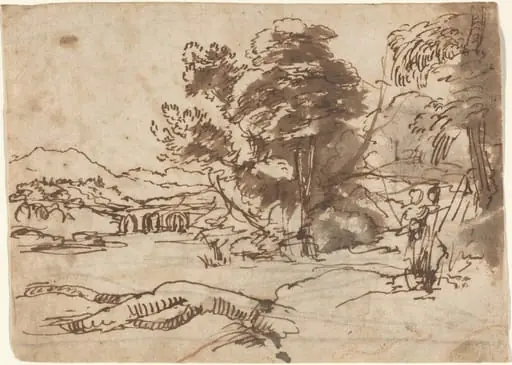 River Landscape