Artwork
Study of a Fallen Soldier (possibly the Conversion of Saul) (recto)
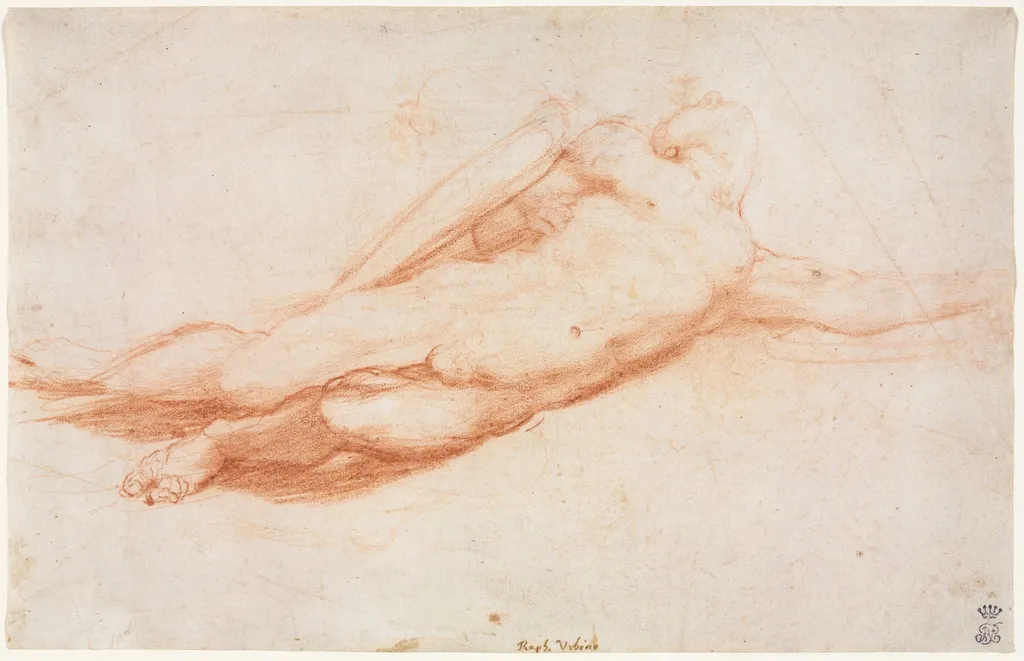
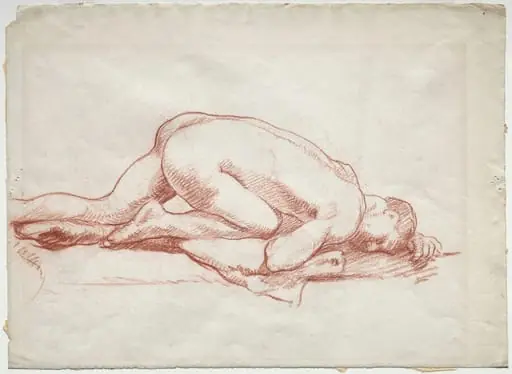
Study of a Fallen Soldier (possibly the Conversion of Saul) (recto) is a drawing by the Renaissance artist Correggio. It dates from 1525 and is held in the collection of the Cleveland Museum of Art.
About this work
Overview
This chalk drawing on paper depicts a solitary fallen figure, rendered with loose, expressive lines that emphasize anatomical weight over completeness.
This chalk drawing on paper depicts a solitary fallen figure, rendered with loose, expressive lines that emphasize anatomical weight over completeness. Once thought to be by Raphael, the work is now recognized as a study by Correggio, distinguished by its tactile sensitivity and selective detail. The verso contains rapid sketches of classical architecture and a female figure with a quiver, suggesting preparatory work for a larger composition. The piece reflects the artist’s habit of exploring form through partial, evocative rendering.
Subject & Meaning
The central figure, a soldier collapsed on the ground, is rendered with minimal narrative context. His obscured face and fragmented limbs invite interpretation as a moment of vulnerability or transition. The accompanying figure on the reverse—possibly an Amazon or Diana—hints at mythological themes, suggesting the artist was considering contrasts between human frailty and divine or heroic strength. The drawing functions as a study of posture and emotional resonance rather than a defined scene.
Technique & Style
Correggio employs soft brown chalk with a fluid, almost tactile touch, emphasizing the curve of the leg and the fall of the body while leaving other areas lightly sketched or left blank. The handling reflects a deliberate focus on sensory immediacy: contours dissolve into shadow, and volume is suggested through subtle gradations rather than definition. This approach aligns with his broader use of sfumato, where form emerges from atmosphere rather than outline.
History & Provenance
An inscription at the bottom of the sheet once attributed the work to Raphael, a common misattribution for drawings of high quality from the early 16th century. Later stylistic analysis, particularly the handling of form and the warmth of the line, led scholars to reassign it to Correggio. The drawing’s condition and the presence of preparatory sketches on the reverse indicate it was part of the artist’s private working process, not intended for public display.
Context
Created during the High Renaissance, this drawing reflects a shift in artistic practice toward intimate, exploratory studies. While contemporaries like Michelangelo emphasized monumental structure, Correggio pursued emotional nuance through fragmented forms. The inclusion of classical motifs on the verso aligns with Renaissance humanist interests, yet the treatment remains personal and experimental, revealing the artist’s engagement with both antiquity and the physicality of the human body.
Legacy
The drawing exemplifies Correggio’s influence on later artists who valued expressive draftsmanship over finish. Its emphasis on partial form and atmospheric suggestion prefigures Baroque sensibilities, particularly in the handling of light and movement. Though not widely exhibited, it remains a key example of how Renaissance artists used preparatory studies to investigate emotion, anatomy, and composition beyond the constraints of final commissions.
Artist & collection

Artist
Antonio Allegri da Correggio (August 1489 – 5 March 1534), usually known as just Correggio (, also UK: , US: , Italian: ), was an Italian Renaissance painter who was the foremost painter of the Parma school of the High…

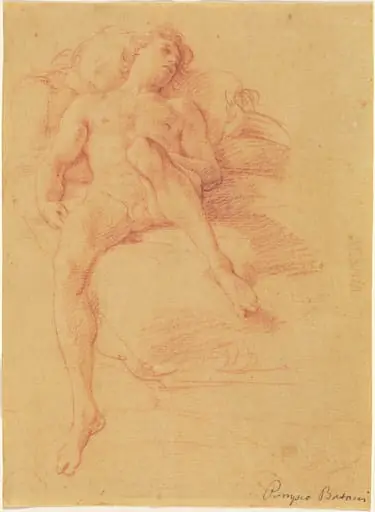 Male Nude Reclining on a Bed
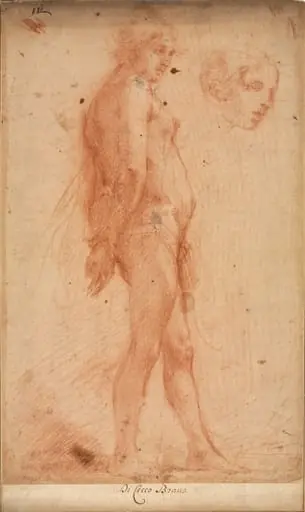 Study of a Standing Male Nude, with a Study of Head in Three-Quarter Profile
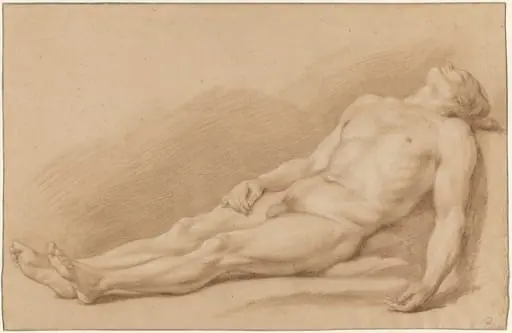 An Academy Study of a Reclining Male Nude
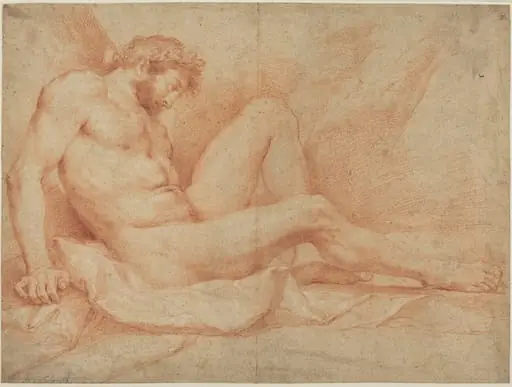 Academic Nude Study of a Seated Male
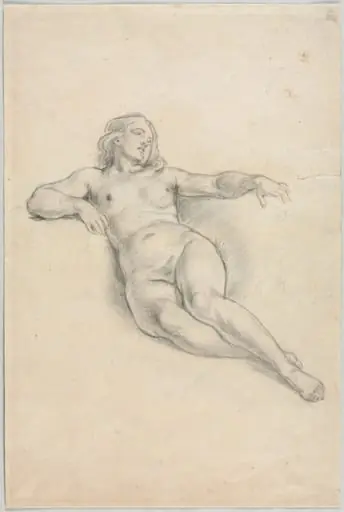 Reclining Female Nude (recto)
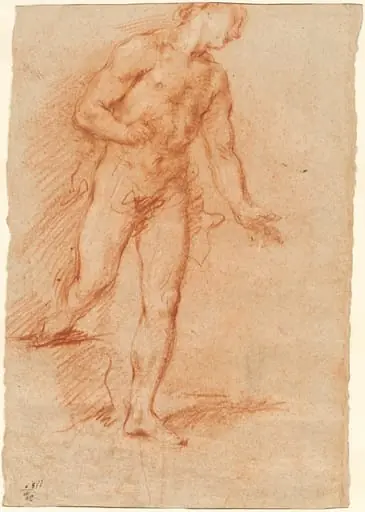 Male Nude
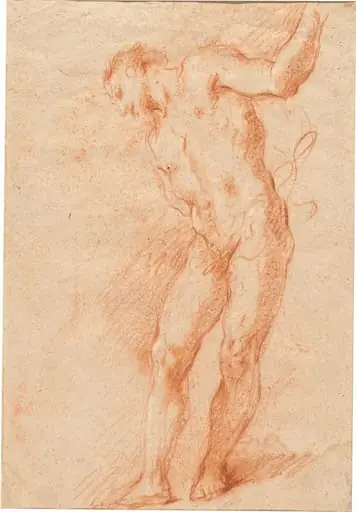 Male Nude
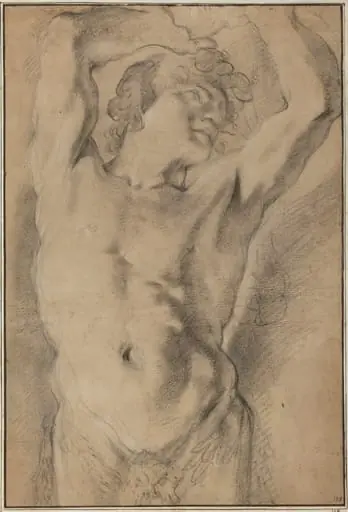 A Male Herm
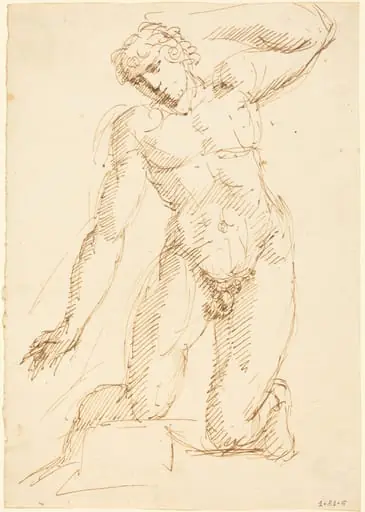 A Male Nude Kneeling
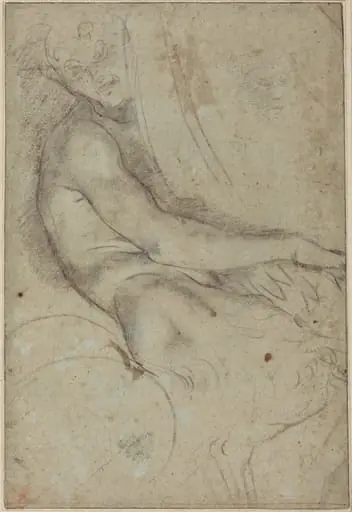 Satyr Holding a Roundel
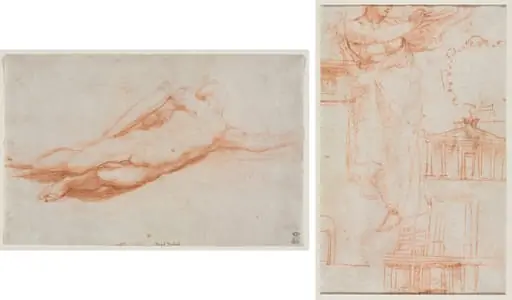 Study of a Fallen Soldier (possibly the Conversion of Saul) (recto); A Draped Female Figure (possibly an Amazon) and Architectural Studies (verso)
 Crouching Male Nude