Artwork
A Male Herm
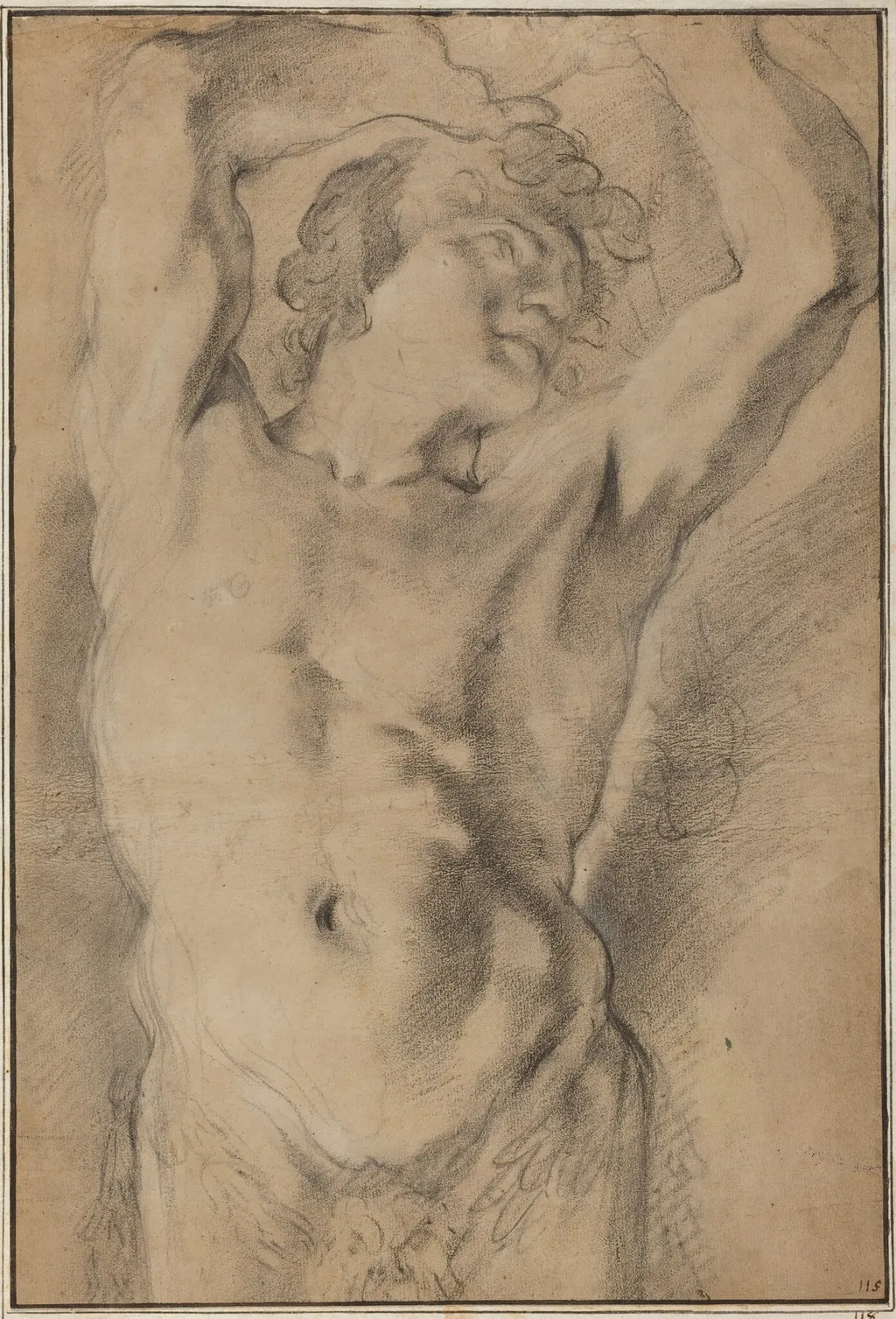
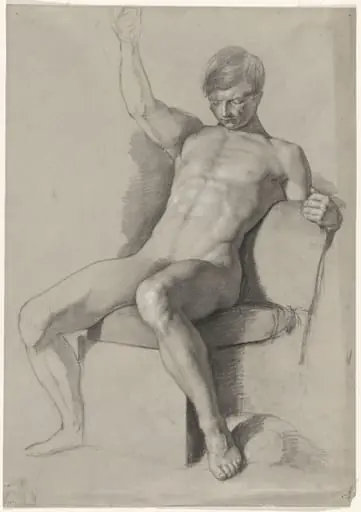
A Male Herm is a charcoal drawing by the Baroque artist Domenico Maria Canuti. It dates from 1669 and is held in the collection of the National Gallery of Art.
About this work
Overview
Created circa 1669, this drawing by Domenico Maria Canuti employs charcoal with selective white heightening on a tan sheet of paper. The work belongs to the artist’s later period and exemplifies his interest in classical motifs rendered in a monochrome drawing technique.
Subject & Meaning
The composition presents a nude male figure positioned with his back to the viewer, arms lifted, reminiscent of a herm—a classical architectural element that traditionally combines a pillar with a sculpted head or torso. The pose emphasizes the sculptural quality of the human form, echoing antiquarian studies of anatomy and proportion.
Technique & Style
Canuti builds the figure through layered charcoal strokes, creating a textured surface that suggests flesh and musculature. Rough, overlapping lines generate tonal variation, while concentrated white highlights accentuate the most illuminated planes, producing a subtle three‑dimensional effect on the warm‑toned paper.
History & Provenance
An Italian Baroque painter active in Bologna and Rome, Canuti is better known for large‑scale frescoes that merged Bolognese and Roman aesthetics. This paper drawing, executed toward the end of his career, reflects his practice of preparatory studies for larger compositions, though its subsequent ownership record remains undocumented.
Context
During the mid‑seventeenth century, artists frequently revisited classical forms such as herms to explore idealized anatomy and decorative motifs. Canuti’s rendering aligns with contemporary academic exercises that combined rigorous draftsmanship with a restrained palette, serving both pedagogical and compositional purposes.
Artist & collection
Artist
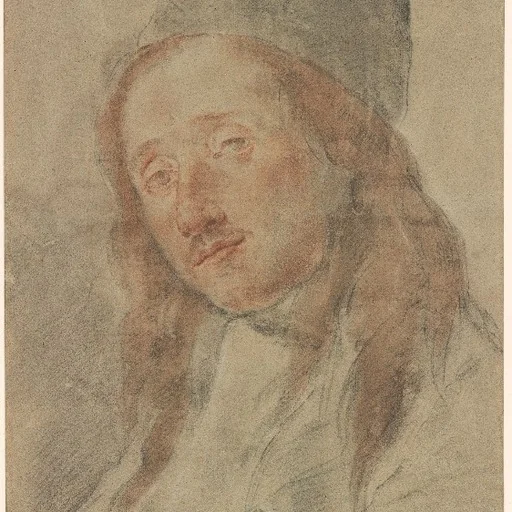
Domenico Maria Canuti (5 April 1625 – 6 April 1684) was an Italian painter of the Baroque period, active mainly in Bologna and Rome.

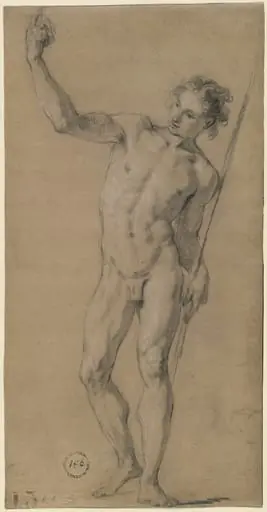 Saint John the Baptist
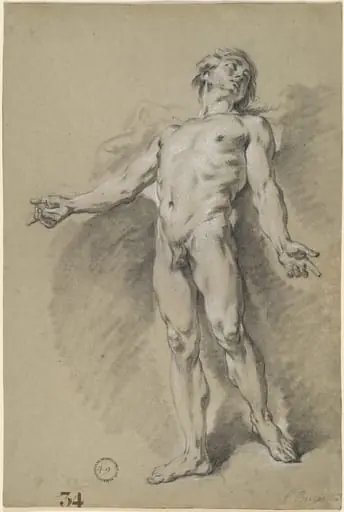 Apollo
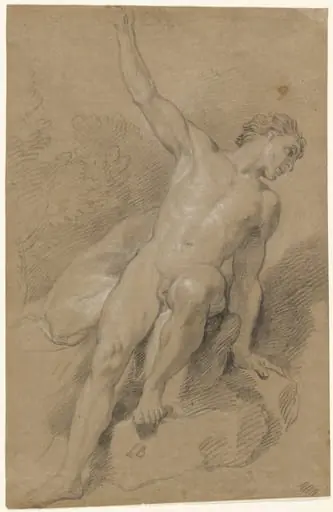 Male Nude Seated on Rocks
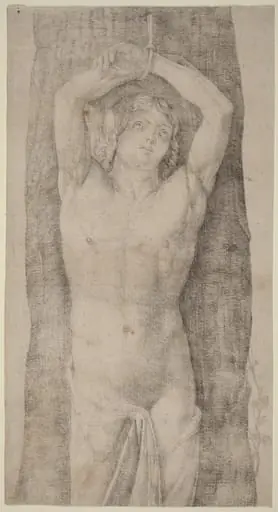 Saint Sebastian
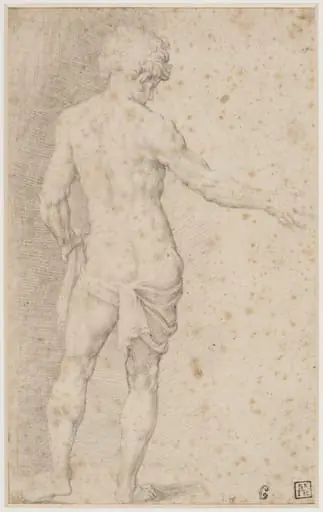 Standing Male Figure
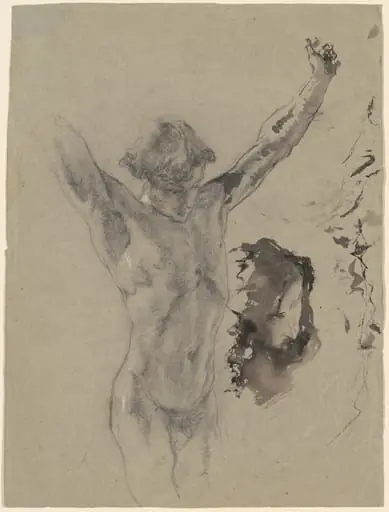 Study of the Figure and Head of Christ in "Christ on the Cross and Mary Magdalene"
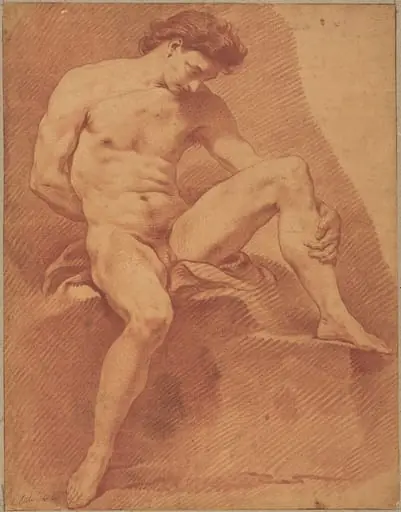 A Seated Male Nude
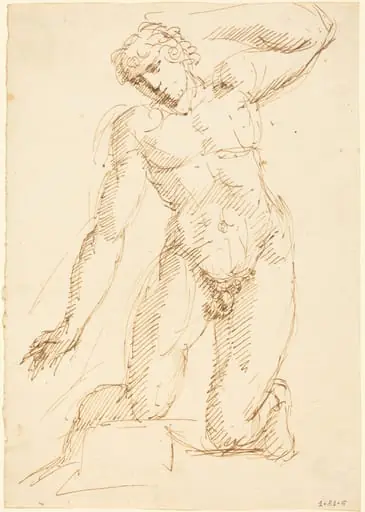 A Male Nude Kneeling
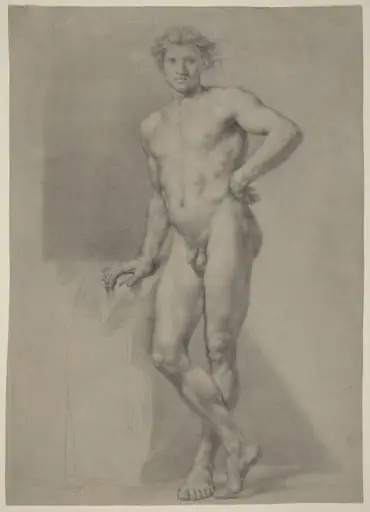 Male Nude Study
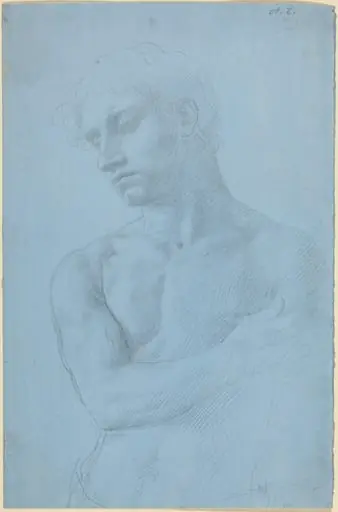 Bust of Nude Man
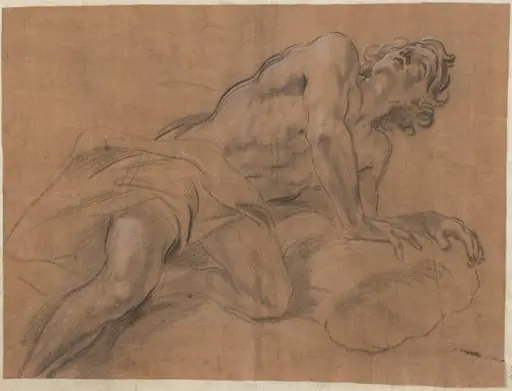 Nude Youth Leaning on a Cloud and Gazing Upward
 Seated Male Nude with Raised Right Hand