Artwork
Study of a Fallen Soldier (possibly the Conversion of Saul) (recto); A Draped Female Figure (possibly an Amazon) and Architectural Studies (verso)
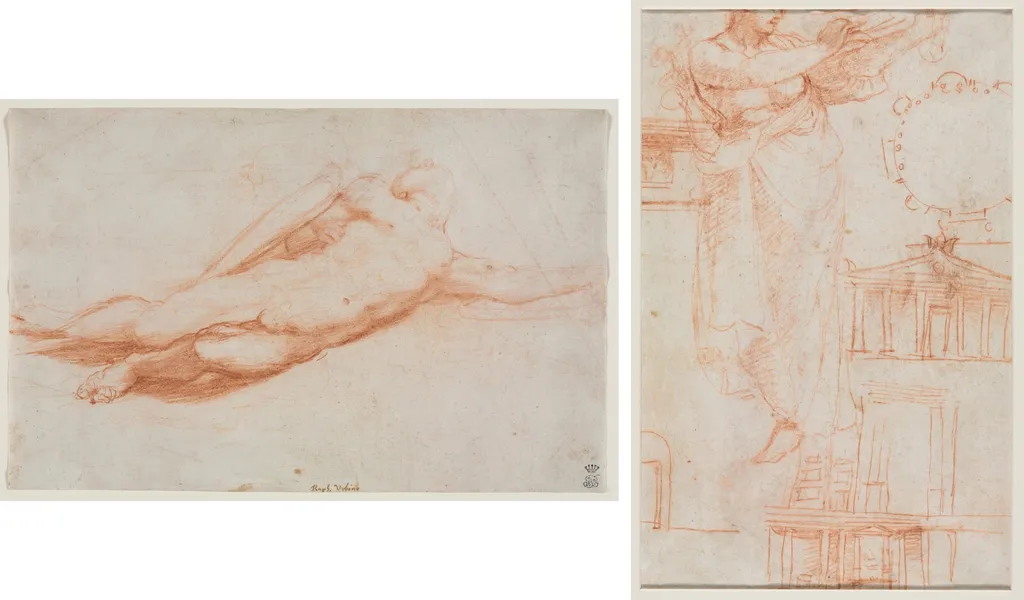
Study of a Fallen Soldier (possibly the Conversion of Saul) (recto); A Draped Female Figure (possibly an Amazon) and Architectural Studies (verso) is a drawing by the Renaissance artist Correggio. It dates from 1525 and is held in the collection of the Cleveland Museum of Art.
About this work
Overview
This double-sided chalk drawing features a study of a fallen soldier on the recto and architectural sketches with a draped female figure on the verso.
This double-sided chalk drawing features a study of a fallen soldier on the recto and architectural sketches with a draped female figure on the verso. Once attributed to Raphael due to a brown ink inscription, it is now recognized as the work of Correggio, identified through his distinctive handling of form and subtle tonal transitions. The drawing’s unfinished quality suggests it was a preparatory study, not a completed composition.
Subject & Meaning
The central figure on the recto is a soldier in a reclining, vulnerable pose, one leg bent awkwardly, the other extended. Though once thought to depict the Conversion of Saul, the imagery lacks narrative context, suggesting it was studied for anatomical or emotional expression. The verso figure, armed with a quiver, may represent an Amazon or Diana, reflecting Renaissance interest in classical mythology and idealized female forms.
Technique & Style
Correggio employs soft chalk strokes to model the soldier’s body, emphasizing the curve of the leg and foot with delicate shading while leaving other areas barely defined. The edges dissolve into faint washes, creating a sense of atmospheric softness akin to sfumato. This selective focus and intentional ambiguity reveal a study in tactile presence rather than precise detail, characteristic of his exploratory method.
History & Provenance
A brown ink inscription on the lower edge once attributed the drawing to Raphael, a common practice when works were admired for their refinement. Later scholarship, based on stylistic analysis of the handling of form and texture, reassigned it to Correggio. The drawing’s survival in this dual-sided format suggests it was kept in an artist’s sketchbook, valued for its compositional ideas rather than its finish.
Context
Created during the early 16th century, the drawing reflects the period’s intense focus on the human form and classical antiquity. Artists like Correggio studied anatomy and mythological subjects through rapid sketches, often reusing sheets for multiple ideas. The presence of architectural fragments alongside the figure indicates an interest in integrating figures into imagined spatial environments.
Legacy
This drawing exemplifies Correggio’s influence on later Mannerist and Baroque artists through his emphasis on fluid contours and emotional subtlety. Its layered revisions and unfinished state offer insight into his working process, revealing how he refined form through gesture rather than finish. The sheet remains a key example of Renaissance drawing as a site of experimentation and visual inquiry.
Artist & collection

Artist
Antonio Allegri da Correggio (August 1489 – 5 March 1534), usually known as just Correggio (, also UK: , US: , Italian: ), was an Italian Renaissance painter who was the foremost painter of the Parma school of the High…

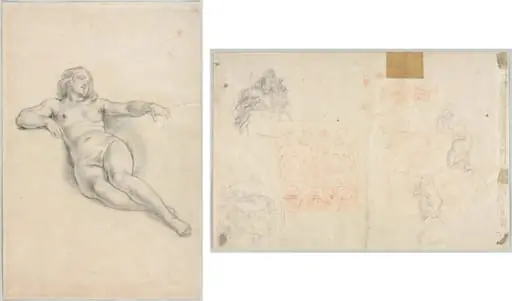 Reclining Female Nude (recto); Various Sketches of Figures and Plants (verso)
![Apollo and Studies of the Artist's Own Hand [recto], by Francesco Fontebasso](https://artifactworldgallery.com/img/francesco-fontebasso--apollo-and-studies-of-the-artist-s-own-hand-recto--ee93288e84456aea-w320.webp) Apollo and Studies of the Artist's Own Hand [recto]
Apollo and Studies of the Artist's Own Hand [recto]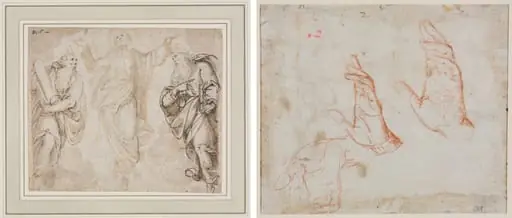 The Transfiguration (recto); Study of Hands (verso)
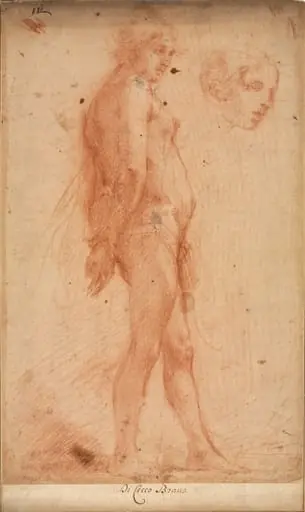 Study of a Standing Male Nude, with a Study of Head in Three-Quarter Profile
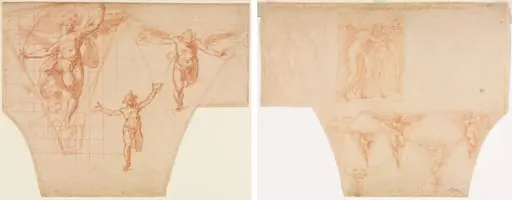 Three Studies of Angels for a Pendentive (recto); Studies for Christ Meeting His Mother on the Road to Calvary, Studies of an Angel in a Pendentive (verso)
![Two Studies of the Statue of Alexander and Bucephalus [verso], by Hubert Robert](https://artifactworldgallery.com/img/hubert-robert--two-studies-of-the-statue-of-alexander-and-bucephalus-verso--c8baec3f622cceea-w320.webp) Two Studies of the Statue of Alexander and Bucephalus [verso]
Two Studies of the Statue of Alexander and Bucephalus [verso]![Young Woman Kneeling and Reaching Forward [verso], by Charles de La Fosse](https://artifactworldgallery.com/img/charles-de-la-fosse--young-woman-kneeling-and-reaching-forward-verso--dad9d34b84dadb6d-w320.webp) Young Woman Kneeling and Reaching Forward [verso]
Young Woman Kneeling and Reaching Forward [verso]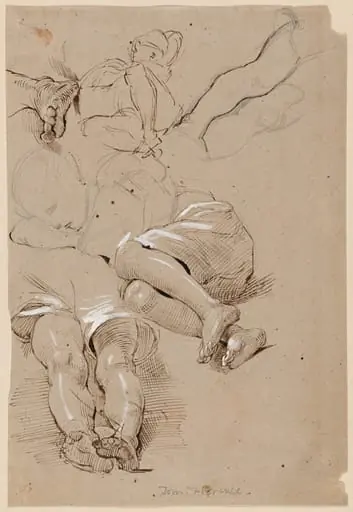 Tom -- Florence
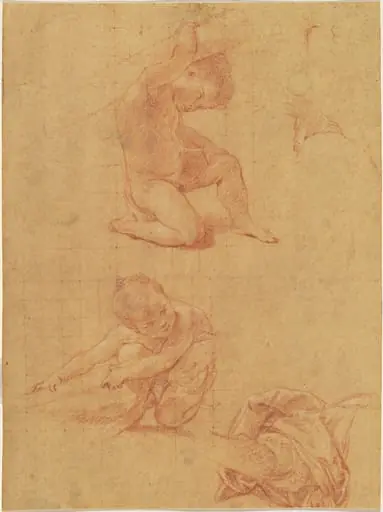 Two Nude Children Lifting a Cudgel
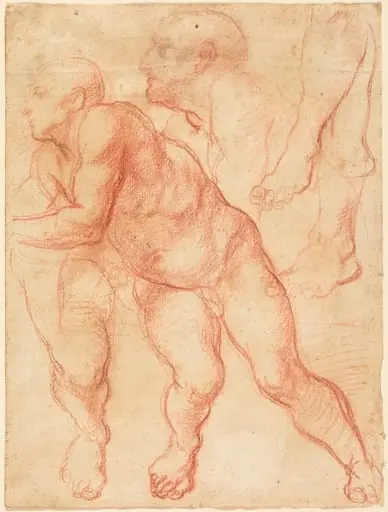 Studies of a Male Nude