Artwork
A Man Trapped between a Lion and a Serpent
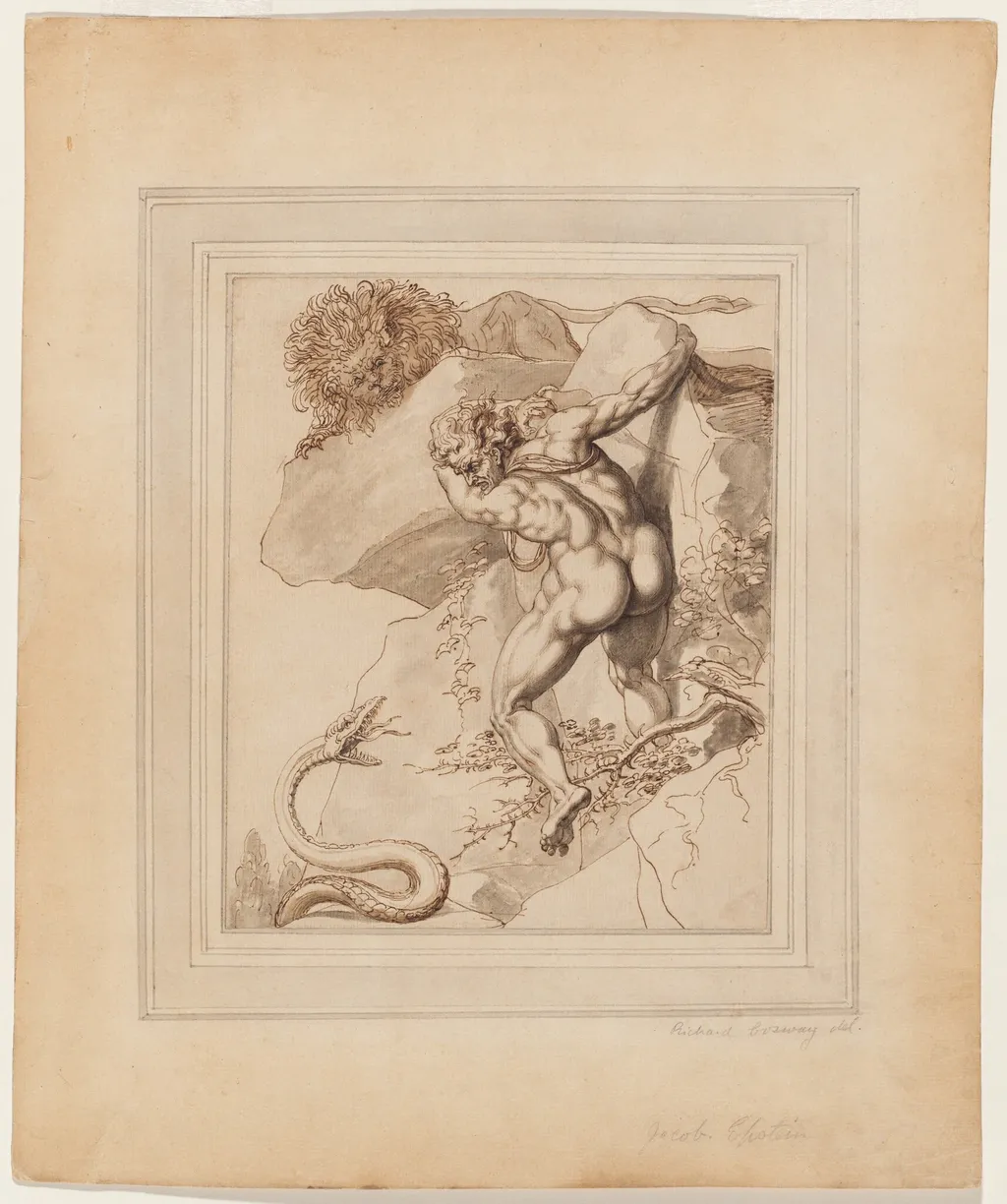
A Man Trapped between a Lion and a Serpent is an ink drawing by the Romanticist artist Richard Cosway. It dates from 1794 and is held in the collection of the National Gallery of Art.
About this work
Overview
The composition centers on a human figure caught in a physical struggle, rendered with minimal color but heightened emotional intensity through line and tone.
This ink and wash drawing, dated around 1794, is attributed to Richard Cosway and resides in the National Gallery of Art, Washington. Executed on laid paper and later mounted on an older support, it captures a moment of violent confrontation. The composition centers on a human figure caught in a physical struggle, rendered with minimal color but heightened emotional intensity through line and tone.
Subject & Meaning
The figure is immobilized between a lion, looming from the upper left, and a serpent entwined around his lower limbs. His contorted posture suggests desperate resistance, neither fully escaping nor surrendering. The imagery evokes themes of vulnerability, primal threat, and psychological tension, possibly reflecting contemporary anxieties about power, nature, or moral conflict rather than a specific mythological narrative.
Technique & Style
Cosway employed pen and brown ink with subtle gray washes to define form and shadow. Bold, fluid lines convey movement and tension, while the washes modulate depth without softening the drama. The rough texture of the laid paper enhances the rawness of the scene. The style prioritizes expressive gesture over anatomical precision, aligning with late 18th-century tendencies toward emotional immediacy in graphic art.
History & Provenance
The drawing entered the National Gallery of Art’s collection through established institutional acquisitions, though its earlier ownership history is not publicly documented. Its preservation on an older mount suggests it was valued as a standalone work early on. No exhibition or publication record from Cosway’s lifetime confirms its original intent, leaving its purpose—study, commission, or personal exercise—uncertain.
Context
Created during the height of Romanticism, the work reflects a broader cultural fascination with intense emotion, natural forces, and the individual’s confrontation with the sublime. While Cosway was primarily known for miniature portraits, this drawing diverges sharply, revealing an interest in dramatic, almost theatrical subjects that resonated with emerging Romantic sensibilities beyond his usual clientele.
Legacy
Though not widely reproduced or studied, the drawing stands as an unusual example of Cosway’s range beyond portraiture. It contributes to understanding the breadth of graphic experimentation in late 18th-century Britain, where artists occasionally explored visceral, non-commissioned themes. Its survival and preservation underscore its resonance as a solitary, evocative fragment of psychological drama.
Artist & collection
Artist
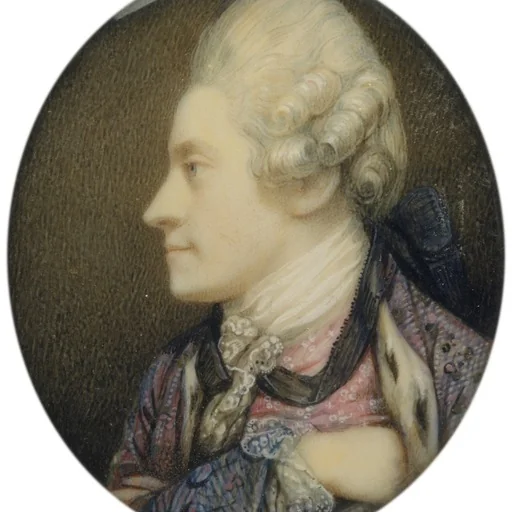
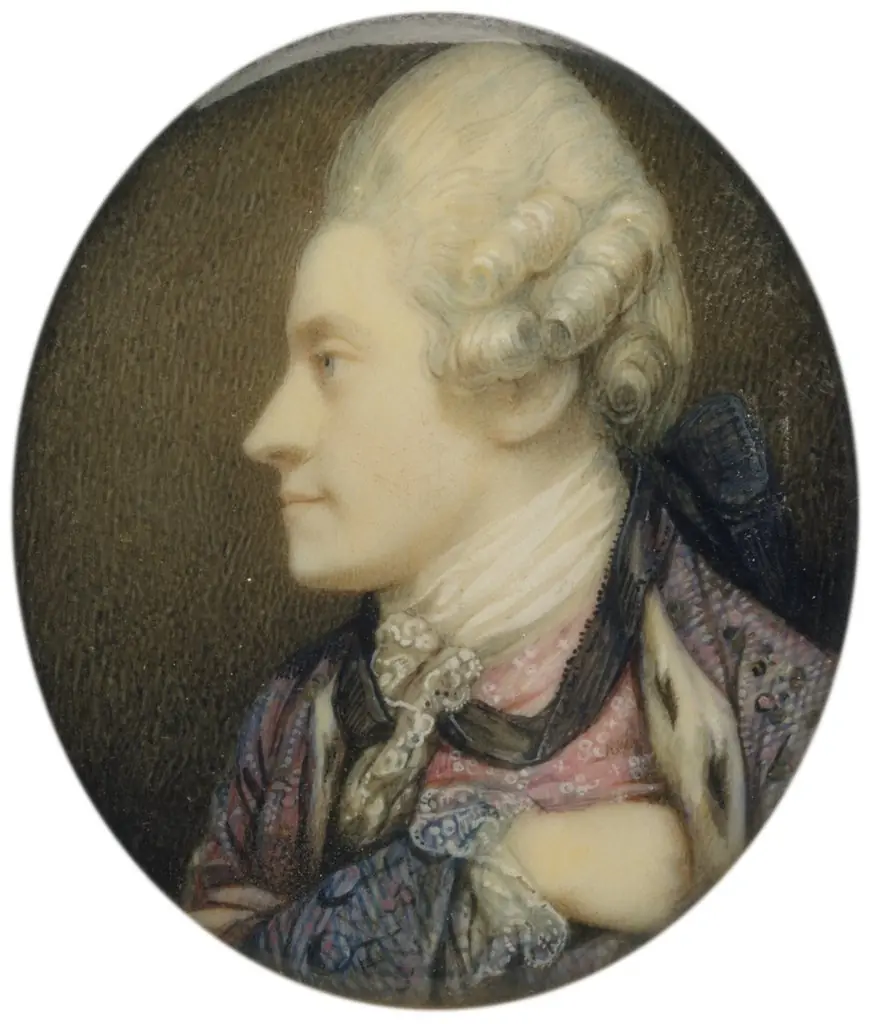
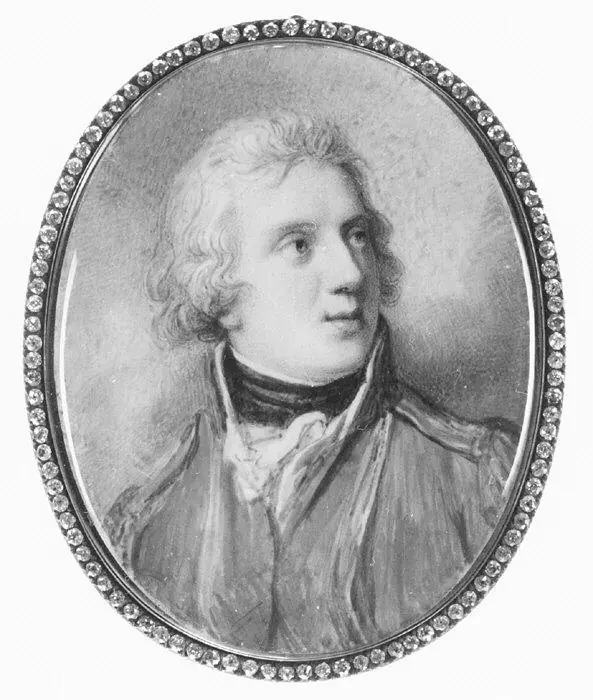
Richard Cosway (5 November 1742 – 4 July 1821) was a leading English portrait painter of the Georgian and Regency era, noted for his miniatures.

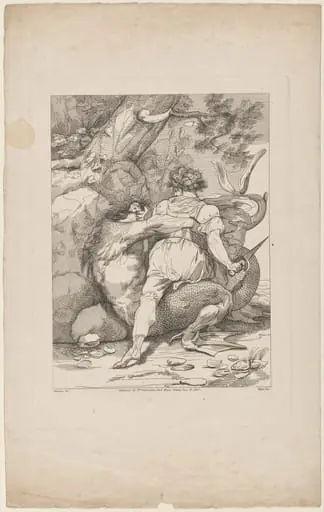 Man Attacking a Monster
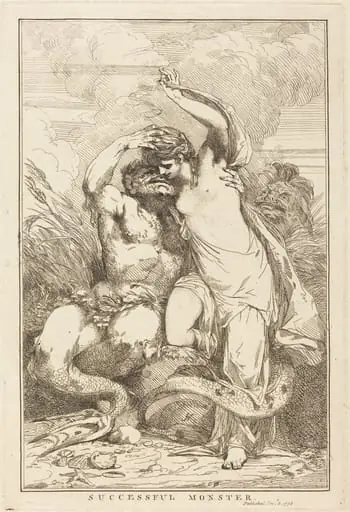 Successful Monster
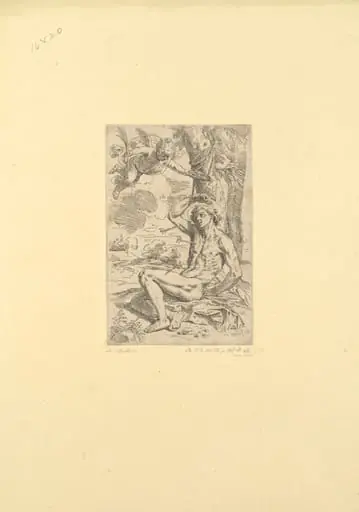 Saint Sebastian
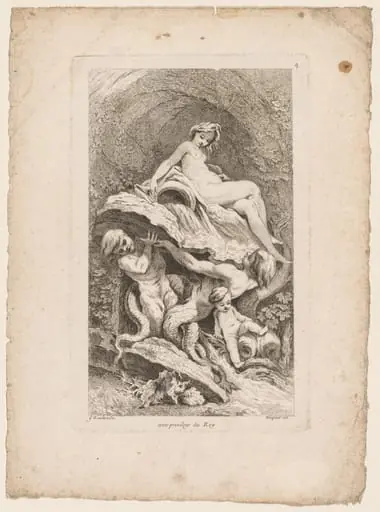 Book of Fountains: No. 4
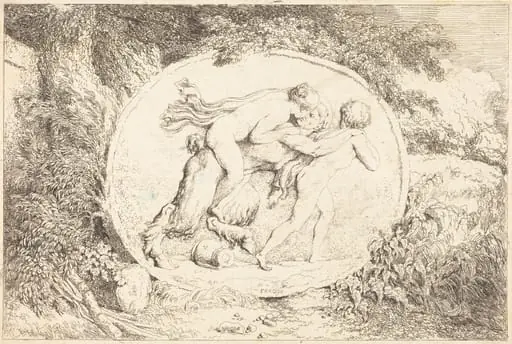 Nymph Astride a Satyr (Jeune fille a califourchon sur un satyre)
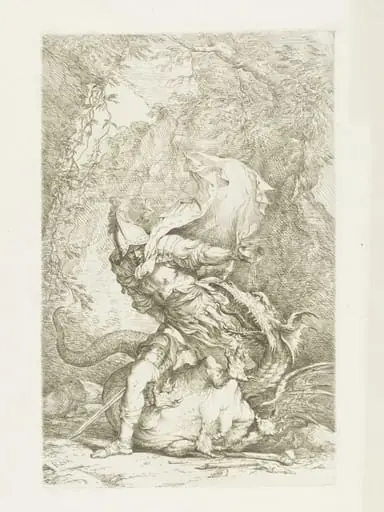 Untitled
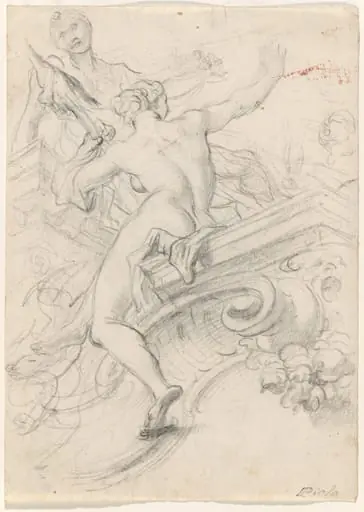 A Female Figure Seated on an Entablature, Holding a Distaff
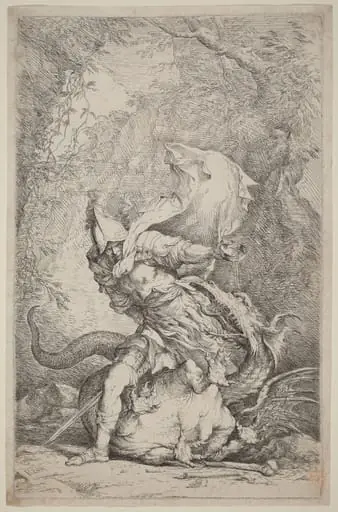 Jason and the Dragon
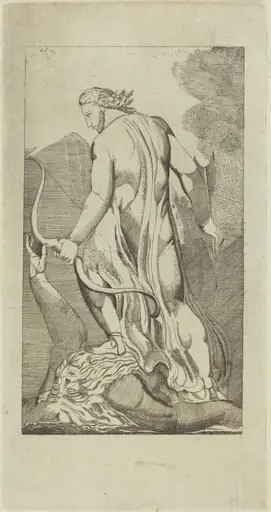 Christ Trampling Satan
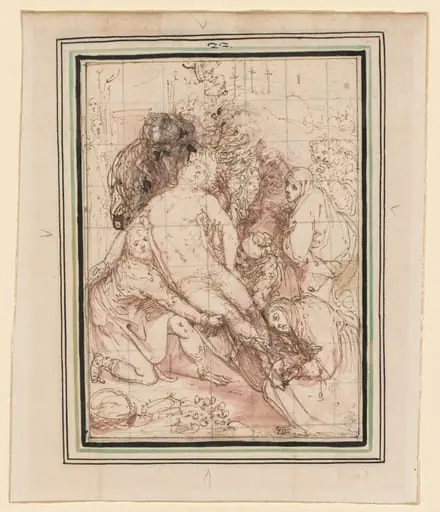 The Entombment
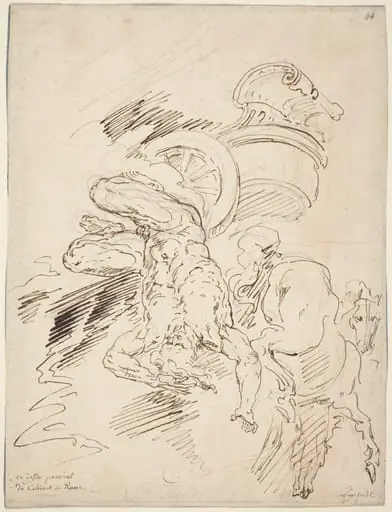 The Fall of Phaeton
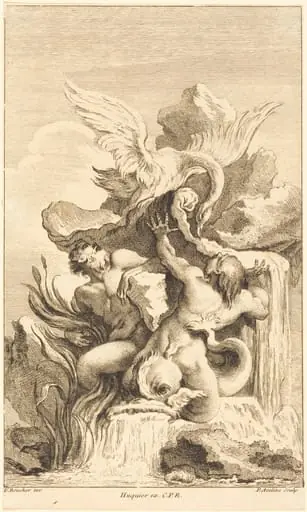 Two Tritons and a Swan