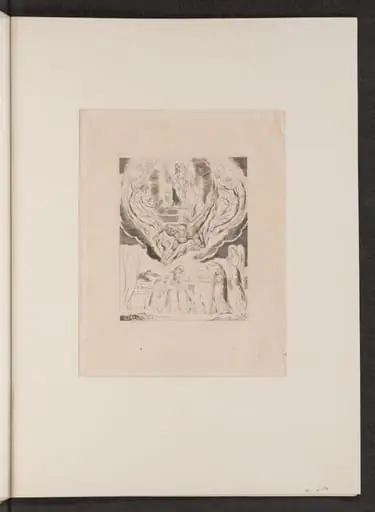
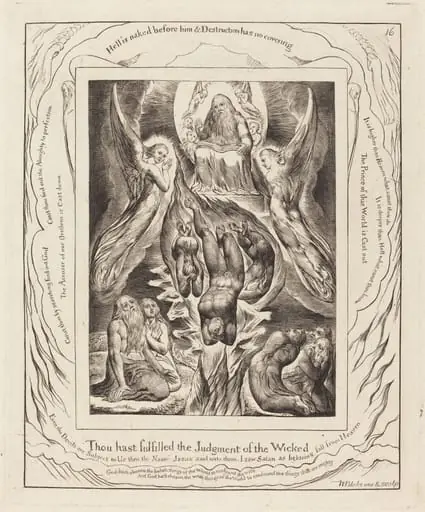
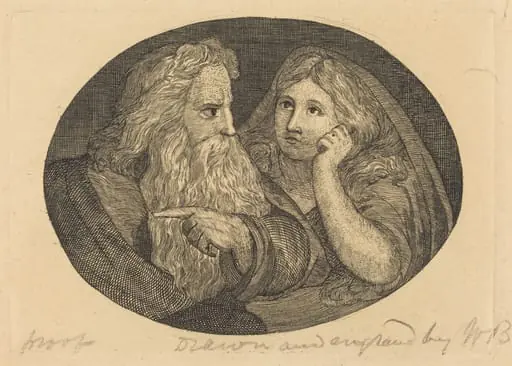
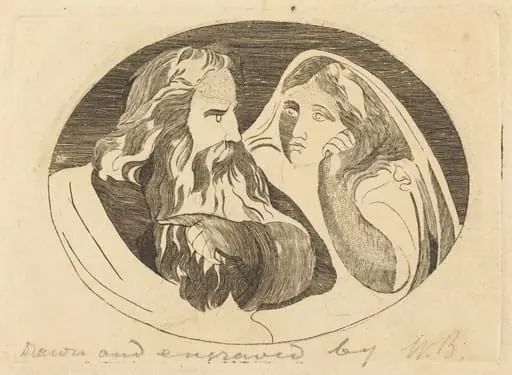
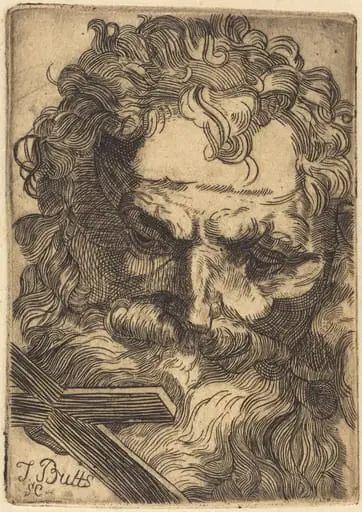
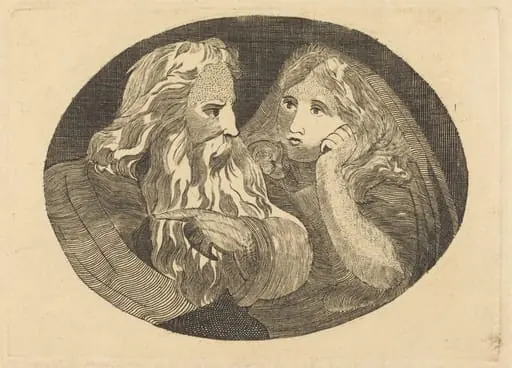
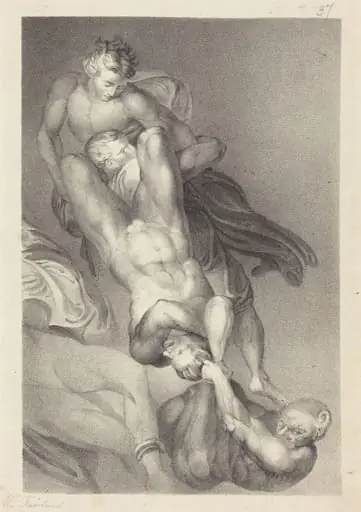
Christ Trampling Satan
1797
ink
paper
From the collection of National Gallery of Art
1797
ink
paper
From the collection of National Gallery of Art
Christ Trampling Satan is a 1797 ink by Butts, Jr., Thomas, a Baroque work, held at National Gallery of Art.
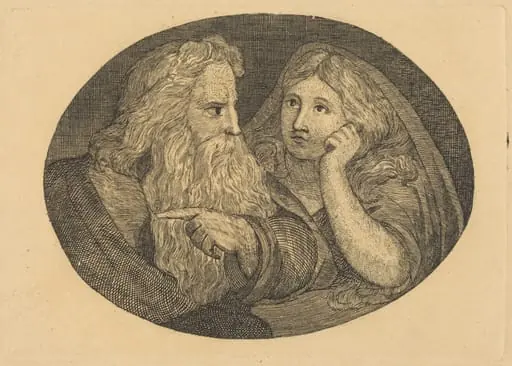
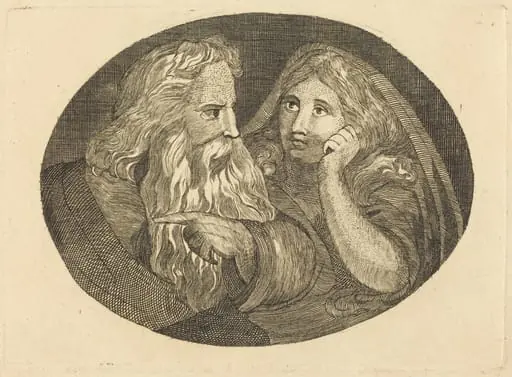
This engraving shows a muscular figure in a long, flowing robe standing on a defeated, snarling creature. The figure’s face is turned away, and one arm is raised slightly, while the other rests on a rock. The background is mostly empty except for a few wispy clouds. The artist used fine lines to show light and shadow on the fabric and skin, making it look three-dimensional. The defeated creature’s face is twisted in pain, adding drama to the scene. Next, look up engraving to see how artists create detailed images like this one using only lines.
Christ Trampling Satan is a black‑ink engraving on blue laid paper executed by Thomas Butts, Jr. in 1797. The print measures a modest size typical of late‑eighteenth‑century devotional works and presents a single, centrally placed figure in a dynamic pose against a sparse background of faint clouds.
The composition depicts a muscular, robed figure—identified as Christ—standing triumphantly over a snarling, contorted creature representing Satan. The defeated demon’s twisted expression conveys suffering, while the upright posture of the central figure suggests victory and divine authority, reflecting common theological themes of redemption and the triumph of good over evil.
Butts employs a network of fine, intersecting lines to model the folds of the robe and the anatomy of the bodies, creating subtle gradations of light and shadow. The engraving’s reliance on line work, rather than tonal washes, produces a crisp, three‑dimensional effect, especially evident in the rendering of the creature’s anguished face and the textured rock beneath the figure’s hand.
Produced toward the end of the eighteenth century, the print aligns with a period when religious imagery was widely disseminated through affordable prints for private devotion. The use of blue laid paper, a relatively expensive substrate, indicates a work intended for collectors or patrons seeking a more refined devotional object.
Read the full account in the museum source.
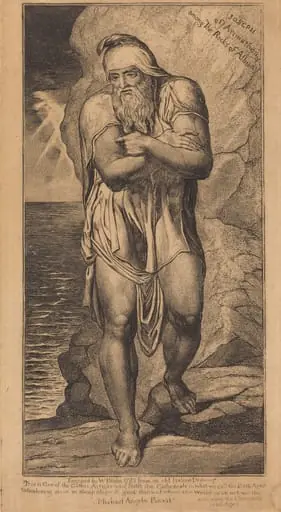
Joseph of Arimathea Among the Rocks of Albion
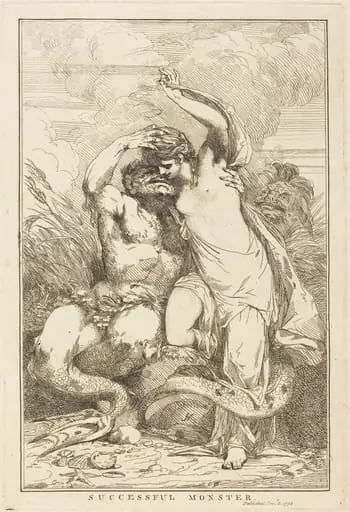
Successful Monster
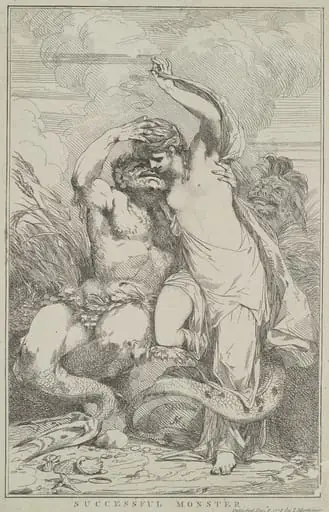
Successful Monster
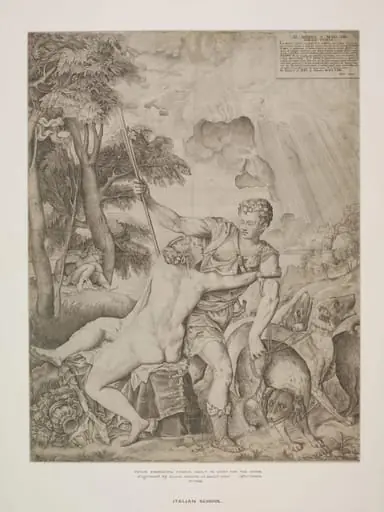
Untitled
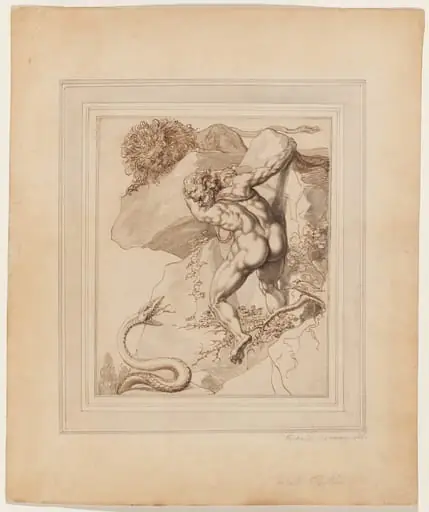
A Man Trapped between a Lion and a Serpent
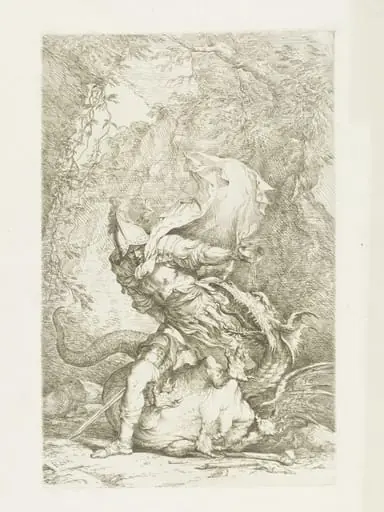
Untitled
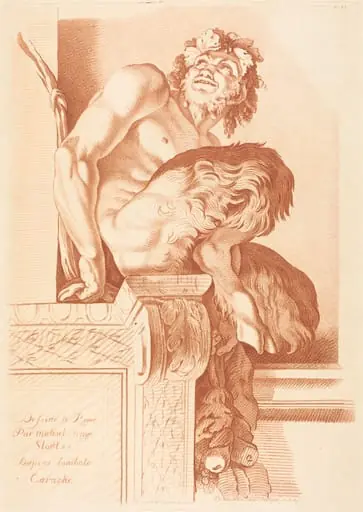
Satyr
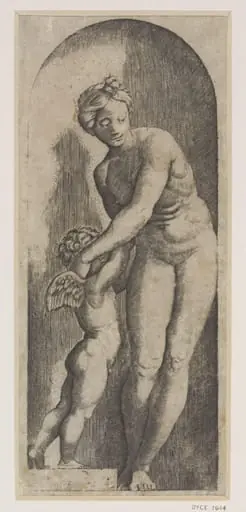
Untitled
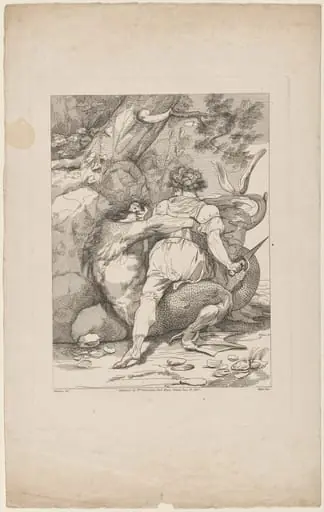
Man Attacking a Monster
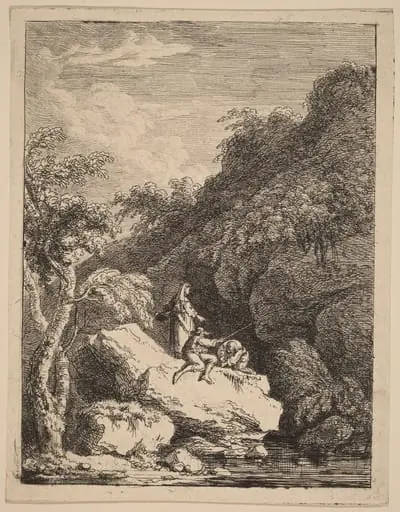
The Outskirts of Florence, on the Way to Rome
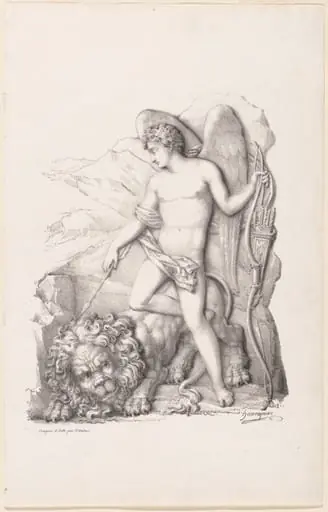
L’Amour terrassant un lion (Personification of Love Vanquishing a Lion)
Part of the Last Judgment from Michael Angelo
Your cart is empty
Explore artworks →