Artwork
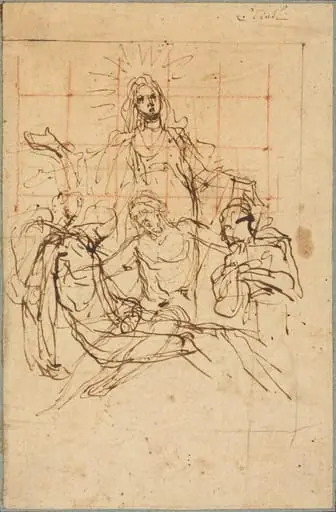
The Entombment
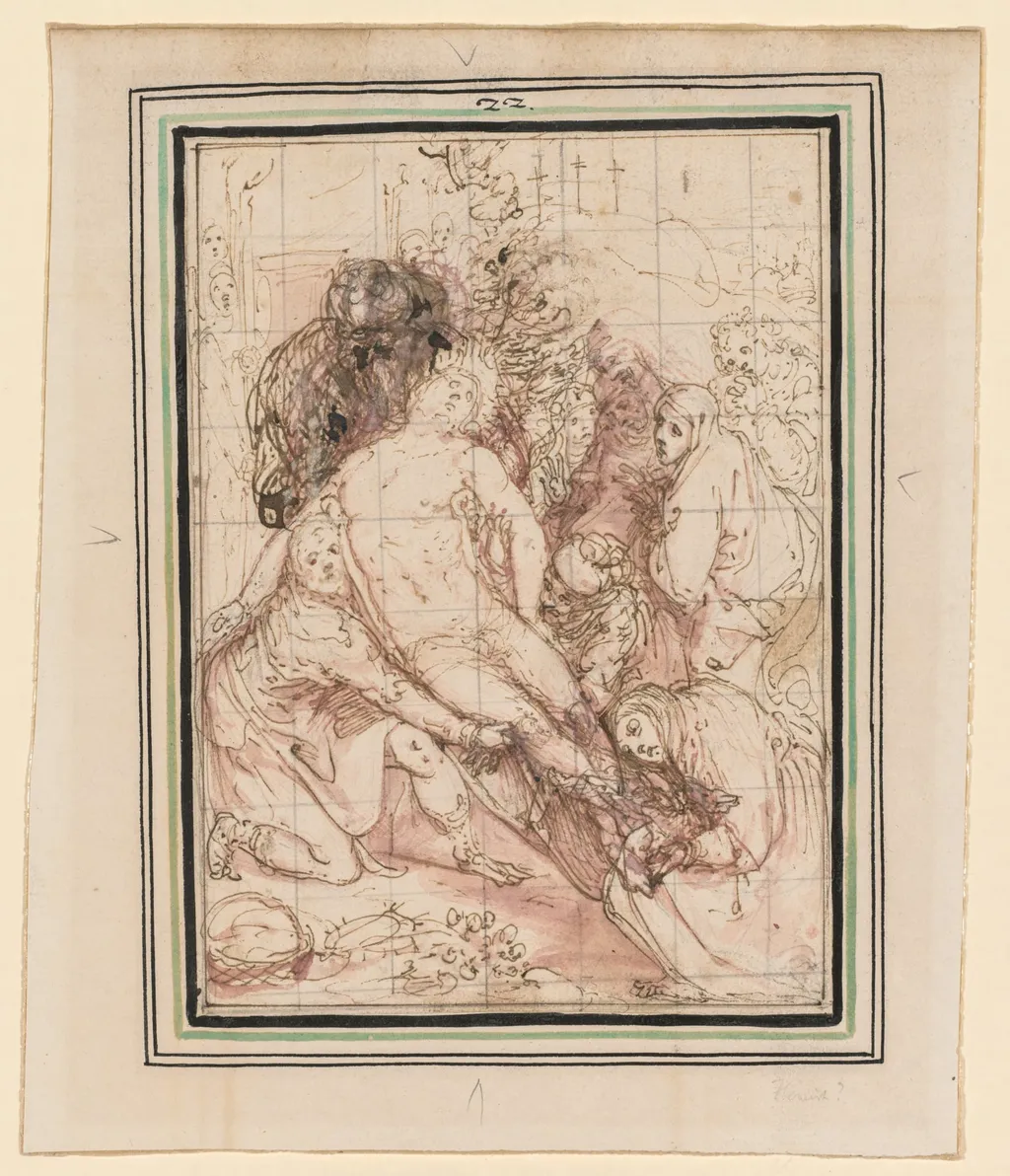
The Entombment is a drawing by the Renaissance artist Giovanni de' Vecchi. It dates from 1596 and is held in the collection of the Cleveland Museum of Art.
About this work
You see a group of people lowering Christ’s body into a tomb, their arms stretched in long, wavy lines.
De’ Vecchi painted this around 1596, when artists were playing with Michelangelo’s ideas. Instead of perfect muscles, they twisted bodies to show feeling. Christ’s limbs look almost weightless, as if grief has made them float.
Look up Mannerism to see how other artists bent the rules like this.
Overview
The Entombment is a drawing by Giovanni de' Vecchi, created around 1596 as a preparatory work for an altarpiece for the church of Santa Prassede in Rome.
Subject & Meaning
The drawing depicts the burial of Christ, showing a group of figures including the Virgin Mary, Saint John the Apostle, and Mary Magdalene, as they lower Christ's body into a tomb.
Technique & Style
De' Vecchi used pen and purplish watercolor to create fluid figures with elongated proportions, emphasizing emotional expression over anatomical accuracy, characteristic of the Mannerist style.
Context
The drawing reflects the influence of Michelangelo's treatment of the human form, which was being reinterpreted by artists of the late 16th century, who prioritized expressive potential over classical ideals.
Artist & collection