Artwork
Dieppe Harbour
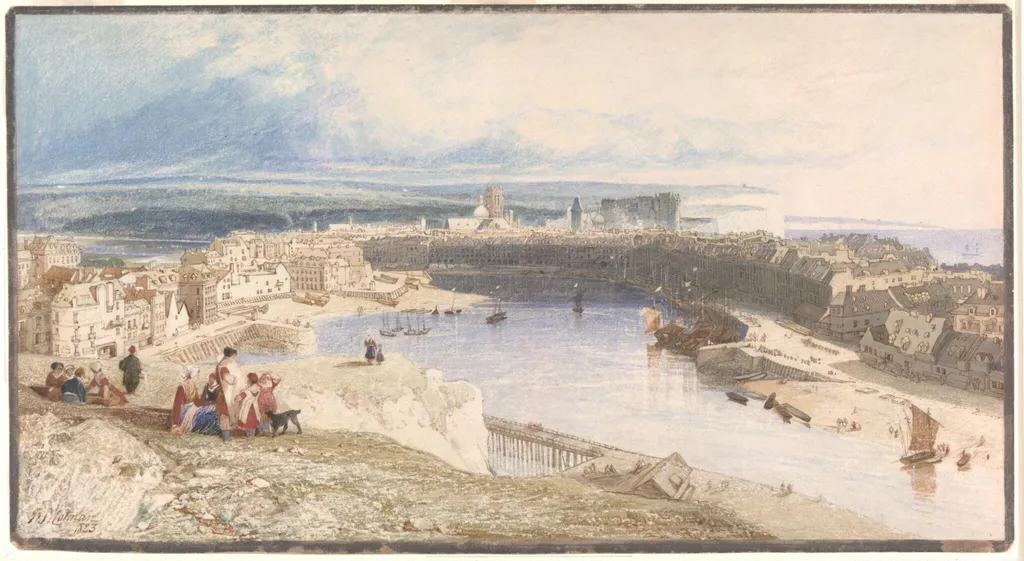
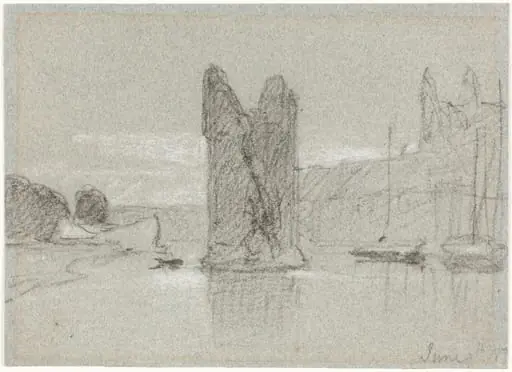
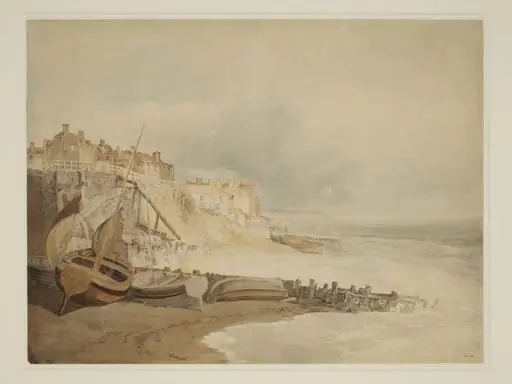
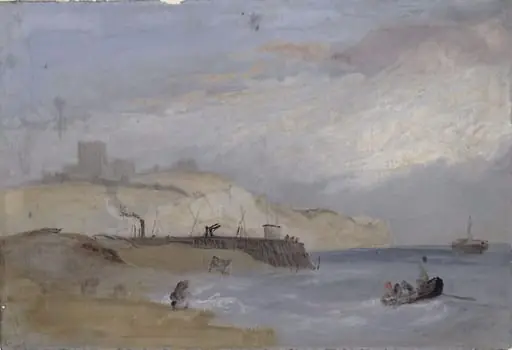
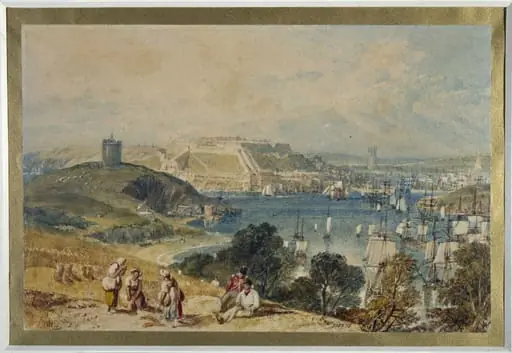
Dieppe Harbour is a watercolor work on paper by the Romanticist artist John Sell Cotman. It dates from 1823 and is held in the collection of the Victoria and Albert Museum.
About this work
Overview
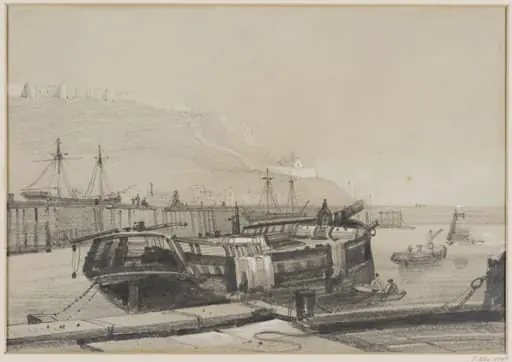
The work is one of two nearly identical versions in the same collection, suggesting deliberate replication for study or distribution.
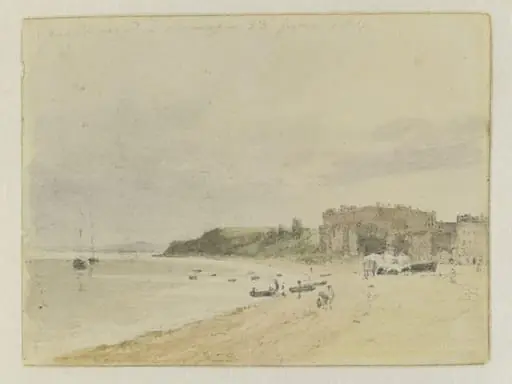
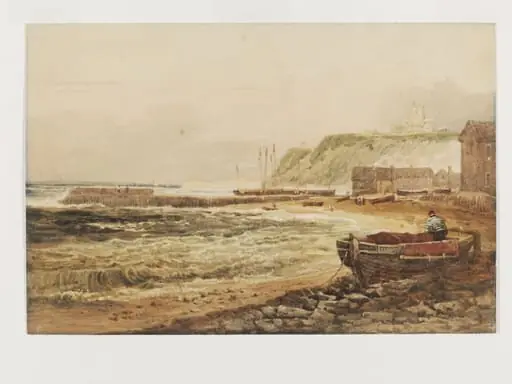
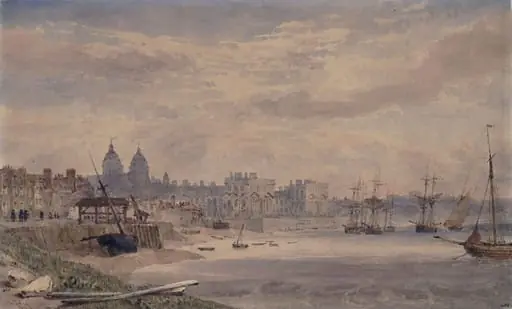
Painted in 1823, this watercolour by John Sell Cotman captures Dieppe Harbour from an elevated vantage point along the coast. The composition emphasizes the sweeping arc of the town’s architecture, with rooftops and facades descending toward the water. Calm seas mirror the sky and buildings, while small figures dot the foreground, engaged in quiet observation. The work is one of two nearly identical versions in the same collection, suggesting deliberate replication for study or distribution.
Subject & Meaning
The scene presents Dieppe as a tranquil, inhabited landscape rather than a bustling port. Figures gather on the hillside not in activity but in contemplation, aligning the image with quietude and observation. The absence of dramatic action or narrative suggests an interest in atmosphere and place, reflecting a 19th-century shift toward landscape as a subject worthy of attention in its own right, rather than as a backdrop to human drama.
Technique & Style
Cotman employs transparent watercolour washes to suggest light and texture with minimal brushwork. Buildings are rendered in soft, graded tones, their forms defined by subtle shifts in hue rather than sharp lines. The sky and water are rendered with delicate bleeds, creating a sense of atmospheric unity. The restrained palette and precise yet fluid handling reflect the artist’s mastery of the medium and his alignment with the topographical watercolour tradition of his time.
History & Provenance
This watercolour was produced during Cotman’s travels along the Normandy coast, part of a broader series documenting French coastal towns. It exists in two closely related versions, one held in the British Museum and the other in a private collection. The duplication indicates the artist may have used the work as a study or to fulfill commissions, a common practice among topographical artists seeking to disseminate their observations.
Context
In the early 1820s, British artists increasingly traveled to continental Europe following the Napoleonic Wars, drawn by picturesque landscapes and historic towns. Cotman’s focus on Dieppe aligns with a growing interest in French coastal architecture and the quiet rhythms of everyday life. His approach diverged from grand Romantic drama, favoring measured observation and tonal harmony over emotional intensity.
Legacy
Cotman’s Dieppe Harbour exemplifies the British watercolour tradition’s capacity for quiet precision. Though not widely exhibited in his lifetime, his works influenced later generations of landscape artists who valued restraint and atmospheric nuance. The painting remains a key example of how topographical art evolved into a more personal, reflective mode of seeing the natural and built environment.
Artist & collection
Artist
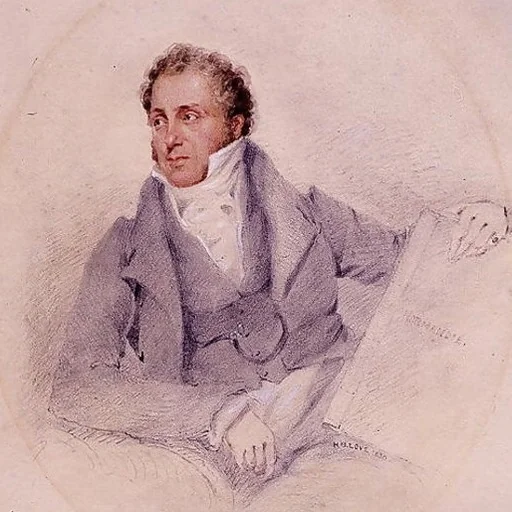
John Sell Cotman (16 May 1782 – 24 July 1842) was an English marine and landscape painter, etcher, illustrator, and a leading member of the Norwich School of painters.