Artwork
Dover
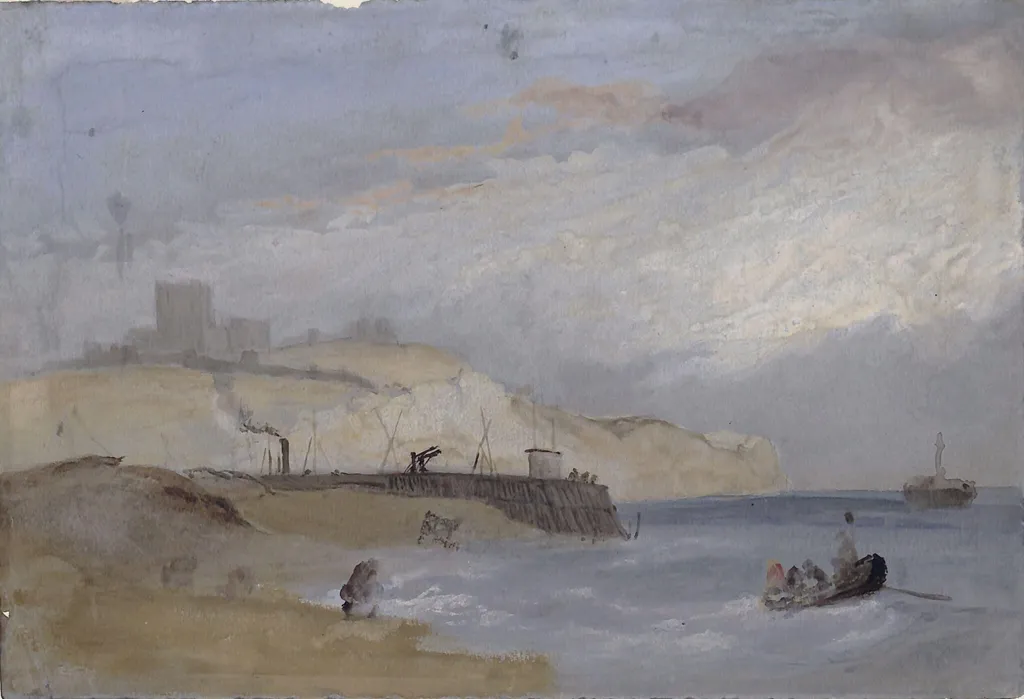
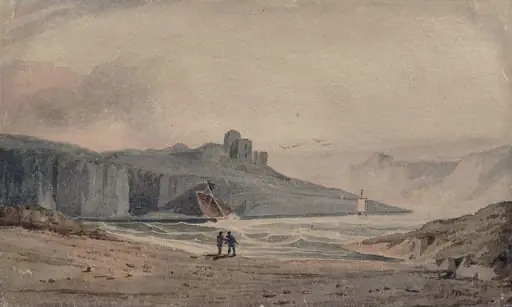
Dover is a watercolor work on paper by the British Romanticist artist James Stark. It dates from 1825 and is held in the collection of the Victoria and Albert Museum.
About this work
Overview
Painted in 1825 by James Stark, this watercolour captures a coastal scene near Dover, focusing on a shipwreck against a rugged shoreline. The composition balances the chaos of the wreck with the calm distance of the harbor and castle, rendered in delicate washes and fluid brushwork characteristic of early 19th-century British watercolor practice.
Subject & Meaning
The painting centers on a vessel broken upon the rocks, with a small rescue boat approaching in the distance. The juxtaposition of human vulnerability and the enduring presence of Dover Castle suggests themes of peril and resilience. The scene evokes maritime danger without overt sentimentality, reflecting a quiet observation of nature’s power.
Technique & Style
Stark employed loose, expressive brushstrokes to convey the texture of wind-worn cliffs and turbulent water. Transparent watercolor washes create atmospheric depth, while minimal detail in the sky and distant harbor enhances the sense of isolation. The technique prioritizes mood over precision, aligning with Romantic-era tendencies to emphasize emotional resonance.
History & Provenance
The work was completed during Stark’s active period as a landscape painter, shortly after his travels along the southeast coast. It entered the Victoria and Albert Museum’s collection in the late 19th century, where it remains part of a broader archive of British watercolors documenting coastal life and maritime incidents of the period.
Context
In the 1820s, British artists increasingly turned to natural landscapes and coastal scenes as subjects worthy of serious study. Stark’s depiction of a shipwreck aligns with contemporary interest in the sublime and the precariousness of human endeavor against nature, a theme echoed in literature and visual art of the time.
Legacy
Though not widely exhibited today, the painting exemplifies the quiet intensity of British watercolor in the early Victorian era. Its restrained palette and focus on natural forces influenced later artists who sought to capture transient atmospheric effects without theatrical embellishment.
Own this work as a print
Artist & collection
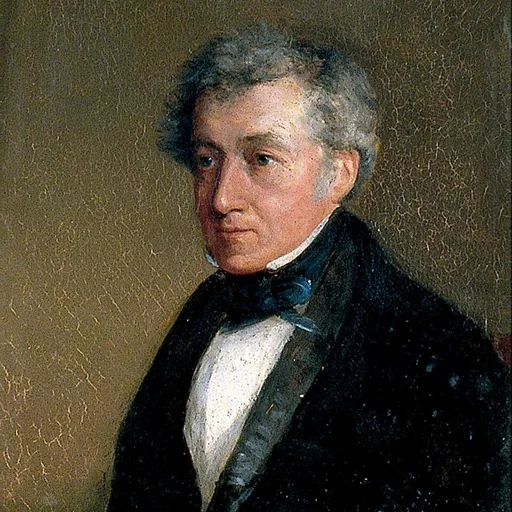
Artist
James Stark (19 November 1794 – 24 March 1859) was an English landscape painter. A leading member of the Norwich School of painters, he was elected vice-president of the Norwich Society of Artists in 1828 and became…