Artwork
Ruins of Rievaulx Abbey, Yorkshire
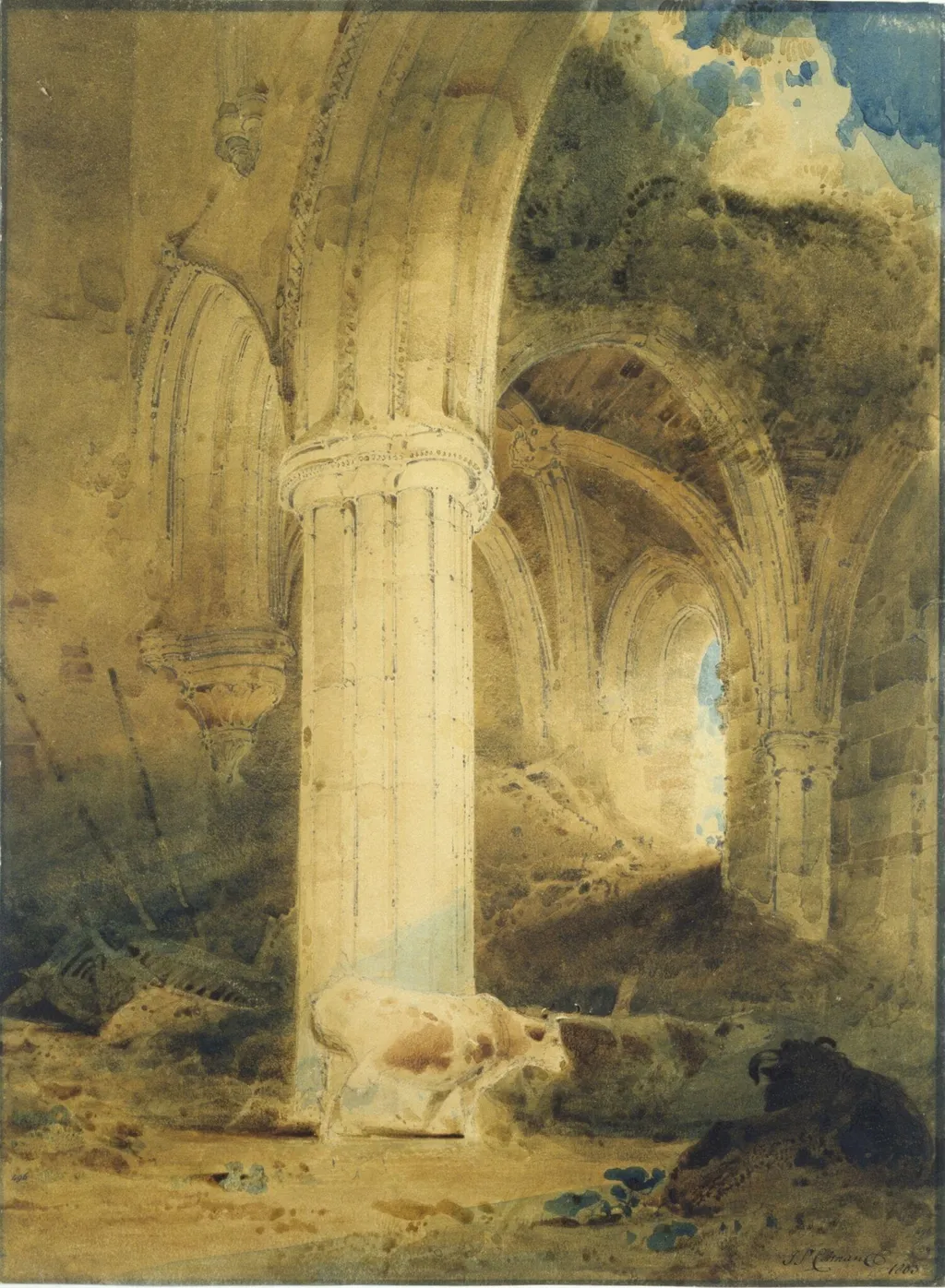
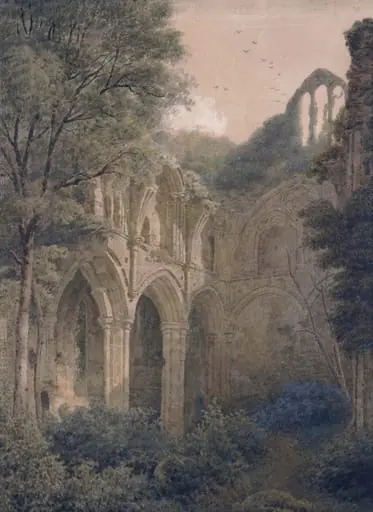
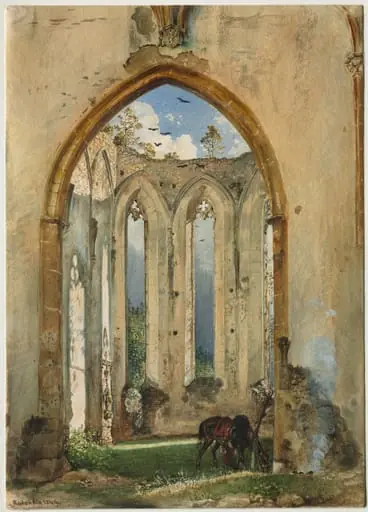
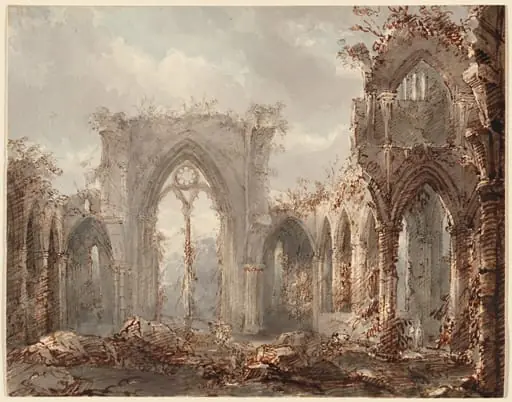
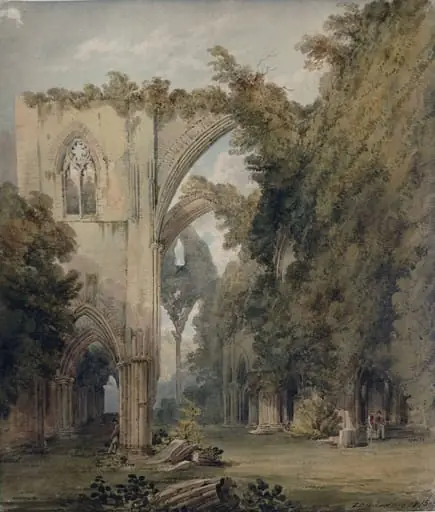
Ruins of Rievaulx Abbey, Yorkshire is a watercolor work on paper by the Romanticist artist John Sell Cotman. It dates from 1803 and is held in the collection of the Victoria and Albert Museum.
About this work
Overview
John Sell Cotman created this watercolour of Rievaulx Abbey between 1803 and 1805 during a series of sketching journeys across northern England.
John Sell Cotman created this watercolour of Rievaulx Abbey between 1803 and 1805 during a series of sketching journeys across northern England. The work reflects the growing interest in topographical watercolour as both an artistic and amateur pursuit in early 19th-century Britain. Executed with deliberate economy, it captures the quiet grandeur of a ruined monastic site through subtle tonal shifts and unmodulated washes, distinguishing it from more ornate contemporary styles.
Subject & Meaning
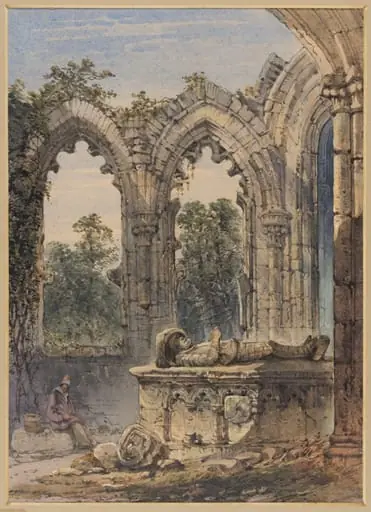
Rievaulx Abbey, a Cistercian foundation dissolved in the 16th century, served as a potent symbol of temporal decay and spiritual legacy for Romantic-era artists. Cotman’s depiction emphasizes the ruin’s integration with the natural landscape—stone arches softened by moss and time, set against a pale sky and lush grass. The scene invites contemplation rather than drama, aligning with the Picturesque ideal of beauty found in aged, weathered forms.
Technique & Style
Cotman employed watercolour with a restrained yet confident hand, reserving the paper’s white surface to suggest light rather than applying highlights with pigment. His washes are layered with precision, allowing the stone’s texture to emerge through controlled transparency. The absence of heavy outlines and the use of atmospheric tone create a sense of depth and quiet luminosity, reflecting his emerging mastery of the medium’s unique properties.
History & Provenance
Cotman made multiple sketching trips to Yorkshire between 1803 and 1805, often accompanied by fellow artists such as Paul Sandby Munn. These excursions were formative, shaping his approach to landscape and composition. The resulting works, including this watercolour, were later used as teaching aids after he established himself as a drawing master in Norwich in 1806, where he cultivated a generation of watercolourists through direct study of his originals.
Context
In the early 1800s, ruined abbeys across northern England became focal points for artists drawn to the sublime and the picturesque. Cotman’s work alongside contemporaries like Turner and Girtin reflects a broader cultural fascination with monastic ruins as sites of historical memory and aesthetic inquiry. Watercolour, once considered a minor medium, gained legitimacy through such artists’ technical innovations and their engagement with the English landscape.
Legacy
Cotman’s watercolours of Rievaulx and other northern ruins helped redefine the expressive potential of the medium. His emphasis on tonal harmony, structural clarity, and the expressive use of negative space influenced later generations of British watercolourists. The work remains a key example of how topographical observation could be elevated into a deeply personal and refined artistic language.
Artist & collection
Artist
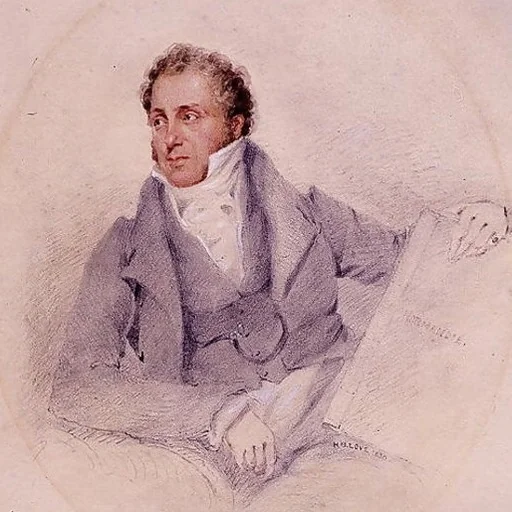
John Sell Cotman (16 May 1782 – 24 July 1842) was an English marine and landscape painter, etcher, illustrator, and a leading member of the Norwich School of painters.