Artwork
Ruined Chapel Near St Omer, Northern France
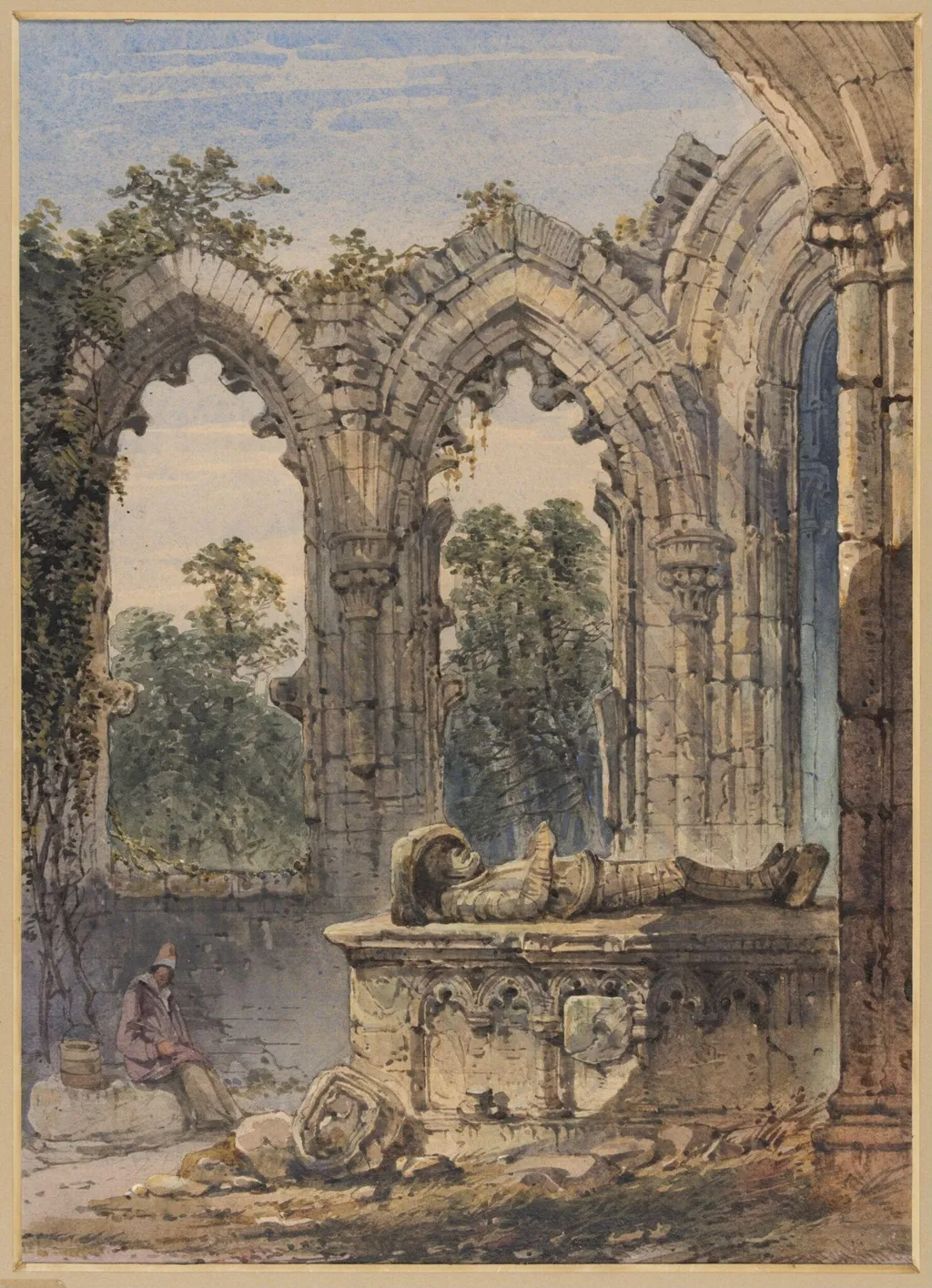
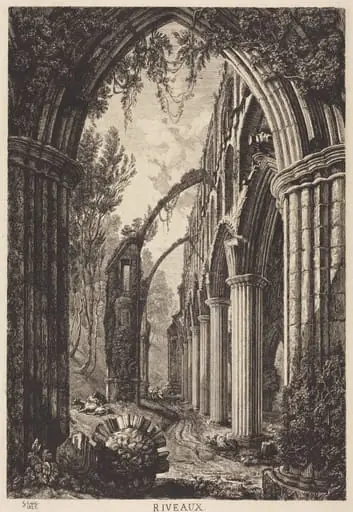
Ruined Chapel Near St Omer, Northern France is a watercolor work on paper by Joseph John Jenkins. It dates from 1850 and is held in the collection of the Victoria and Albert Museum. The watercolor portrays the remnants of a chapel near Saint-Omer in northern France.
About this work
Overview
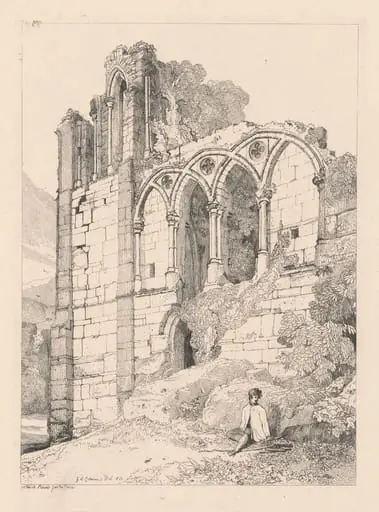
The watercolor portrays the remnants of a chapel near Saint-Omer in northern France. A weathered stone arch, its carved shell motif broken, frames a modest landscape of trees and a distant water surface. Moss and ivy cling to the crumbling walls, while a solitary figure sits on a rock nearby, accompanied by a bucket and a basket.
Subject & Meaning
At the foreground, a tomb with a sculptural element anchors the composition, suggesting a funerary context. The seated man, dressed in dark clothing and a hat, appears contemplative, perhaps reflecting on the passage of time that erodes both stone and memory. The juxtaposition of human presence with decaying architecture invites meditation on mortality and the persistence of nature.
Technique & Style
Executed in watercolor, the work balances translucency with precise detail. Fine washes render the moss‑covered stone and the soft foliage, while sharper strokes define the broken shell carving and the figure’s attire. The medium’s inherent fluidity conveys the atmosphere of decay, allowing subtle color shifts to suggest both the strength of the structure and its fragility.
Context
Ruined edifices have long served as visual metaphors in European art, symbolising the inevitable decline of human endeavors. In the 19th‑century tradition of landscape painting, artists often used such sites to explore themes of nostalgia and the sublime. This piece aligns with that lineage, employing a northern French chapel as a focal point for broader reflections on history and nature.
Artist & collection

Artist
Joseph John Jenkins was a British engraver and watercolor painter. He is best known for his portraits and landscapes paintings.