Artwork
Eardisland
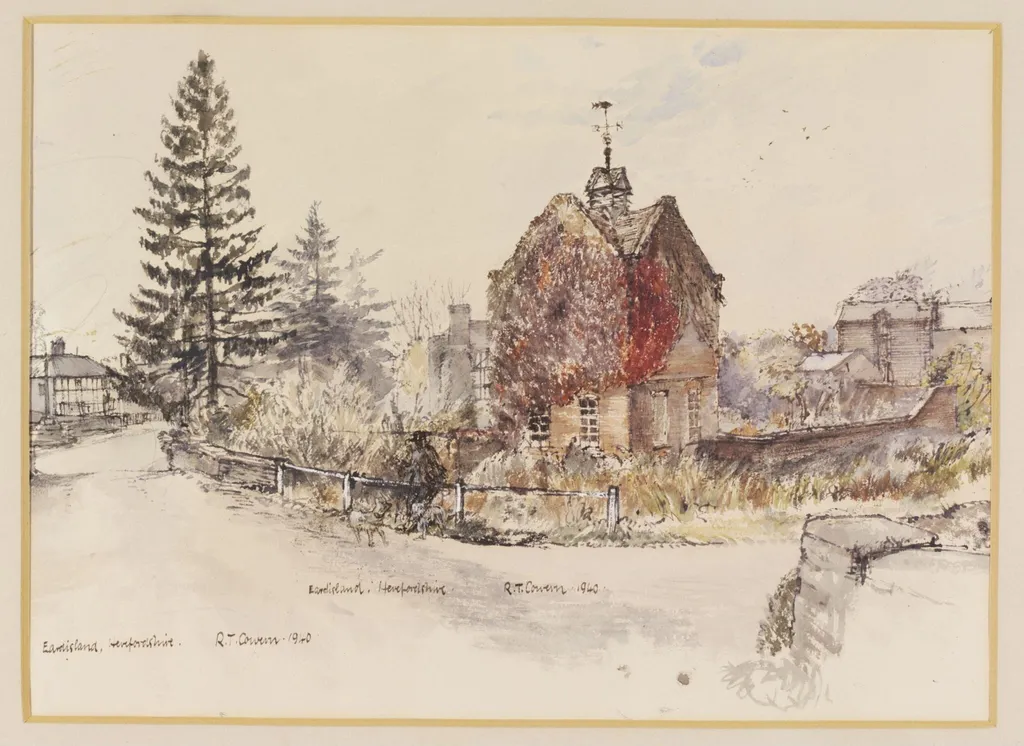
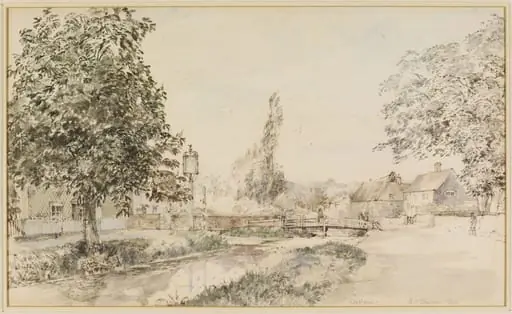
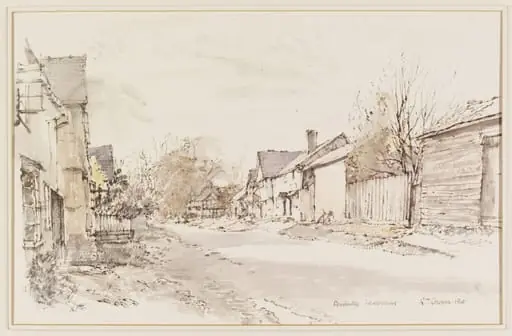
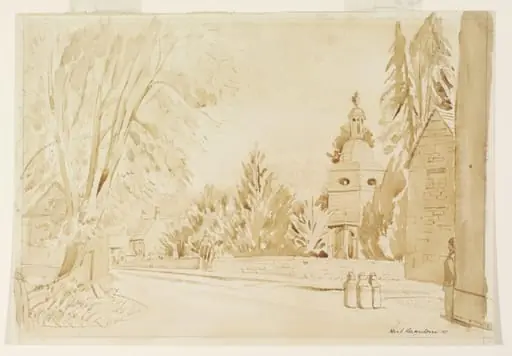
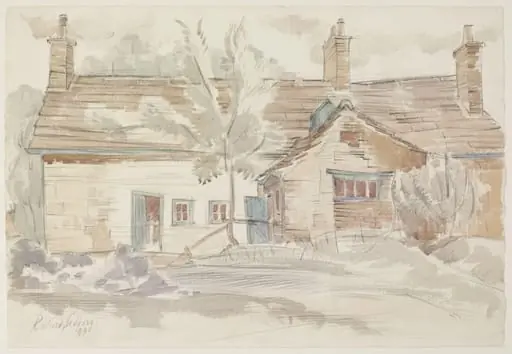
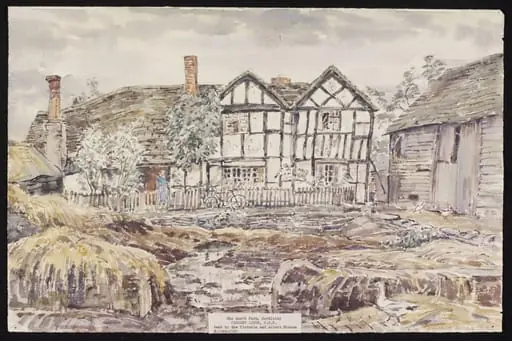
Eardisland is a watercolor work on paper by Cowern. It dates from 1940 and is held in the collection of the Victoria and Albert Museum.
About this work
Overview
The scene includes modest timber-framed buildings and a winding road, rendered with quiet precision to preserve a moment in time during wartime.
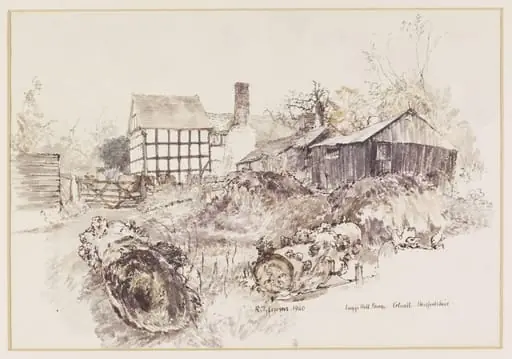
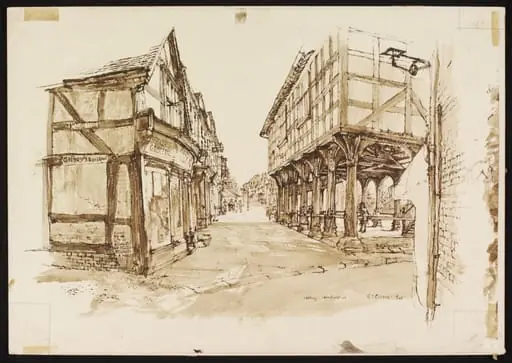
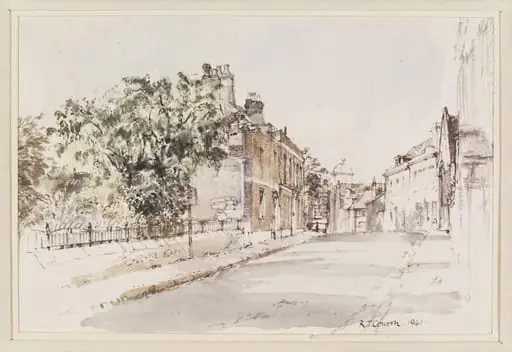
This 1940 watercolour by Cowern depicts the rural village of Eardisland in Herefordshire, created as part of the Recording Britain initiative. The work captures a quiet corner of the landscape with delicate brushwork and subtle ink details, focusing on a once-functional dovecote now reclaimed by nature. The scene includes modest timber-framed buildings and a winding road, rendered with quiet precision to preserve a moment in time during wartime.
Subject & Meaning
The central subject is a 17th-century brick dovecote, its original purpose faded, now entwined with creeping vines and standing apart from the manor it once served. Surrounding structures, half-timbered and weathered, suggest a village unchanged by modernity. The composition avoids human figures, emphasizing stillness and the quiet passage of time, reflecting the project’s aim to record heritage at risk during wartime upheaval.
Technique & Style
Cowern employed transparent watercolour with fine pen lines to define architectural details and foliage. The palette is restrained—soft greens, muted reds, and earthy browns—enhancing the sense of calm. Layered washes suggest depth in the trees and distance, while the road’s curve guides the eye inward. The technique balances precision with atmospheric looseness, typical of Recording Britain’s documentary aesthetic.
History & Provenance
Painted in 1940, this work was commissioned by the Recording Britain project, a government-backed effort to preserve visual records of the British countryside amid wartime threats. Cowern’s watercolour entered the Victoria and Albert Museum’s collection as part of the project’s archive, where it remains as a testament to the initiative’s mission to safeguard cultural memory through art.
Context
During the early years of World War II, artists were commissioned to document landscapes and vernacular architecture vulnerable to bombing or neglect. Eardisland, a modest Herefordshire village, represented the quiet rural heritage the project sought to preserve. Cowern’s work aligns with others in the series that prioritize observation over sentiment, capturing places not as idealized scenes but as lived-in, evolving environments.
Legacy
The Recording Britain collection, including this watercolour, endures as a vital historical resource. Cowern’s depiction of Eardisland contributes to a broader visual archive of pre-industrial English villages, offering insight into architectural forms and rural life before widespread change. Its quiet realism continues to inform studies of 20th-century British art and heritage conservation.
Artist & collection
Artist
Cowern is a surname. Notable people with the surname include:Dianna Cowern, American YouTuber Jenny Cowern (1943–2005), English artist Raymond Teague Cowern (1913–1986), British painter and illustrator

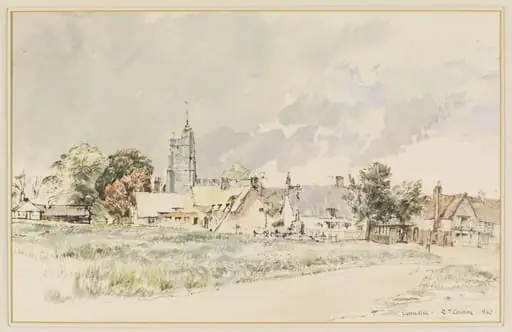 Cavendish
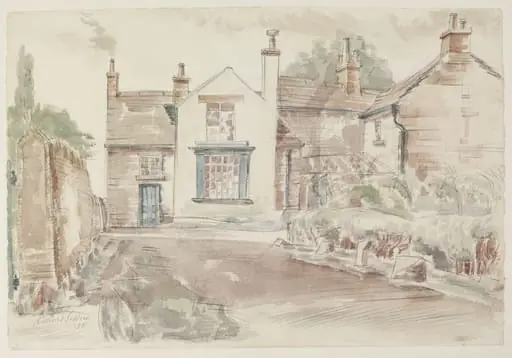 Cottages at Norton, No.1
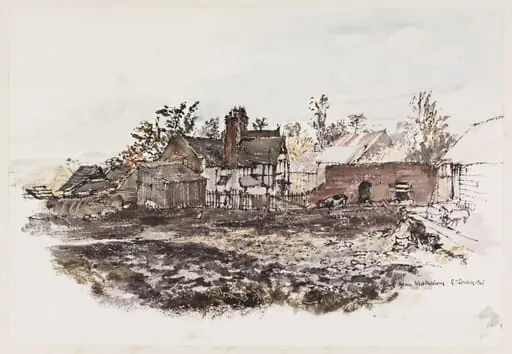 Park Farm, West Malvern
 Dove Valley, Mappleton
 Cottages at Norton, No.4
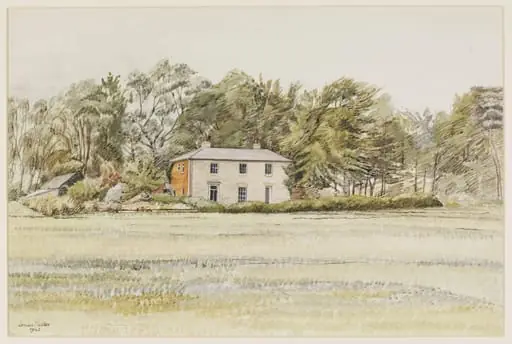 The Firs (Farmhouse) near Sudbourne
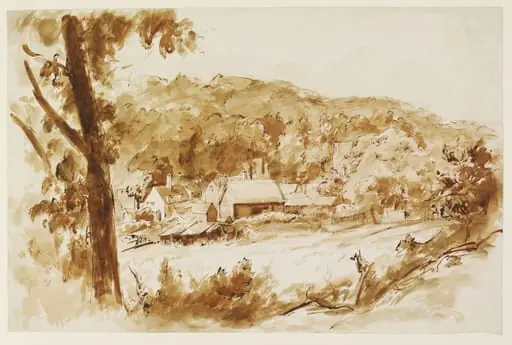 Turville Village
 Cottages at Norton, No.3
 Vejen gennem Côte-Saint-André ved Grenoble
 A Country Church seen through Trees
 Cottages at Norton, No.2
 The Quebb Farm, Eardisley