Artwork
The Firs (Farmhouse) near Sudbourne
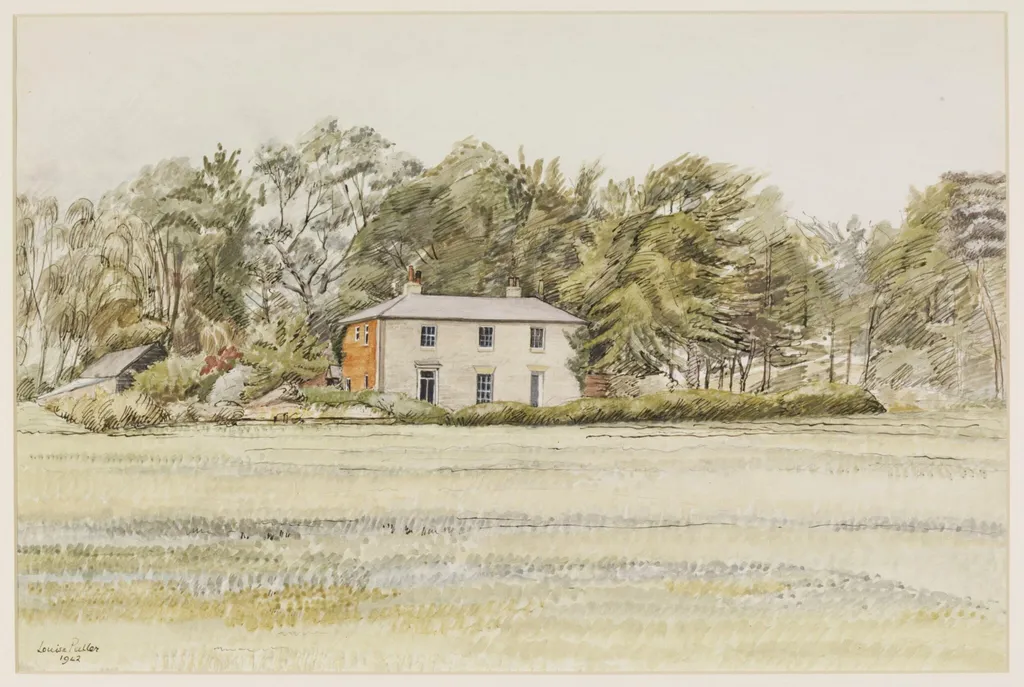
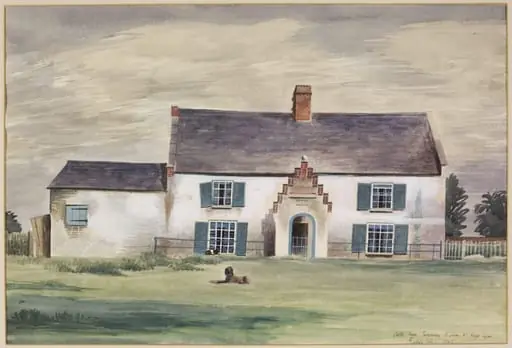
The Firs (Farmhouse) near Sudbourne is a watercolor work on paper by Louisa Puller. It dates from 1942 and is held in the collection of the Victoria and Albert Museum.
About this work
Puller often added small signs of modern life like telephone wires to these scenes.
This watercolour shows a simple Georgian farmhouse near Sudbourne, Suffolk. Louisa Puller painted it in 1942 as part of a project called Recording Britain. The house sits among fir trees, giving it a quiet, enduring feel.
Puller often added small signs of modern life like telephone wires to these scenes. Here, the wires are missing. The farmhouse looks almost untouched by time.
Look up the Victoria and Albert Museum next.
Overview
Painted in 1942 by Louisa Puller, this watercolour depicts a Georgian farmhouse near Sudbourne in Suffolk. It was created as part of the Recording Britain initiative, a wartime effort to document the nation’s rural architecture before it vanished amid modernization. Unlike other works in the series, this piece omits signs of contemporary infrastructure, emphasizing instead the building’s quiet permanence amid its surrounding fir trees.
Subject & Meaning
The farmhouse, one of five in the Sudbourne area recorded by Puller, stands as a symbol of enduring rural life. Its unadorned form and isolation among evergreens suggest resilience against change. The absence of telephone wires—common in Puller’s other works—intentionally removes markers of modernity, reinforcing an impression of continuity and stillness, as if the structure has existed unchanged for generations.
Technique & Style
Puller employed delicate watercolour washes to capture the soft textures of the farmhouse’s weathered walls and the dense, shadowed foliage of the fir trees. Her restrained palette and precise linework convey quiet realism without sentimentality. The composition avoids dramatic perspective, grounding the viewer in the scene’s calm equilibrium, where architecture and landscape merge with subtle harmony.
History & Provenance
Created during World War II under the Recording Britain scheme, the work was commissioned by the Victoria and Albert Museum to preserve images of threatened vernacular buildings. After completion, it entered the museum’s collection, where it remains today. The project, supported by the Pilgrim Trust, aimed to safeguard visual records of a Britain under pressure from war and industrial change.
Context
The Recording Britain initiative emerged in 1939 as a cultural response to wartime uncertainty. Artists like Puller were sent across the country to document rural and coastal scenes deemed vulnerable to destruction or neglect. This farmhouse, though unremarkable in form, represented the quiet heritage the project sought to preserve—not as a monument, but as a lived-in, ordinary presence in the landscape.
Legacy
Puller’s watercolour contributes to a broader archive of British rural life recorded during a pivotal era. Its omission of modern elements distinguishes it within the Recording Britain corpus, offering a contemplative counterpoint to more overtly transitional scenes. Today, it stands as a quiet testament to the value placed on ordinary architecture during times of upheaval.
Artist & collection
Artist
Louisa Puller painted quiet, detailed watercolors of English buildings in the 1940s.

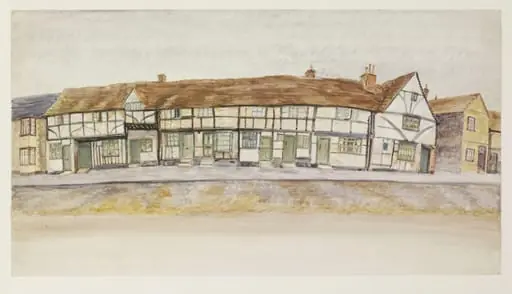 Houses in Rose Street, Wokingham
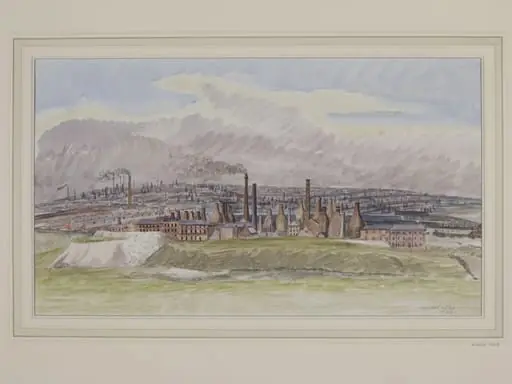 General view of Hanley and Burslem, from near Wolstanton
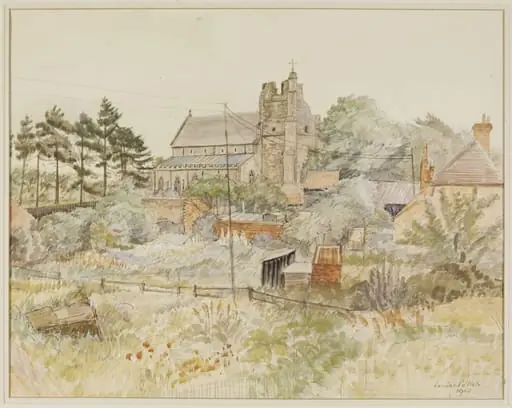 St. Bartholomew's Church, Orford, from the North-West
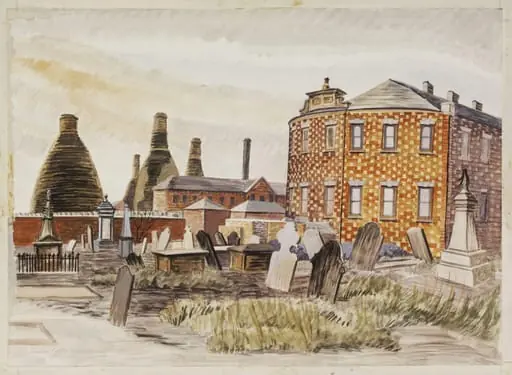 Bethesda Methodist Chapel and Churchyard, Hanley, Staffordshire
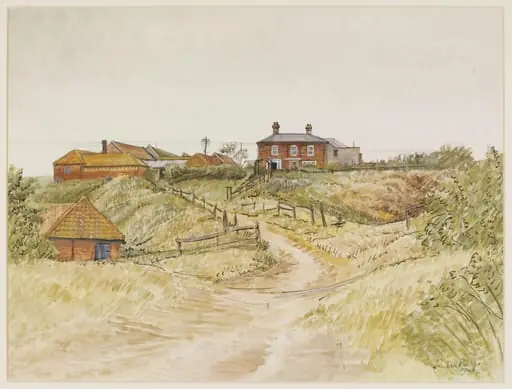 The Valley Farm, near Sudbourne
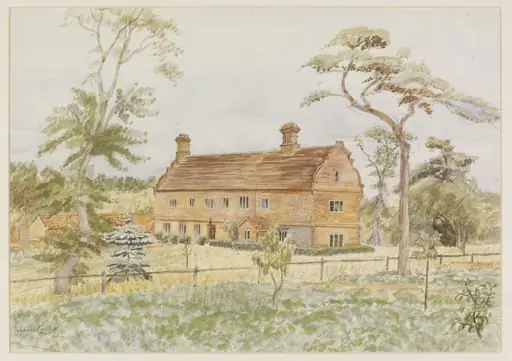
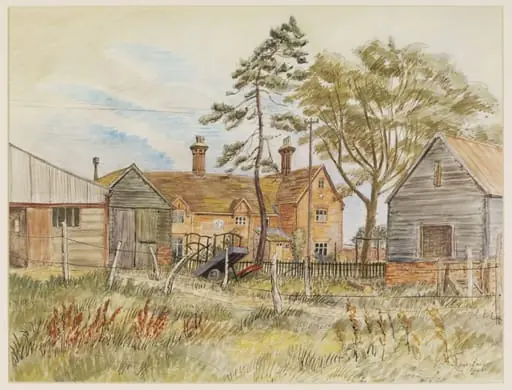 Crag Farm near Sudbourne
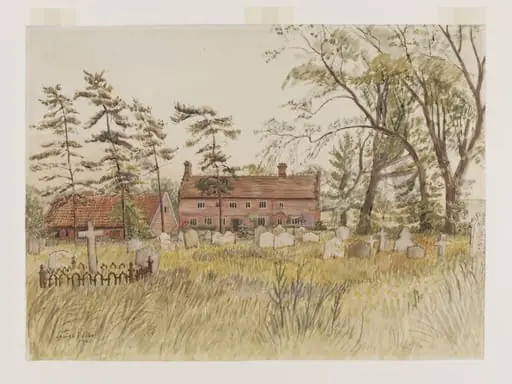
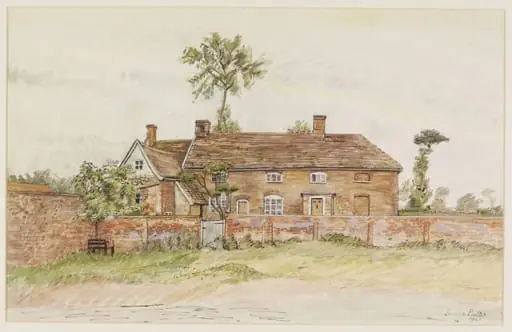 Church Farm (from the Churchyard) Sudbourne