Artwork
Untitled
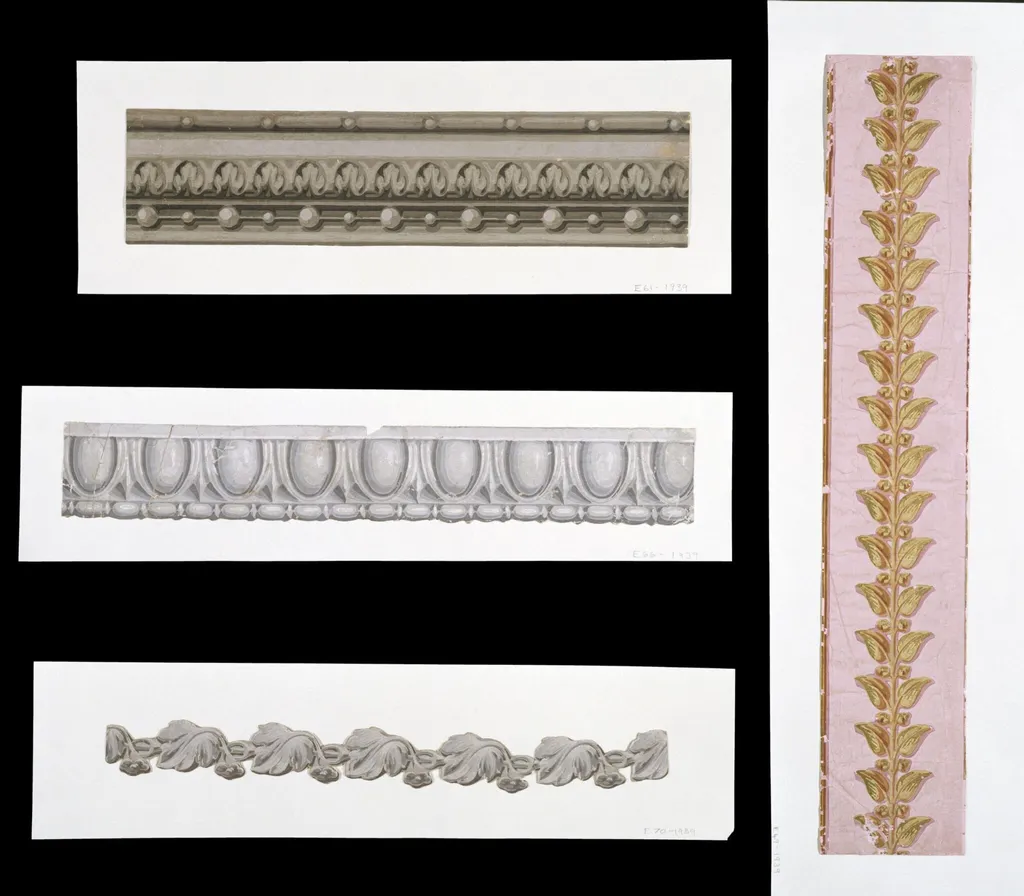
Untitled is a print by the Romanticist artist Cowtan & Son. It dates from 1812 and is held in the collection of the Victoria and Albert Museum.
About this work
Overview
The work is a printed wallpaper border created in 1812 by the British design firm Cowtan & Son. It consists of a repeating gold‑coloured leafy stem motif set against a pink ground, executed as a woodblock print on paper. The piece was presented to the museum by Mr A. C. Cowtan in tribute to his father, Arthur Barnard Cowtan, OBE.
Subject & Meaning
The decorative scheme centers on a stylised botanical element—a slender, gold‑toned stem with foliage—repeated in a continuous band. The design reflects early‑nineteenth‑century taste for ornamental interiors, where natural motifs were employed to convey elegance and refinement within domestic spaces.
Technique & Style
The border was produced using traditional woodblock printing, a labor‑intensive process in which carved wooden matrices were inked and pressed onto paper. The gold coloration was achieved by applying metallic pigment to the carved areas, creating a luminous contrast with the soft pink field, characteristic of Regency decorative aesthetics.
History & Provenance
Commissioned by Cowtan & Son, a prominent wallpaper manufacturer of the period, the border exemplifies the firm’s output during the early 1800s. It entered the museum’s collection through a donation from Mr A. C. Cowtan, who offered the piece in memory of his father, Arthur Barnard Cowtan, a noted figure in the company and recipient of an OBE.
Context
The border belongs to a broader tradition of architectural ornamentation that blended printed textiles with interior design. Similar motifs appear in contemporary pattern books and in the decorative schemes of Regency homes, where gold‑leaf detailing and botanical motifs were employed to enhance walls, furniture, and architectural trim.
Artist & collection
Artist
Cowtan & Son turned out finely detailed prints in the first decades of the 1800s, selling to collectors who wanted crisp city views and portraits turned into black-and-white sheets.

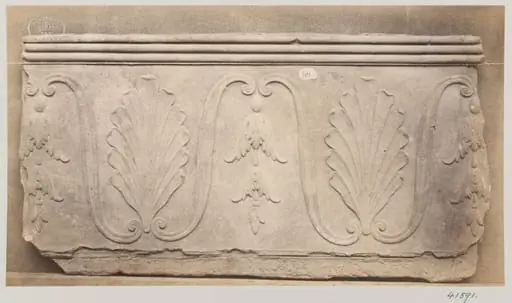 Bas-relief of a portion of a frieze depicting a palmetto and foliage in terra cotta
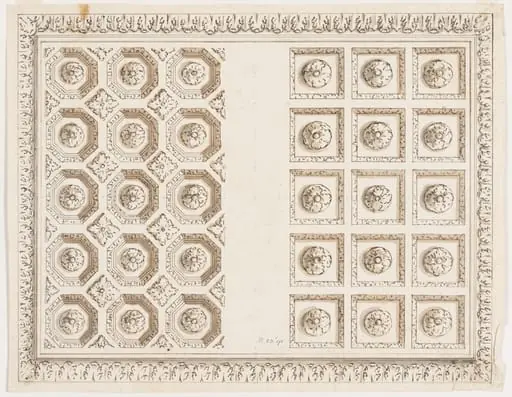 Design for a coffered ceiling set within an acanthus frame
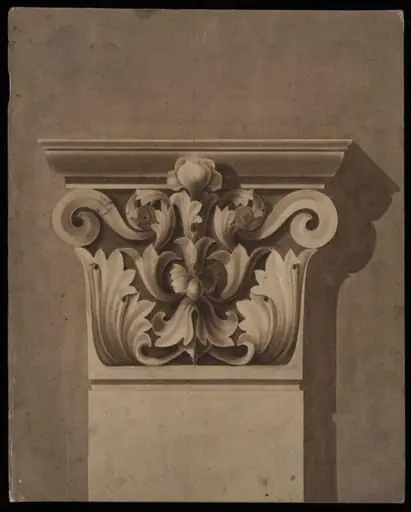 Untitled
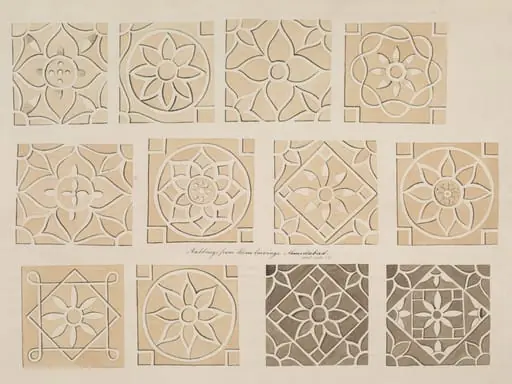 One of thirty drawings of details of architectural stone and mother-of pearl ornament taken from rubbings and moulds of monuments in Ahmedabad, the capital seat of the Ahmad, Shahi dynasty.
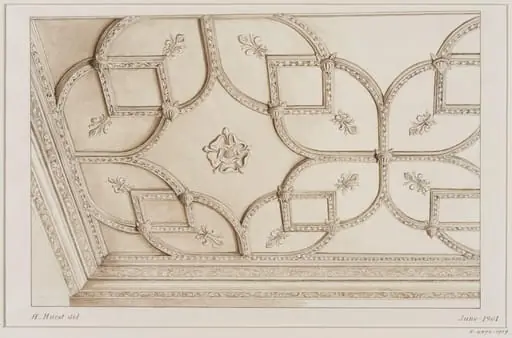 Untitled
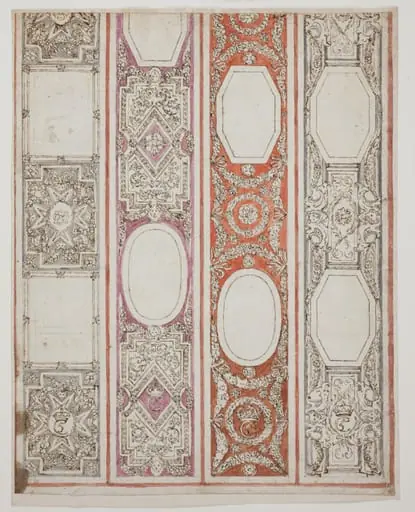 Udkast til stukdekoration i gangen til audienshuset paa Frederiksborg
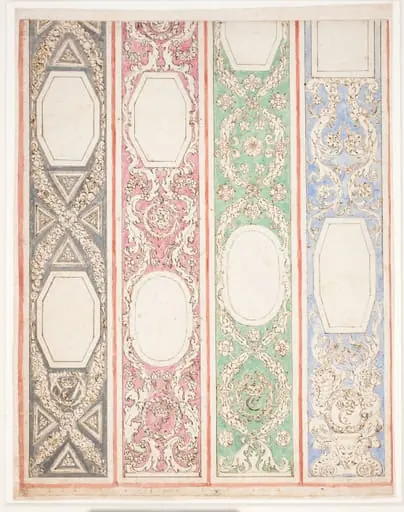 Udkast til stukdekoration i gangen i audienshuset, Frederiksborg
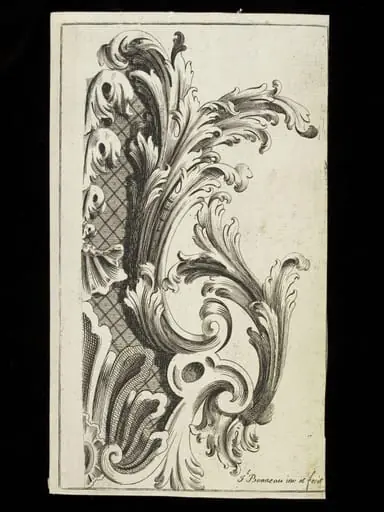 Ornament print by Jacob Bonneau
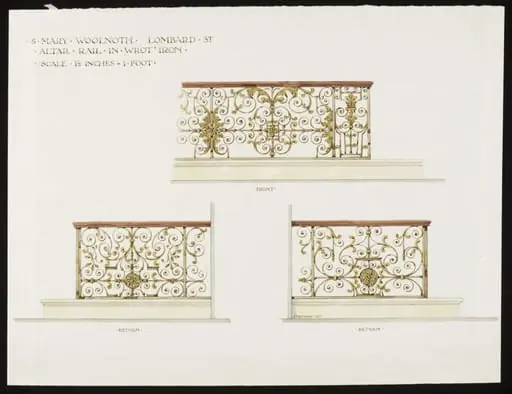 Drawing of the alter rail, St. Mary Woolnoth, Lombard Street, E.C.
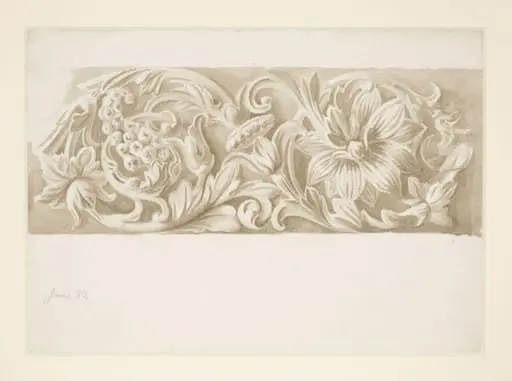 Drawing of part of a frieze
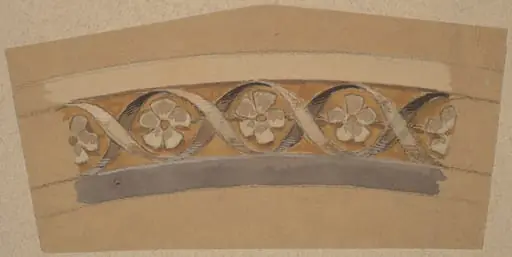 Study for a Border Design
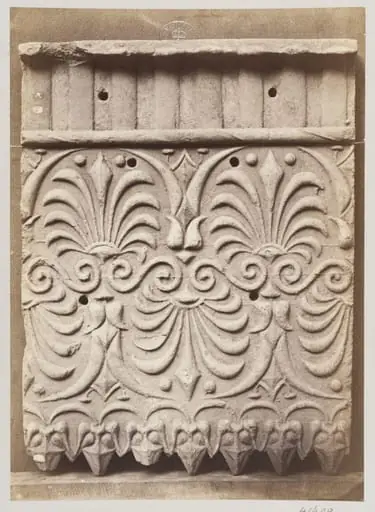 Bas-relief portion of a frieze of honeysuckle in terra cotta