Artwork
Bas-relief of a portion of a frieze depicting a palmetto and foliage in terra cotta
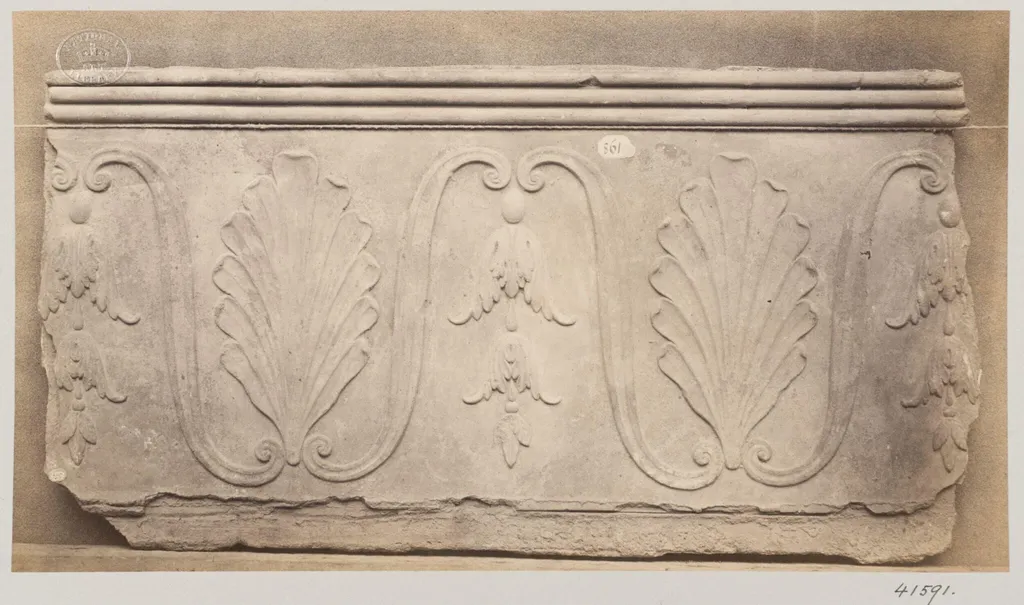
Bas-relief of a portion of a frieze depicting a palmetto and foliage in terra cotta is a photographic photography by the Impressionist artist Louise Laffon. It dates from 1864 and is held in the collection of the Victoria and Albert Museum. This photograph, taken between 1863 and 1864, captures a small terra cotta bas-relief featuring a palmetto and foliage.
About this work
This photograph shows a small terra cotta relief carving of a palmetto plant and leaves.
This photograph shows a small terra cotta relief carving of a palmetto plant and leaves. Louise Laffon made it between 1863 and 1864. It’s a quiet study of nature turned into an artwork.
The Victoria and Albert Museum began collecting photographs in 1852. That made it the first museum to do so. They used these images to help artists and students see new ways of working.
Look up the Victoria and Albert Museum.
Overview
This photograph, taken between 1863 and 1864, captures a small terra cotta bas-relief featuring a palmetto and foliage. It was produced by Louise Laffon, a French photographer whose work was acquired by the Victoria and Albert Museum in 1864. The image belongs to a larger series documenting objects from the Campana Collection in Paris, selected for its educational value. The V&A, among the first museums to collect photography, integrated such images into its instructional resources for artists and designers.
Subject & Meaning
The relief depicts a naturalistic palmetto motif, common in classical and Renaissance decorative arts. Laffon’s photograph isolates the carving with quiet precision, emphasizing its form and texture rather than its original architectural context. The image serves not as art in itself, but as a study tool—allowing students to examine ornamental detail, plant anatomy, and craftsmanship without direct access to the object. Nature, here, becomes a model for design.
Technique & Style
Laffon employed the albumen print process, then standard for photographic documentation. The image’s tonal range and fine detail reflect careful lighting and exposure, suited to recording subtle surface variations in terra cotta. The composition is frontal and evenly lit, avoiding dramatic shadows to ensure clarity. This restrained aesthetic aligns with the museum’s goal: to produce accurate, utilitarian records rather than expressive photographs.
History & Provenance
In 1864, the V&A acquired 500 photographs from Laffon’s series through the Parisian agent E. Cappe. These images originated in the Musée Napoléon III, now part of the Louvre, and documented artifacts from the Campana Collection. Laffon, one of the earliest female members of Le Société Française de la Photographie, was commissioned for her technical skill. The V&A’s purchase reflects its active network of international sources and its commitment to building a visual archive for study.
Context
The V&A’s early adoption of photography was driven by its educational mission. Under Henry Cole, the museum sought to supplement traditional drawings and casts with photographic reproductions, making rare or distant objects accessible. Laffon’s work was part of this broader strategy, linking European collections through visual documentation. Her role as a woman in a male-dominated field underscores the quiet but vital contributions of female photographers to institutional knowledge systems.
Legacy
Laffon’s photographs, including this one, helped establish photography as a legitimate tool for art historical study. Their inclusion in the V&A’s collection marked a shift toward visual archives as essential educational resources. Though largely overlooked in early scholarship, her work exemplifies how women contributed to the institutional infrastructure of art education. These images remain part of the museum’s historical record, preserving both the objects and the methods used to study them.
Artist & collection
Artist
Louise Laffon (1828–1885), was a French photographer and painter. She was one of the first female professional photographers in France. She had a studio in Paris between 1859 and 1876.

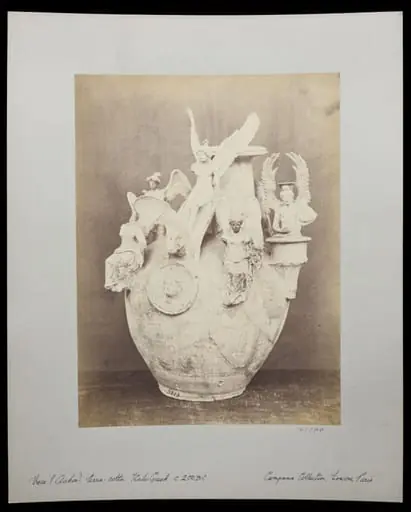 Perfume Burner in terra cotta
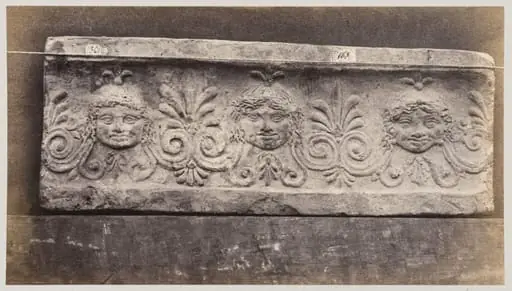 Three masques of gorgons in terra cotta
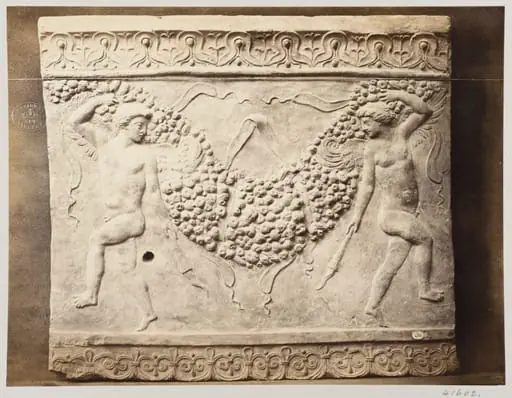 Bas-relief of portion of frieze of dancing figures with torches bearing festoon of fruit in terra cotta
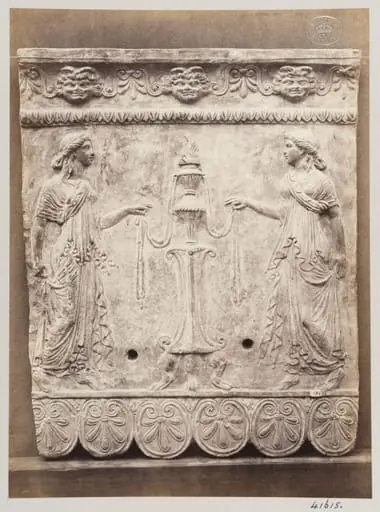 Bas-relief portion of a frieze of two draped females and an altar in terra cotta
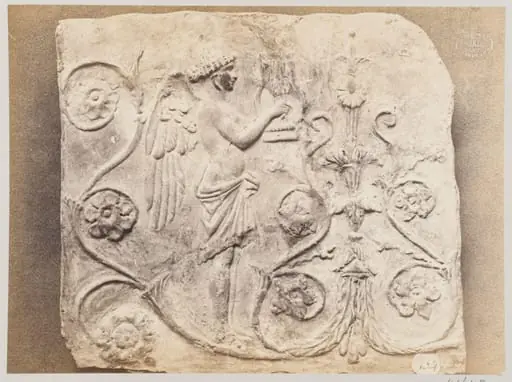 Bas-relief of a geni and a lyre in terra cotta
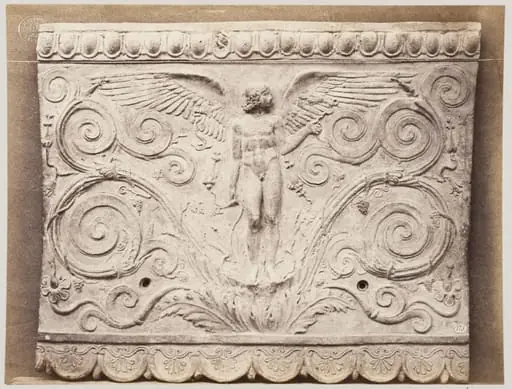 Bas-relief of a portion of frieze of Eros with scrollwork in terra cotta
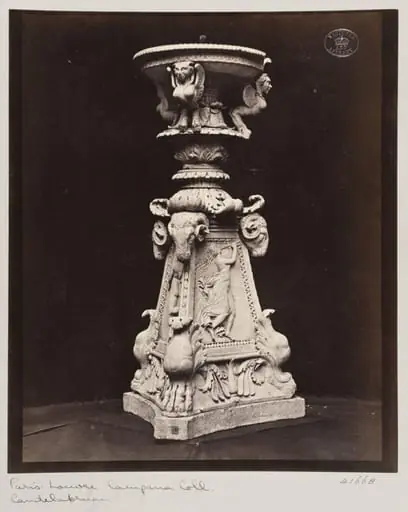 Marble sculptured fountain
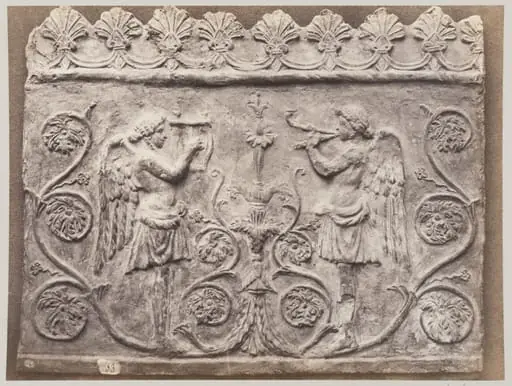 Bas-relief portion of frieze of Genii with double flutes and lyre
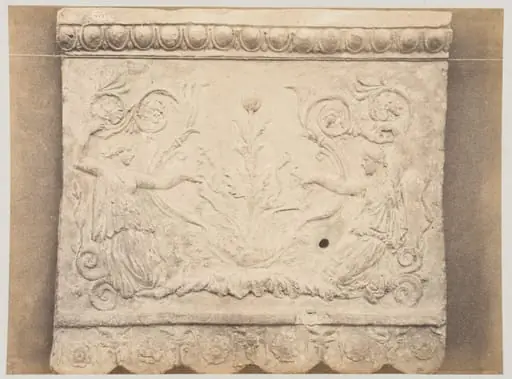 Bas-relief portion of frieze of nymphs with scrollwork in terra cotta
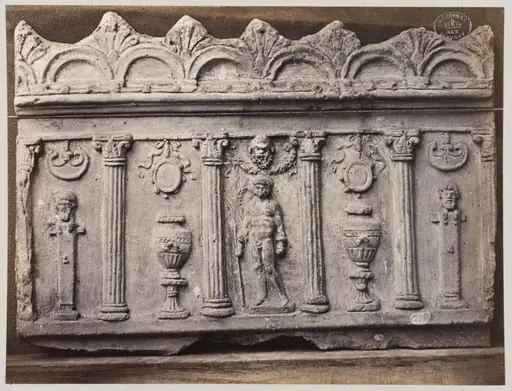 Bas-relief of a figure with bust, vessels and columns in terra cotta
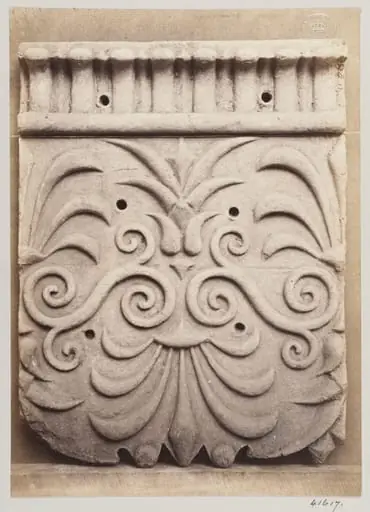 Bas-relief portion of a frieze in terra cotta
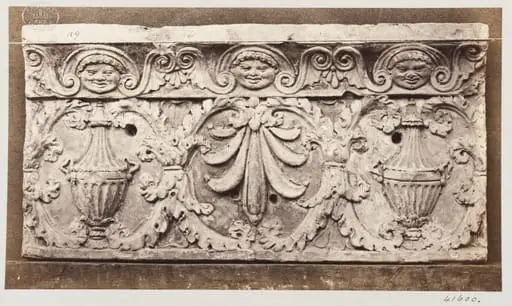 Bas-relief of portion of frieze with acanthus ornament enclosing vases and honesuckle in terra cotta
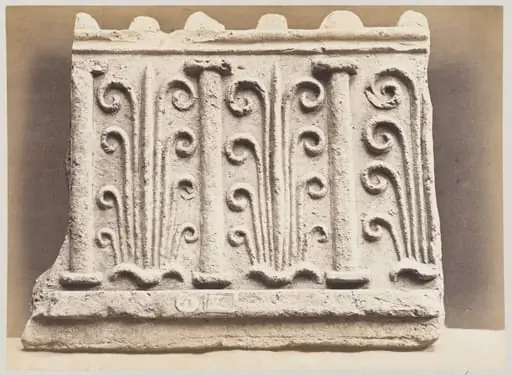 Bas-relief portion of frieze with palmettes and columns in terra cotta
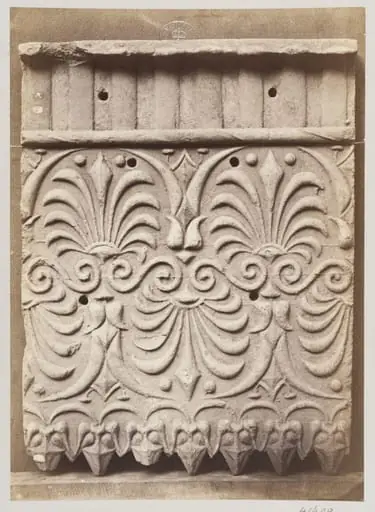 Bas-relief portion of a frieze of honeysuckle in terra cotta
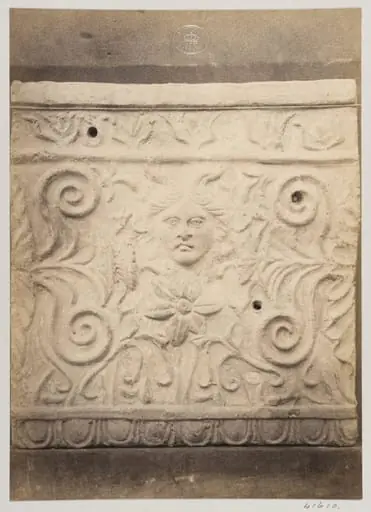 Bas-relief portion of a frieze with a mask in terra cotta
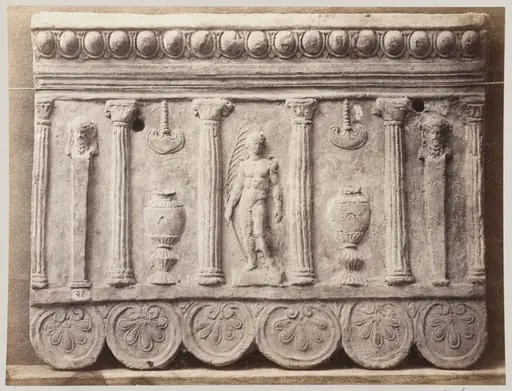 Bas-relief portion of a frieze of Hercules the conqueror in terra cotta
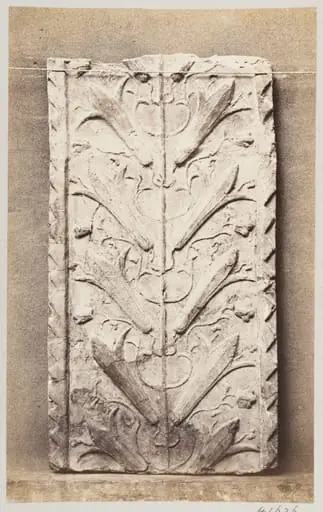 Bas-relief portion of friez of fleur de lys in terra cotta
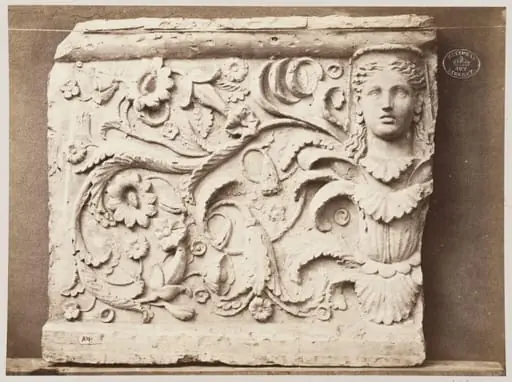 Bas-relief portion of frieze of female head and foliage ornament in terra cotta
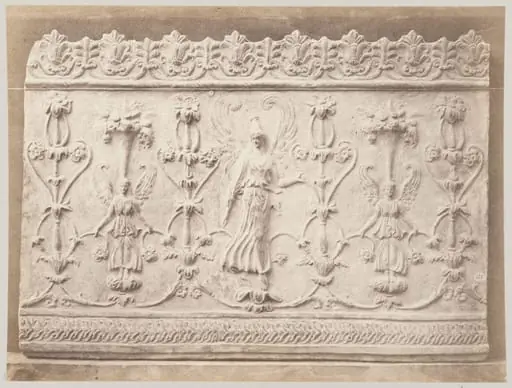 Bas-relief of a portion of a frieze of 'The Victors' in terra cotta