Artwork
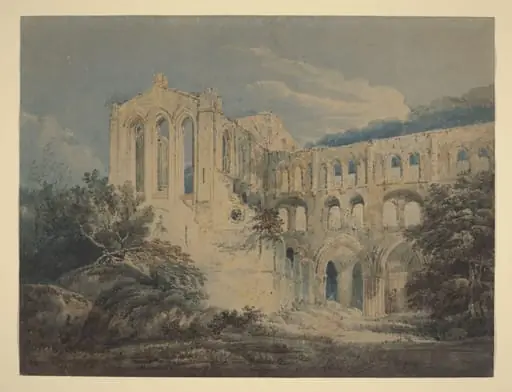
Llanthony Abbey, Monmouthshire
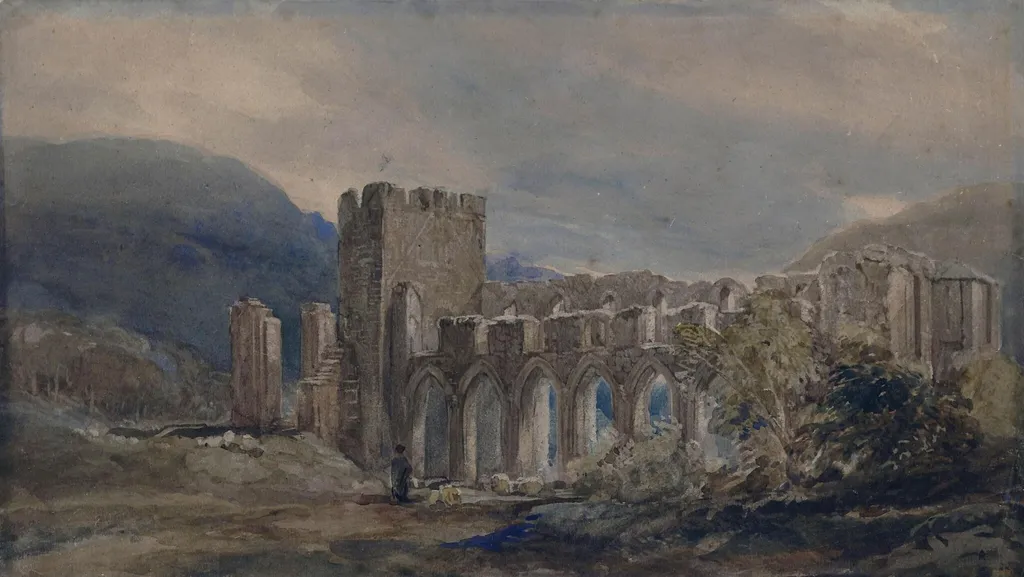
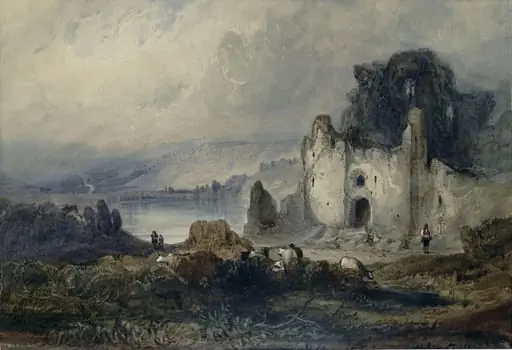
Llanthony Abbey, Monmouthshire is a watercolor work on paper by the British Romanticist artist David Cox. It dates from 1800 and is held in the collection of the Victoria and Albert Museum.
About this work
Overview
The work is a quiet, atmospheric study of decay and solitude, executed with restrained brushwork and translucent washes.
David Cox the Elder created this watercolour in 1800, capturing the ruins of Llanthony Abbey in Monmouthshire. The work is a quiet, atmospheric study of decay and solitude, executed with restrained brushwork and translucent washes. Unlike grand historical depictions, it emphasizes the subdued presence of the abbey within its natural surroundings, reflecting a shift toward intimate landscape observation.
Subject & Meaning
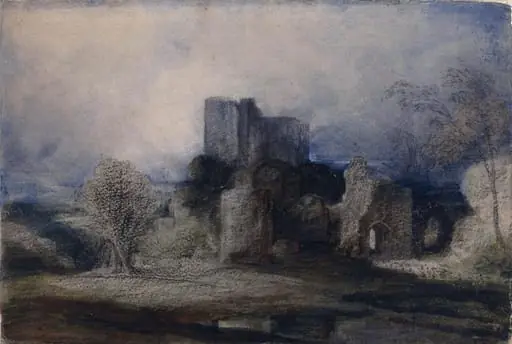
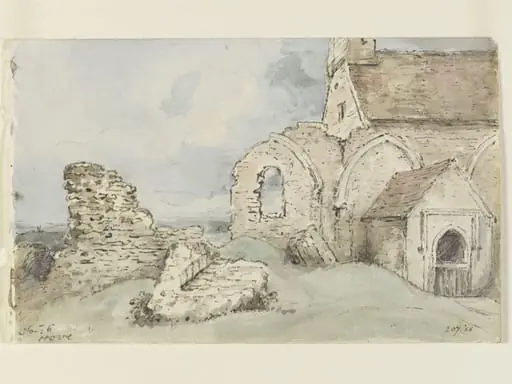
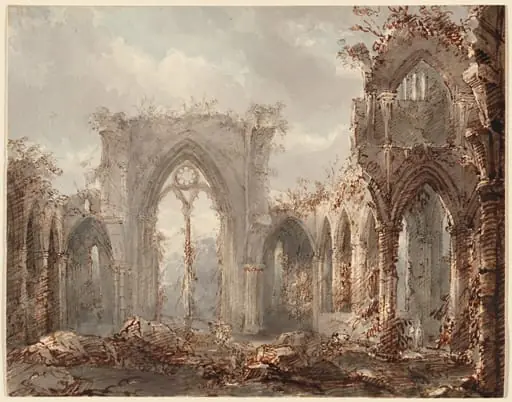
The painting centers on the abandoned monastic complex, its stone arches and fractured walls standing as silent witnesses to time. A solitary figure, barely discernible, underscores the scale of ruin and human insignificance. The scene conveys no narrative or religious message, instead inviting contemplation of impermanence and the quiet dignity of neglected places.
Technique & Style
Cox employed delicate watercolour washes to suggest texture and depth without heavy detail. The sky and distant hills are rendered in soft, blended greys and blues, creating atmospheric perspective. Shadows define the ruins’ forms subtly, while the lack of sharp outlines enhances the sense of mist and stillness, characteristic of early 19th-century British watercolour practice.
History & Provenance
Painted shortly after the abbey’s dissolution and decades before its formal preservation, the work reflects contemporary interest in antiquarian sites. Cox likely visited the location during a tour of Wales, as was common among artists of the period. The painting remains within private collections, with no public exhibition history recorded prior to the 20th century.
Context
This work emerged during a period when British artists increasingly turned to ruins and rural landscapes as subjects, influenced by Romantic sensibilities and the growing appreciation for the sublime in nature. Cox’s approach aligns with contemporaries like Turner and Girtin, who favored mood over topographical precision, valuing emotional resonance in landscape depiction.
Legacy
Cox’s Llanthony Abbey exemplifies the transition from topographical illustration to expressive landscape in British watercolour. Its understated tone and emphasis on atmosphere influenced later generations of artists seeking to convey emotion through light and weather rather than narrative. The painting remains a quiet but significant document of early Romantic landscape sensibility.
Artist & collection
Artist
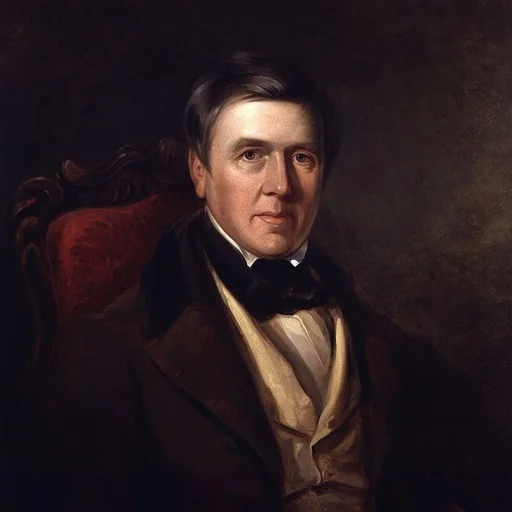
David Cox (29 April 1783 – 7 June 1859) was an English landscape painter, one of the most important members of the Birmingham School of landscape artists and an early precursor of Impressionism.

![Trees [verso], by David Cox](https://artifactworldgallery.com/img/david-cox--trees-verso--2f59ba73e183df09-w320.webp)
![Chatsworth [recto], by David Cox](https://artifactworldgallery.com/img/david-cox--chatsworth-recto--3f4d97adb21a8333-w320.webp)