Artwork
Rievaulx Abbey, Yorkshire
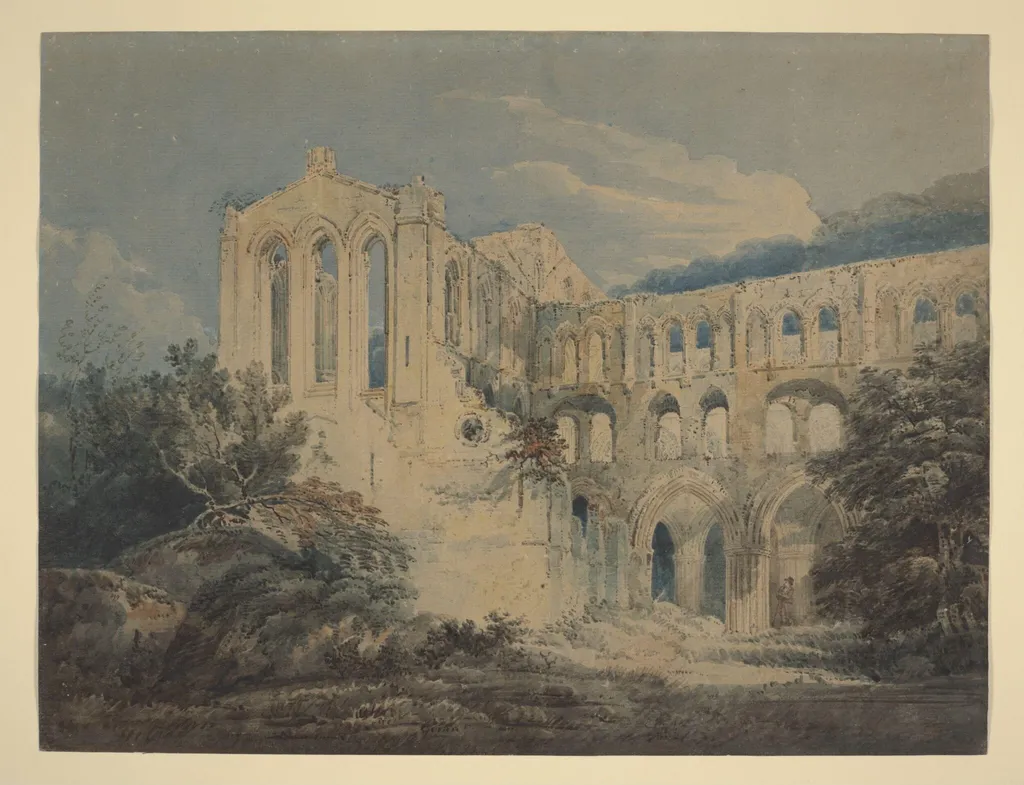
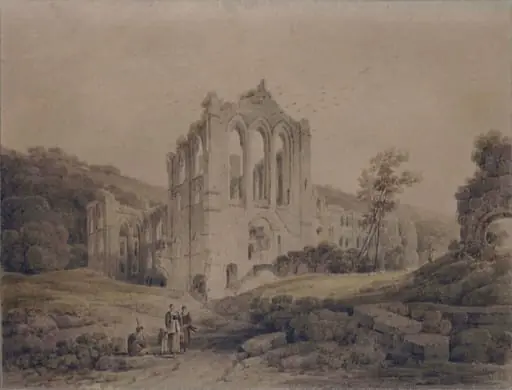
Rievaulx Abbey, Yorkshire is a watercolor work on paper by the Romanticist artist Thomas Girtin. It dates from 1798 and is held in the collection of the Victoria and Albert Museum.
About this work
Overview
Rievaulx Abbey, Yorkshire is a watercolour by Thomas Girtin, depicting the ruined Cistercian monastery in a soft, morning light. The artwork balances accuracy with a lively, contemplative atmosphere.
Subject & Meaning
The subject, Rievaulx Abbey, was founded by Cistercian monks in the 12th century and ruined after the Dissolution of the Monasteries under Henry VIII. Girtin's portrayal emphasizes the timeless, grandeur of the ruins, juxtaposing emptiness with a lone figure, underscoring the passage of time and human scale.
Technique & Style
Executed in watercolour, the piece features Girtin's characteristic soft rendering, capturing the play of morning light on the abbey's stone walls. The style reflects Romantic-era fascination with ruins, yet avoids mere documentation, instead conveying a sense of serene monumentality.
History & Provenance
Created during Thomas Girtin's brief but prolific career (1775-1802), this work exemplifies the Romantic period's affinity for depicting abandoned, historically rich sites like Rievaulx Abbey.
Context
Girtin's choice of subject aligns with the broader Romantic movement's interest in nature, decay, and the sublime. Isolated, water-proximate locations like Rievaulx resonated with both the Cistercians' original intentions and the Romantic aesthetic.
Artist & collection


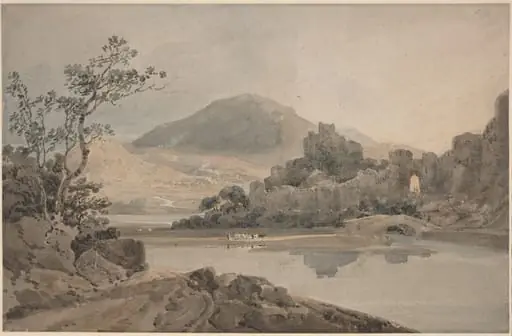 Conwy Castle, North Wales
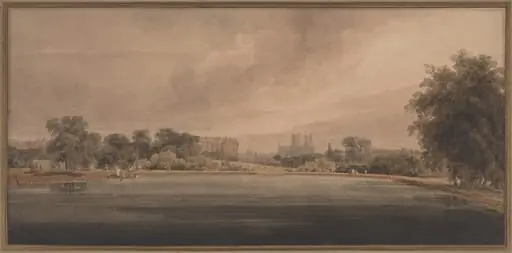 St. James' Park with a View of Westminster Abbey
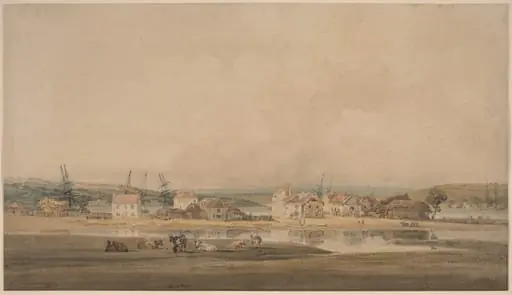 Village along a River Estuary in Devon
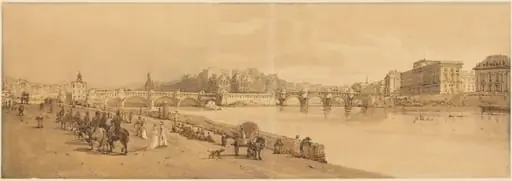 A View of the Pont Neuf, the Mint, etc.: pl.8
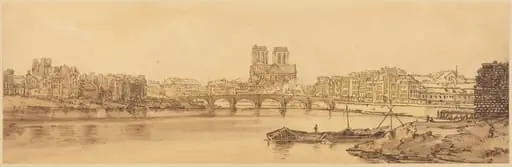 View of Pont de la Tournelle and Notre Dame Taken from the Arsnel: pl.11
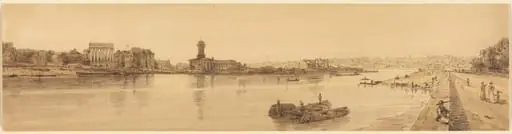 View of the Village of Chaillot from the Pont de la Concorde: pl.17
 Untitled
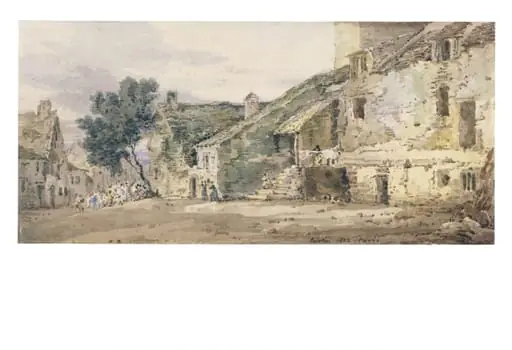 Street Scene, Near Paris