Artwork
Landscape with cottage - labourers binding cordwood
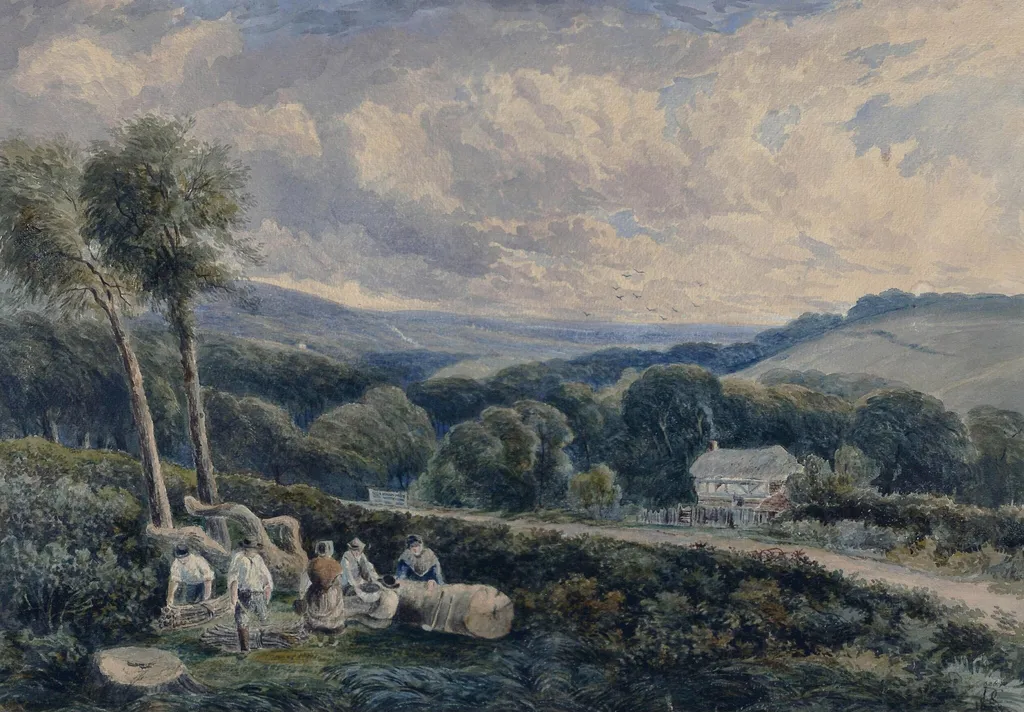
Landscape with cottage - labourers binding cordwood is a watercolor work on paper by the Impressionist artist David Cox. It dates from 1853 and is held in the collection of the Victoria and Albert Museum. This watercolour depicts a quiet rural scene centered on a modest cottage and a group of workers preparing cordwood.
About this work
Overview
This watercolour depicts a quiet rural scene centered on a modest cottage and a group of workers preparing cordwood.
This watercolour depicts a quiet rural scene centered on a modest cottage and a group of workers preparing cordwood. The composition balances human activity with the surrounding landscape, emphasizing stillness over drama. Soft washes of pigment create a gentle atmosphere, with no sharp contrasts or bold lines. The work belongs to a tradition of 19th-century landscape watercolours that valued observation over idealization.
Subject & Meaning
The painting captures a moment of daily labor: peasants binding stacked wood for fuel. The cottage, with smoke curling from its chimney, suggests domestic life sustained by this work. There is no narrative climax or symbolic gesture—instead, the scene conveys routine, endurance, and the quiet integration of human effort into the natural world.
Technique & Style
Rendered in watercolour, the piece relies on translucent layers and subtle gradations to suggest form and depth. Brushwork is restrained, avoiding detail in favor of atmospheric effect. The muted palette—soft greens, browns, and greys—enhances the sense of calm. Light is diffused, not directional, contributing to the overall serenity without invoking dramatic chiaroscuro.
History & Provenance
The painting’s origin and early ownership are undocumented. It appears to stem from a regional British or Northern European tradition of topographical watercolours, common among amateur and professional artists in the early to mid-1800s. Its survival suggests it was privately held, possibly by a collector interested in rural life rather than grand historical themes.
Context
During the early 19th century, watercolour became a respected medium for recording everyday landscapes, especially in Britain. Artists and amateurs alike turned to rural scenes as industrialization reshaped the countryside. This work reflects a broader cultural interest in preserving the appearance of agrarian life, even as it faded from daily reality.
Legacy
Though not widely exhibited or reproduced, the painting contributes to a quiet archive of vernacular landscape art. It stands as an unembellished record of rural labor and domestic economy, valued today for its honesty and restraint. Its significance lies not in fame, but in its faithful depiction of ordinary existence.
Own this work as a print
Artist & collection
Artist
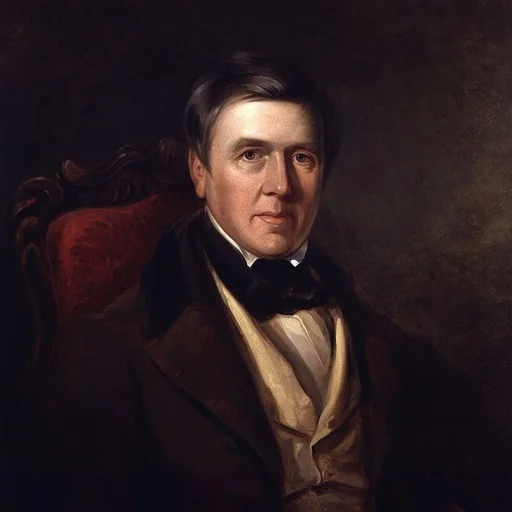
David Cox (29 April 1783 – 7 June 1859) was an English landscape painter, one of the most important members of the Birmingham School of landscape artists and an early precursor of Impressionism.

![Trees [verso], by David Cox](https://artifactworldgallery.com/img/david-cox--trees-verso--2f59ba73e183df09-w320.webp)
![Chatsworth [recto], by David Cox](https://artifactworldgallery.com/img/david-cox--chatsworth-recto--3f4d97adb21a8333-w320.webp)
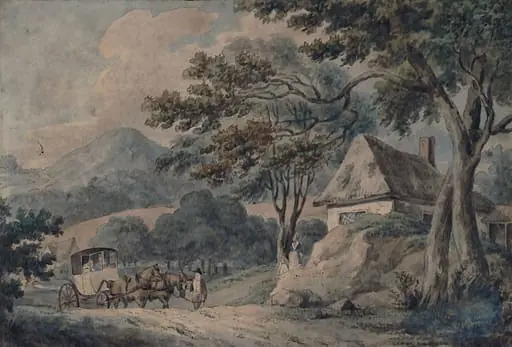 Landscape with cottage and postchaise
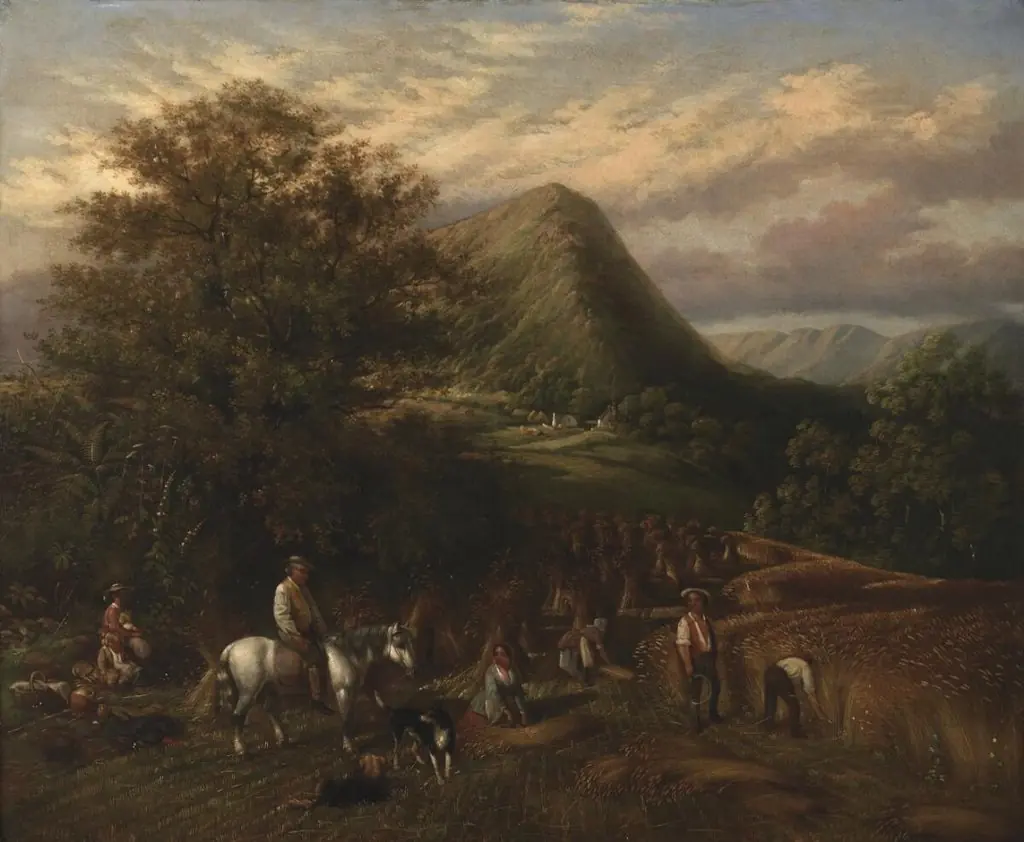 Haymaking near Abergavenny
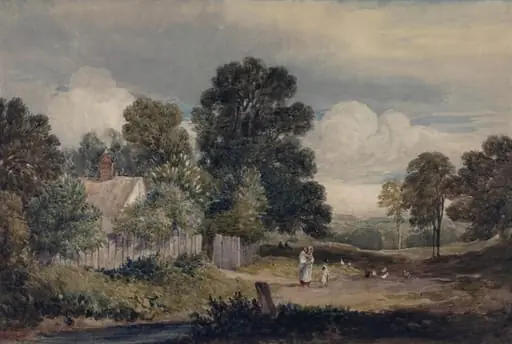 Cottage near Norwood
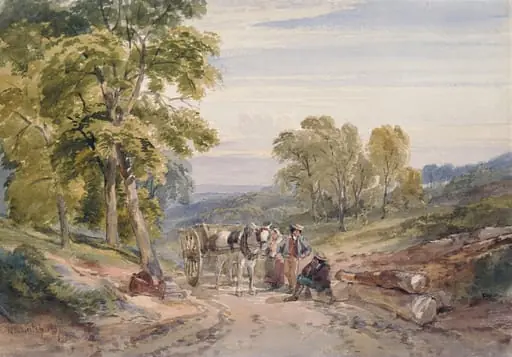 Untitled
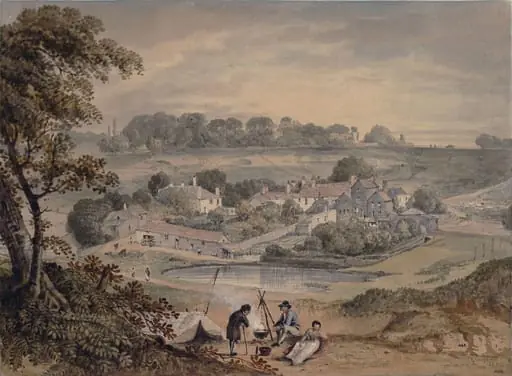 The Vale of Health, Hampstead
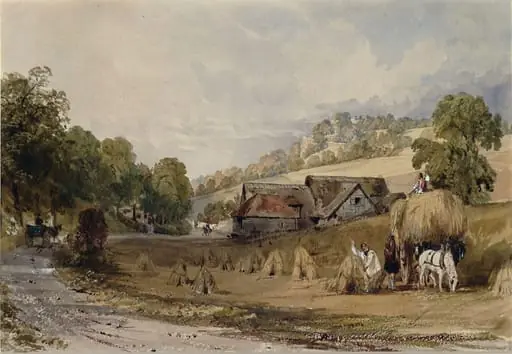 Haymaking at Ashurst, Surrey
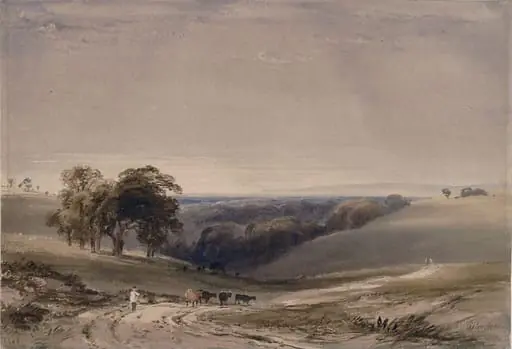 Ecclesbourne Glen
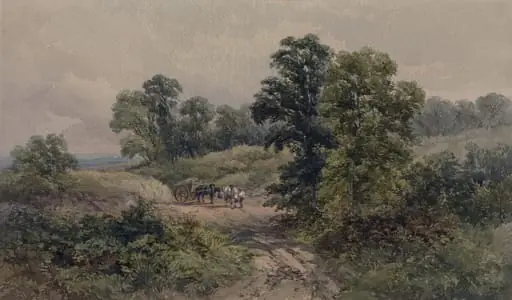 Near Benhill Wood, Sutton, Surrey
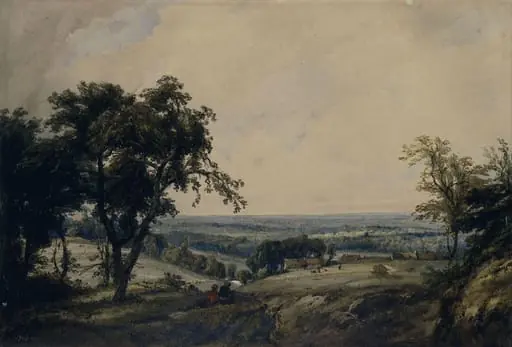 Landscape with figures and cottages in a hollow
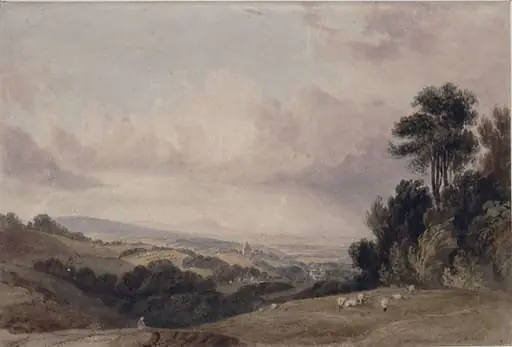 In Brightling Park
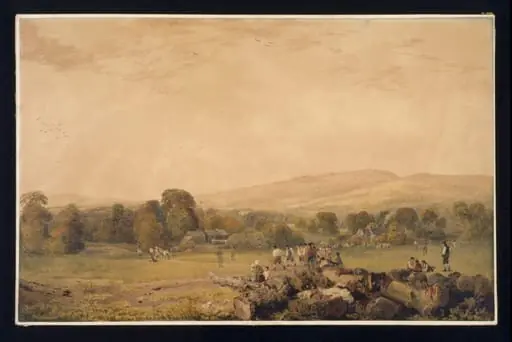 The Cricketers
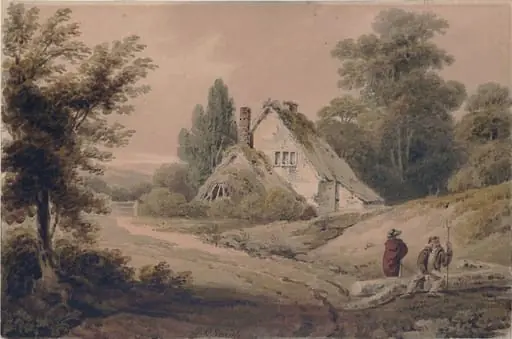 Landscape with cottage and figures