Artwork
Haymaking near Abergavenny
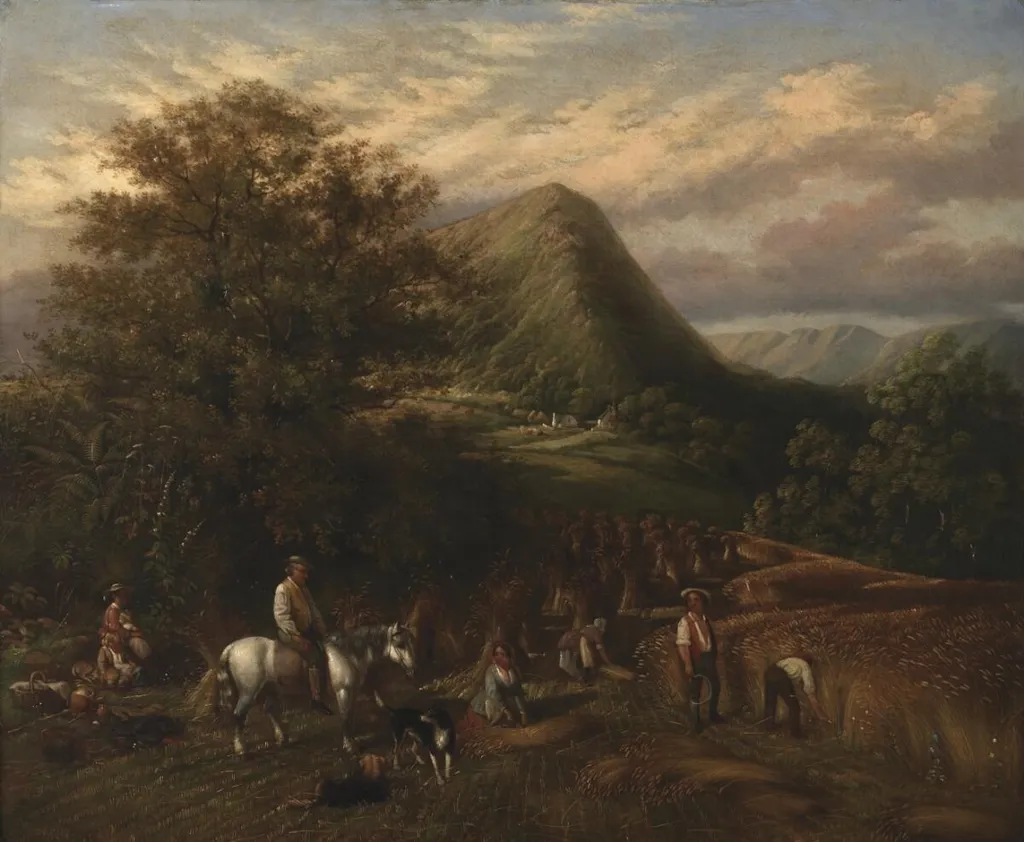
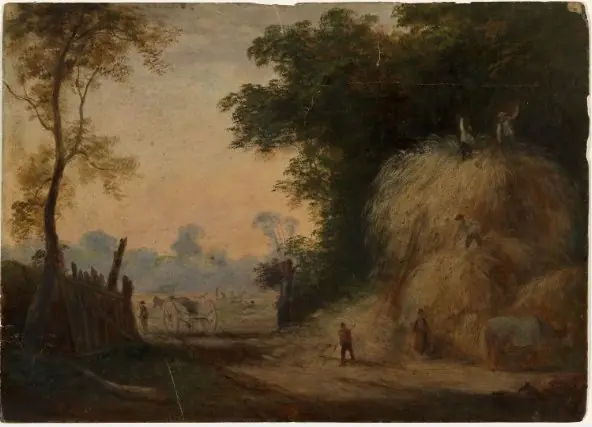
Haymaking near Abergavenny is an oil painting by the Impressionist artist William Richard B. Shaw. It dates from 1875 and is held in the collection of the National Library of Wales. William Richard B.
About this work
Overview
William Richard B. Shaw’s *Haymaking near Abergavenny* (1875) is an oil painting depicting rural labor in mid-19th-century Wales. The composition centers on agricultural workers engaged in haymaking, set against a landscape dominated by rolling hills and a partially clouded sky. The scene captures a moment of everyday activity, rendered with attention to natural light and atmospheric conditions.
Subject & Meaning
Shaw’s focus on ordinary labor reflects broader 19th-century interests in documenting working-class livelihoods and the rhythms of the countryside.
The painting portrays a communal agricultural task, emphasizing the harmony between laborers, animals, and the land. Workers cut and gather hay, while a mounted figure oversees the process near a stream. A dog and horses appear integrated into the scene, reinforcing the tranquility of rural life. Shaw’s focus on ordinary labor reflects broader 19th-century interests in documenting working-class livelihoods and the rhythms of the countryside.
Technique & Style
Shaw employs a naturalistic approach, using soft brushwork to depict light filtering through clouds and illuminating the fields. The figures and animals are rendered with careful observation, though not with meticulous detail, allowing the scene to retain a sense of immediacy. The palette consists of muted greens, browns, and blues, evoking the subdued tones of a Welsh summer landscape.
History & Provenance
Completed in 1875, *Haymaking near Abergavenny* is part of the collection of the National Library of Wales. Little is documented about its early exhibition history or ownership, though its inclusion in a national institution suggests its recognition as a representation of Welsh rural life. The painting remains a record of agricultural practices and landscape traditions of the period.
Context
The work emerges from a tradition of British landscape painting that sought to depict the countryside as a site of both labor and idyllic beauty. During the 19th century, industrialization prompted renewed interest in rural life, often romanticized in art. Shaw’s painting aligns with this trend, capturing a pre-mechanized agricultural scene while subtly acknowledging the social and economic realities of the time.
Artist & collection
Artist
William Richard B. Shaw painted rolling Welsh landscapes just as photography was changing how artists worked. In 1858 he recorded Crickhowell’s stone bridge and hills in oil, and twenty years later he framed golden…

 Haymaking at Ashurst, Surrey
 Landscape with cottage - labourers binding cordwood
 A Wood near Cheltenham
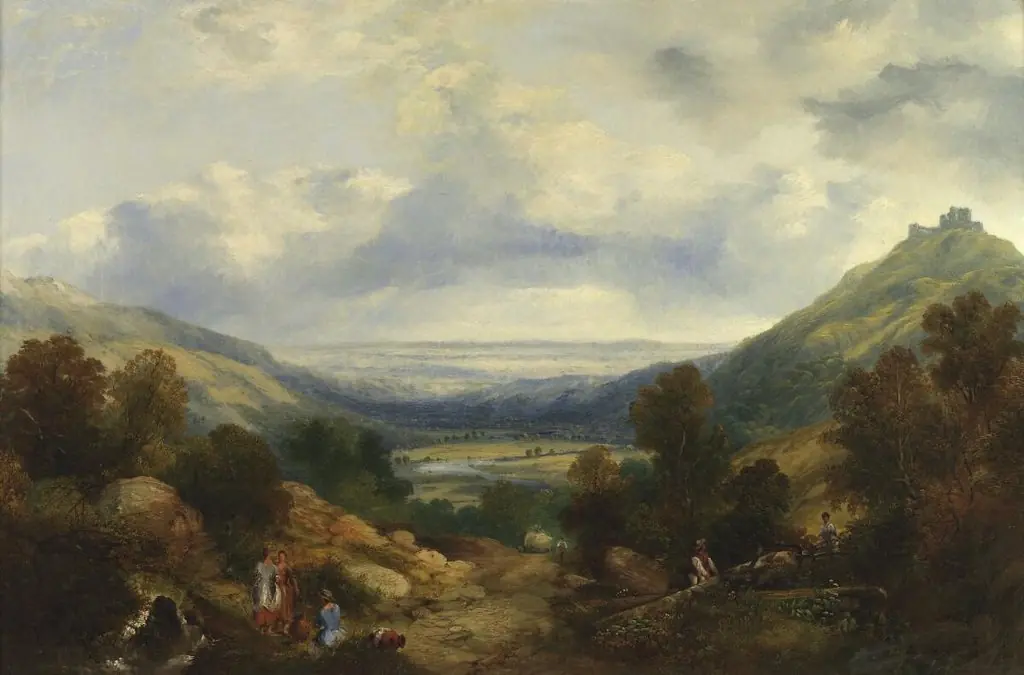 Castell Dinas Bran
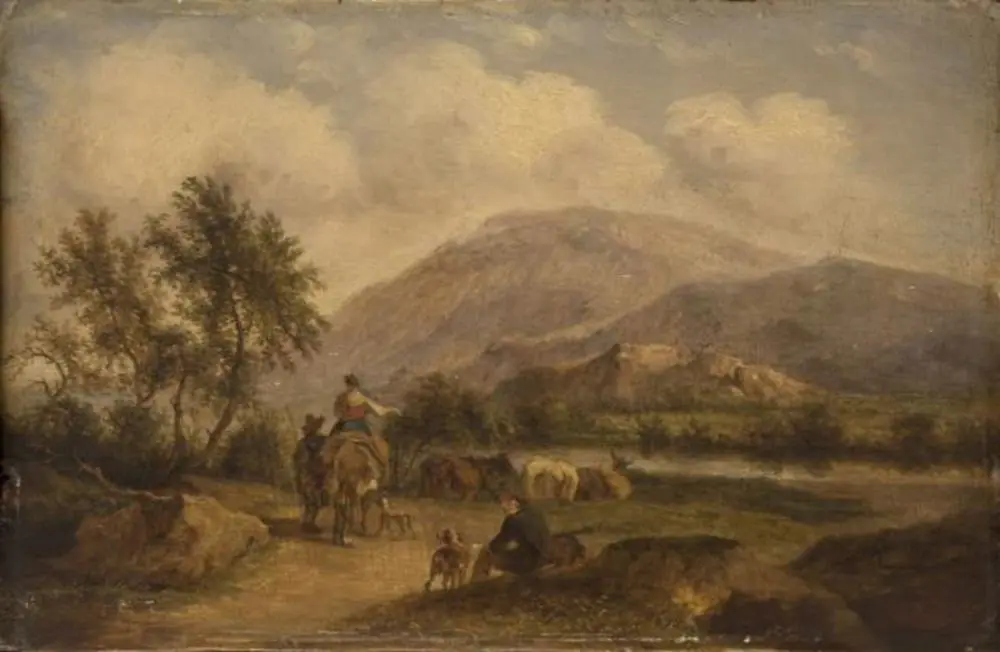 Landscape with Cattle, Italy
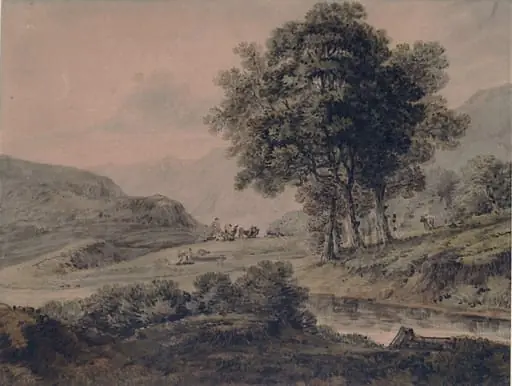 Landscape with stream, cattle and figures
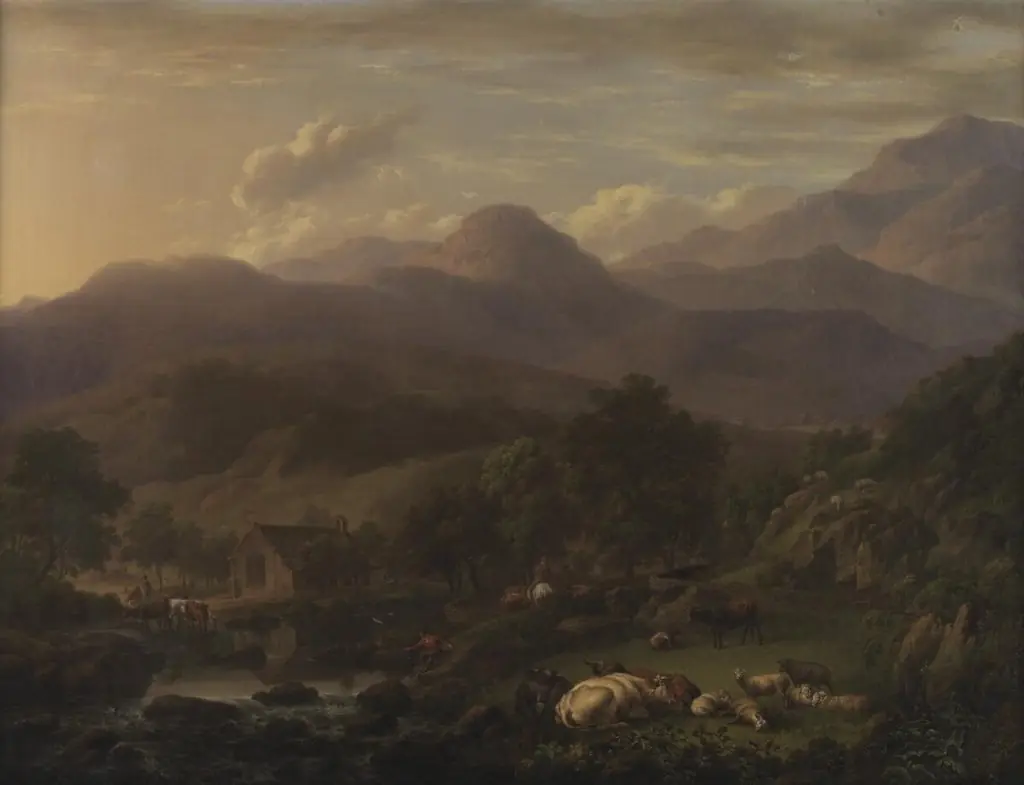 Welsh landscape with animals
 The Vale of Clwyd
 Landscape near Blokhus, Jutland
 Returning from Work
 Landscape near Holmstrup, Zealand
 Haymaking