Artwork
View of the Exe near Tiverton
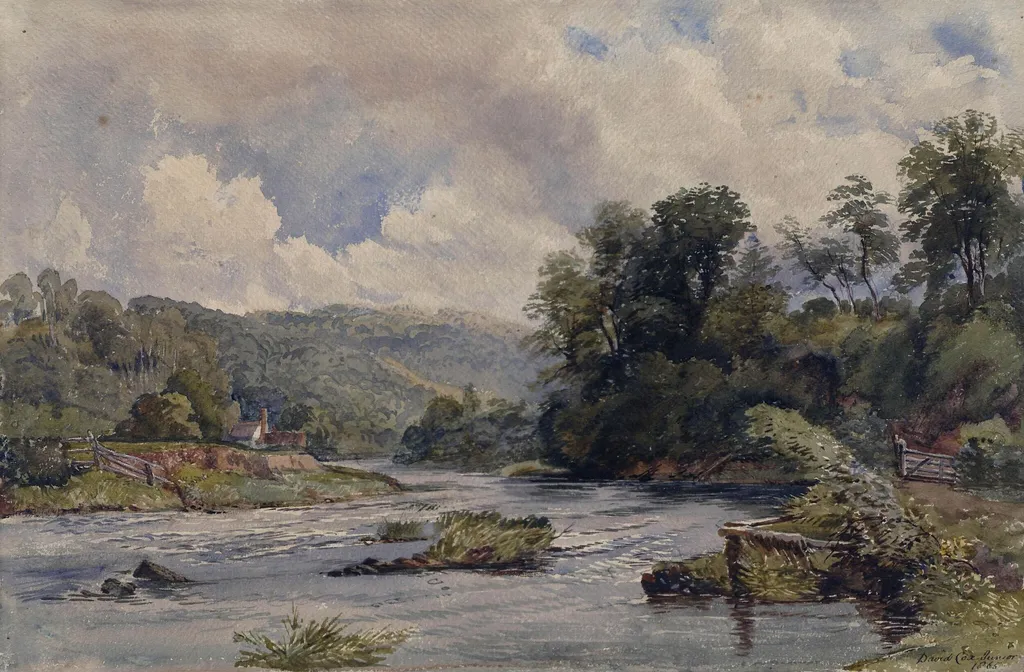
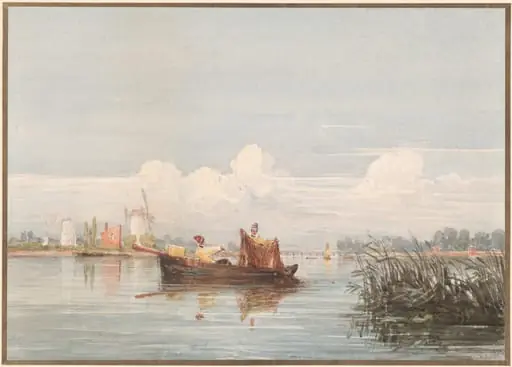
View of the Exe near Tiverton is a watercolor work on paper by the Impressionist artist David Cox. It is held in the collection of the Victoria and Albert Museum.
About this work
Overview
Executed in delicate washes, the piece exemplifies Cox’s late style, emphasizing atmospheric effect over precise detail.
Created in 1865 by David Cox the Elder, this watercolor depicts a tranquil stretch of the River Exe near Tiverton. The work is signed and dated by the artist, and its reverse bears pencil annotations from previous owners. Executed in delicate washes, the piece exemplifies Cox’s late style, emphasizing atmospheric effect over precise detail. Its quiet composition and restrained palette reflect a contemplative engagement with the English landscape.
Subject & Meaning
The scene captures a gentle bend in the river, framed by wooded banks and distant rolling hills. A slender bridge spans the water, suggesting human presence without disrupting the solitude of the setting. The stillness of the water mirrors the sky, reinforcing a sense of calm. There is no narrative or dramatic event—only the quiet rhythm of nature, rendered as a moment of observed serenity.
Technique & Style
Cox employed loose, fluid brushwork to suggest movement in the clouds and ripples on the water. Layers of transparent watercolor build subtle tonal shifts, avoiding hard outlines. The palette is muted: soft greens, pale blues, and faint yellows dominate, enhancing the hazy, luminous quality of the light. Pencil underdrawing remains visible in places, revealing the artist’s process of working directly from nature.
History & Provenance
The watercolor bears the artist’s signature and the date 1865, placing it among Cox’s final works. The reverse of the sheet contains handwritten inscriptions from earlier collectors, indicating its passage through private hands. These annotations offer clues to its ownership history but do not reveal a documented exhibition record or institutional acquisition prior to its current location.
Context
Cox was a key figure in the transition from topographical landscape to expressive watercolor in 19th-century Britain. Working outside the Royal Academy system, he favored outdoor sketching and spontaneous rendering. This piece aligns with his later focus on light and atmosphere, reflecting broader trends among artists who sought emotional resonance over topographical accuracy in landscape representation.
Legacy
Though not widely exhibited during his lifetime, Cox’s watercolors influenced later generations of British landscape painters. This work exemplifies his commitment to capturing transient effects of light and weather with minimal means. Its quiet intimacy and technical restraint continue to be studied as part of the evolution of watercolor from draft medium to independent art form.
Own this work as a print
Artist & collection
Artist
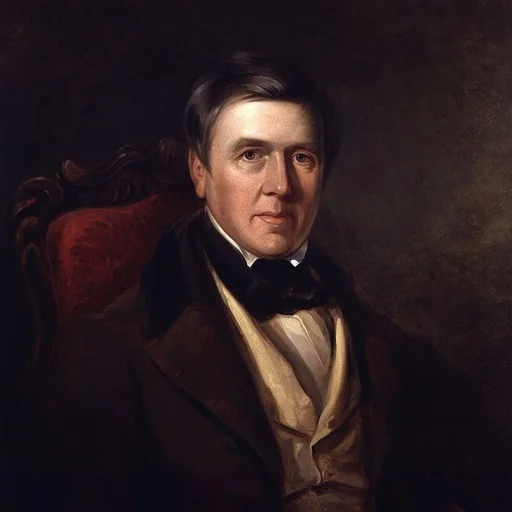
David Cox (29 April 1783 – 7 June 1859) was an English landscape painter, one of the most important members of the Birmingham School of landscape artists and an early precursor of Impressionism.

![Trees [verso], by David Cox](https://artifactworldgallery.com/img/david-cox--trees-verso--2f59ba73e183df09-w320.webp)
![Chatsworth [recto], by David Cox](https://artifactworldgallery.com/img/david-cox--chatsworth-recto--3f4d97adb21a8333-w320.webp)
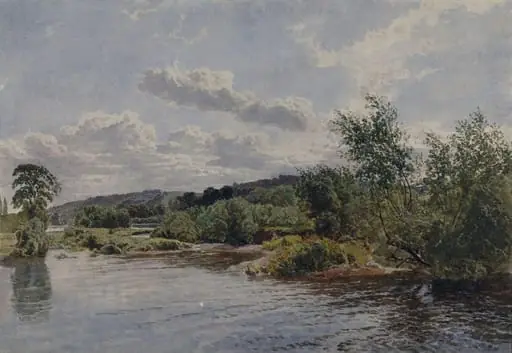 A reach on the Thames, near Goring
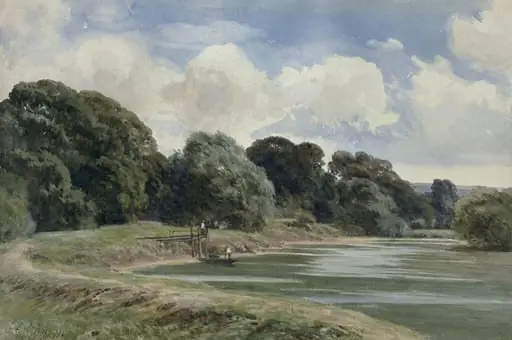 A Peaceful River
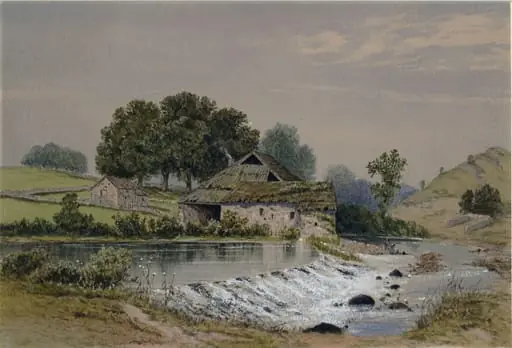 Old Mill on the Eden
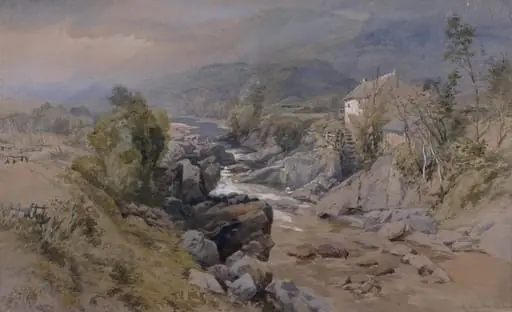 On the River Dee, Braemar
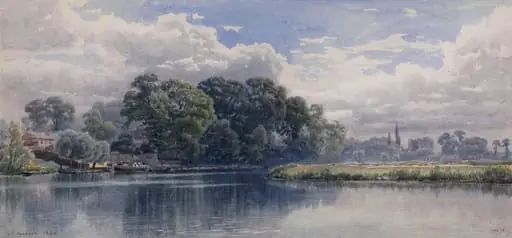 The Thames at Wargrave: Midday
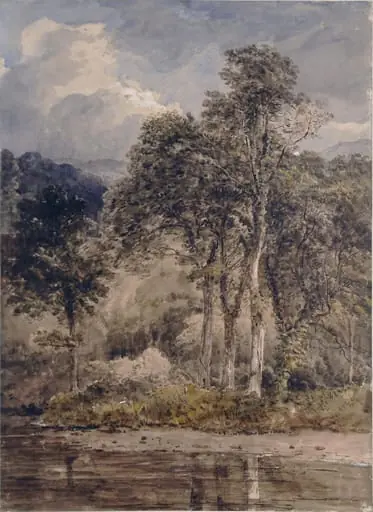 Wood Scene
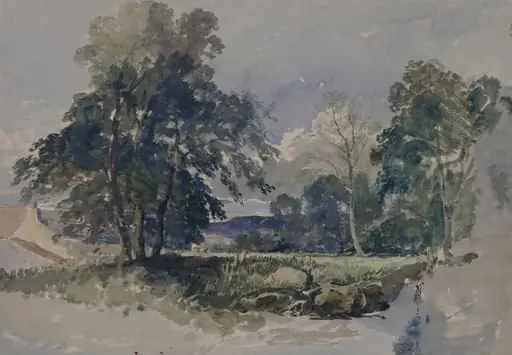 Woody Landscape with rocks and a cottage
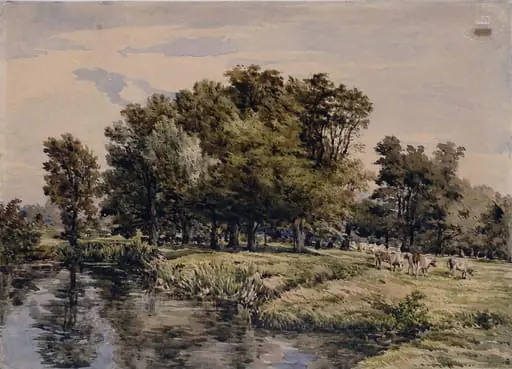 Trees and Cattle
 A Yorkshire Beck
 Bed of a mountain torrent, North Wales
 Eel Pots: Sketch from nature at Chilton
 View of Streatley-on-Thames