Artwork
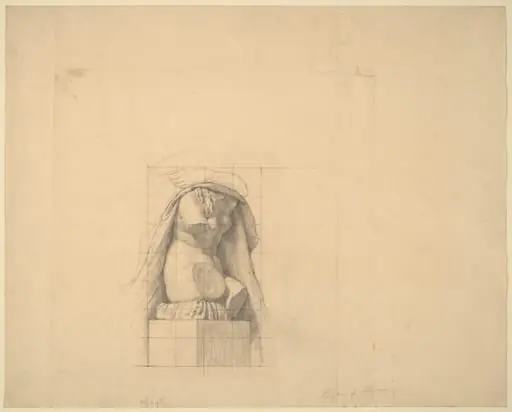
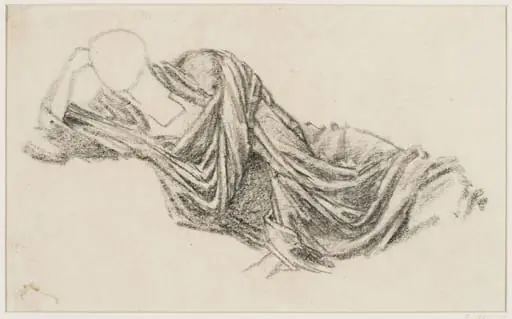
Drapery Study for Reclining Female Study for "Painting"
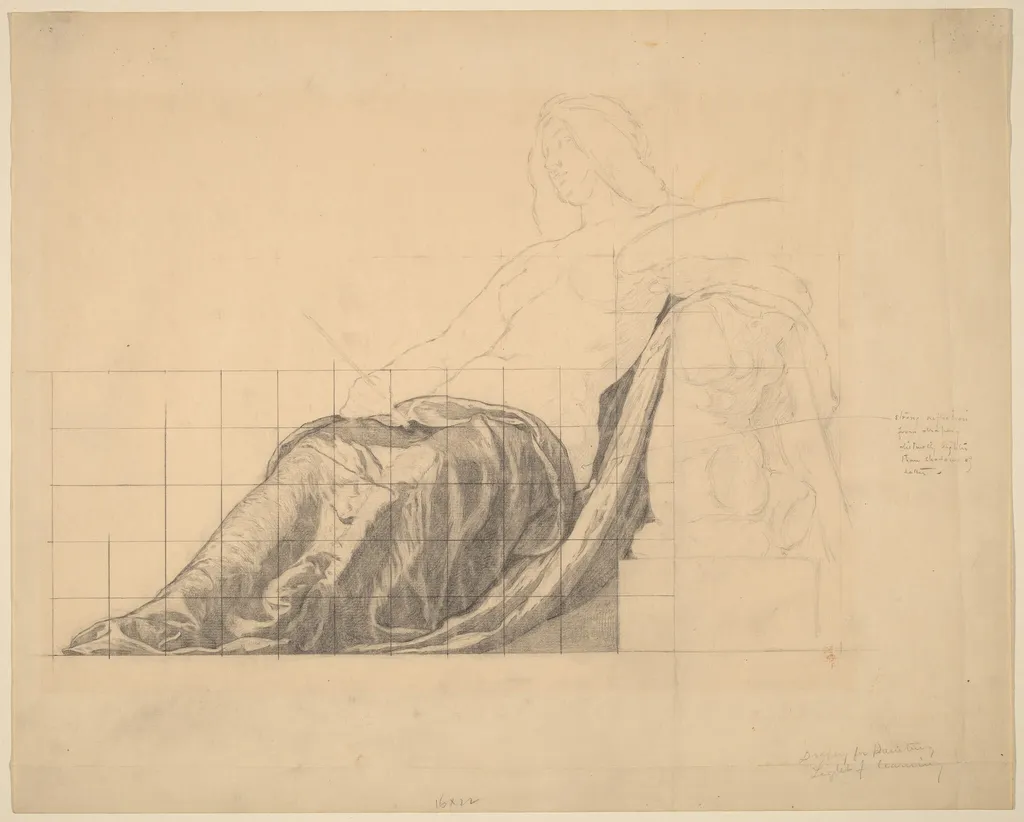
Drapery Study for Reclining Female Study for "Painting" is a graphite drawing by the Impressionist artist Kenyon Cox. It dates from 1888 and is held in the collection of the National Gallery of Art.
About this work
Overview
Kenyon Cox’s 1888 graphite drawing, titled Drapery Study for Reclining Female Study for "Painting," is a preparatory sketch executed on laid paper. The work measures the figure’s draped form in a compact composition, using a simple grid background to organize the study.
Subject & Meaning
The drawing captures a reclining female figure partially concealed by a heavy cloth, with only the head and one arm emerging. The emphasis lies in the interaction of fabric and light, exploring how the material folds and obscures the body beneath.
Technique & Style
Cox employed loose, gestural graphite lines to render the drapery’s volume, allowing shadows to define the deeper folds while lighter strokes suggest illuminated surfaces. The underlying grid, drawn in graphite, serves as a structural guide for proportion and perspective.
History & Provenance
Created as a study for a larger, unfinished painting, the piece reflects Cox’s typical academic practice of working out complex surface effects before committing to a final composition. The drawing remains in a private collection, documented as part of the artist’s preparatory materials from the late 19th century.
Artist & collection

Artist
Kenyon Cox was an American painter, illustrator, muralist, writer, and teacher. Cox was an influential and important early instructor at the Art Students League of New York. He was the designer of the League's logo,…





![Study of Drapery [verso], by John Singer Sargent](https://artifactworldgallery.com/img/john-singer-sargent--study-of-drapery-verso--af011b294c02210f-w320.webp)