Artwork
Allegorical Female Figures
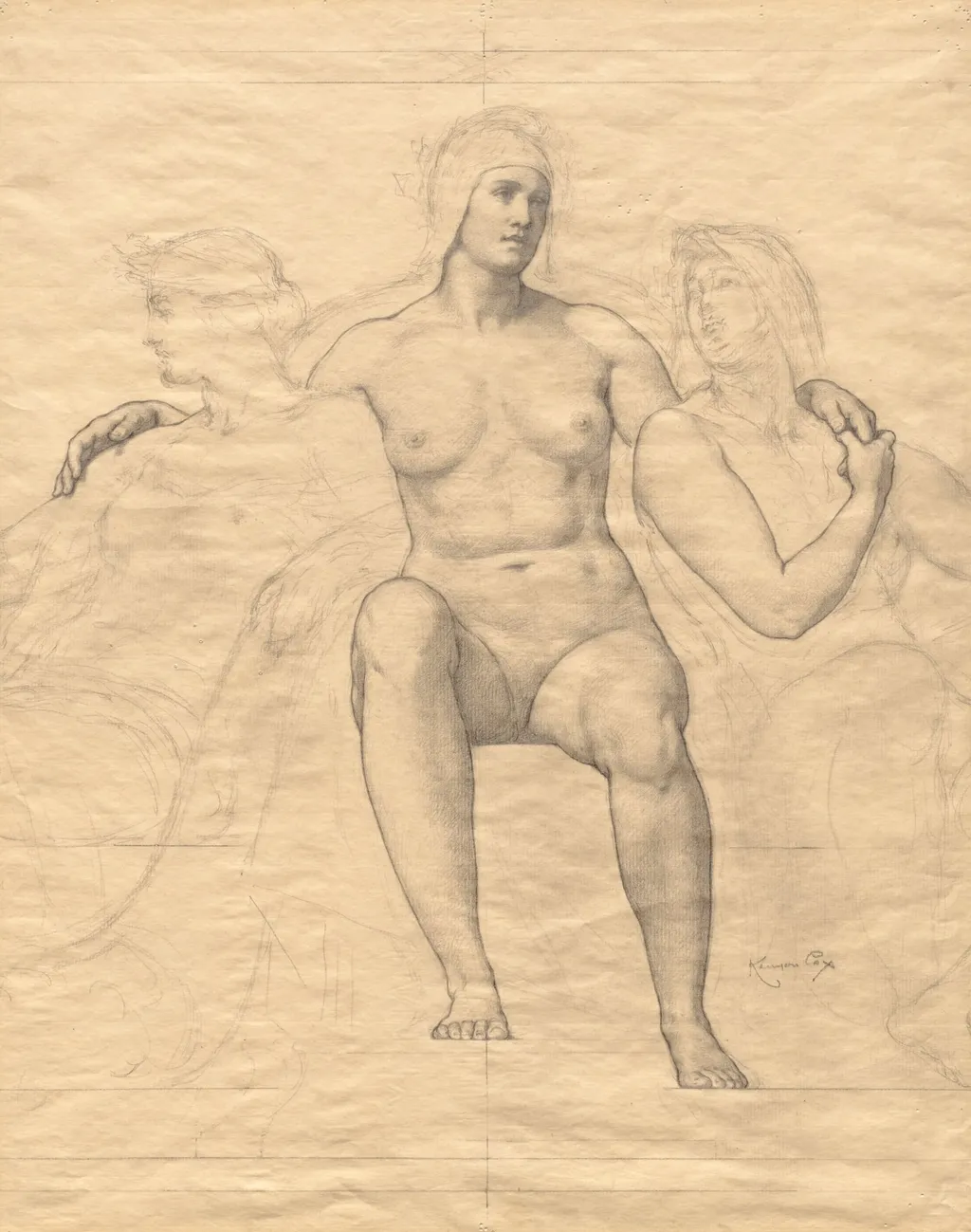
Allegorical Female Figures is a drawing by Kenyon Cox. It dates from 1912 and is held in the collection of the Cleveland Museum of Art.
About this work
Next, check out Kenyon Cox (American, 1856–1919) to see more of his work.
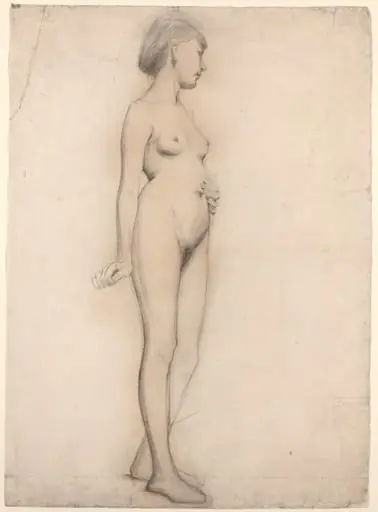
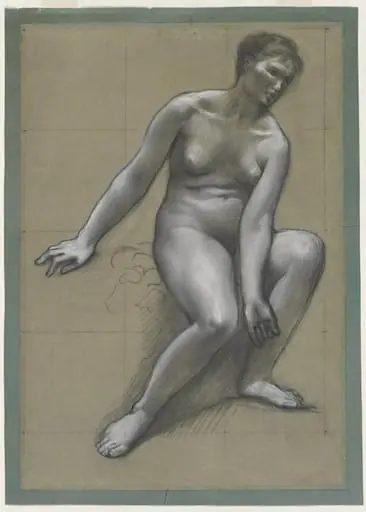
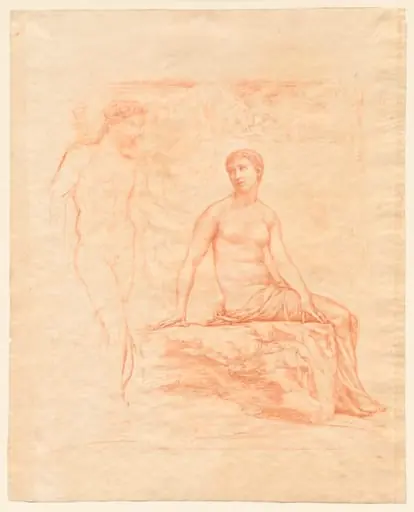
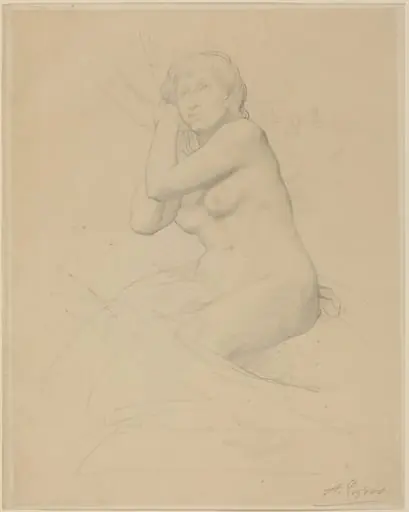
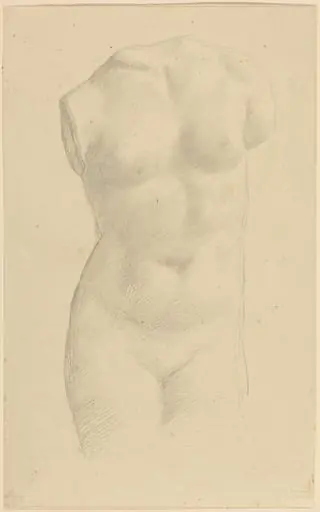
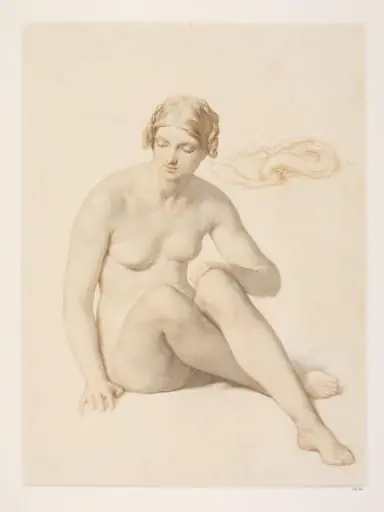
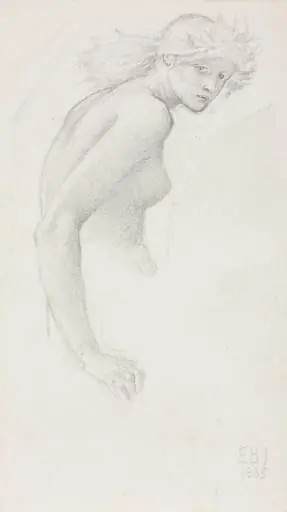
This sketch shows two women standing side by side. Both are bare-chested, with soft curves and loose hair. One holds her arms up, the other rests her hands near her face. The lines are light and sketchy, like quick pencil strokes.
The artist focused on the shapes of their bodies, not details. Their faces are simple, almost like masks. The paper has a warm, beige tone.
Next, check out Kenyon Cox (American, 1856–1919) to see more of his work.
Overview
Created in 1912 by American artist Kenyon Cox, this drawing presents two nude female figures in a simplified, contemplative pose. Executed in pencil on warm-toned paper, the work is a preparatory study that emphasizes form over detail. Its loose, fluid lines suggest rapid sketching, capturing movement and silhouette rather than finished anatomy. The piece resides in The Cleveland Museum of Art’s collection.
Subject & Meaning
The figures are interpreted as allegorical representations, possibly embodying abstract concepts such as Beauty, Inspiration, or the Arts. Their bare torsos and minimal facial features strip away individual identity, inviting symbolic reading. The raised arms and hands near the face suggest gesture as expression—perhaps invocation or introspection—aligning with late 19th-century traditions of allegorical painting that favored idealized forms over narrative.
Technique & Style
Cox employed light, rapid pencil strokes to define the contours of the bodies, avoiding shading or fine detail. The soft curves are suggested through flowing lines, while the faces remain deliberately vague, resembling masks. The warm beige paper enhances the tonal subtlety of the graphite, contributing to an intimate, unfinished quality. This approach reflects a focus on essential form, characteristic of academic studies prioritizing composition over finish.
History & Provenance
The drawing was made by Kenyon Cox in 1912, near the end of his career, and entered The Cleveland Museum of Art’s collection through documented acquisition. It is not known to have been part of a larger commissioned work, suggesting it may have served as an independent study or personal exploration. Its preservation indicates its value as an example of Cox’s draftsmanship, even outside his more finished paintings.
Context
Cox worked during a period when academic art in America still upheld classical ideals, even as modernism gained traction. This drawing aligns with the tradition of studying the nude as the foundation of artistic training, yet its sketch-like quality hints at a personal, introspective practice. It reflects the lingering influence of European academies while revealing a quieter, more experimental side of an artist often associated with formal murals and allegories.
Legacy
Though less known than Cox’s large-scale murals, this drawing offers insight into his process and aesthetic priorities. It exemplifies how academic artists engaged with the human form through rapid study, preserving the vitality of gesture over polished finish. As such, it contributes to understanding the transition between 19th-century academic norms and early 20th-century shifts in artistic practice.
Artist & collection

Artist
Kenyon Cox was an American painter, illustrator, muralist, writer, and teacher. Cox was an influential and important early instructor at the Art Students League of New York. He was the designer of the League's logo,…