Artwork
Croquis (Sketch)
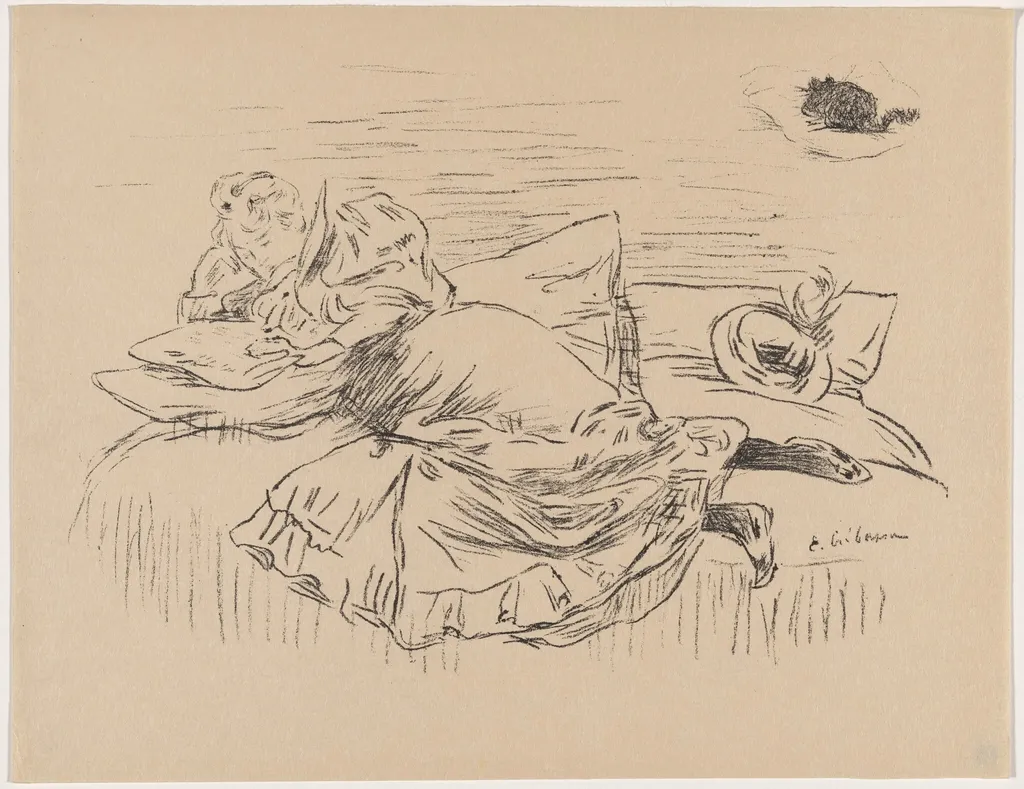
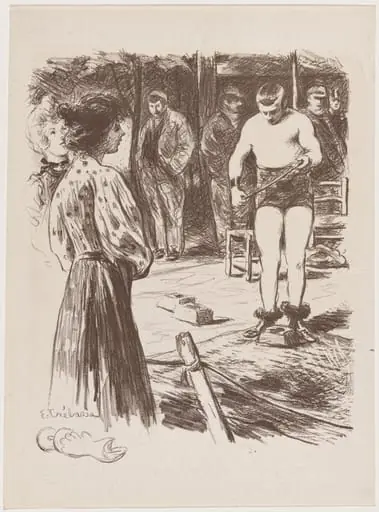
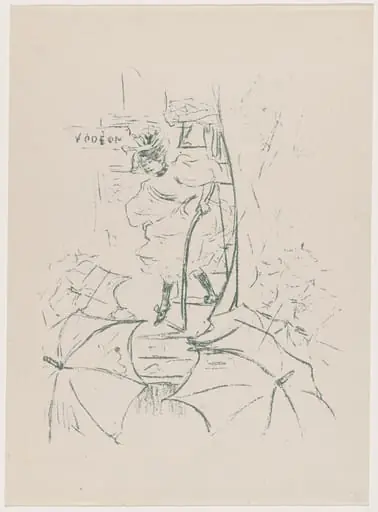
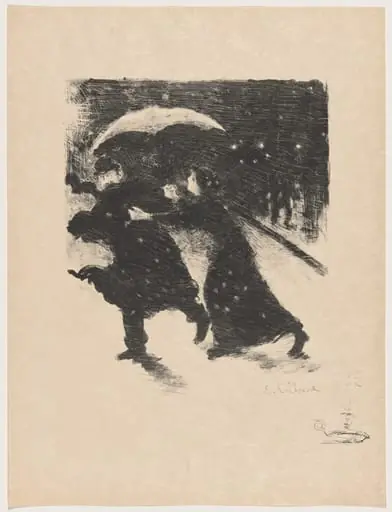
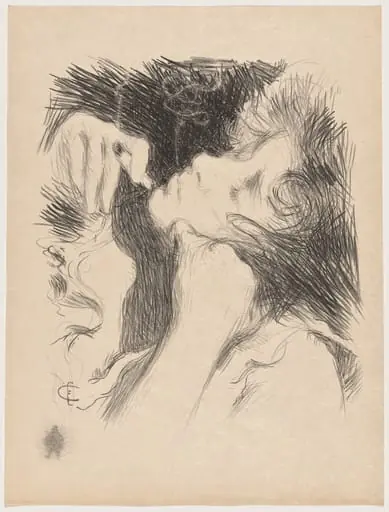
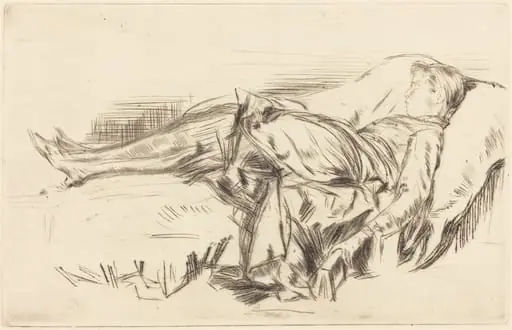
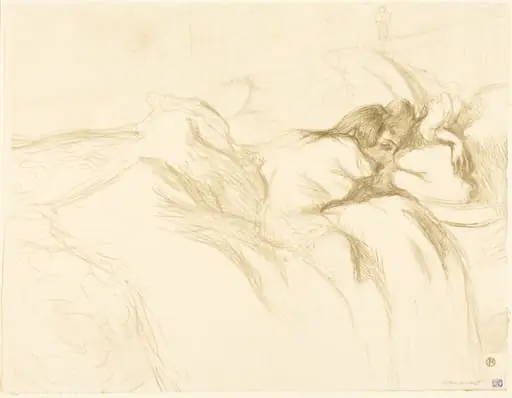
Croquis (Sketch) is an ink print by the Impressionist artist Paul Edouard Crébassa. It dates from 1895 and is held in the collection of the National Gallery of Art.
About this work
However, the focus of the painting is clearly on the woman and her surroundings, rather than on the broader environment.
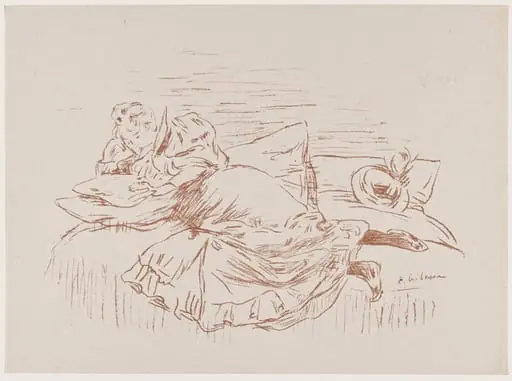
The painting features a sketch of a woman lying on a bed, surrounded by pillows and blankets. The woman is dressed in a long-sleeved shirt and appears to be sleeping or resting. The bed is positioned against a wall, with a small table or nightstand beside it. The overall atmosphere of the painting is one of quiet intimacy and relaxation.
In the background, there are some faint lines and marks that suggest the presence of a room or interior space. However, the focus of the painting is clearly on the woman and her surroundings, rather than on the broader environment.
This painting is a lithograph in black on japan paper, created by Paul Edouard Crébassa in 1895. It is held at the National Gallery of Art, Washington, and is an example of Impressionism and Realism. To learn more about lithography, check out the technique.
Overview
Created in 1895, Croquis (Sketch) is a lithograph by Paul Edouard Crébassa, executed in black ink on thin Japanese paper. The work belongs to a series of intimate figure studies, capturing a solitary woman at rest. Its modest scale and restrained palette reflect a focus on quiet observation rather than dramatic narrative, characteristic of late 19th-century printmaking practices that valued immediacy and subtlety.
Subject & Meaning
The subject is a woman reclining on a bed, clad in a long-sleeved shirt, surrounded by folded linens and pillows. Her posture suggests sleep or quiet repose, evoking a private, unguarded moment. The absence of facial detail and the soft, indistinct background emphasize the universality of rest, inviting contemplation of solitude rather than personal identity. The scene conveys stillness without sentimentality.
Technique & Style
Crébassa employed lithography to achieve delicate tonal gradations using only black ink. The lines are loose and suggestive, with areas of wash and hatching defining form without rigid outline. The absorbent Japanese paper enhances the softness of the ink, allowing subtle smudges and feathered edges to mimic the fragility of a drawn memory. The composition avoids detail, favoring atmospheric suggestion over precision.
History & Provenance
The work was produced in 1895 during a period when French artists increasingly turned to printmaking for personal expression. It entered the collection of the National Gallery at an unspecified date, likely through acquisition or donation. Its preservation on fragile paper suggests it was valued as a study rather than a commercial print, possibly retained by the artist or a close associate.
Context
In the 1890s, lithography was widely used by artists to explore informal subjects outside academic traditions. Crébassa’s work aligns with contemporaries like Toulouse-Lautrec and Degas, who favored intimate, everyday scenes. Unlike grand historical or portrait prints, Croquis reflects a shift toward private moments, influenced by Japanese ukiyo-e prints and the growing interest in domestic tranquility.
Legacy
Croquis remains a quiet example of late 19th-century printmaking’s capacity for emotional restraint. While not widely exhibited, it contributes to understanding how artists used lithography to capture fleeting, personal moments. Its survival in institutional collections underscores its role as a document of artistic practice rather than public spectacle.
Artist & collection