Artwork
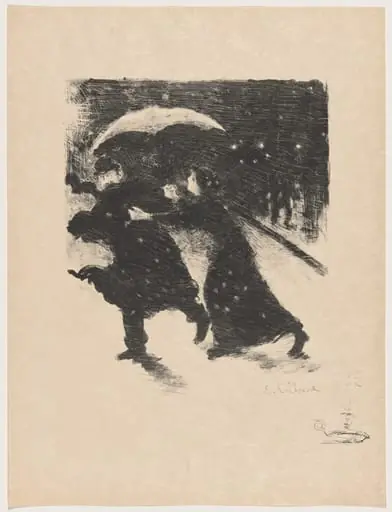
untitled (Woman descending onto a street of umbrellas)
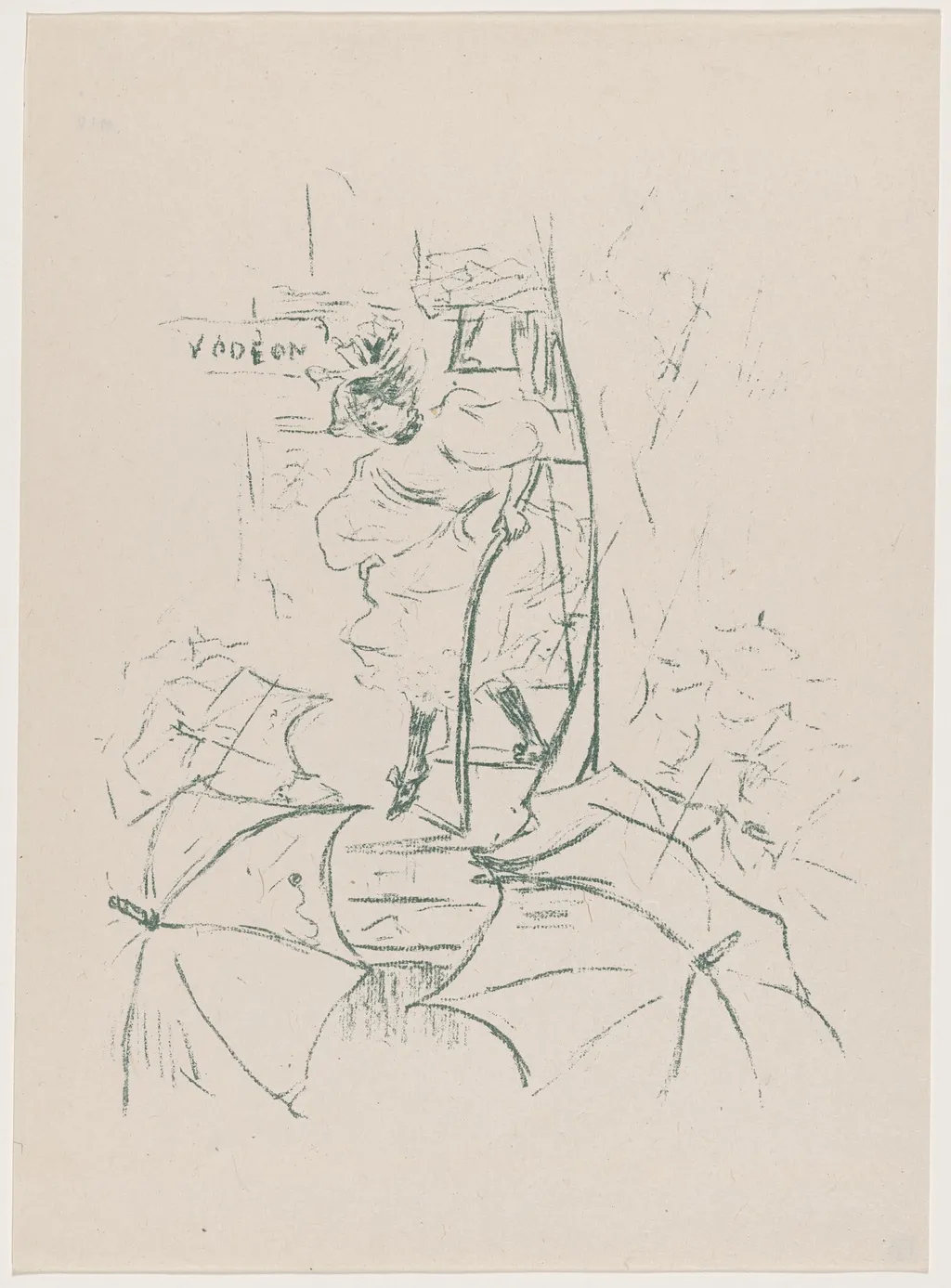
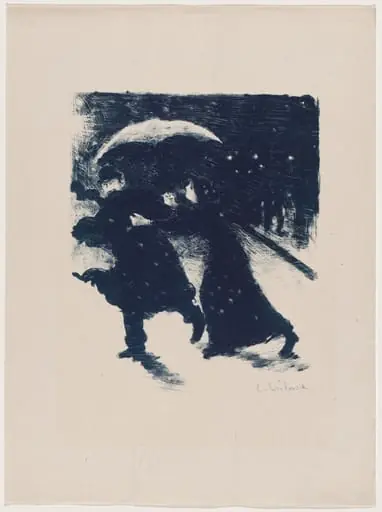
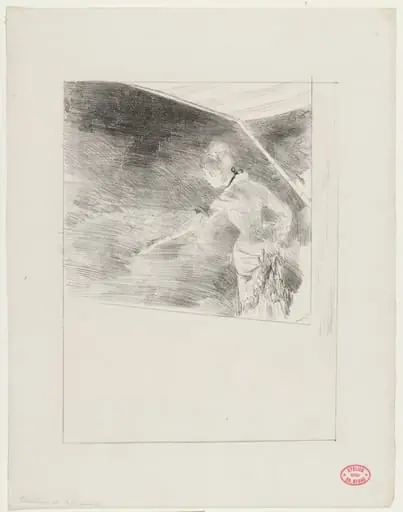
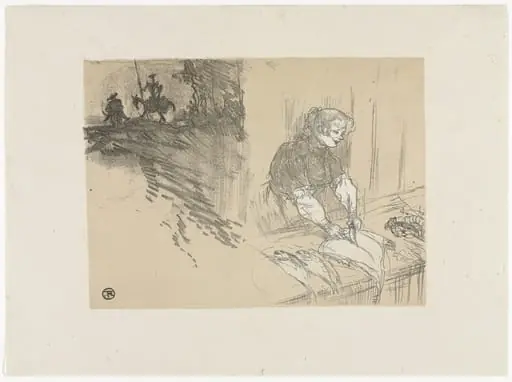
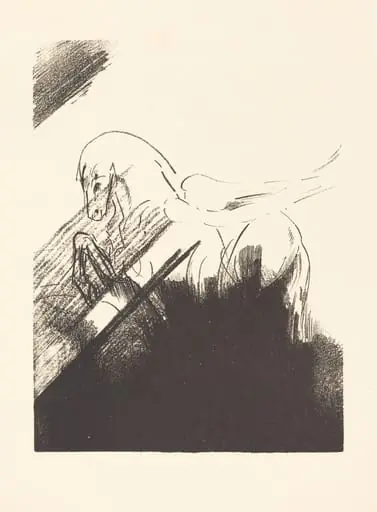
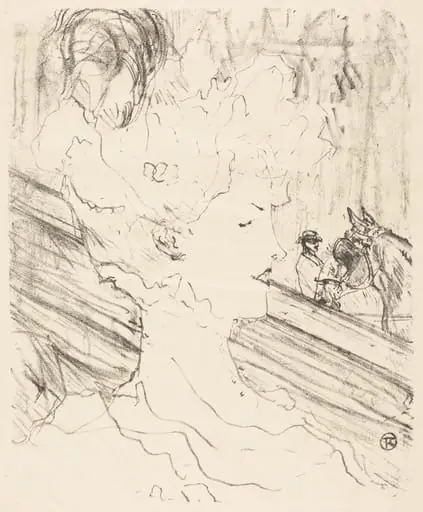
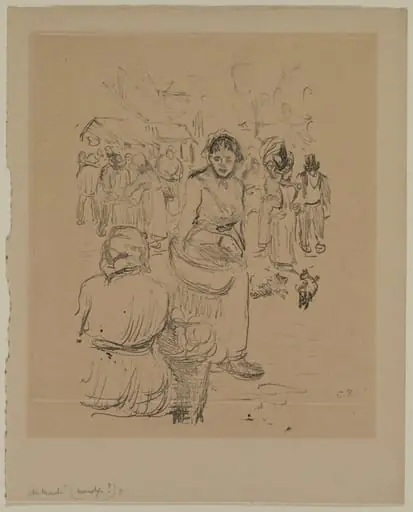
untitled (Woman descending onto a street of umbrellas) is an ink print by the Impressionist artist Paul Edouard Crébassa. It dates from 1895 and is held in the collection of the National Gallery of Art.
About this work
Overview
The medium’s subtle tonal range enhances the hazy, atmospheric quality of the scene, distinguishing it from more sharply defined urban depictions of the period.
Created in 1895, this lithograph by Paul Édouard Crébassa depicts a solitary woman moving down a rain-slicked urban street, surrounded by others sheltered beneath umbrellas. Rendered in green ink on delicate china paper, the work captures a quiet, transient moment in daily life. The medium’s subtle tonal range enhances the hazy, atmospheric quality of the scene, distinguishing it from more sharply defined urban depictions of the period.
Subject & Meaning
The figure, cloaked in a long coat and hat, moves deliberately through a crowd of anonymous figures, each holding umbrellas that form a rhythmic pattern across the street. The composition suggests isolation amid urban density, a common theme in late 19th-century city life. No narrative is overt; instead, the scene invites reflection on solitude, routine, and the quiet rituals of weathered public spaces.
Technique & Style
Crébassa employed lithography to achieve soft gradations of green, exploiting the porous nature of china paper to diffuse ink and create a muted, atmospheric effect. Lines are suggestive rather than precise, with figures rendered in loose, fluid strokes. The technique leans toward Impressionist sensibilities—emphasizing light, movement, and mood—while retaining the observational clarity associated with Realism.
History & Provenance
The work is one of a small group of lithographs by Crébassa produced in the mid-1890s, a period when he focused on urban scenes in southern France. Few of his prints survive in public collections, and this piece is known primarily through private holdings and exhibition records from the late 19th century. Its survival on delicate china paper suggests it was likely produced in limited numbers for collectors.
Context
In 1895, Paris and other French cities were undergoing rapid modernization, and artists increasingly turned to everyday street life as subject matter. Crébassa’s work aligns with contemporaries like Degas and Toulouse-Lautrec, who captured fleeting moments in public spaces. Yet his choice of green tonality and intimate scale sets his approach apart, favoring quietude over spectacle.
Legacy
Crébassa’s lithographs remain obscure in broader art historical narratives, overshadowed by more prominent figures of the era. This work, however, exemplifies a quiet, regional strand of urban observation that valued atmosphere over drama. Its preservation offers insight into lesser-known printmakers who contributed to the nuanced portrayal of modern life beyond the major centers of artistic innovation.
Artist & collection