Artwork
Untitled
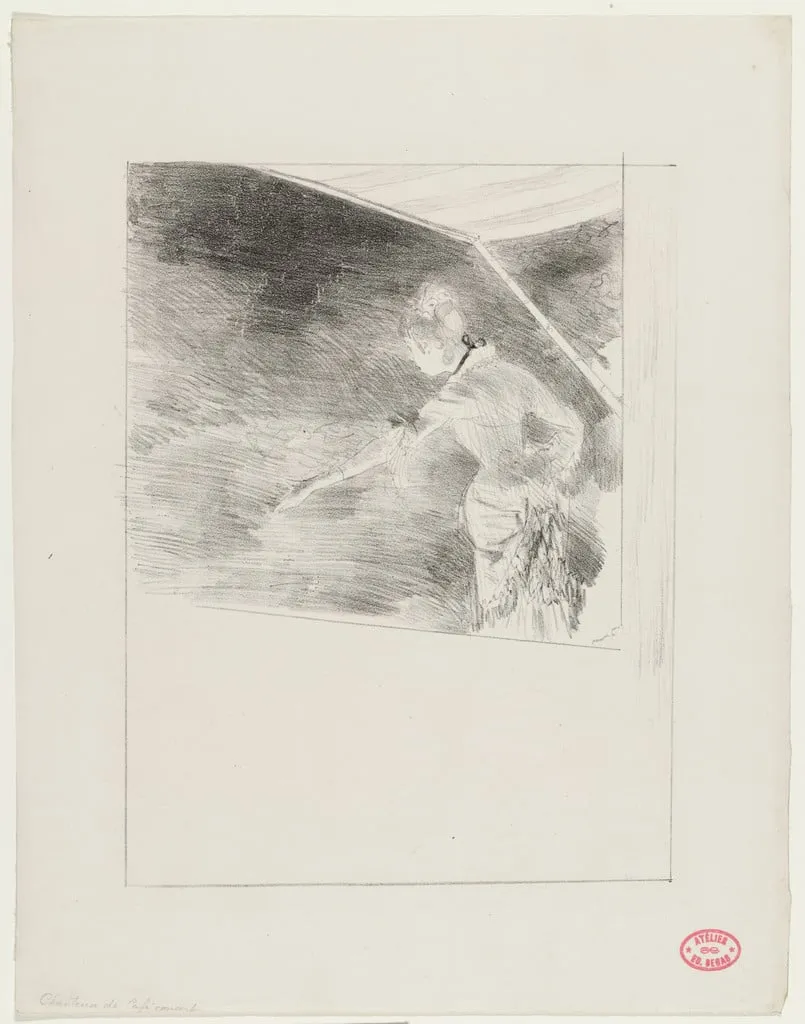
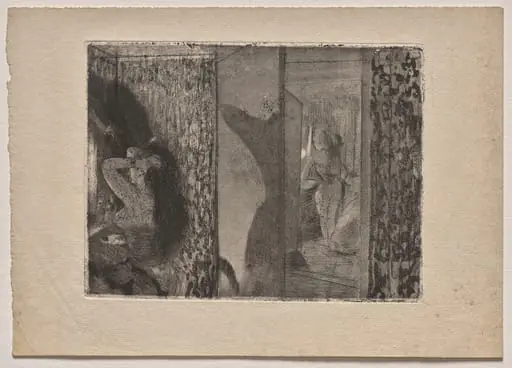
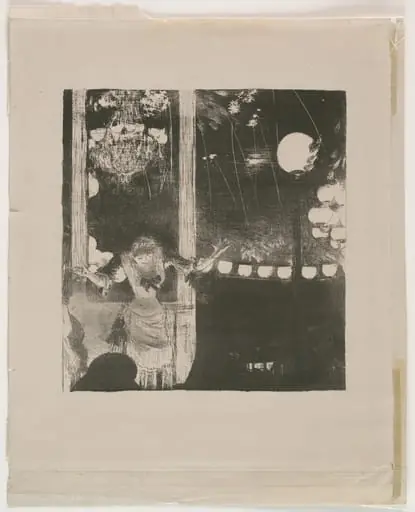
Untitled is an ink print by the Impressionist artist Edgar Degas. It dates from 1875 and is held in the collection of the Museum of Modern Art.
About this work
Overview
It belongs to a series of prints exploring movement and stage life, revealing Degas’s hands-on approach to printmaking.
This 1875 lithograph by Edgar Degas is an unpolished, experimental print made directly on the stone. Unlike finished works intended for sale, it was a private study, created rapidly as part of his process. The raw, unrefined marks reflect his interest in immediacy and the transient nature of performance. It belongs to a series of prints exploring movement and stage life, revealing Degas’s hands-on approach to printmaking.
Subject & Meaning
The image captures a singer mid-performance, mouth open as if singing, one gloved hand holding a fan. Degas focuses on a fleeting, unposed moment rather than a formal portrait. The subject’s anonymity emphasizes the routine of stage life, not individual fame. The gesture and posture suggest the physical effort behind performance, aligning with Degas’s broader interest in the unseen labor behind artistic spectacle.
Technique & Style
Degas drew directly onto the lithographic stone with a greasy medium, using swift, uneven lines that retain the energy of his hand. Smudges and unblended tones preserve the spontaneity of the sketch, rejecting the smooth finish typical of commercial prints. This technique prioritized immediacy over polish, allowing the texture of the stone and the artist’s gesture to remain visible—echoing his preference for realism over idealized form.
History & Provenance
Created in 1875, this lithograph was never intended for public exhibition or sale. It remained in Degas’s personal collection, likely used as a working study for later compositions. Its survival offers insight into his private creative process, contrasting with the polished lithographs he later produced for publishers. Its rarity stems from its status as an artist’s trial, not a commercial product.
Context
In the 1870s, Degas was deeply engaged with Parisian theater and ballet, frequenting rehearsals and performances to observe movement and gesture. Lithography offered him a direct, flexible medium to record these moments without the constraints of oil painting. His interest in stage subjects reflected broader cultural fascination with urban entertainment, though he focused on the mechanics of performance rather than its glamour.
Legacy
This lithograph exemplifies Degas’s commitment to capturing transient moments through unconventional print techniques. Its raw quality influenced later artists seeking authenticity in graphic media. Though not widely known during his lifetime, such private studies now illuminate his method, revealing how experimentation in printmaking shaped his broader artistic vision beyond painting and sculpture.
Artist & collection
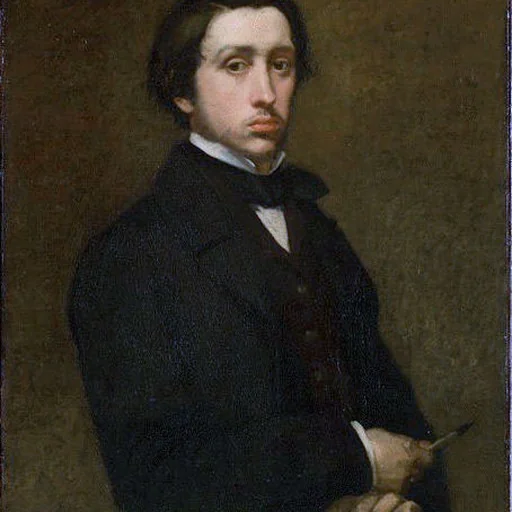
Artist
Born Hilaire-Germain-Edgar De Gas on 19 July 1834 in Paris, Edgar Degas came from an affluent banking family with aristocratic roots and spent his childhood among the cultivated circles of the French capital.

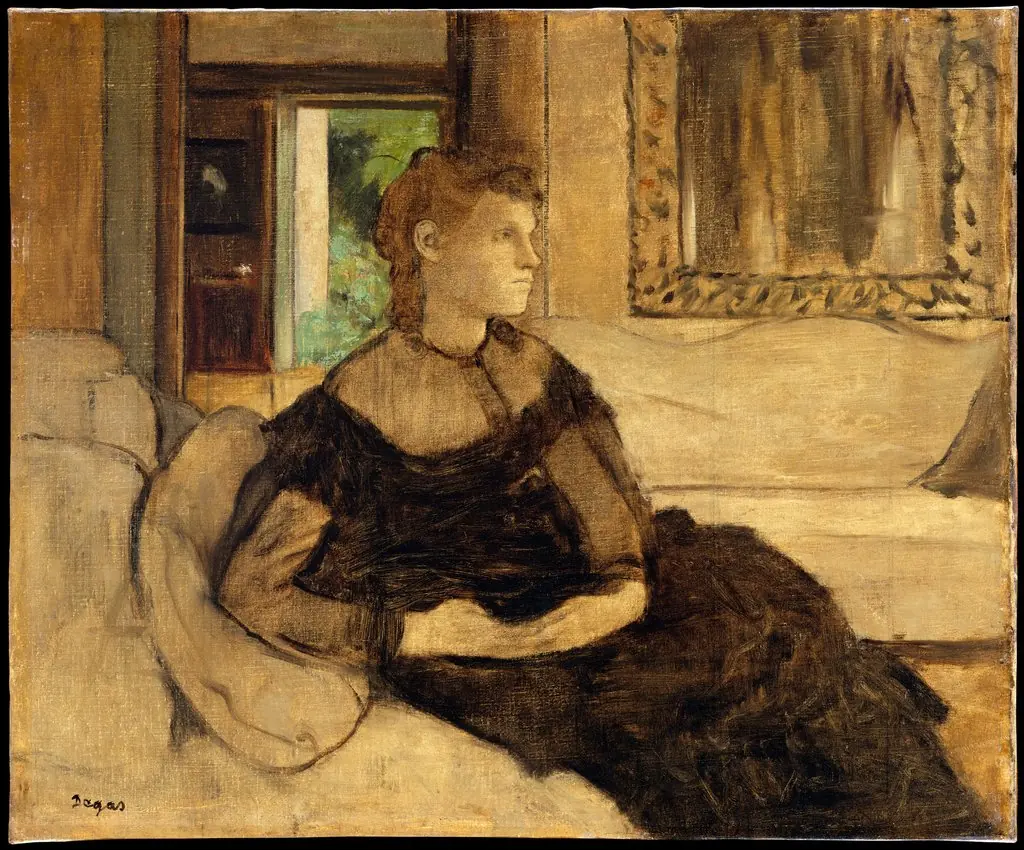
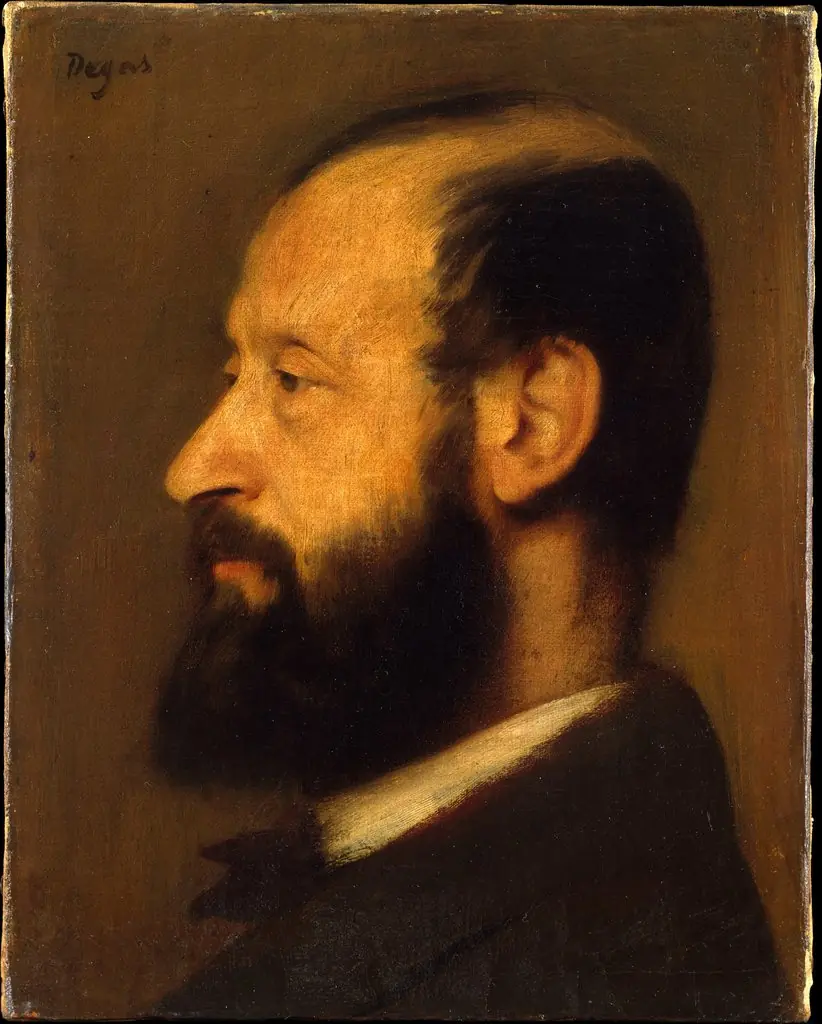
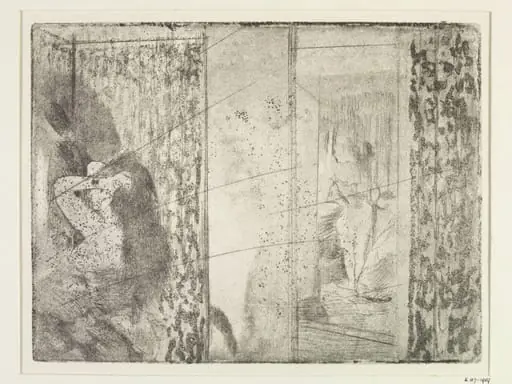 Loges d'actrices
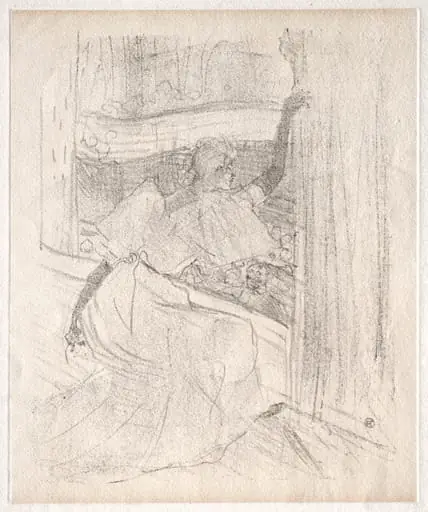 Yvette Guilbert: Saluant le public
 untitled (Woman descending onto a street of umbrellas)
 Untitled
 Peasant Mother and Child
 untitled (Woman descending onto a street of umbrellas)
 Actresses in Their Dressing Rooms
 Untitled
 Croquis (Sketch)
 Cheval aile (Winged Horse)
 Bowing to the Audience (Saluant le public)
 Untitled