Artwork
Cherries
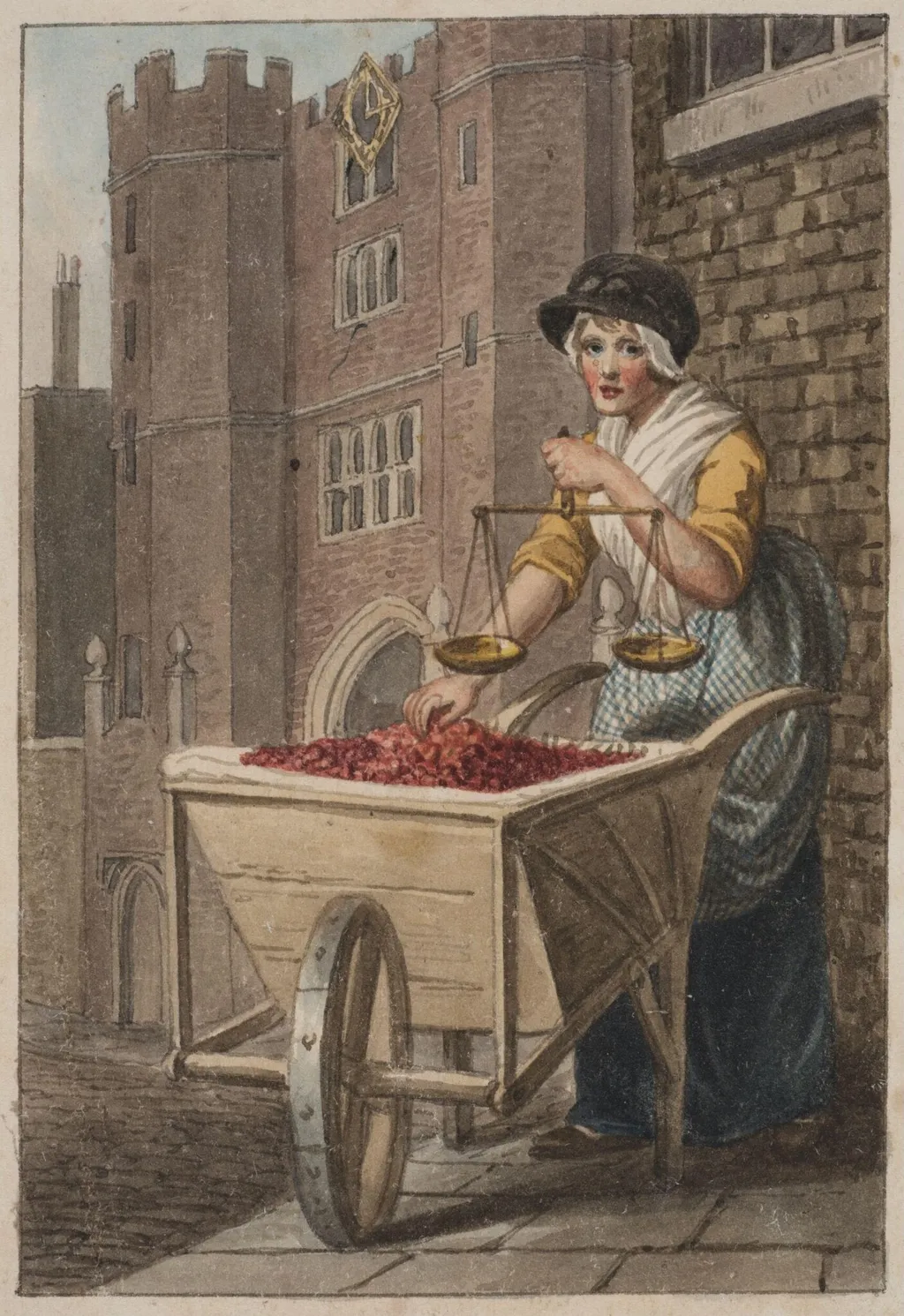
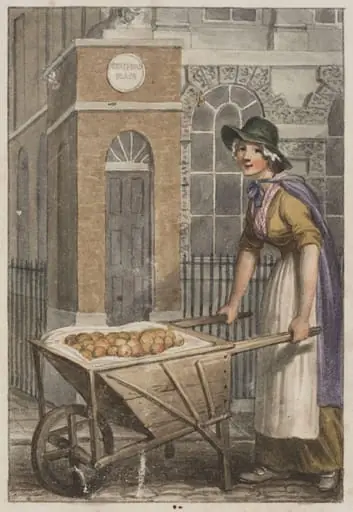
Cherries is a watercolor work on paper by the British Romanticist artist Craig. It dates from 1804 and is held in the collection of the Victoria and Albert Museum.
About this work
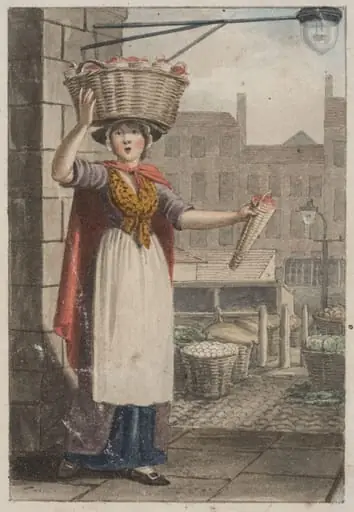
She is dressed in a blue and white checkered apron over a yellow shirt and a white scarf, and wears a black hat.
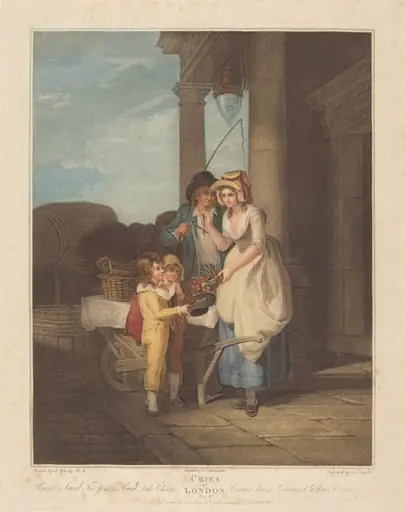
This painting depicts a woman standing behind a wooden cart, which is filled with cherries. She is dressed in a blue and white checkered apron over a yellow shirt and a white scarf, and wears a black hat. The woman holds a scale in her right hand, with a bowl hanging from it. In the background, a tall brick building with a clock tower is visible.
The woman's attire and the setting suggest a scene from everyday life in the early 19th century. The artist's use of watercolor creates a soft, romanticized atmosphere.
To learn more about the artistic style of this period, explore the Romanticism movement.
Overview
This 1804 watercolour by Craig captures a street vendor at work near St. James's Palace in London. The scene is rendered in delicate washes, emphasizing the quiet rhythm of daily commerce. It was acquired in 1874 as part of a group of ten works purchased from W. Headlam, reflecting a 19th-century interest in documenting ordinary urban life through intimate, small-scale art.
Subject & Meaning
The painting portrays a woman selling cherries from a wooden barrow, her posture and tools suggesting the routine of street vending. The scale she holds implies a transaction grounded in fairness and measurement, common in market culture. Her clothing and location point to the working-class presence in the shadow of royal architecture, offering a subtle contrast between public labor and elite space.
Technique & Style
Executed in watercolour, the piece employs translucent layers to suggest light and texture without heavy detail. The soft edges and muted palette create a gentle, atmospheric effect, typical of early 19th-century British watercolour practices. The artist avoids dramatic contrast, favoring a quiet realism that aligns with the period’s interest in modest, observable moments.
History & Provenance
The work entered a public collection in 1874 when it was acquired alongside nine other pieces from the estate of W. Headlam. Its inclusion in this group suggests it was valued as part of a broader documentary effort, possibly linked to regional or topographical studies. No earlier ownership records are documented, and its journey from creation to acquisition remains largely untraced.
Context
In early 1800s London, street vendors were a familiar sight, especially near royal and institutional buildings. The presence of a clock tower in the background aligns with known structures near St. James's, situating the scene in a recognizable urban context. Such images reflect a growing cultural interest in recording everyday life, distinct from grand historical or mythological subjects.
Legacy
Though not widely exhibited or studied, the painting contributes to a modest but persistent tradition of British watercolours that documented working life. Its preservation reflects institutional recognition of vernacular scenes as valid subjects for art, even when created by lesser-known artists. It remains a quiet record of urban labor in the Regency era.
Artist & collection