Artwork
Two Bunches a Penny, Primroses
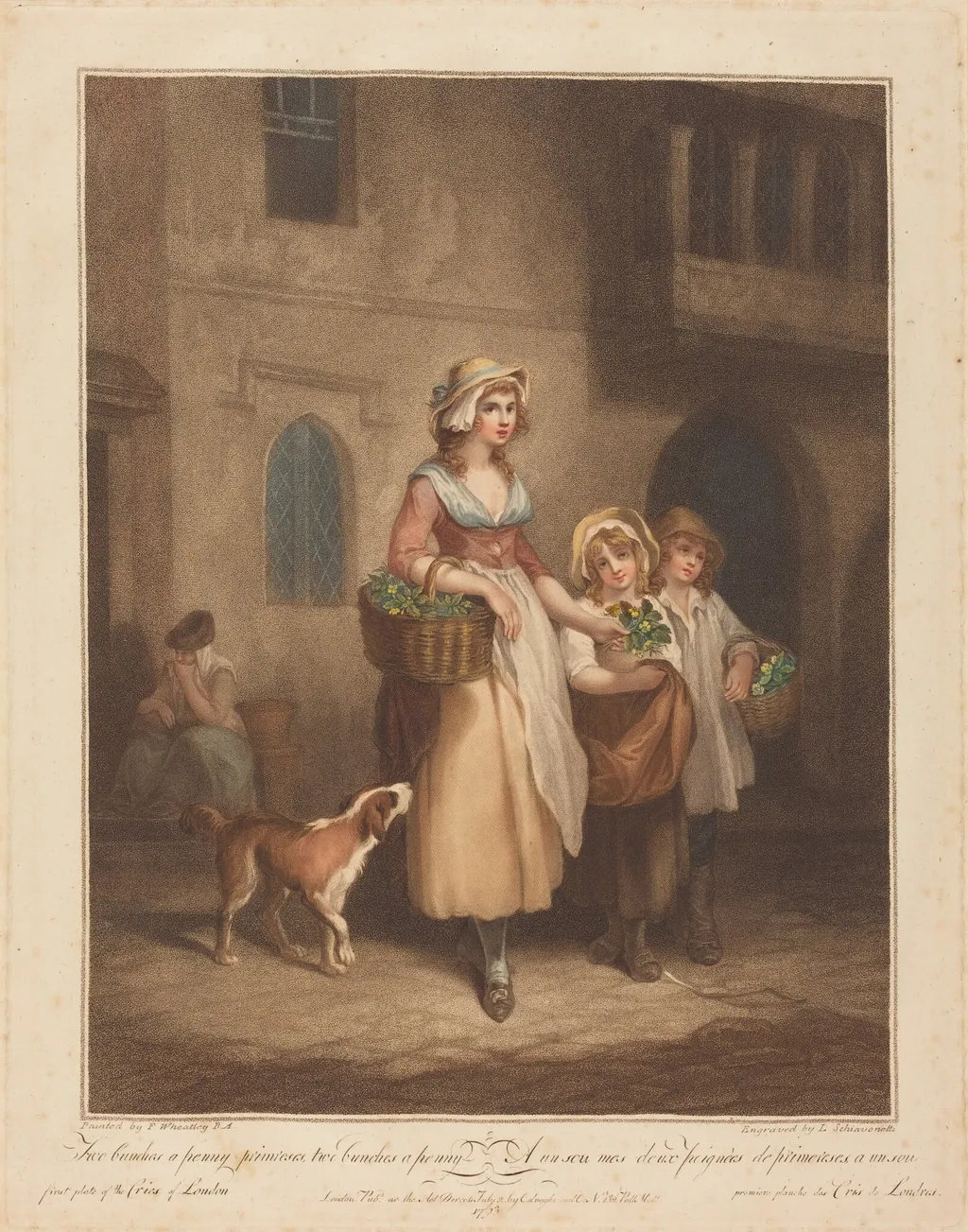
Two Bunches a Penny, Primroses is an ink print by the Romanticist artist Luigi Schiavonetti. It dates from 1793 and is held in the collection of the National Gallery of Art.
About this work
Overview
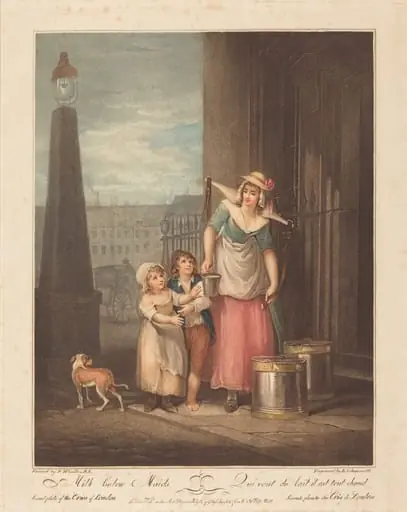
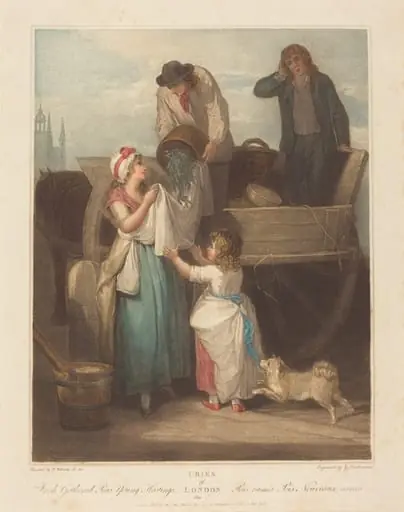
Created in 1793 by Luigi Schiavonetti, this color stipple engraving depicts a street scene featuring a woman and two children selling flowers.
Created in 1793 by Luigi Schiavonetti, this color stipple engraving depicts a street scene featuring a woman and two children selling flowers. The title references the price of the blooms, grounding the image in everyday commerce. Rendered in fine, tonal dots, the print captures a moment of quiet labor, with figures arranged in a composed, frontal grouping against a subdued architectural backdrop.
Subject & Meaning
The scene portrays a working-class family engaged in the sale of primroses, a common springtime flower. The woman, dressed in a red bodice and apron, holds a basket while two children, one boy and one girl, carry their own. A dog sits calmly at their feet. Their serious expressions and unified posture suggest dignity in labor, reflecting the quiet resilience of urban peddlers rather than idealized rural life.
Technique & Style
Schiavonetti employed color stipple engraving, a method using tiny dots to build tone and hue, allowing subtle gradations in skin, fabric, and shadow. The figures are rendered with precise detail, particularly in the folds of clothing and the texture of the dog’s fur. The background, deliberately darker and less detailed, enhances the foreground figures, creating a focused, almost theatrical composition that emphasizes human presence over environment.
History & Provenance
The print was produced during a period when reproductive engravings were widely distributed as affordable art for middle-class homes. Schiavonetti, an Italian-born engraver active in London, specialized in translating paintings into print. This work likely originated from a now-lost painting, possibly by a contemporary British artist, and was intended for commercial sale rather than fine art circulation.
Context
In late 18th-century Britain, flower selling was a common occupation for women and children, especially in urban areas. The depiction of such labor aligns with growing public interest in domestic and working-class life, though without overt social commentary. The composition’s restraint and attention to detail reflect the era’s taste for orderly, morally neutral scenes that celebrated everyday virtue.
Legacy
Though not widely exhibited today, the print remains an example of how reproductive engraving democratized visual culture in the pre-photographic era. Schiavonetti’s technique influenced later printmakers, and the image endures as a quiet record of working-class life, preserving the dignity of ordinary people through meticulous craftsmanship rather than dramatic narrative.
Artist & collection

Artist
Luigi Schiavonetti (1765–1810) was an Italian artist, born in Bassano del Grappa.