Artwork
The Lamentation
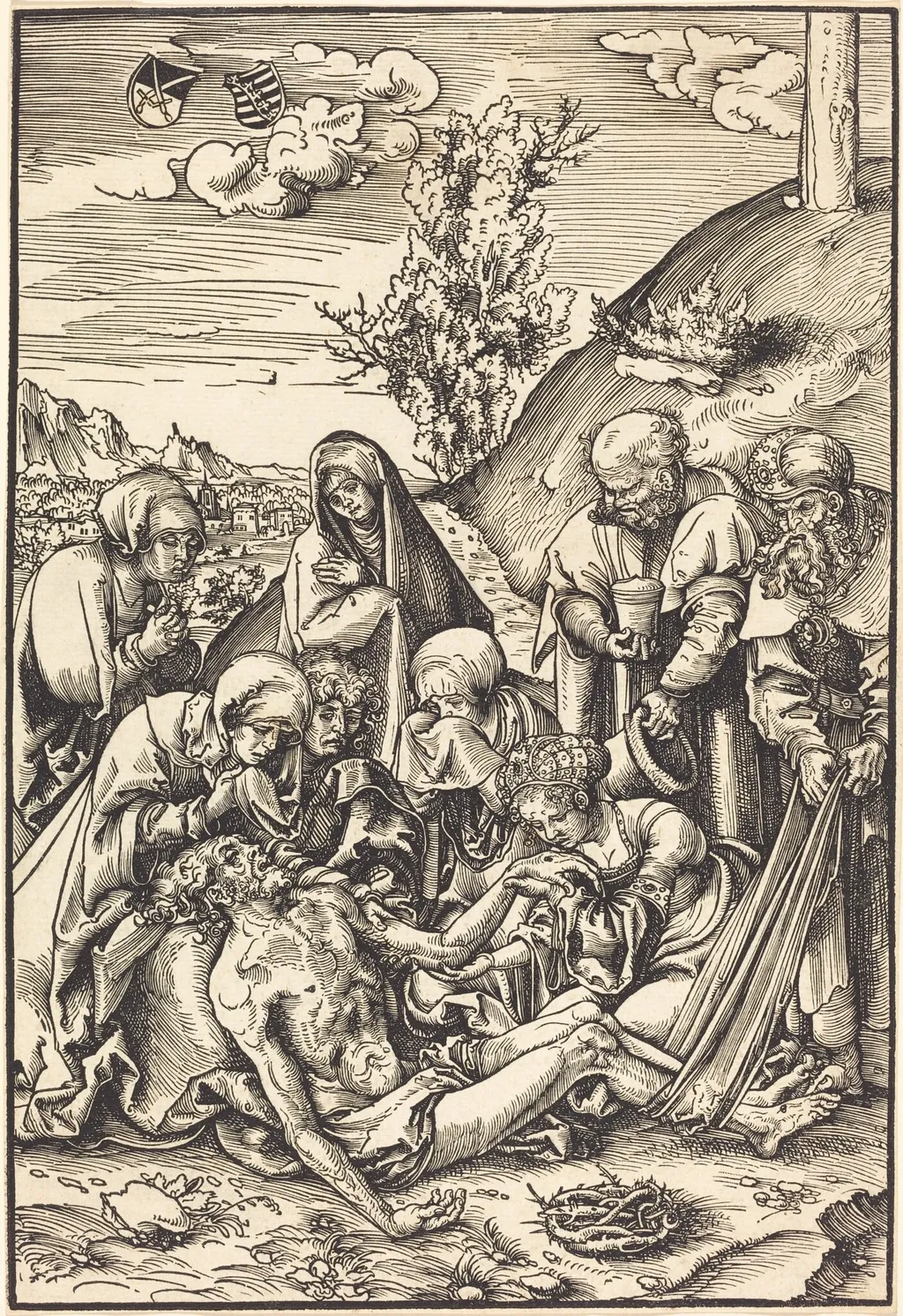
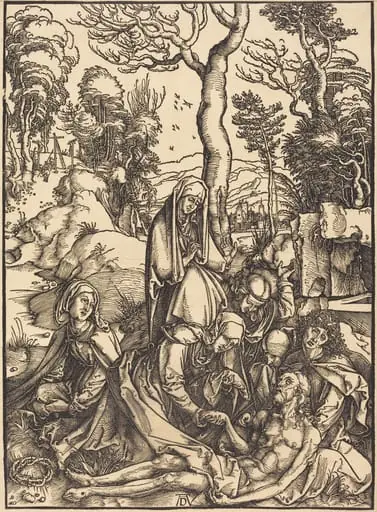
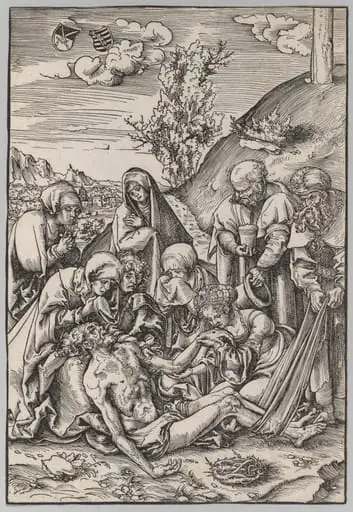
The Lamentation is an ink print by the Renaissance artist Lucas Cranach the Elder. It dates from 1509 and is held in the collection of the National Gallery of Art.
About this work
Overview
This work exemplifies his early engagement with printmaking, where he translated complex emotional scenes into the rigid constraints of carved wood.
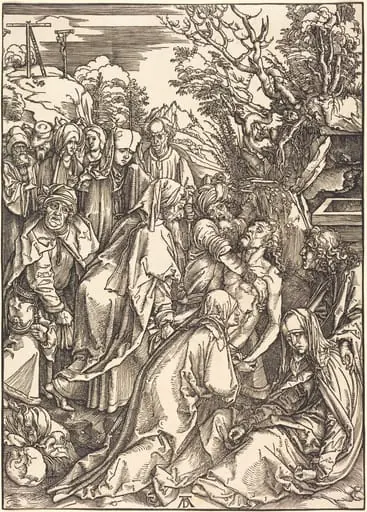
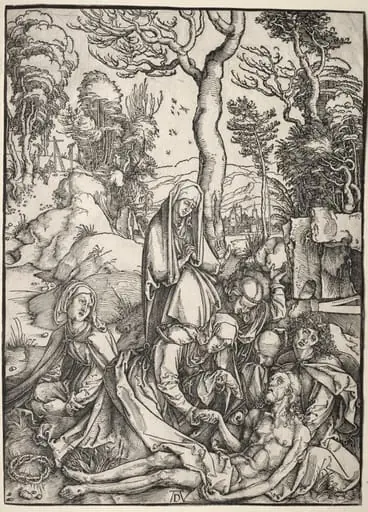
Lucas Cranach the Elder produced *The Lamentation* in 1509 as a woodcut print, one of many religious images he made during his tenure as court artist to the Electors of Saxony. This work exemplifies his early engagement with printmaking, where he translated complex emotional scenes into the rigid constraints of carved wood. The image captures a moment of communal grief following Christ’s crucifixion, rendered with precision and restraint.
Subject & Meaning
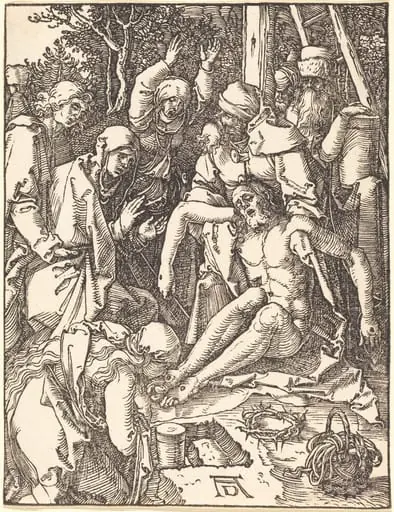
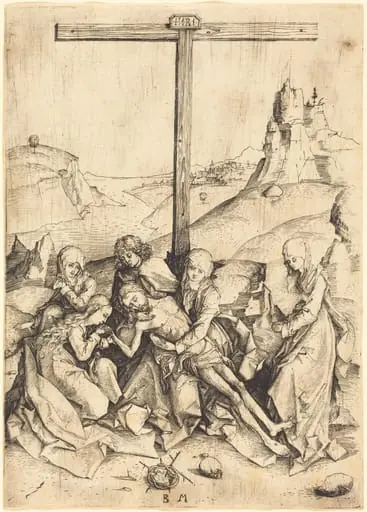
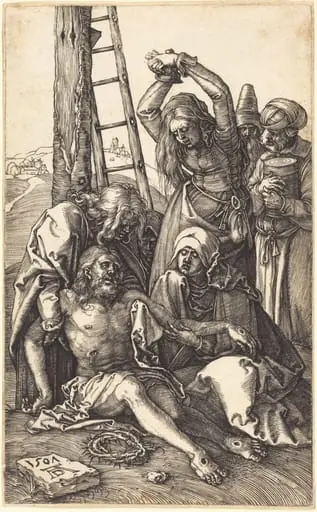
The scene portrays the body of Christ laid on the ground, surrounded by mourners. Mary cradles his head, while John the Evangelist stands behind her, arms raised in sorrow. The composition emphasizes collective mourning, with figures arranged in a tight, inward-facing circle. No divine intervention is shown—only human grief, reflecting a devotional focus on Christ’s humanity and the emotional weight of his death.
Technique & Style
Cranach employed fine, controlled lines to carve the woodblock, allowing intricate details in fabric folds and facial expressions. The contrast between dark ink and pale paper heightens the emotional intensity. Despite the medium’s limitations, he achieved a sense of texture and movement, particularly in the drapery and the tense postures of the figures. His style here is linear and deliberate, prioritizing clarity over atmospheric depth.
History & Provenance
Created during Cranach’s early career in Wittenberg, the print was likely made for private devotion or as a devotional aid. It circulated widely through the growing print market of early 16th-century Germany. While its original ownership is undocumented, its survival in multiple institutional collections suggests early and sustained interest in Cranach’s religious imagery.
Context
In 1509, Cranach was developing his artistic voice amid the religious and cultural shifts preceding the Reformation. His prints often responded to popular piety, offering accessible images of biblical scenes for personal reflection. Though still rooted in Catholic tradition, his work subtly anticipated Protestant values by emphasizing direct emotional connection over ritual.
Legacy
Cranach’s *The Lamentation* contributed to the broader dissemination of religious imagery through print, influencing later artists in Northern Europe. His ability to convey deep emotion within the technical limits of woodcut set a standard for narrative clarity. The work remains a key example of how printmaking could serve both spiritual and artistic ends in the early Renaissance.
Artist & collection
Artist
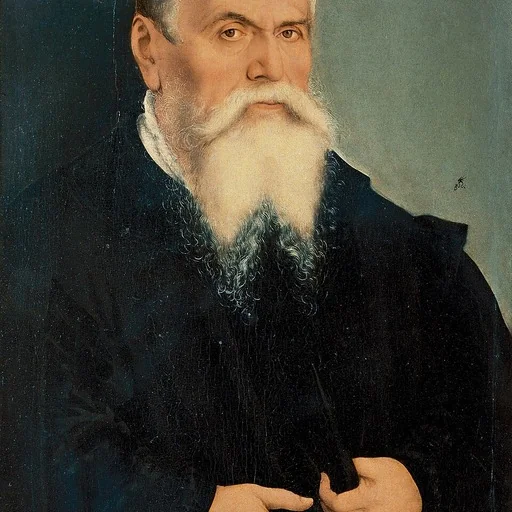
Lucas Cranach the Elder was a German Renaissance painter and printmaker in woodcut and engraving.