Artwork
The Lamentation
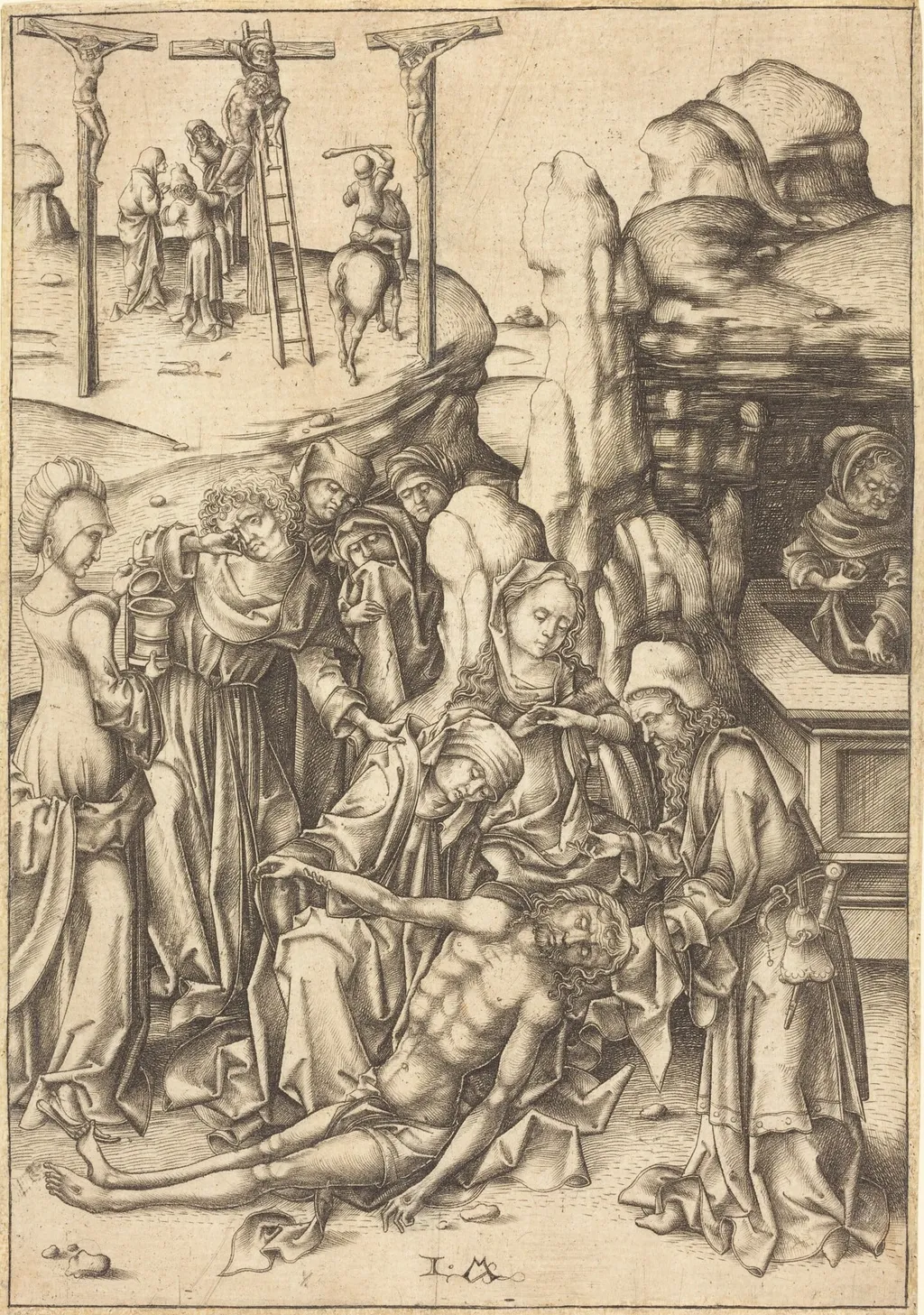
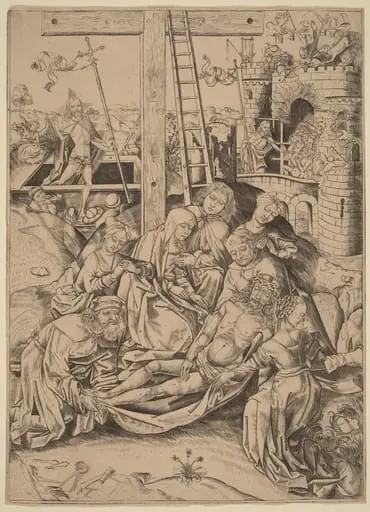
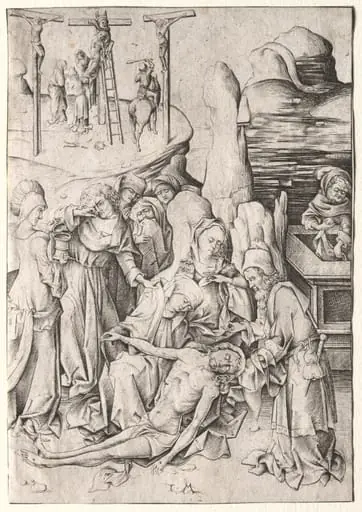
The Lamentation is an ink print by the Renaissance artist Israhel van Meckenem. It dates from 1480 and is held in the collection of the National Gallery of Art.
About this work
Overview
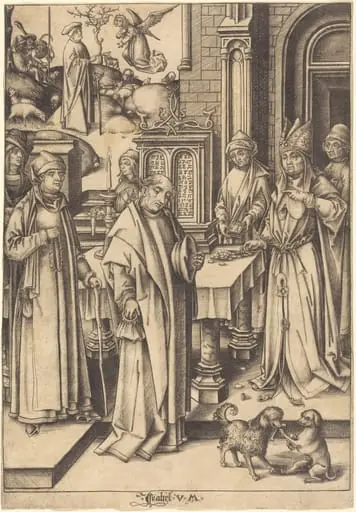
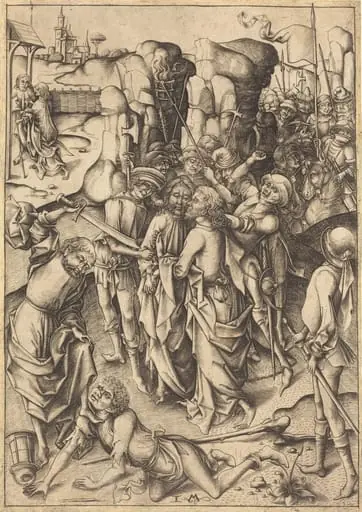
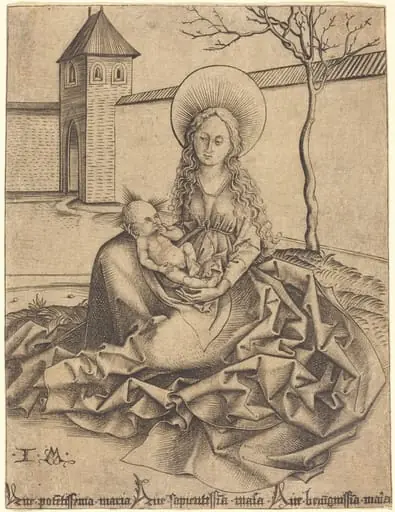
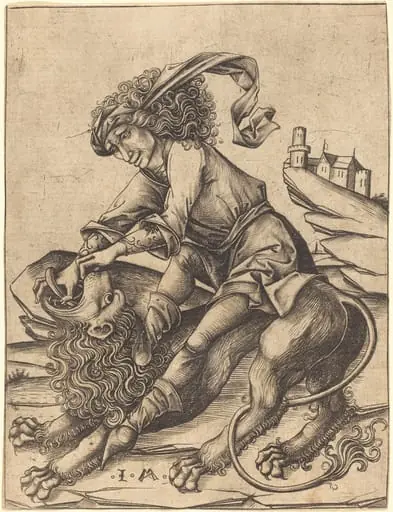
Created around 1480 by Israhel van Meckenem, a German engraver and goldsmith, *The Lamentation* is one of over six hundred prints he produced during his career.
Created around 1480 by Israhel van Meckenem, a German engraver and goldsmith, *The Lamentation* is one of over six hundred prints he produced during his career. As one of the most active printmakers of the late fifteenth century, van Meckenem specialized in reproductive engravings, often adapting compositions from other artists. This work exemplifies his technical precision and his role in disseminating religious imagery across Northern Europe through the emerging medium of print.
Subject & Meaning
The scene captures the moment after Christ’s crucifixion, with mourners gathered around his lifeless body on the ground. Figures express grief through gestures—clutching the corpse, clasping hands, or gazing upward. In the distance, the two thieves crucified alongside Christ are visible on their crosses, while a ladder leans against one, suggesting recent removal. The inclusion of a horse and bystanders grounds the sacred event in a tangible, human context, emphasizing collective sorrow and the physical reality of death.
Technique & Style
Van Meckenem employed fine, controlled engraving lines to model form and texture. Parallel strokes and cross-hatching build tonal depth, defining the folds of garments and the contours of faces with subtle gradations. The density of lines varies to suggest shadow and volume, while the composition remains orderly despite its crowded figures. His method reflects the Northern European tradition of meticulous detail, where every element contributes to narrative clarity and emotional resonance.
History & Provenance
The print was made during a period of rapid growth in print production, when engravings served as affordable religious images for private devotion. Van Meckenem’s workshop produced multiple impressions, allowing wide circulation. While the exact early ownership of this specific impression is undocumented, its survival in multiple institutional collections suggests it was widely copied and preserved, reflecting its popularity among collectors and religious communities in the late 15th century.
Context
In the decades before the Reformation, devotional prints like this one were crucial for conveying biblical stories to lay audiences. Van Meckenem’s adaptations of larger compositions—often from paintings or illuminated manuscripts—helped standardize visual narratives. His work emerged alongside rising literacy and the spread of printing technology, positioning engravings as both spiritual tools and artistic objects accessible beyond elite circles.
Legacy
Van Meckenem’s prolific output and technical refinement influenced subsequent generations of Northern European printmakers. His ability to translate complex scenes into clear, detailed engravings set a standard for narrative clarity in print. Though later artists would surpass him in innovation, his work preserved and transmitted religious imagery during a transformative era, ensuring the endurance of visual traditions in the age of mechanical reproduction.
Artist & collection
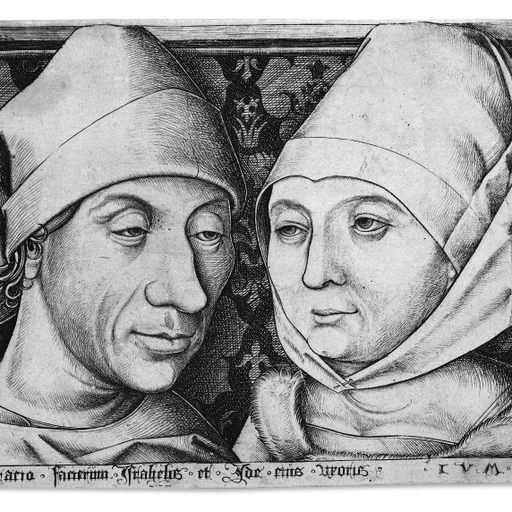
Artist
Israhel van Meckenem (c. 1445 – 10 November 1503), also known as Israhel van Meckenem the Younger, was a German printmaker and goldsmith, perhaps of a Dutch family origin. He was the most prolific engraver of the…