Artwork
The Lamentation
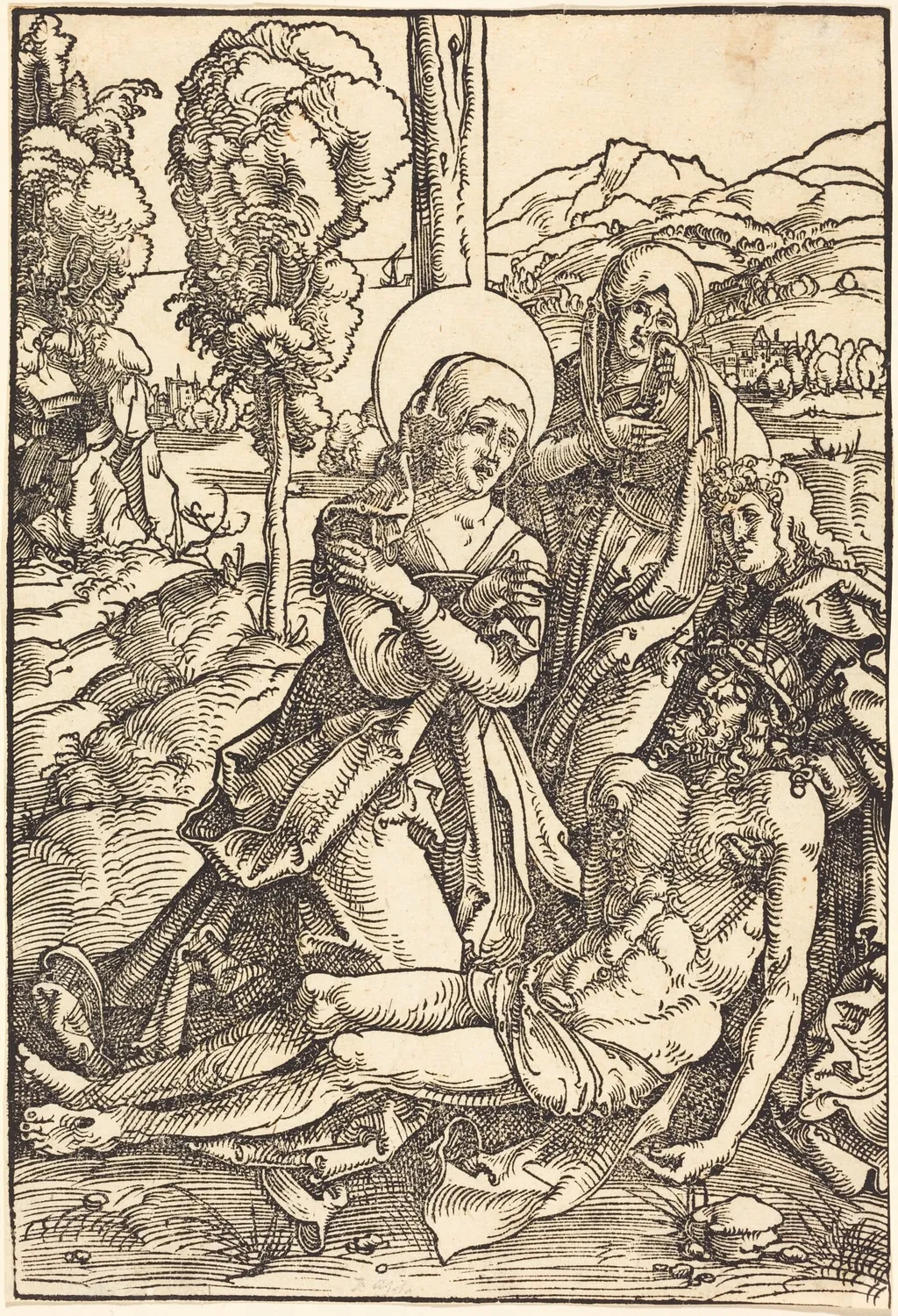
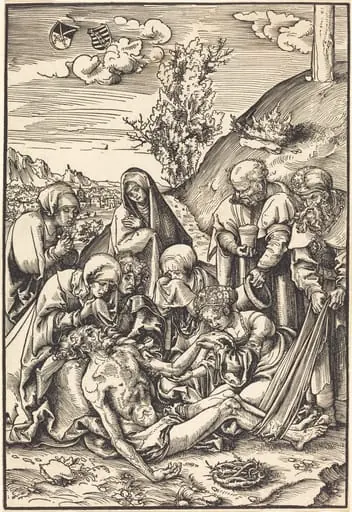
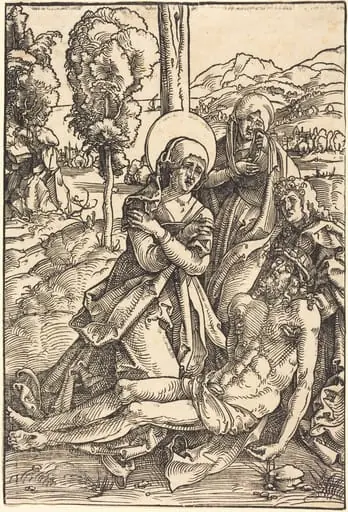
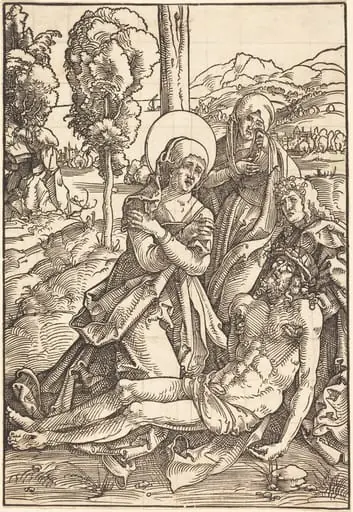
The Lamentation is an ink print by the Renaissance artist Hans Baldung Grien. It dates from 1510 and is held in the collection of the National Gallery of Art.
About this work
Overview
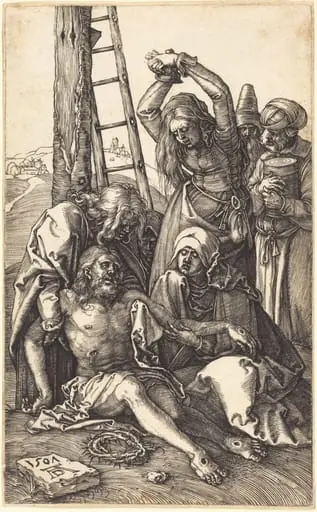
Hans Baldung Grien’s *The Lamentation* is a black‑and‑white woodcut executed on laid paper in 1510. The image captures a biblical moment of mourning after the crucifixion, arranging a group of mourners around a lifeless figure. The composition includes a distant landscape with trees and a town, giving depth to the scene while the foreground figures convey a palpable sense of grief.
Subject & Meaning
The print portrays the traditional Christian narrative of the lament over Christ’s body. Figures kneel, stand, and cradle a child, their gestures directed toward the central corpse, suggesting personal loss and collective sorrow. The arrangement emphasizes the emotional weight of the event, inviting contemplation of sacrifice and compassion.
Technique & Style
Created by carving a design into a wooden block, the artist applied ink to the recessed lines and pressed the paper onto the surface, producing stark contrasts of black and white. Baldung’s handling of line and texture reflects the influence of his teacher Albrecht Dürer, while his exaggerated poses and dynamic forms hint at emerging Mannerist tendencies within the German Renaissance.
History & Provenance
The woodcut dates to 1510, early in Baldung’s independent career after his apprenticeship with Dürer. It was produced as part of the artist’s prolific output of prints, which also included drawings and stained‑glass designs. Surviving copies are held in several European collections, attesting to the work’s circulation among early 16th‑century patrons.
Context
Baldung’s *Lamentation* aligns with contemporary devotional prints that aimed to evoke personal piety.
During the early 1500s, German printmaking flourished as a means of disseminating religious imagery. Baldung’s *Lamentation* aligns with contemporary devotional prints that aimed to evoke personal piety. Its visual language combines detailed natural background elements with expressive human figures, reflecting the transitional aesthetic between High Renaissance clarity and the more stylized Mannerist approach.
Artist & collection
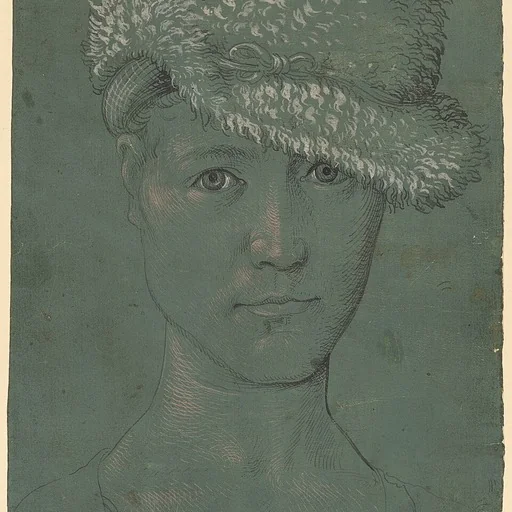
Artist
Hans Baldung (1484 or 1485 – September 1545), called Hans Baldung Grien, (being an early nickname, because of his predilection for the colour green), was a painter, printer, engraver, draftsman, and stained glass…