Artwork
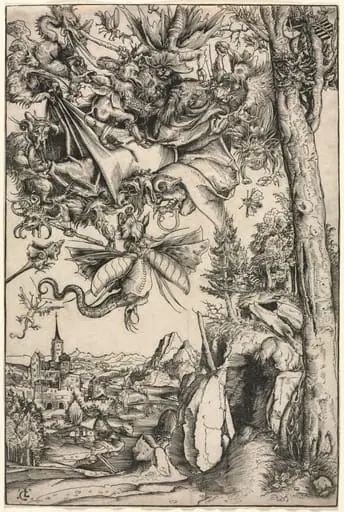
The Temptation of Saint Anthony
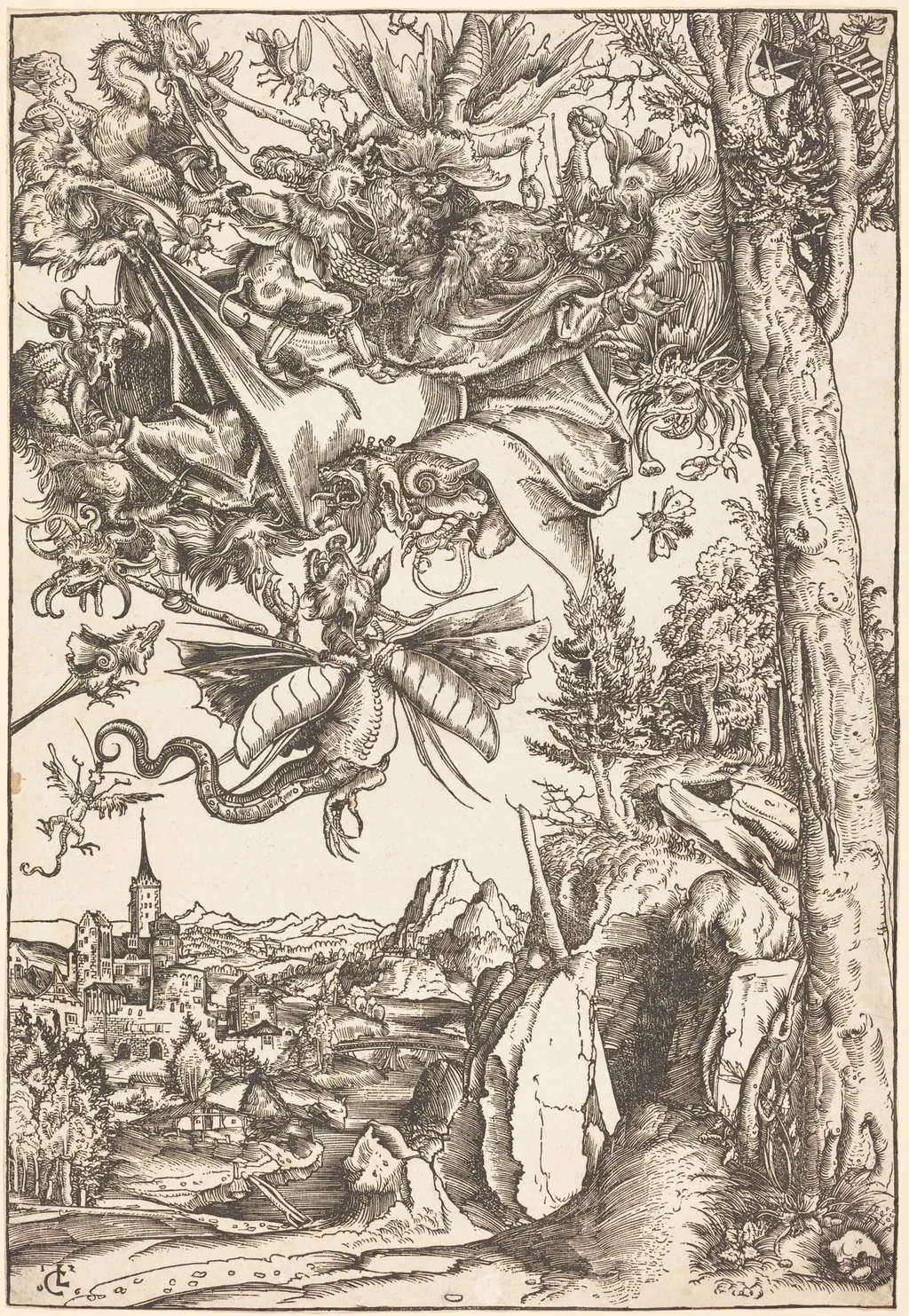
The Temptation of Saint Anthony is an ink print by the Renaissance artist Lucas Cranach the Elder. It dates from 1506 and is held in the collection of the National Gallery of Art.
About this work
Overview
Created in 1506, Lucas Cranach the Elder’s woodcut *The Temptation of Saint Anthony* is a printed image that visualizes the saint’s spiritual ordeal through a dense composition of hybrid creatures. As a leading German Renaissance printmaker, Cranach employed the woodcut medium to reach wide audiences, blending traditional religious subjects with the emerging visual language of the Reformation.
Subject & Meaning
The scene portrays Saint Anthony, a hermit saint, besieged by grotesque, fantastical beings that symbolize spiritual temptation and moral decay. These figures—part beast, part human, part machine—embody the inner turmoil of the soul under siege. The saint remains centered and composed, a quiet anchor amid the chaos, reflecting the Lutheran emphasis on inner faith over external ritual.
Technique & Style
Cranach used sharp, linear carving to define the writhing forms of the demons and the rugged landscape. The woodcut’s high contrast between black ink and white paper heightens the sense of unease. Figures are arranged in a dense, overlapping pattern, creating visual tension without perspective, a stylistic choice that prioritizes symbolic intensity over naturalism.
History & Provenance
Produced during Cranach’s tenure as court artist to the Electors of Saxony, the print emerged as Protestant ideas gained ground in Germany. Though rooted in medieval hagiography, the image was adapted to resonate with reformist audiences, avoiding Catholic iconography while retaining the moral urgency of monastic trials.
Context
In early 16th-century Germany, printed images like this one circulated widely among laypeople, serving as tools for religious instruction and moral reflection. Cranach’s work bridged the gap between traditional monastic imagery and Protestant pedagogy, using familiar narratives to reinforce new theological values without relying on ecclesiastical authority.
Legacy
Cranach’s woodcut influenced later Protestant visual culture by demonstrating how sacred stories could be rendered with psychological immediacy and symbolic clarity. Its emphasis on internal struggle over external spectacle helped shape the aesthetic of Reformation-era religious prints, moving away from ornate altarpieces toward accessible, didactic imagery.
Artist & collection
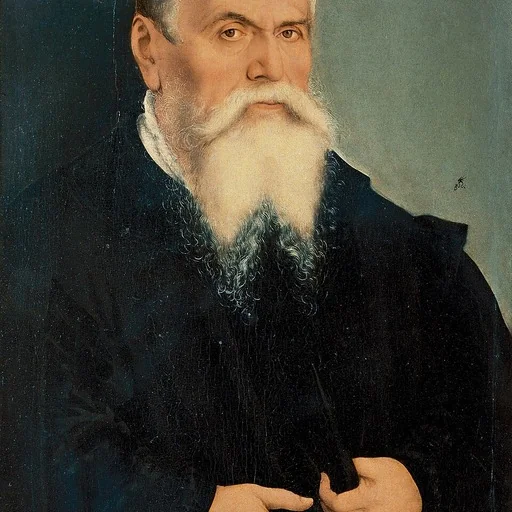
Artist
Lucas Cranach the Elder was a German Renaissance painter and printmaker in woodcut and engraving.

 The Temptation of St. Anthony
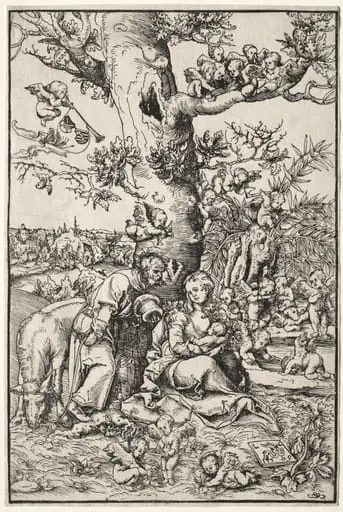 Rest on the Flight into Egypt
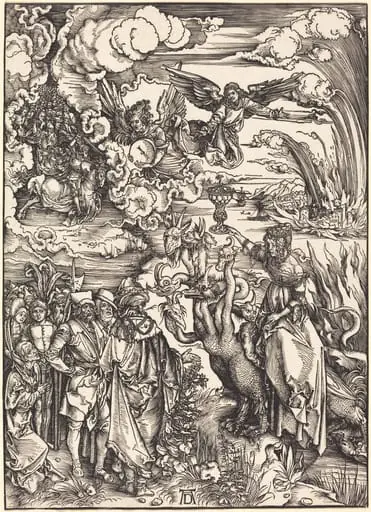 The Babylonian Whore
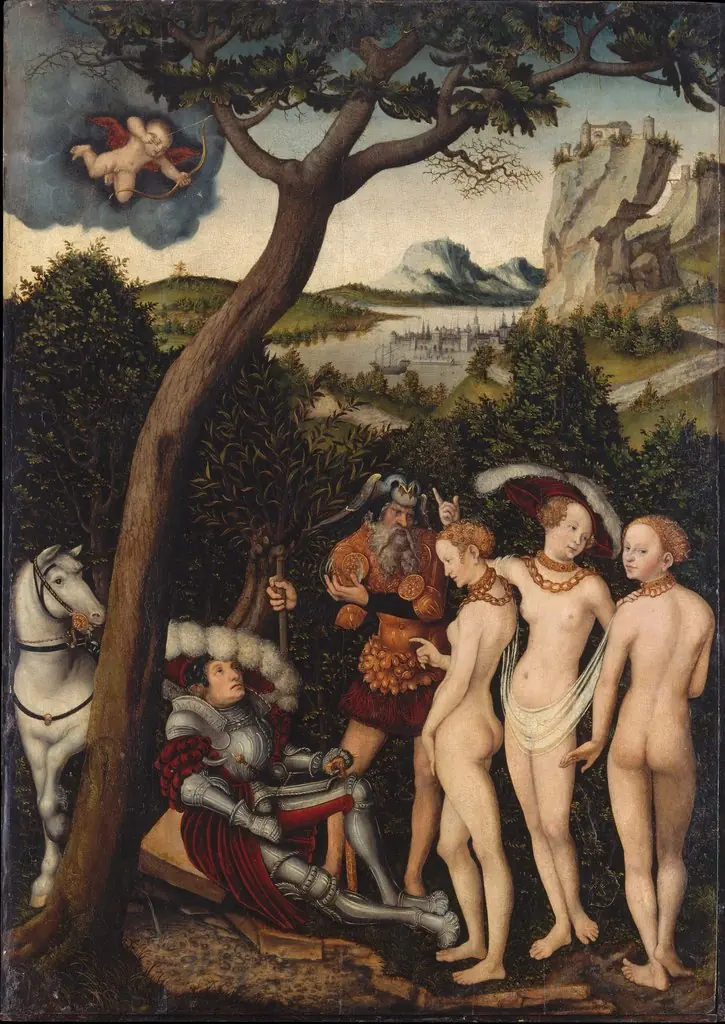
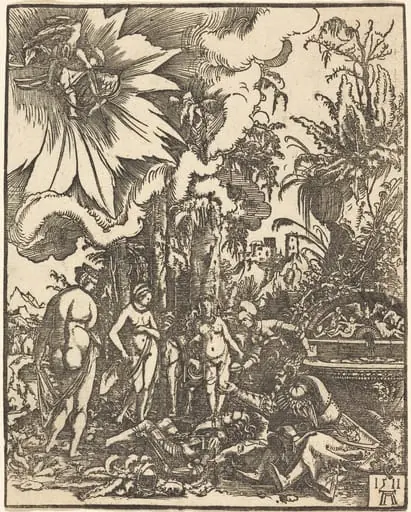 The Judgment of Paris
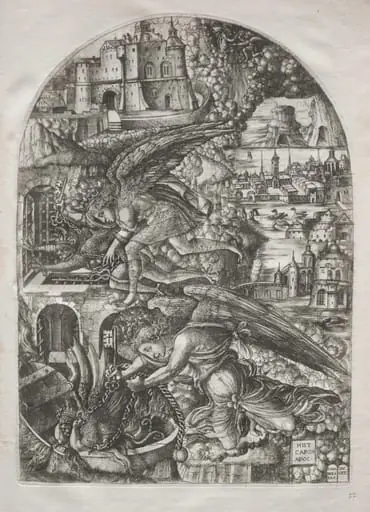 The Apocalypse: Satan Bound for a Thousand Years
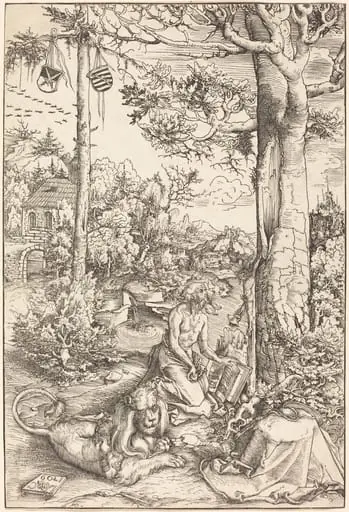 The Penitence of Saint Jerome
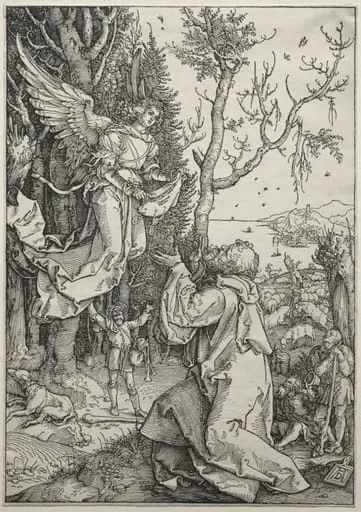 The Life of the Virgin: Joachim and the Angel
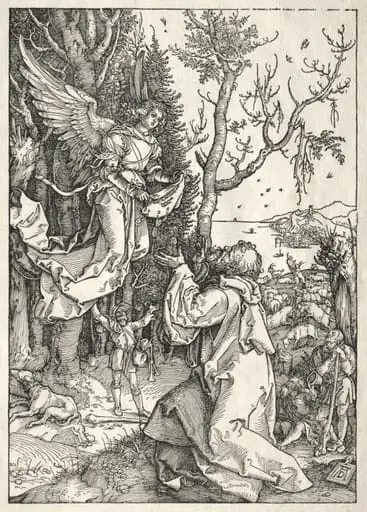 Life of the Virgin: Joachim and the Angel
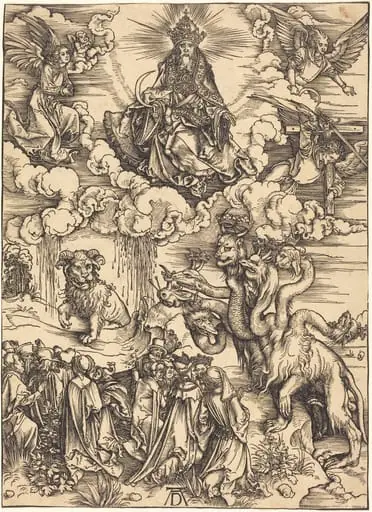 The Beast with Two Horns like a Lamb
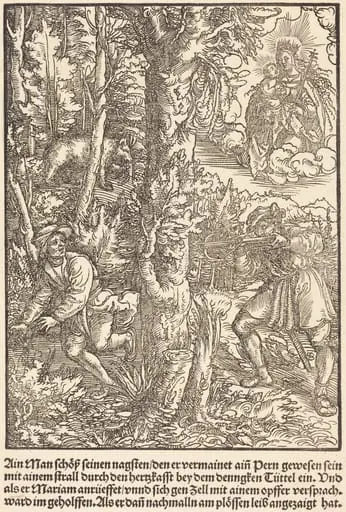 Ain Man Schoss seinen nagsten ...
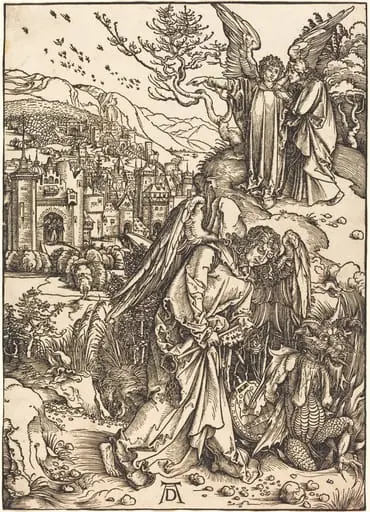 The Angel with the Key to the Bottomless Pit
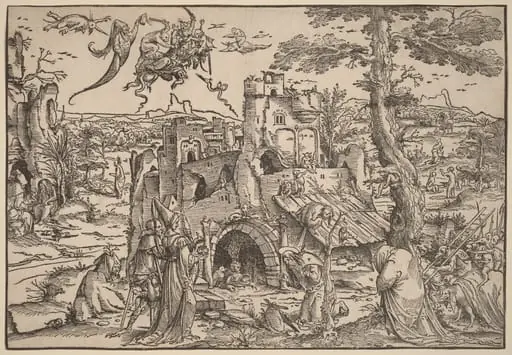 The Temptation of Saint Anthony