Artwork
The Apocalypse: Satan Bound for a Thousand Years
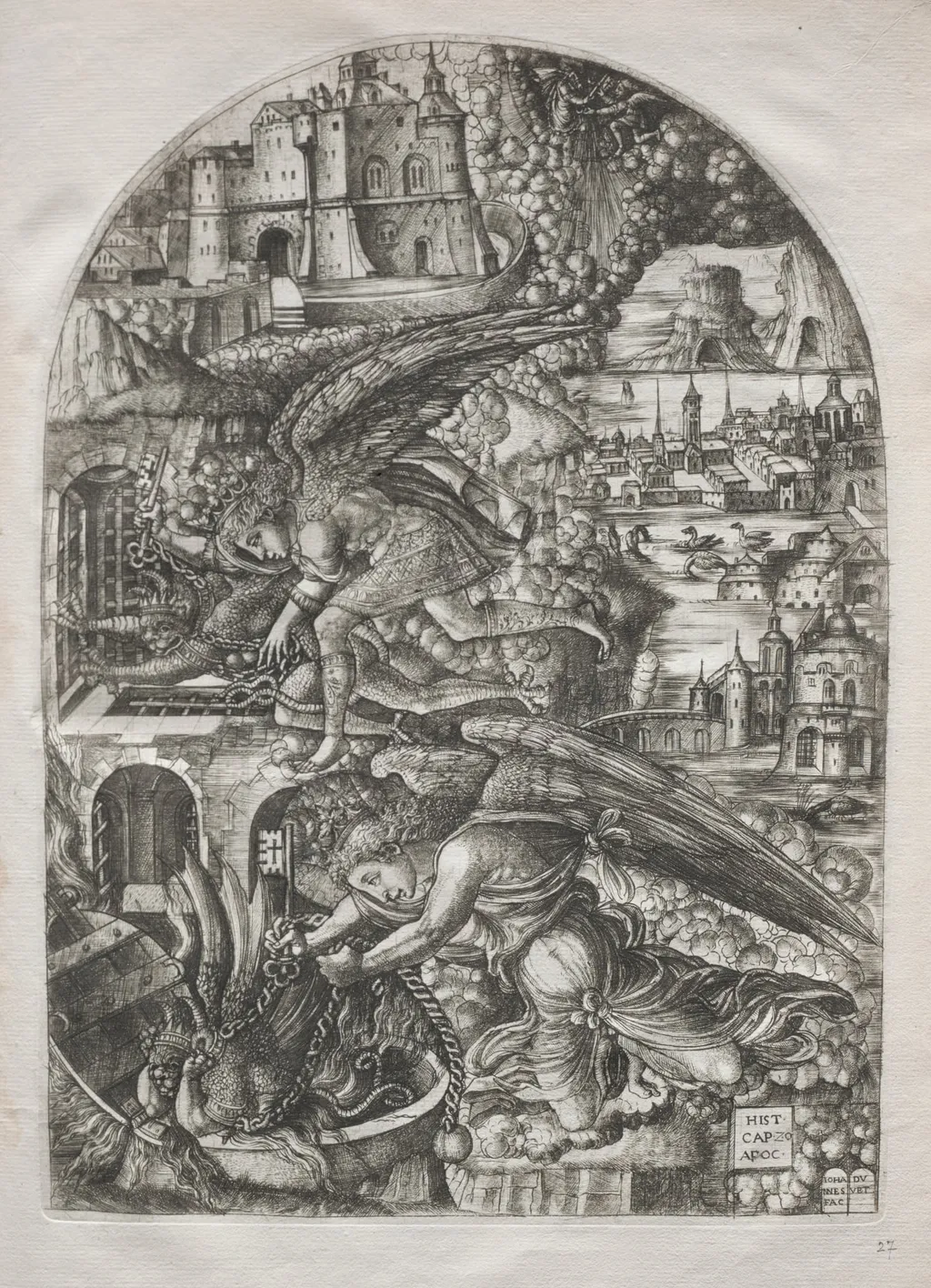
The Apocalypse: Satan Bound for a Thousand Years is a print by the Renaissance artist Jean Duvet. It dates from 1550 and is held in the collection of the Cleveland Museum of Art.
About this work
Overview
This engraving is one of twenty-three plates in a serialized depiction of the Book of Revelation, created by Jean Duvet over nearly a decade.
This engraving is one of twenty-three plates in a serialized depiction of the Book of Revelation, created by Jean Duvet over nearly a decade. Produced in the mid-16th century, the complete set is exceptionally rare, with only seven known surviving volumes. Duvet, based in Langres, France, was among the earliest significant French printmakers to engage deeply with biblical narrative through the medium of engraving, blending Northern precision with Italianate forms.
Subject & Meaning
The scene illustrates the binding of Satan as described in Revelation 20, where the devil is cast into an abyss for a thousand years. Chains bind his limbs as flames consume his lower body, while angels secure a heavy iron collar around his neck. Above, a celestial assembly of saints and angels observes from golden clouds, emphasizing divine order triumphing over chaos. The imagery serves as a visual sermon on ultimate judgment and the temporary nature of evil.
Technique & Style
Duvet employed fine, intricate lines to render minute details in the chains, flames, and drapery, demonstrating exceptional control on a small metal plate. His compositions reject linear perspective, favoring dense, layered arrangements that prioritize decorative surface over spatial logic. Figures are robustly modeled after Italian Renaissance precedents, yet distorted and elongated into a personal, almost hallucinatory style that heightens emotional intensity.
History & Provenance
Duvet completed the series between 1550 and 1560, likely for private or ecclesiastical patrons. The survival of only seven complete sets underscores the fragility and limited circulation of such works. The museum’s volume is among these rare survivors, preserved through centuries of religious upheaval and material decay. Its existence attests to the enduring value placed on devotional imagery in post-Reformation France.
Context
Duvet worked in relative isolation in Langres, yet absorbed Italian artistic trends through imported prints, particularly those of Marcantonio Raimondi. His work emerged amid a broader European trend of religious printmaking, initially pioneered in Germany, which sought to convey theological narratives to literate and non-literate audiences alike. Despite regional distance, his imagery aligns with the Counter-Reformation’s emphasis on vivid, emotionally charged sacred scenes.
Legacy
Duvet’s Apocalypse series stands as a singular achievement in 16th-century French printmaking, distinguished by its intensity and originality. Though not widely imitated, it influenced later French artists drawn to complex, symbolic compositions. His fusion of Northern detail with Italianate form helped shape a uniquely French visual language for religious narrative, leaving a quiet but lasting imprint on the evolution of print culture in early modern Europe.
Artist & collection

Artist
Jean Duvet (1485 – after 1562) was a French Renaissance goldsmith and engraver, now best known for his engravings.

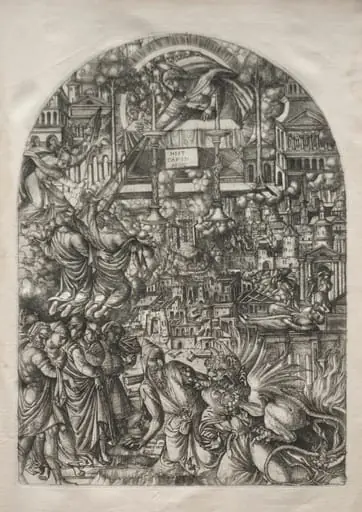 The Apocalypse: The Measurement of the Temple
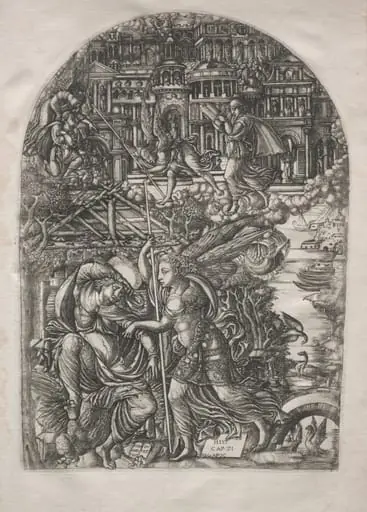 The Apocalypse: The Angel Shows St. John the New Jerusalem
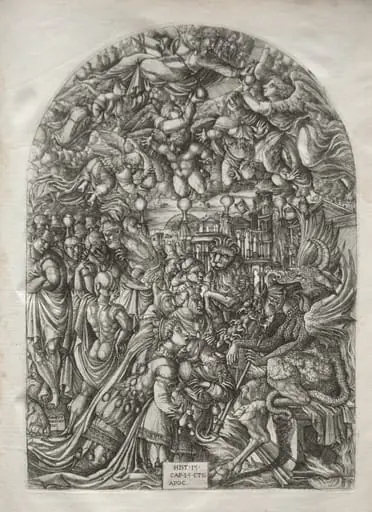 The Apocalypse: The Woman Clothed with the Sun
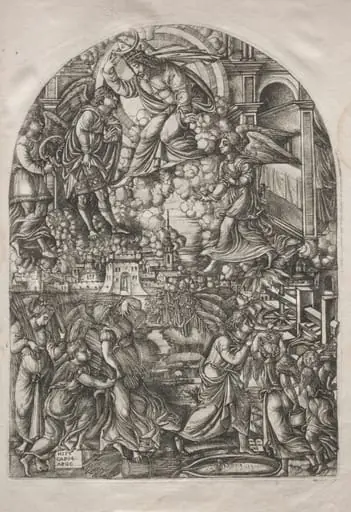 The Apocalypse: The Winepress of the Wrath of God
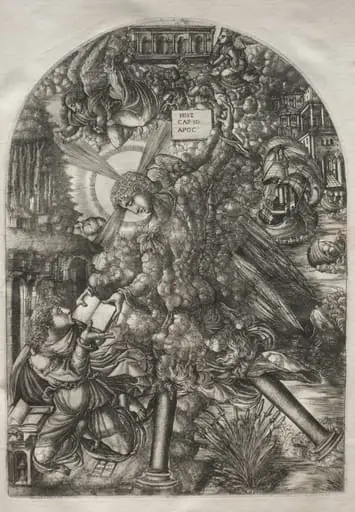 The Apocalypse: The Angel Gives St. John the Book to Eat
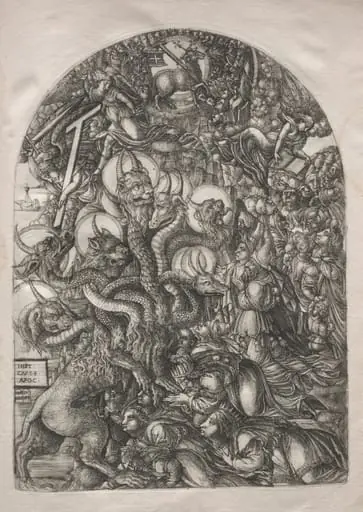 The Apocalypse: The Beast with Seven Heads and Ten Horns
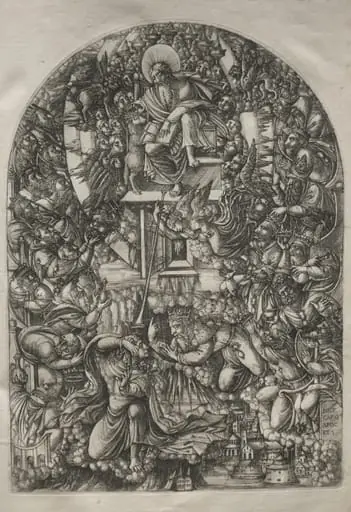 The Apocalypse: St. John Summoned to Heaven
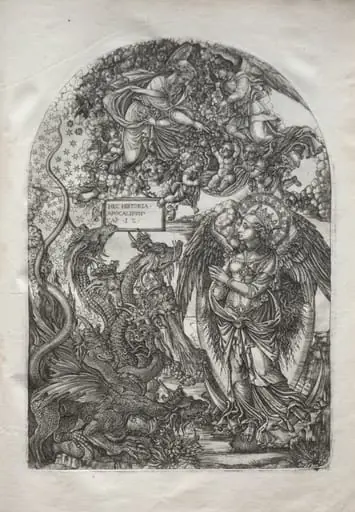 The Apocalypse: St. Michael and the Dragon
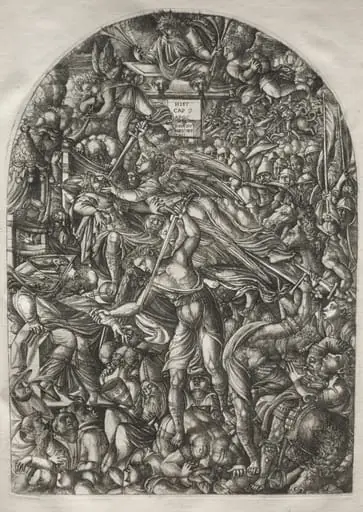 The Apocalypse: The Angel Sounding the Sixth Trumpet
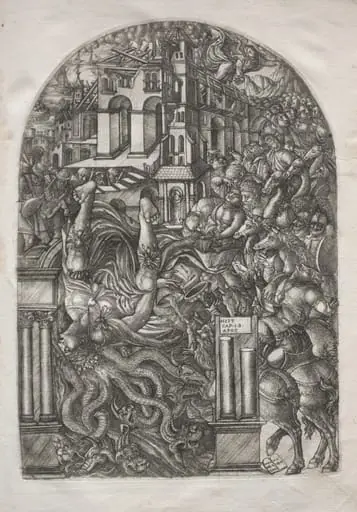 The Apocalypse: The Fall of Babylon
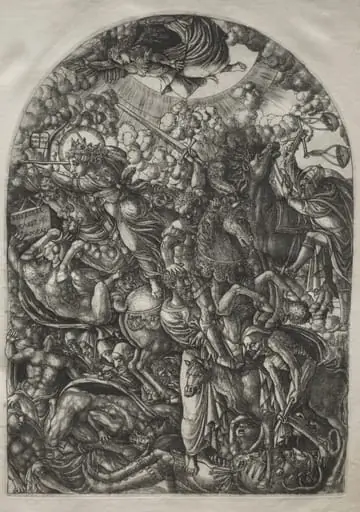 The Apocalypse: St. John Sees the Four Riders