Artwork
The Beast with Two Horns like a Lamb
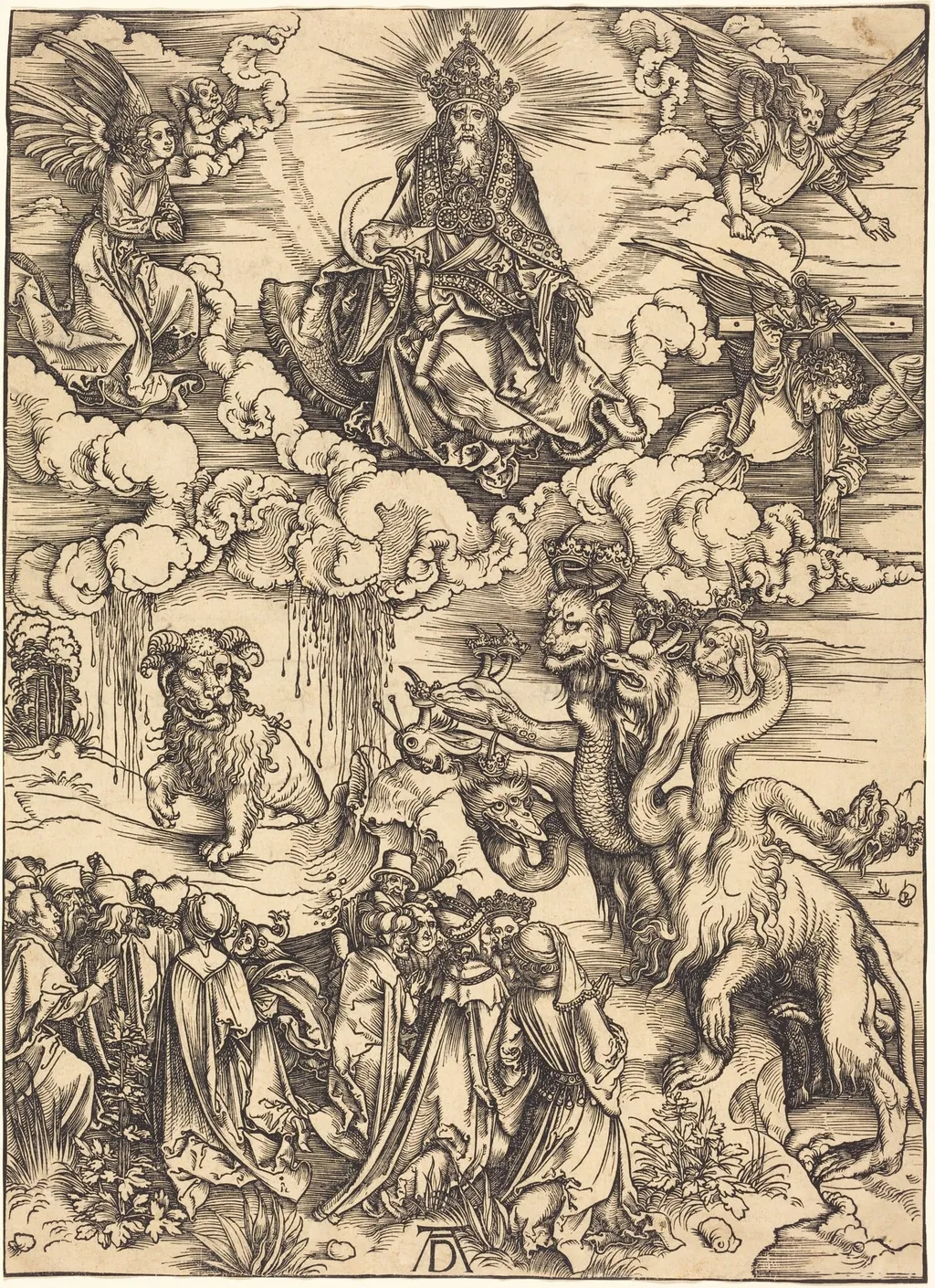
The Beast with Two Horns like a Lamb is an ink print by the Northern Renaissance artist Albrecht Dürer. It dates from 1497 and is held in the collection of the Metropolitan Museum of Art.
About this work
Overview
The work belongs to Dürer’s early religious series and reflects the apocalyptic tone of the biblical Book of Revelation.
Albrecht Dürer’s woodcut, titled *The Beast with Two Horns like a Lamb*, was produced around 1497. Executed as a single‑block print, the image presents a hybrid creature—its head resembling a lamb, its body goat‑like, and two prominent horns—set against a dark background where a shadowy demonic face can be discerned. The work belongs to Dürer’s early religious series and reflects the apocalyptic tone of the biblical Book of Revelation.
Subject & Meaning
The central figure represents the apocalyptic beast described in Revelation, a symbol traditionally linked to false prophets and deceptive powers opposing divine truth. By giving the beast a lamb’s visage, Dürer juxtaposes innocence with menace, underscoring the text’s warning that evil may appear benign. The lurking demon in the rear reinforces the theme of hidden malevolence surrounding the false messiah.
Technique & Style
Carved from a single wood block, the print relies on stark, incised lines to delineate the creature’s horns, fur, and the grimace of the background demon. Dürer’s precise incision produces a high‑contrast image where black ink on white paper emphasizes the tension between the luminous lamb‑like face and the surrounding darkness, exemplifying his early mastery of fine detail in woodcut.
History & Provenance
Created in the late 1490s, the print was part of Dürer’s initial forays into religious illustration, preceding his more famous series such as the *Apocalypse* (1498). Surviving impressions are held in several European collections, indicating the work circulated among patrons interested in devotional imagery and the burgeoning market for printed religious art.
Context
The woodcut emerges from a period when the Reformation’s precursors stirred interest in scriptural interpretation and apocalyptic expectation. Dürer, working in Nuremberg, responded to a growing demand for visual aids that could convey complex theological ideas to a largely illiterate audience, using the accessible medium of print to disseminate biblical narratives.
Artist & collection
Artist
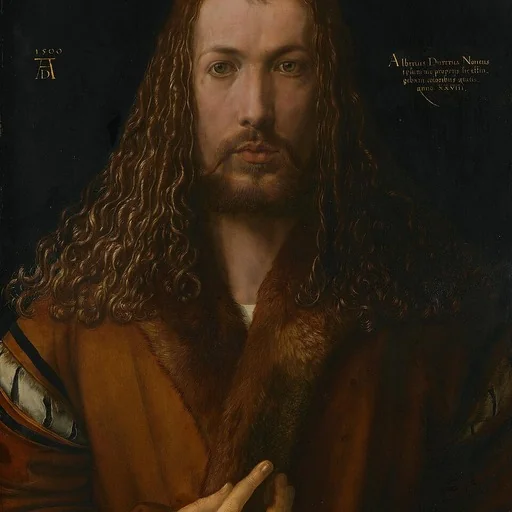
Albrecht Dürer spent his life in Nuremberg, a busy German city where artists traded prints like currency.

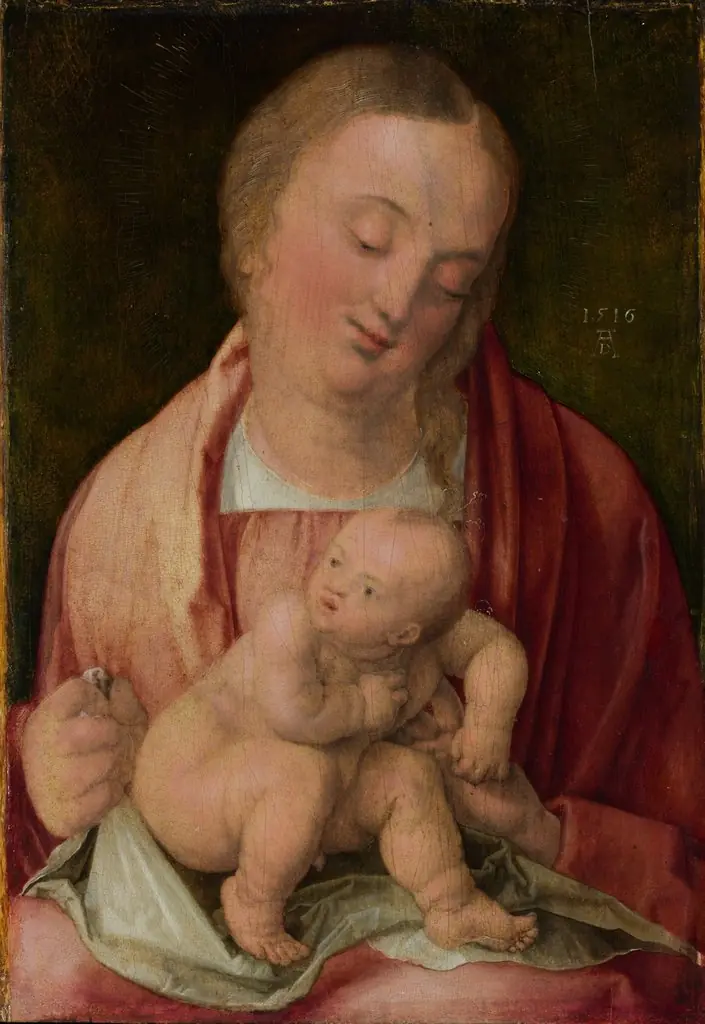
![Madonna and Child [obverse], by Albrecht Dürer](https://artifactworldgallery.com/img/albrecht-durer--madonna-and-child-obverse--d7b8ebf05d22ebe5-w320.webp)
![Lot and His Daughters [reverse], by Albrecht Dürer](https://artifactworldgallery.com/img/albrecht-durer--lot-and-his-daughters-reverse--b4ebf9b282faa17a-w320.webp)
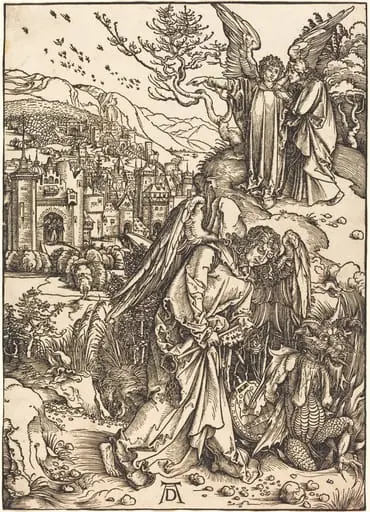 The Angel with the Key to the Bottomless Pit
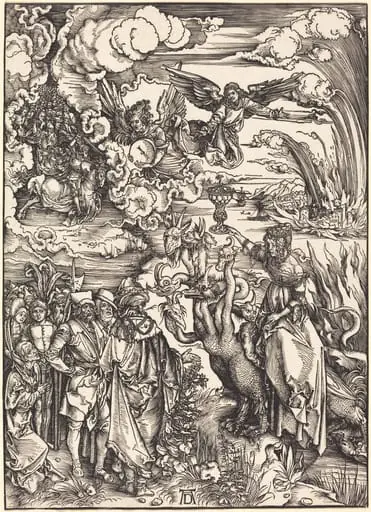 The Babylonian Whore
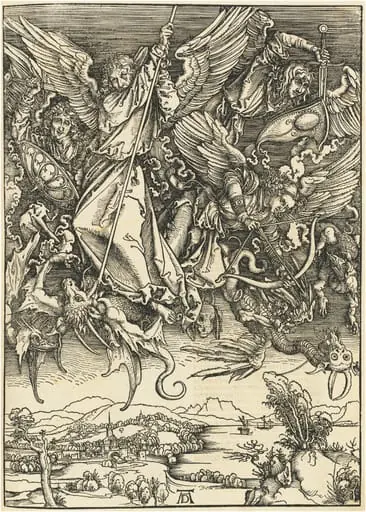 Saint Michael Fighting the Dragon
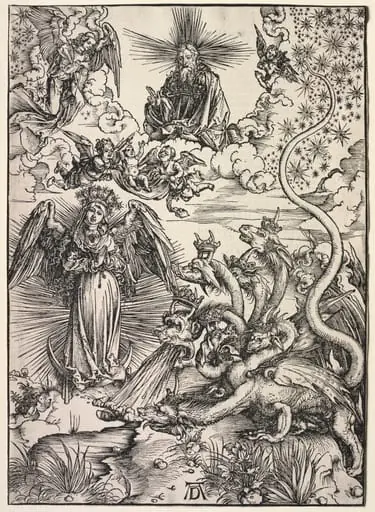 Revelation of St. John: The Woman Clothed with the Sun
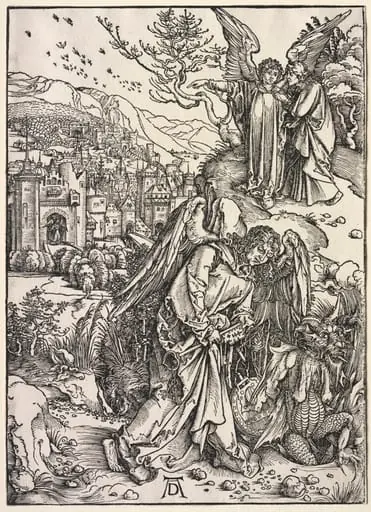 Revelation of St. John: Angel with the Key of the Bottomless Pit
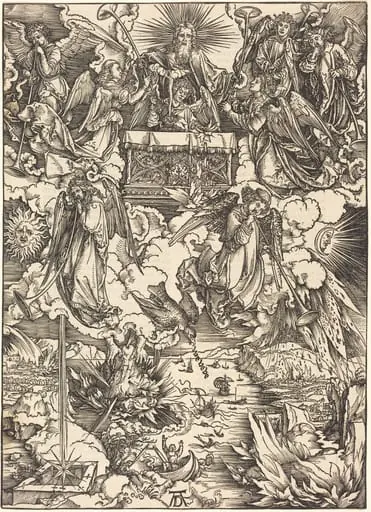 The Seven Angels with the Trumpets
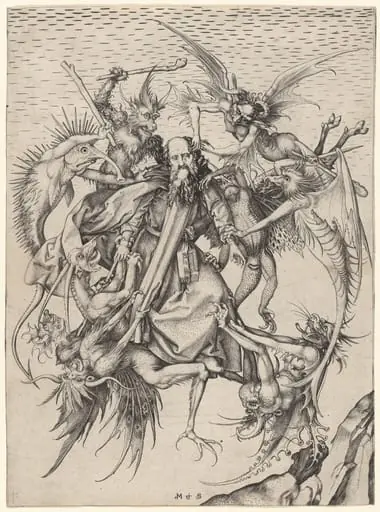 The Tribulations of Saint Anthony
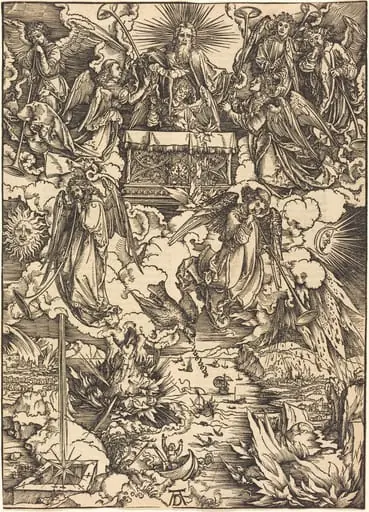 The Seven Angels with the Trumpets
 The Last Judgment