Artwork
Saint Paul and Saint James the Elder
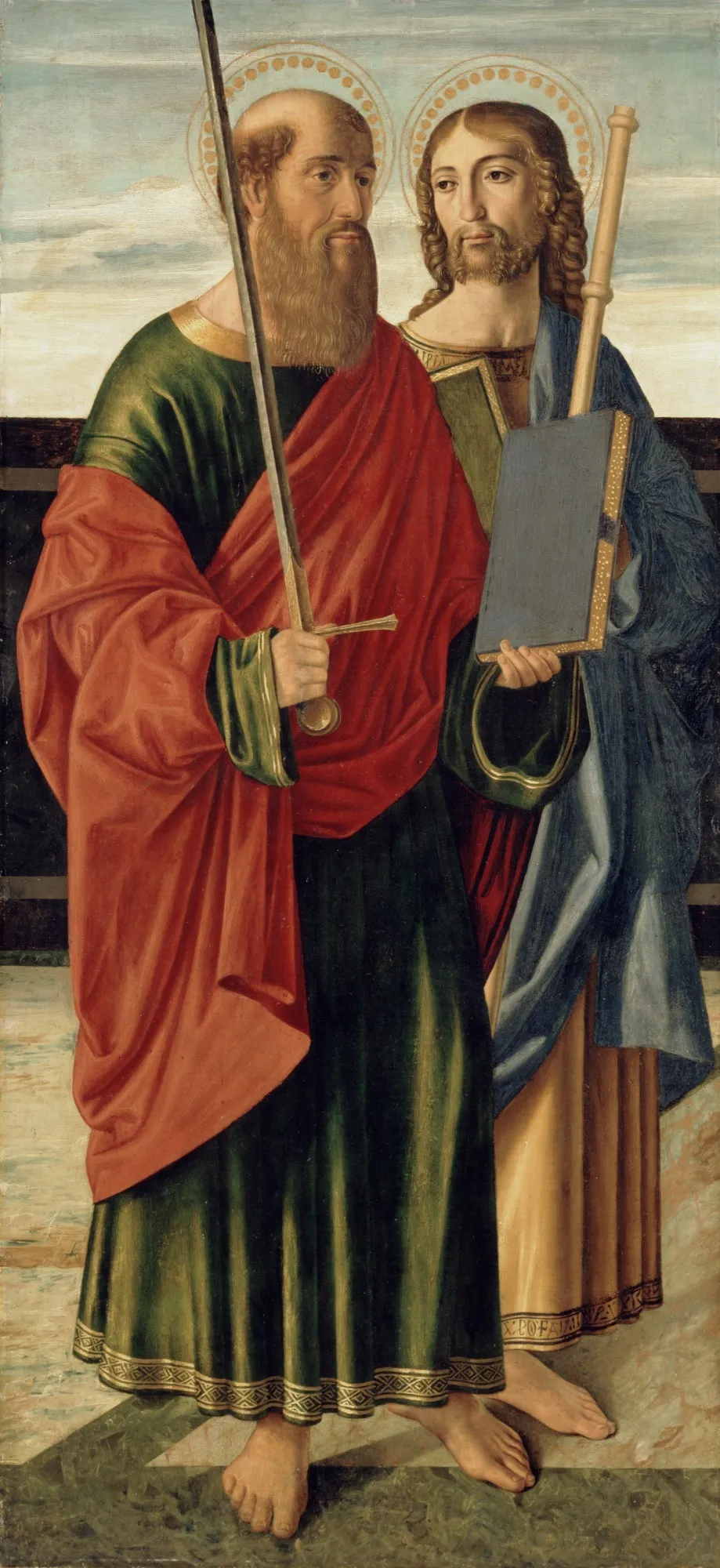
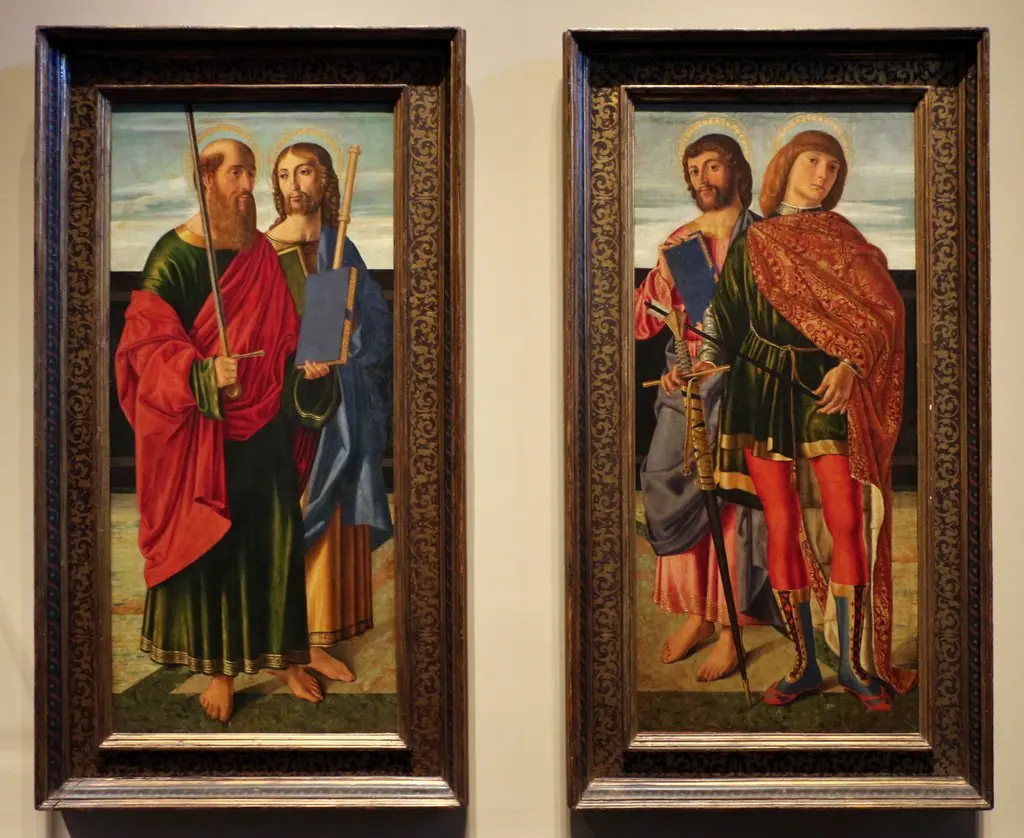
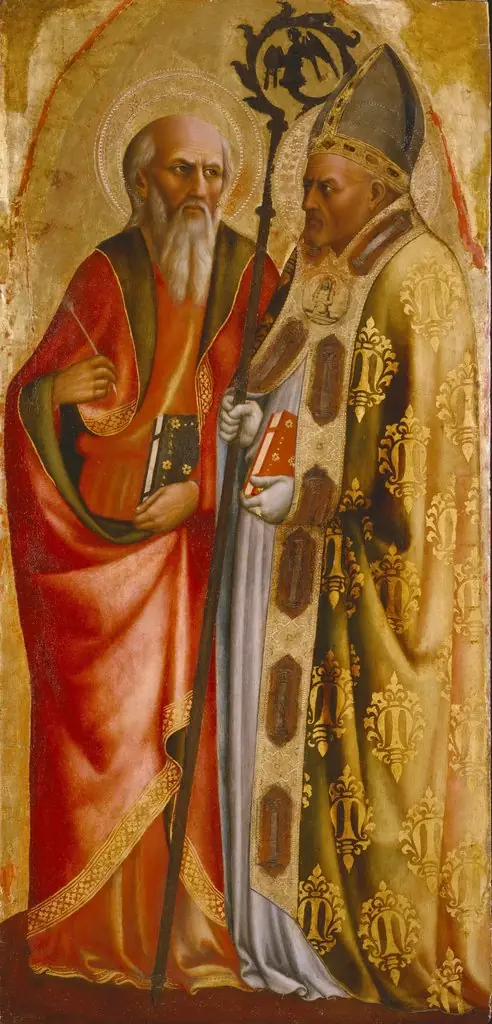
Saint Paul and Saint James the Elder is an unspecified painting by the Early Renaissance artist Cristoforo Caselli. It dates from 1500 and is held in the collection of the Detroit Institute of Arts.
About this work
Overview
Caselli, occasionally known as da Parma or il Temperello, worked within the evolving early Renaissance tradition.
Painted around 1500 by Cristoforo Caselli, an Italian artist active in the late 15th and early 16th centuries, this work portrays two apostles in a devotional arrangement. Caselli, occasionally known as da Parma or il Temperello, worked within the evolving early Renaissance tradition. The painting is now part of the Detroit Institute of Arts collection, representing a modest but carefully rendered example of regional religious art from northern Italy.
Subject & Meaning
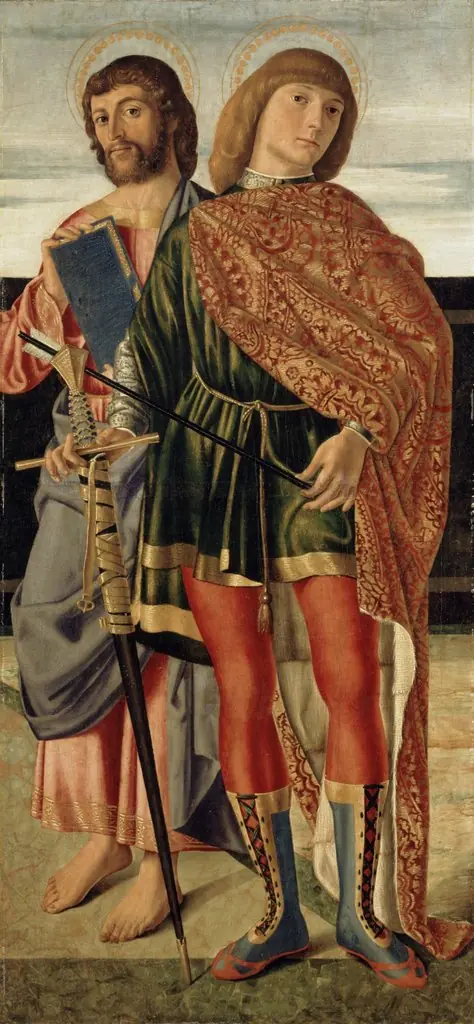
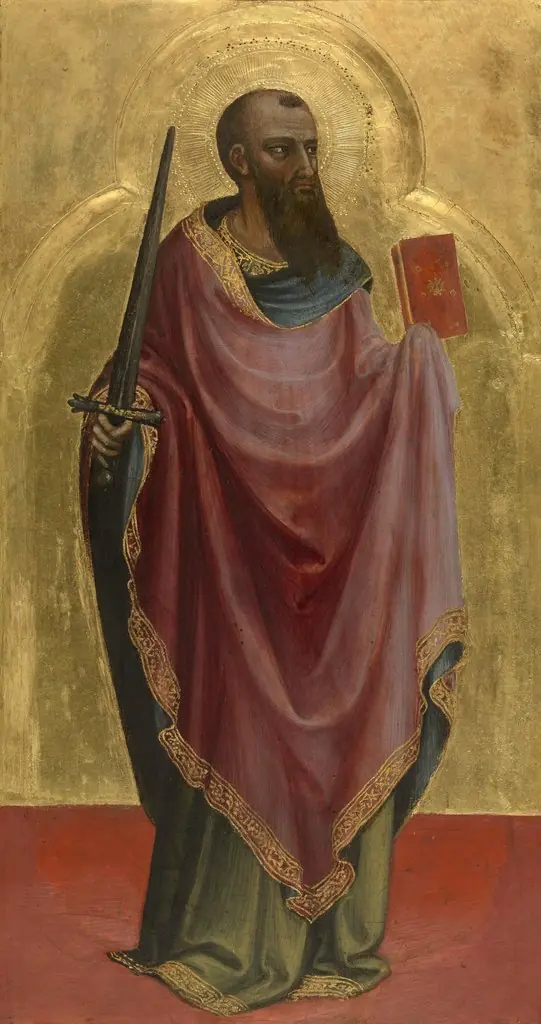
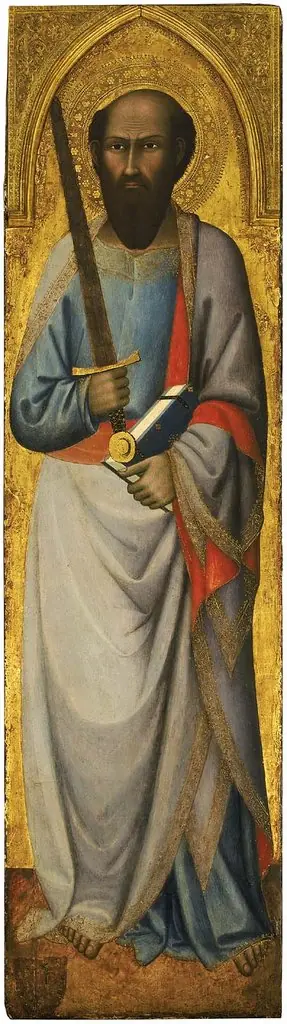
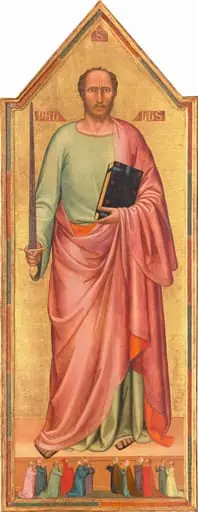
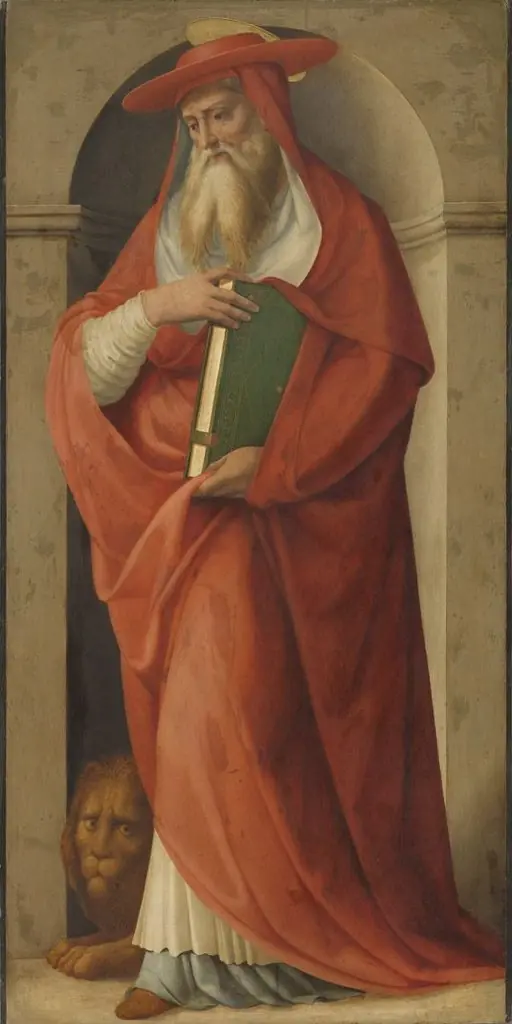
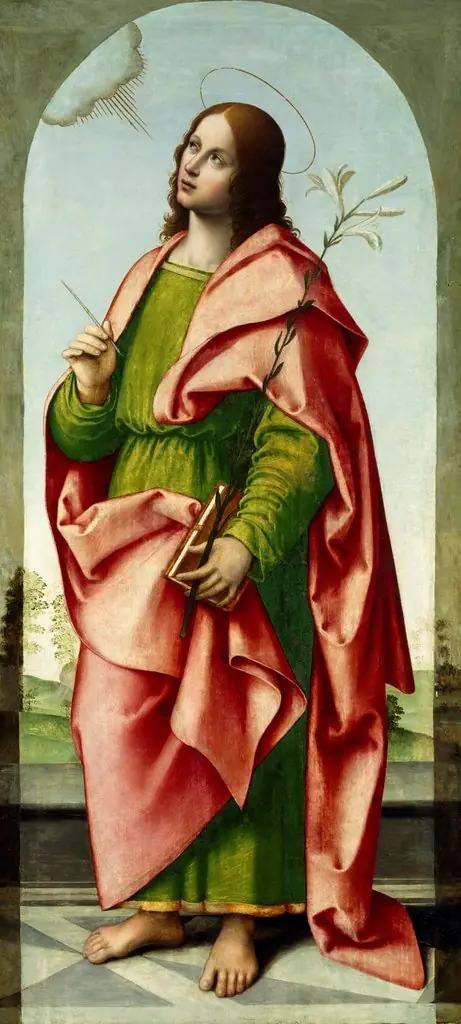
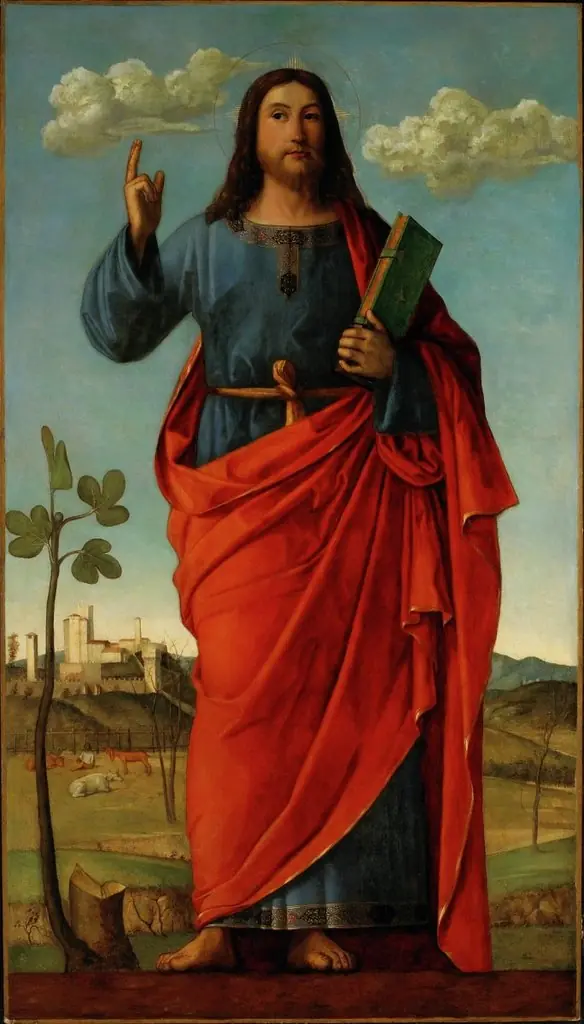
The figures are Saint Paul, identifiable by his spear and stern demeanor, and Saint James the Elder, distinguished by his pilgrim’s staff and open book. Both are depicted with golden halos, signaling their sanctity. Their placement side by side suggests a pairing of apostolic authority—Paul as the missionary and James as the elder leader of the early Church. The composition invites contemplation rather than narrative action, emphasizing their spiritual presence over dramatic storytelling.
Technique & Style
Caselli employs chiaroscuro to model the figures’ robes, using subtle gradations of light and shadow to suggest volume and texture. The folds of the red and blue garments are rendered with attention to naturalistic drapery, while the faces and hands show careful attention to anatomical detail. The rocky backdrop is simplified, focusing attention on the saints. The style reflects a transitional phase between late Gothic rigidity and early Renaissance naturalism, with restrained emotion and clear outlines.
History & Provenance
The painting’s early history is undocumented, but it entered the Detroit Institute of Arts collection in the 20th century. Its attribution to Caselli is based on stylistic comparisons with other works from the Parma region and documented references to his activity during the turn of the 16th century. No records of its original commission or location survive, suggesting it may have been created for a private chapel or small religious community.
Context
Created during a period when Italian art was shifting toward human-centered realism, this painting reflects the lingering influence of regional traditions in northern Italy. While major centers like Florence and Venice embraced perspective and classical ideals, smaller workshops like Caselli’s maintained a more intimate, devotional approach. The work aligns with contemporaneous altarpieces intended for quiet veneration rather than public spectacle.
Legacy
Though Caselli is not widely known today, this painting contributes to the understanding of minor Renaissance artists who sustained religious imagery outside major artistic hubs. It illustrates how local painters adapted emerging techniques like chiaroscuro and anatomical precision to serve devotional needs. The work remains a quiet testament to the persistence of traditional iconography amid broader artistic change.
Artist & collection
Artist
Cristoforo Caselli, also known as da Parma or il Temperello, (circa 1460 – 1521) was an Italian painter of the Renaissance period.